






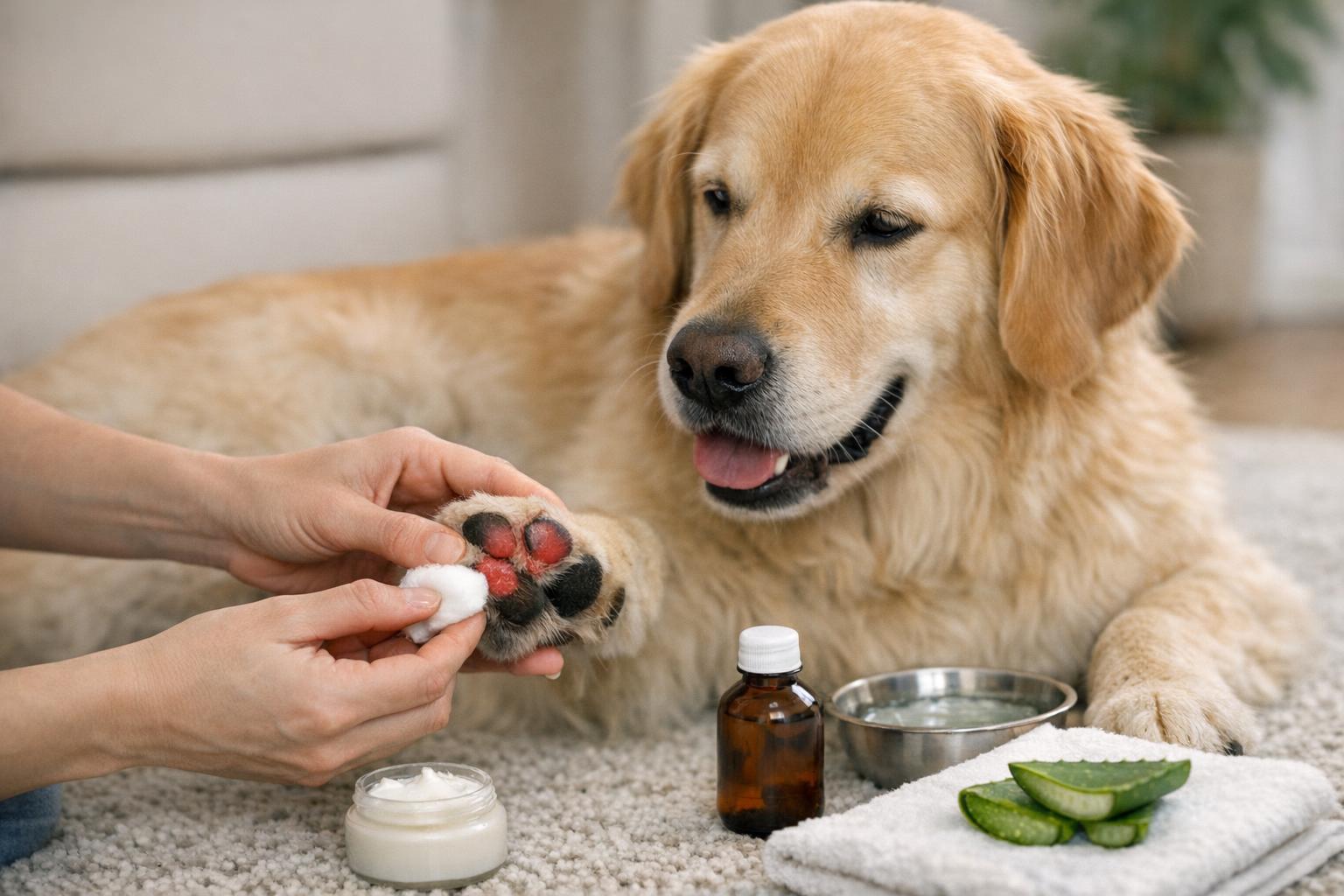
The first time you notice your dog pausing on a walk, lifting a paw with a look that mixes confusion and complaint, a little knot forms in your chest. Paws are the unsung heroes of canine life — soft pads and nimble toes that carry boundless energy, curiosity, and affection. When those pads flare red, raw, or tender, you want a gentle, effective response that soothes without stress. This article blends a caring voice with practical, evidence-minded home care so you can address mild paw problems safely.
## Dog Paw Redness Home Remedy: When To Act
Not every pink paw needs medical drama. Understanding severity helps you choose between calm at-home care and a vet visit. Use a dog paw redness home remedy for mild, recent redness caused by contact irritation, light burns from hot pavement, or seasonal allergic reactions. Avoid home remedies if you see heavy swelling, pus, severe limping, bleeding, high fever, or if the discomfort lasts more than 48–72 hours despite care.
### Signs To Differentiate Mild From Serious
– A mild case often shows localized redness, occasional licking, and slight tenderness but normal appetite and behavior.
– Serious infections or deep wounds present with discharge, a foul odor, raised heat, or systemic signs like lethargy.
Recognizing the difference helps prevent delays in professional treatment.
## 1. Soothing Oat And Aloe Compress
This balanced, humectant compress calms inflamed pads and reduces itchiness. Use it for paw redness from dry skin, mild allergic paw irritation, or contact irritants like certain grasses or cleaning products.
### Ingredients And Materials
– 1/2 cup plain colloidal oatmeal or ground oats (not flavored)
– 1 cup warm water
– 1 tablespoon pure aloe vera gel (food-grade or pet-safe)
– Clean bowl and soft towel
– Small shallow dish for soaking paws
### Creation And Application Steps
1. Mix the ground oats with warm water until it forms a milky, soothing bath. Stir in the aloe gel until evenly distributed.
2. Soak the shallow dish in the oat-and-aloe solution. Gently place the affected paw in the dish for 5–10 minutes. If your dog resists, apply the solution with a soft cloth instead.
3. Pat the paw dry with a clean towel. Do not rub vigorously.
4. Repeat twice daily for up to three days. If redness persists or worsens, stop and consult a veterinarian.
### Safety Notes
– Test a small area first to confirm no hypersensitivity to aloe.
– Do not use products containing alcohol, perfumes, or tea tree oil on open skin.
## 2. Chamomile And Green Tea Rinse For Cooling Relief
Chamomile and green tea provide mild anti-inflammatory and antioxidant benefits. This rinse is suitable when paw irritation is itchy or overheated.
### Ingredients And Materials
– 2 chamomile tea bags
– 1 green tea bag
– 2 cups boiling water
– Clean container and towel
### Creation And Application Steps
1. Steep all tea bags in boiling water for 10 minutes. Allow the infusion to cool completely to lukewarm.
2. Pour the cooled tea into a container. Dip a clean cloth and gently wipe the affected paw pads and between the toes.
3. Allow the area to air-dry or pat lightly with a towel. Apply this rinse 2–3 times daily for 2–3 days.
4. Discard any unused homemade tea rinse after 24 hours.
### Safety Notes
– Avoid using this rinse on open wounds or deep cuts; it’s intended for surface inflammation only.
– Do not sweeten or add honey.
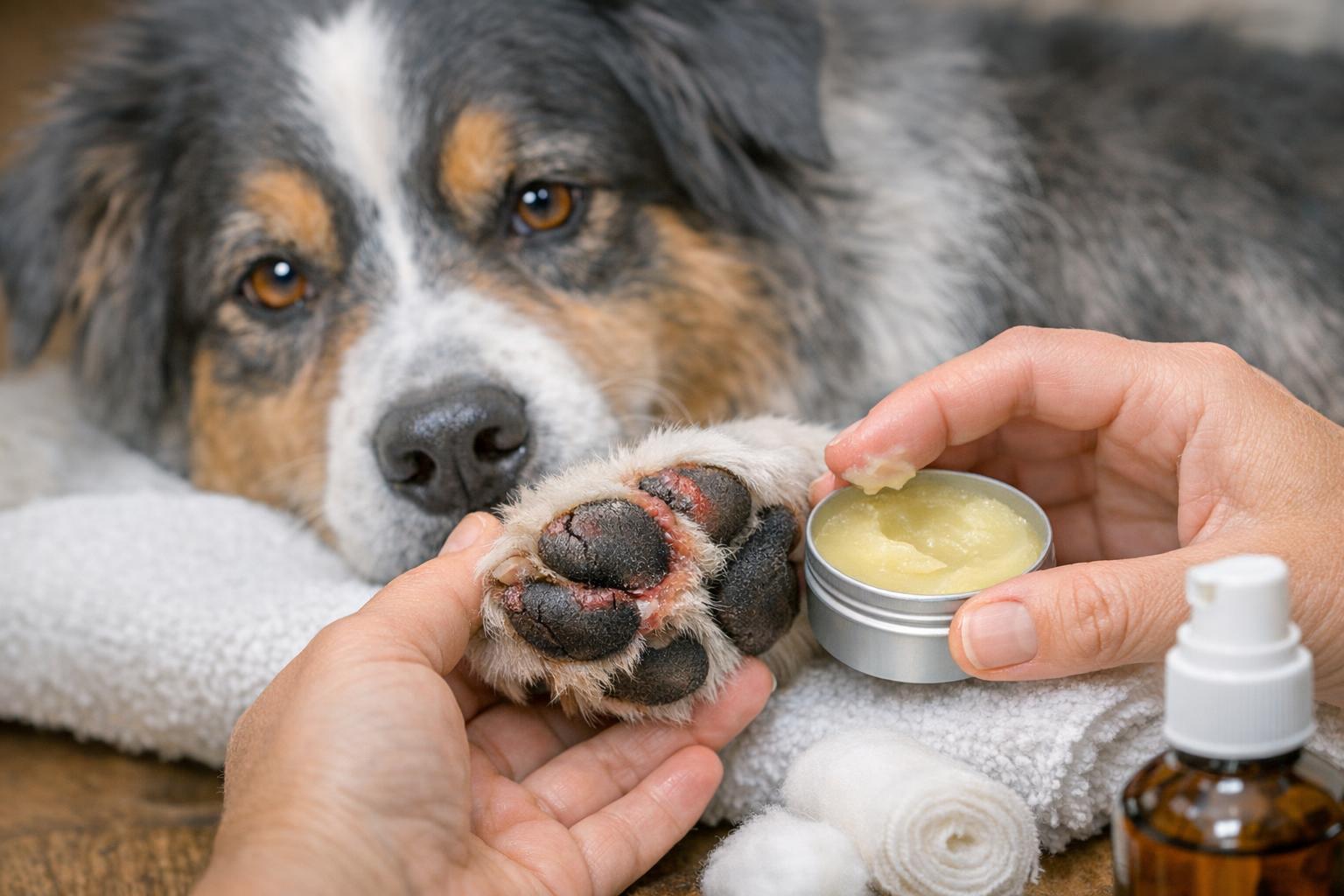
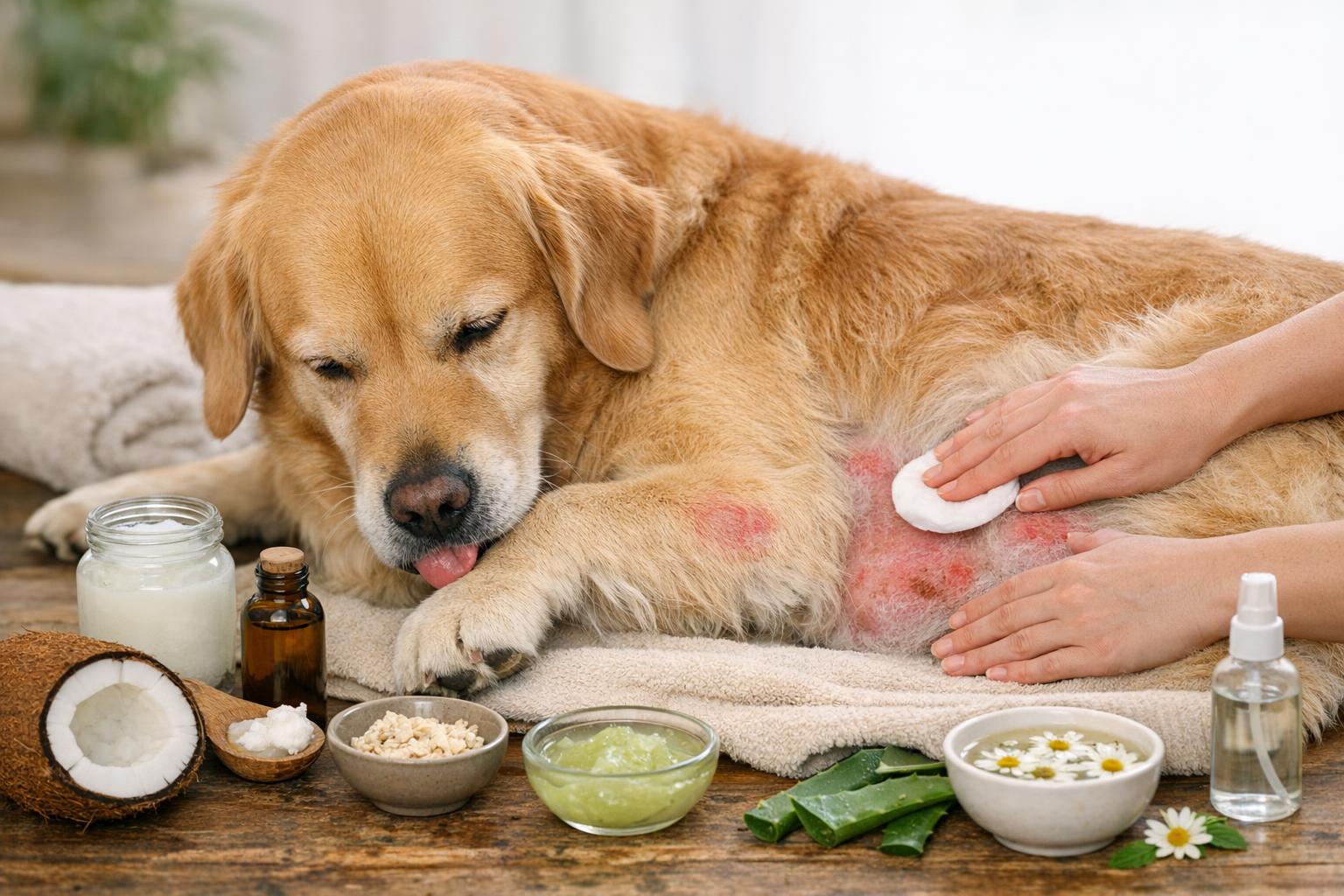
## 3. Coconut Oil Barrier Balm (Healing Topical)
A thin barrier of virgin coconut oil can protect pads from further irritation and has mild antimicrobial properties. Use for dry, cracked pads or minor contact-based paw irritation.
### Ingredients And Materials
– 1–2 teaspoons virgin, cold-pressed coconut oil
– Optional: 1 drop of vitamin E oil
– Small clean jar and fingertip applicator
### Creation And Application Steps
1. Scoop a small amount of coconut oil into the jar. If using vitamin E, add one drop and mix.
2. Warm a pea-sized amount between your fingertips. Gently massage into the paw pads and between the toes, focusing on cracked or red areas.
3. Apply once or twice daily. Limit use to a thin layer to reduce tracking and ingestion.
4. Monitor your dog; some will lick more after application. If excessive licking occurs, use a short-lived protective sock or cover for 10–15 minutes after application, then remove.
### Safety Notes
– For dogs prone to pancreatitis or on a strict diet, discuss topical oils with your veterinarian due to licking and ingestion.
– Avoid if pads are actively infected unless directed by a vet.
## 4. Diluted Apple Cider Vinegar Rinse For Mild Antiseptic Action
Used cautiously, a properly diluted apple cider vinegar (ACV) rinse can restore pH balance and deter mild microbial growth on intact skin. This is for non-broken, non-burned paw surfaces only.
### Ingredients And Materials
– 1 part apple cider vinegar (raw, unfiltered) to 3 parts water
– Clean spray bottle or shallow dish
– Towel
### Creation And Application Steps
1. Mix the ACV and water in a spray bottle or bowl.
2. Lightly spray or dab the diluted solution onto the affected paw. Do not soak.
3. Allow to air dry. Repeat once daily for no more than 48 hours.
4. Stop use immediately if stinging, increased redness, or discomfort occurs.
### Safety Notes
– Never use on open or bleeding wounds. Vinegar stings injured tissue.
– If your dog has sensitive skin, skip this remedy and favor milder rinses.
### When To Seek Veterinary Care
If the paw redness intensifies, discharge appears, the dog develops a fever, or the animal shows systemic illness, seek veterinary attention promptly. Professional care is necessary for abscesses, deep puncture wounds, or suspected foreign bodies between toes. Persistent licking that causes hair loss or secondary infection also requires evaluation and often prescription treatment.
#### Signs Warranting Immediate Vet Visit
– Pus or thick discharge
– Rapid spreading of redness
– Severe pain or inability to bear weight
– Swelling that compresses the paw
– High fever or lethargy
## Preventive Practices To Reduce Future Flare-Ups
Maintaining clean paws and reducing exposure to known irritants are the most reliable ways to avoid recurring paw redness and paw irritation. Trim long fur between the toes, wipe paws after walks, avoid hot pavement in summer, and rotate de-icing salts or chemicals used around your property. A weekly paw inspection becomes a ritual that blends care with bonding.
### Simple At-Home Maintenance Routine
– After outdoor activity, gently wipe paws with a damp cloth.
– Check between toes for burrs, foxtails, or stuck debris.
– Use pet-safe moisturizers (like the coconut oil balm) after drying.
– Swap harsh household cleaners for pet-safe alternatives if your dog walks on treated floors.
## Practical Safety And Licking Management
Dogs naturally lick to soothe. Light licking can help, but excessive licking impedes healing and introduces germs. If your dog perseveres despite home remedy application, use a short-lived barrier such as a clean sock, a breathable boot, or an Elizabethan collar as advised by your vet.
### Brief Notes On Over-The-Counter Products
Topical human antiseptics and steroid creams are not always suitable for dogs. Avoid oral or topical medications meant for humans without veterinary guidance. When in doubt, consult your veterinarian about safe pet-formulated options.
A calm, knowledgeable approach helps your dog recover quickly and prevents small problems from becoming larger ones. Use home remedies like those above to manage mild cases, watch closely for warning signs, and call your vet when necessary.












Leave a Reply