





Gas is a frequent complaint among companion animals and, in many cases, indicates a reversible dietary or behavioral issue. When gas produces notable abdominal distension, however, owners must recognize the difference between manageable flatulence and life‑threatening conditions. The following material clarifies causes, risk factors, and safe home remedies to address gas and bloating in dogs while stressing when immediate veterinary care is required.
## Understanding Gas And Bloating In Dogs
Gas and bloating in dogs may stem from benign causes such as swallowing air or from more serious gastrointestinal dysfunction. The term “bloating” is sometimes used loosely to describe any abdominal fullness, but in a clinical context it can indicate gastric dilatation or gastric dilatation–volvulus (GDV), an acute emergency. This section outlines physiological mechanisms that commonly produce gas and distinguishes them from true volvulus.
### Common Causes Of Excessive Gas
Excessive intestinal gas commonly arises from dietary factors, fermentation of poorly digested carbohydrates by intestinal bacteria, sudden dietary changes, and rapid food intake. Some breeds with deep chests are predisposed to gastric dilation, which can present as severe bloating. Parasites, malabsorption syndromes, and acute enteritis also disrupt normal canine digestion and contribute to gas production.
### How Canine Digestion Contributes
Canine digestion involves mechanical breakdown in the mouth and enzymatic and microbial processing in the stomach and intestines. Inefficient carbohydrate digestion permits fermentative bacteria in the colon to produce excess gas. Disruption of normal gut flora, whether through antibiotics or poor diet, can exacerbate flatulence and contribute to persistent bloating in dogs.
### When Gas Becomes An Emergency
Owners must monitor breathing difficulty, persistent retching without vomiting, extreme restlessness, pale gums, and rapid abdominal enlargement. These signs may indicate GDV rather than simple gas and bloating in dogs, and require immediate veterinary intervention. Do not attempt home remedies if an emergency is suspected.
## Remedy 1: Dietary And Probiotic Approach
This first remedial strategy focuses on correcting underlying digestive imbalance and moderating fermentable substrates in the diet. It is suited for non‑emergent, recurrent flatulence and mild abdominal distension.
#### Ingredients Or Required Materials
– High‑quality limited‑ingredient dog food with moderate protein and low fermentable carbohydrates
– Veterinary‑grade probiotic formulated for dogs (enteric strains preferred)
– Canned plain pumpkin (100% pumpkin, no additives)
– Measuring scale or cup
– Food bowl that slows ingestion (slow‑feeder bowl)
#### Step‑By‑Step Creation And Application
1. Transition Diet: Over 7–10 days, transition to the selected limited‑ingredient food to reduce exposure to fermentable fillers. Mix increasing proportions: 25% new food on day 1–2, 50% on day 3–4, 75% on day 5–6, 100% thereafter.
2. Introduce Probiotic: Administer the probiotic according to label dosage for the dog’s weight, typically once daily with food. Continue for at least 4–6 weeks to allow gut flora stabilization.
3. Add Pumpkin: Offer 1–2 teaspoons of plain canned pumpkin per 10 pounds of body weight, mixed into meals, no more than twice daily. Pumpkin supports regular stool formation and reduces fermentative substrates.
4. Slow Feeding: Replace standard bowls with a slow‑feeder dish to reduce aerophagia (air swallowing) during meals. Encourage multiple small meals a day rather than one large feeding.
5. Monitor And Record: Keep a log of stool consistency, odor, and any recurrence of distension. Allow 3–8 weeks to evaluate effectiveness.
### Dosage And Safety Notes
Probiotics vary by strain and concentration; always choose veterinary formulations and consult a veterinarian for dogs with immunosuppression. Avoid prolonged high‑volume pumpkin feeding, which may alter stool consistency excessively.
## Remedy 2: Herbal And Massage Protocol
This second approach employs gentle external techniques and small, safe herbal adjuncts to relieve transient discomfort associated with non‑serious gas. Use only when veterinary emergencies have been ruled out.
#### Ingredients Or Required Materials
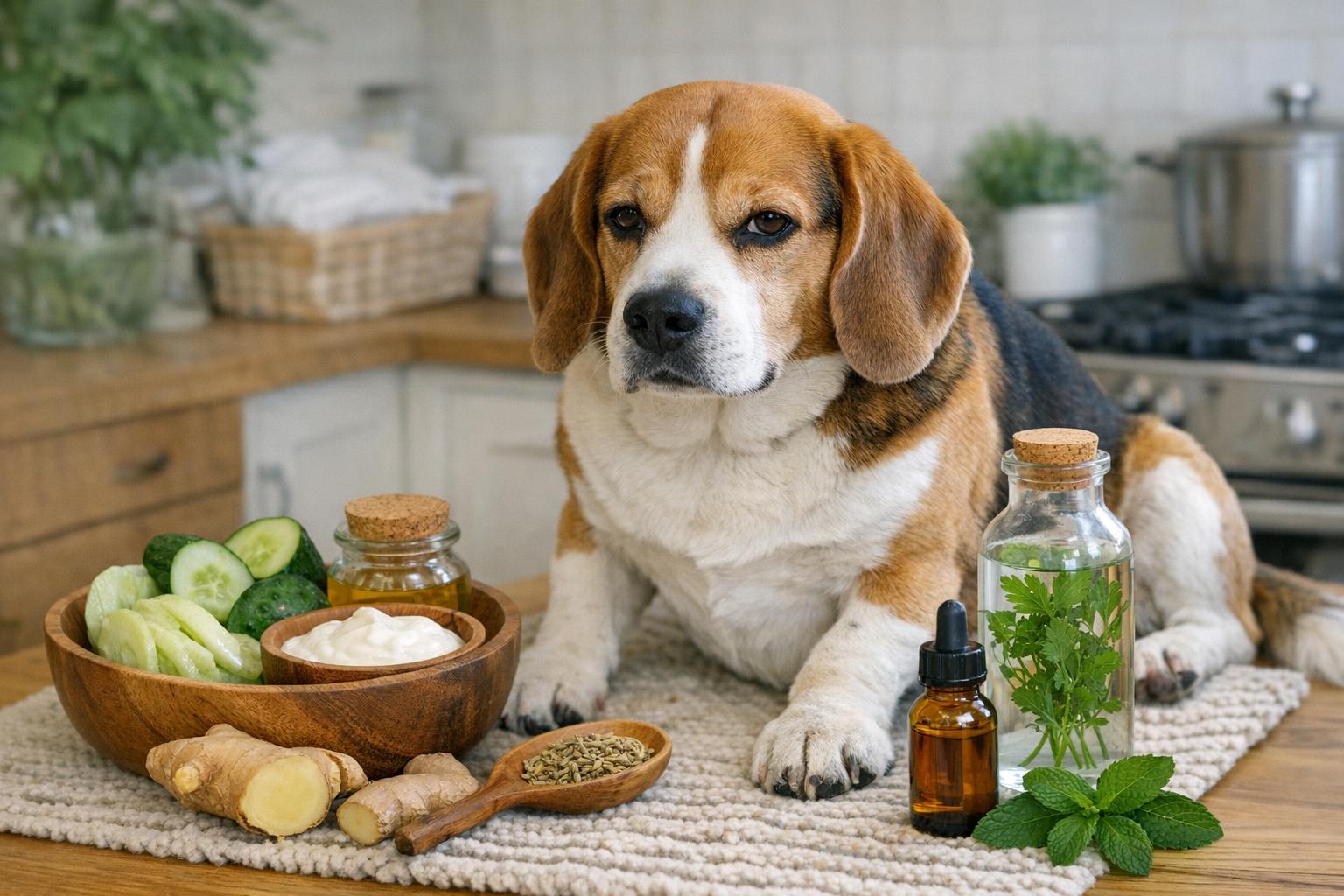
– Fresh ginger root (small piece) or pharmaceutical ginger extract suitable for dogs
– Fennel seed (optional; use sparingly)
– Warm towel
– Quiet area for the animal to rest
– Measuring spoon
#### Step‑By‑Step Creation And Application
1. Prepare Herbal Solution: For fresh ginger, finely grate a pea‑sized amount and steep in 1 cup of hot water for 5–10 minutes; allow to cool to lukewarm. For extract, follow label recommendations for canine dosing—typically 10–25 mg per 10 lb body weight, but verify with a veterinarian.
2. Administer Orally: Offer a few milliliters of the cooled tea mixed into a small amount of food or applied to a treat. Begin with a conservative dose and observe for sensitivity or vomiting.
3. Apply Fennel Sparingly: Crush one or two fennel seeds and place them on the dog’s food if additional carminative action is necessary. Do not exceed a very small amount; fennel is powerful even in modest doses.
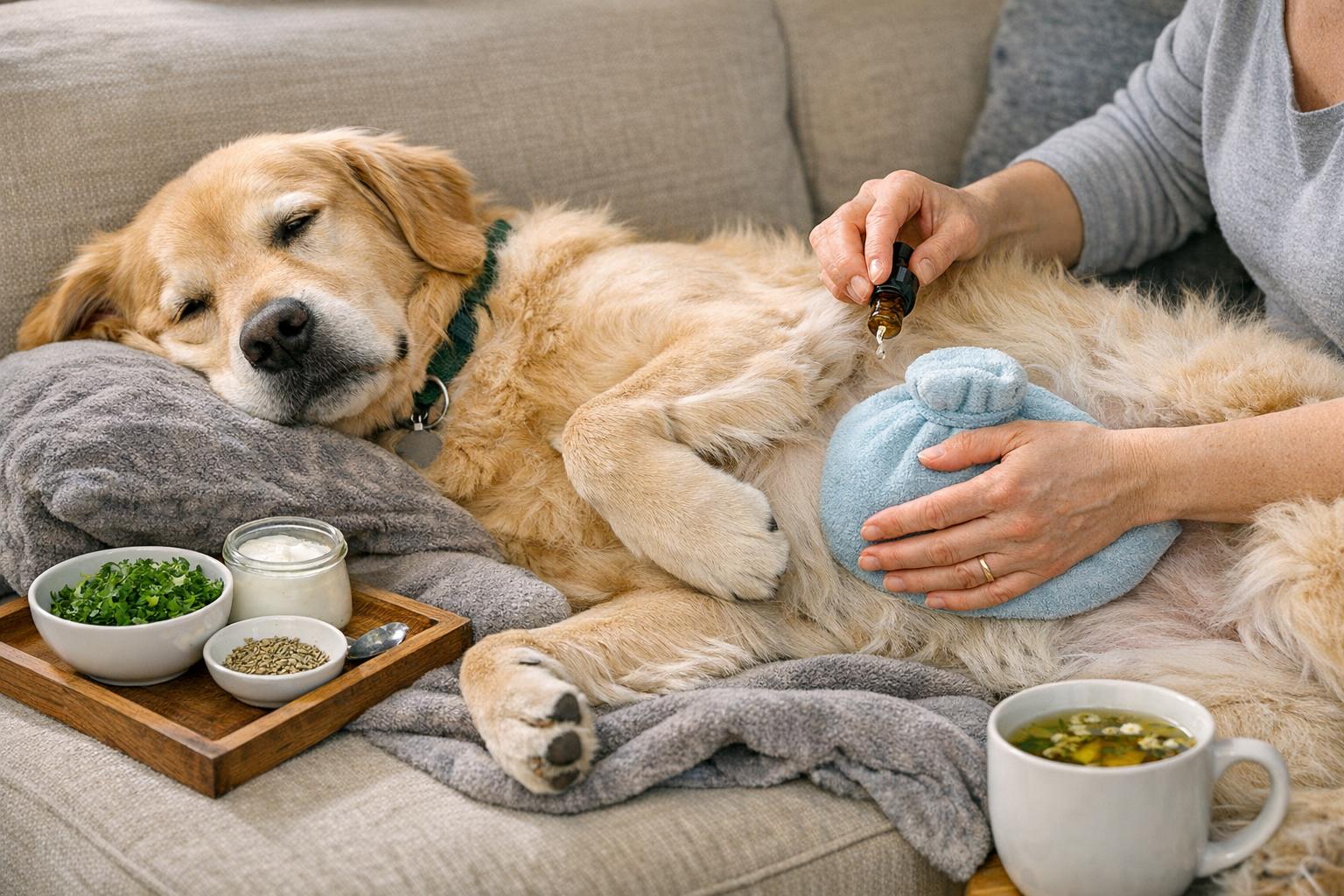
4. Perform Gentle Abdominal Massage: With the dog in a comfortable lateral or sternal position, use the heel of the hand to gently stroke the abdomen in clockwise circles, following intestinal flow. Apply light pressure for 2–3 minutes, then rest. Repeat 2–3 times daily.
5. Warm Compress: Use a warm (not hot) towel applied to the abdomen for up to 10 minutes to relax abdominal musculature after massage.
6. Observe Response: If flatulence decreases and the dog remains comfortable, continue for up to a week. Discontinue herbal measures if vomiting or worsening signs occur.
### Application Frequency And Cautions
Ginger is generally safe in small doses for dogs but may cause mild gastrointestinal upset at higher doses. Avoid herbal remedies in pregnant animals or in dogs on anticoagulant medications without veterinary approval.
## Managing Risk Factors And Long‑Term Strategies
Long‑term management aims to minimize recurrence of gas and bloating in dogs by addressing feeding behavior, environment, and chronic health issues.
### Feeding Strategies
Feed multiple small meals per day rather than one or two large meals. Avoid vigorous exercise immediately before and after feeding; allow at least moderate rest. Use measured portions rather than free‑feeding to prevent overeating and air swallowing.
#### Specific Foods To Avoid
Limit legumes, soy, high‑fiber fillers, and dairy products that commonly cause fermentation in susceptible animals. Sudden shifts between brands or formulations often provoke digestive upset; implement gradual transitions.
#### Lifestyle Adjustments For Canine Digestion
Promote calm feeding environments; avoid stressors or competition at mealtime that prompt gulping. Maintain regular deworming and dental care, as oral disease and parasitism can alter digestion and contribute indirectly to gas production.
### When To Seek Veterinary Care
Immediate veterinary evaluation is required if the dog shows signs of severe pain, persistent retching without producing vomit, collapsed behavior, pale or blue gums, or extremely rapid abdominal enlargement. For persistent, non‑emergent bloating in dogs despite home measures, pursue diagnostic testing—fecal analysis, abdominal imaging, and bloodwork—to identify underlying disorders such as exocrine pancreatic insufficiency, inflammatory bowel disease, or food intolerance.
### Monitoring And Recordkeeping
Document episodes, associated foods, activities, and remedies used. Detailed records assist diagnostic efforts and allow targeted modification of diet and environment to reduce recurrence of gas and bloating in dogs.
## Practical Considerations For Owners
Assess breed predisposition, body condition, and feeding practices. Large, deep‑chested breeds have a higher risk for GDV and merit particular vigilance. Discuss with a veterinarian the potential benefits of prophylactic measures for at‑risk animals, such as feeding protocols that reduce the likelihood of gastric dilation. When implementing any home remedy, maintain conservative dosing, observe closely, and discontinue if adverse reactions arise.







Leave a Reply