


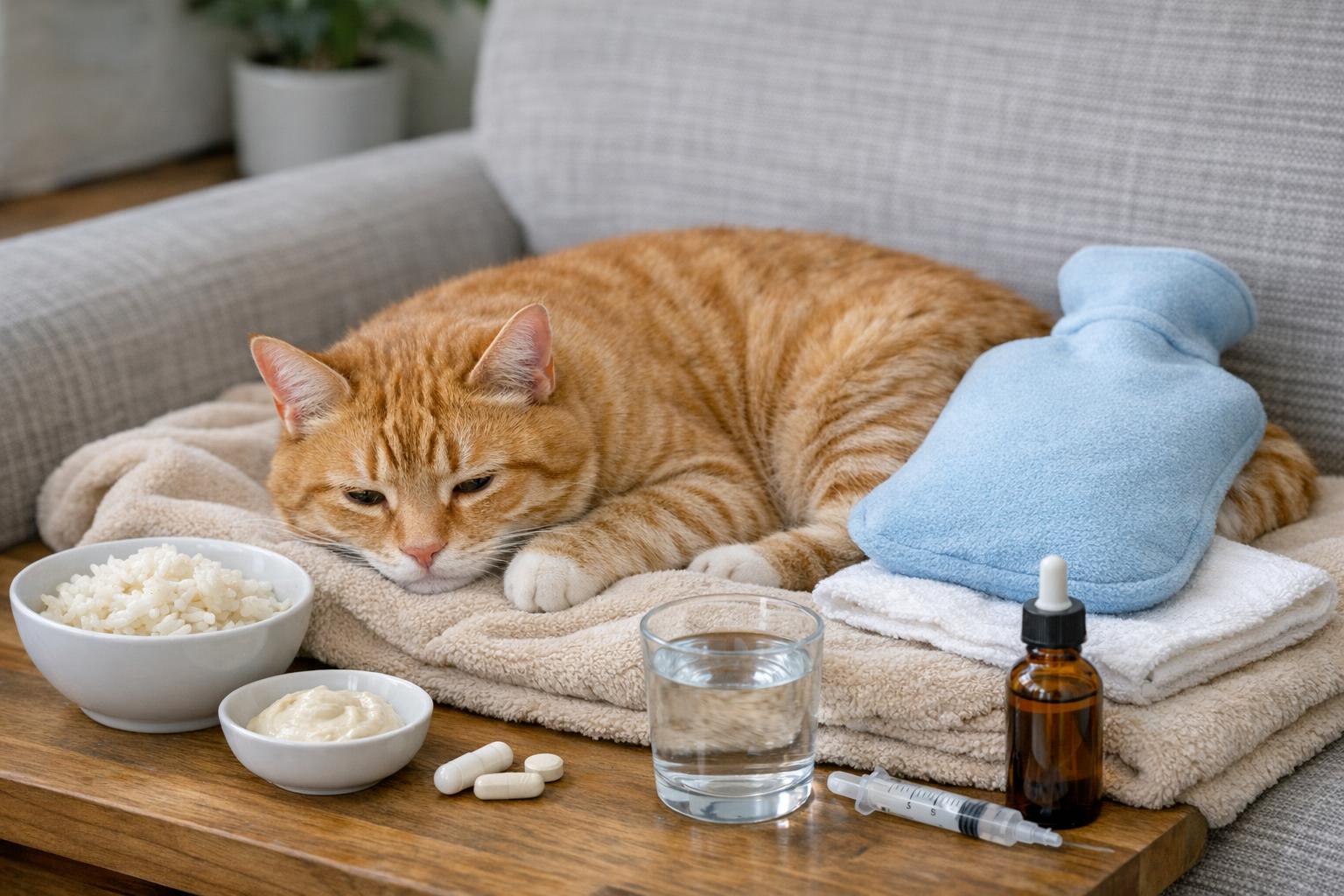
## Cat Digestive Upset Relief At Home: Gentle, Practical Steps
If your cat has loose stools, you don’t always need a vet visit right away. A few calm, measured steps can stop mild problems from getting worse. The goal with cat digestive upset relief at home is to reduce irritation, keep your cat hydrated, and avoid anything that makes the gut work harder than it needs to.
### Recognize Mild Versus Serious Signs
Not all upset tummies are the same. Short-lived soft stool after a dietary change or a quick snack of people food is common. But watch for straining, blood, repeated vomiting, fever, or a cat that refuses to move. Those are signs to seek help.
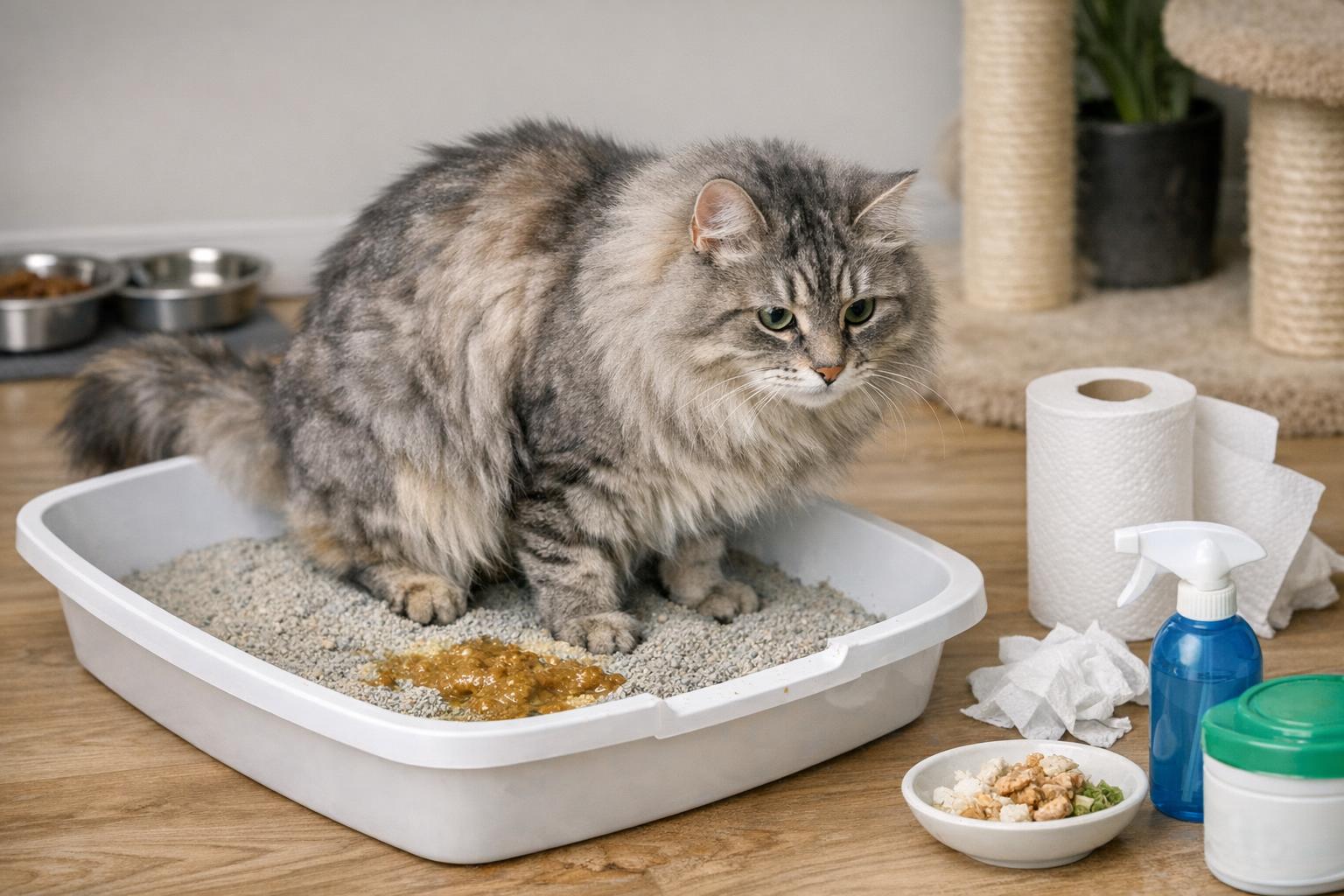
Diarrhea in cats can be messy but also telling. A single episode or slightly loose stool often qualifies as mild. If you see frequent watery stool, or it lasts more than 24 to 48 hours, treat that as more than “just a case of the runs.” If your cat is a kitten, elderly, or has a health condition, act sooner.
### Immediate At-Home Actions For Cat Diarrhea
First, separate water from food for a short period. Offer small amounts of water frequently so your cat doesn’t gulp and vomit. Don’t withhold water entirely. You can try an unseasoned bone broth or a few spoonfuls of an oral electrolyte solution (vet-approved) if your cat will lap it. This helps replace salts without upsetting the stomach further.
Temporarily remove regular food for up to 12 hours for a healthy adult cat; do not fast kittens, diabetic cats, or cats that are underweight. After that short break, reintroduce a bland diet in tiny portions. Keep portions small and frequent to avoid overloading the digestive tract.
Avoid giving over-the-counter anti-diarrheal human medicines. Many of them are unsafe for cats. Also skip dairy, fatty table scraps, and new treats until the stool is back to normal.
### Diet And Hydration To Soothe The Gut
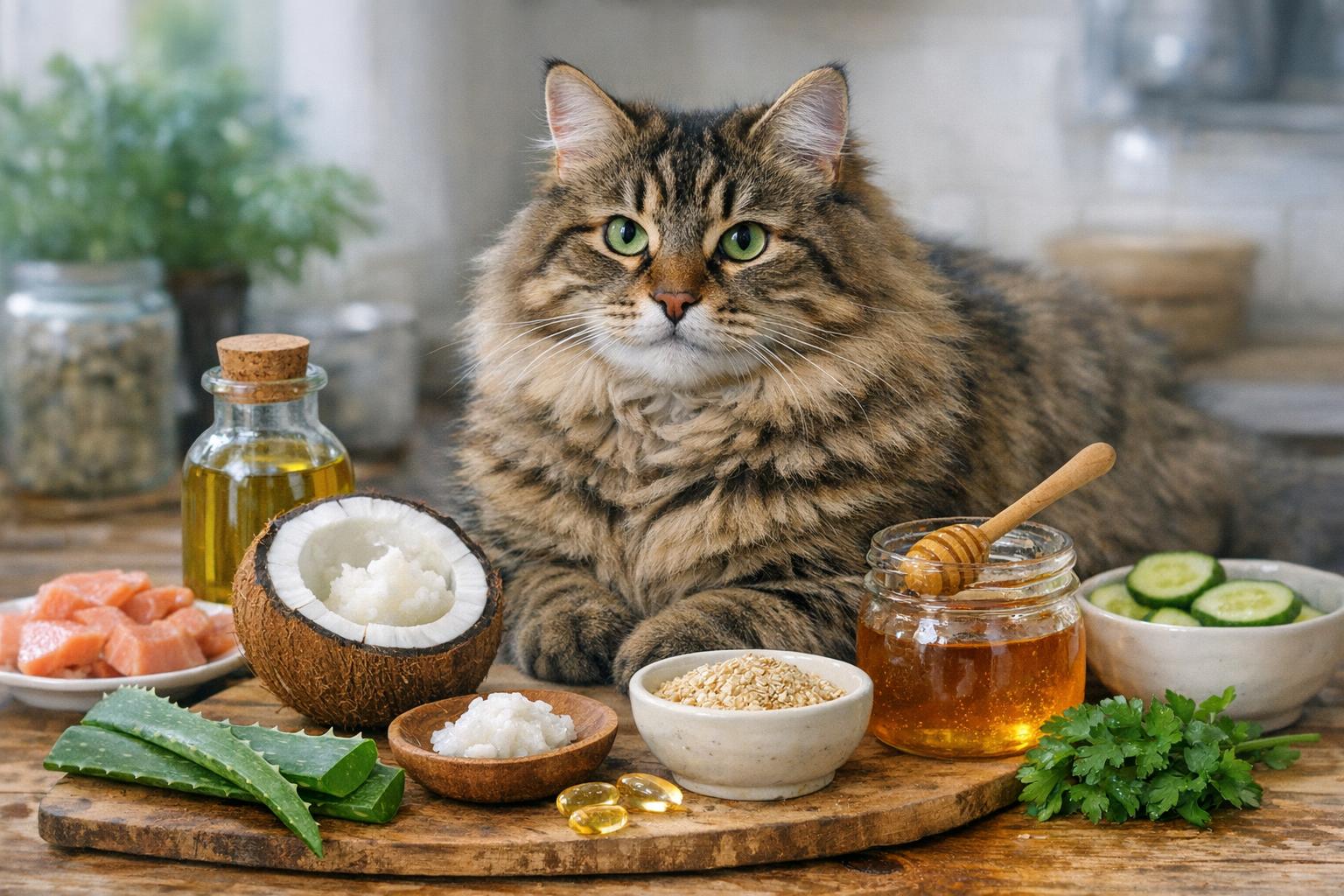
A bland diet can quiet inflammation and firm the stool. Plain cooked white meat like chicken or turkey, with no skin, bones, or seasoning, is a good start. Some people add plain cooked white rice or canned pumpkin to add gentle bulk. For most cats, a teaspoon of pure canned pumpkin added to a meal can help; for larger cats try up to a tablespoon. Pure pumpkin, not pumpkin pie filling.
Feed small amounts several times a day rather than one large meal. Watch for appetite returning; if your cat refuses food for more than a day, call the vet.
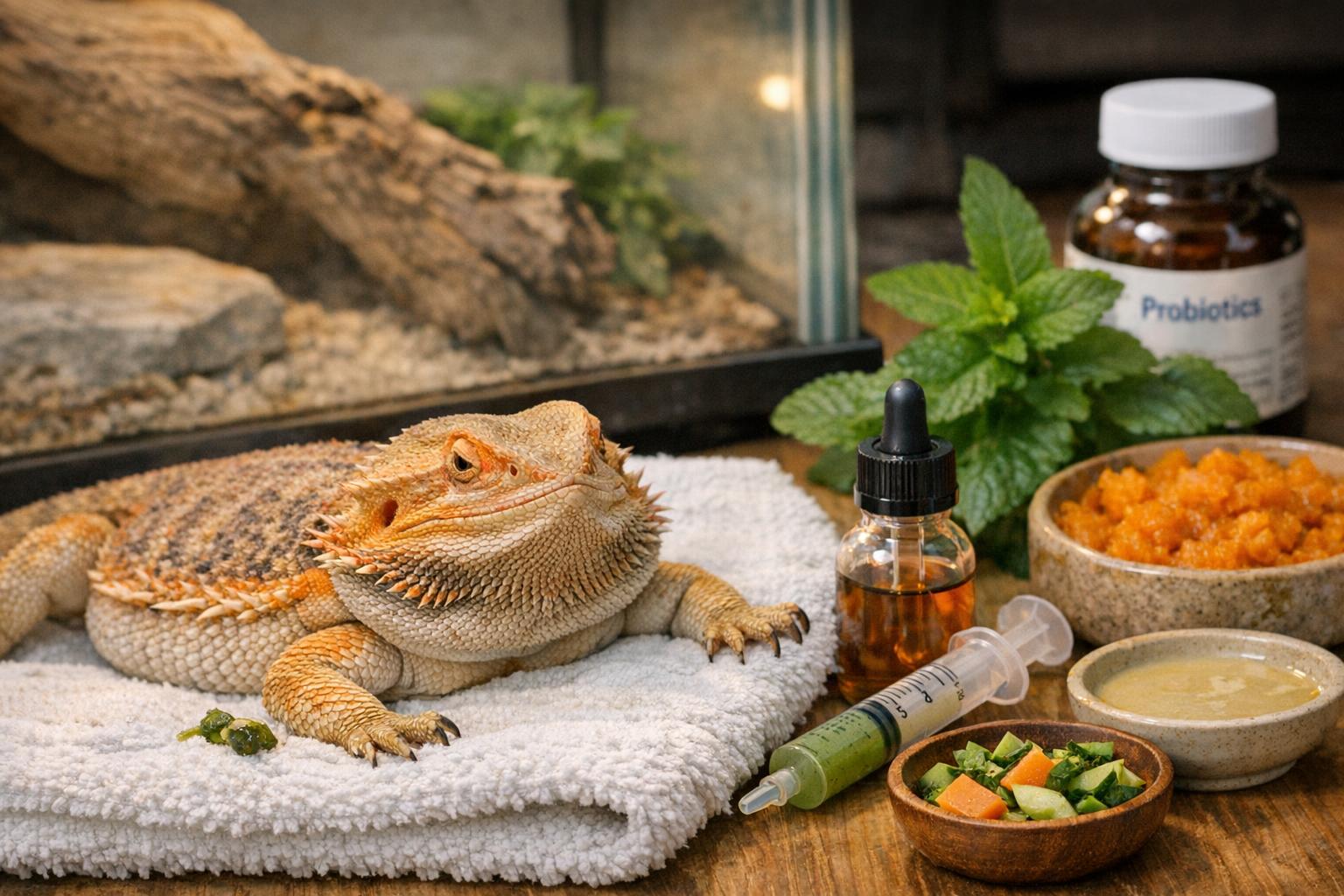
Probiotic support often speeds recovery. Use a product formulated for pets when possible. Sprinkle a vet-recommended probiotic powder on food for a few days. These can help rebalance gut flora after an upset. Do not substitute random human supplements without checking with your veterinarian.
#### Probiotics And Safe Add-Ins
Choose probiotics designed for cats or small animals. Look for strains and CFU counts that are labeled for pets. If you can’t get a pet product immediately, try natural options like a little plain yogurt only if your cat tolerates dairy, but most cats are lactose intolerant so this is a last resort. A few spoonfuls of unsalted bone broth can encourage drinking and settle the stomach.
Fiber can help in some cases. A touch of canned pumpkin provides soluble fiber that firms stool. Introduce any supplement slowly. If things seem to worsen, stop and call your clinic.
### How To Monitor Hydration And Waste
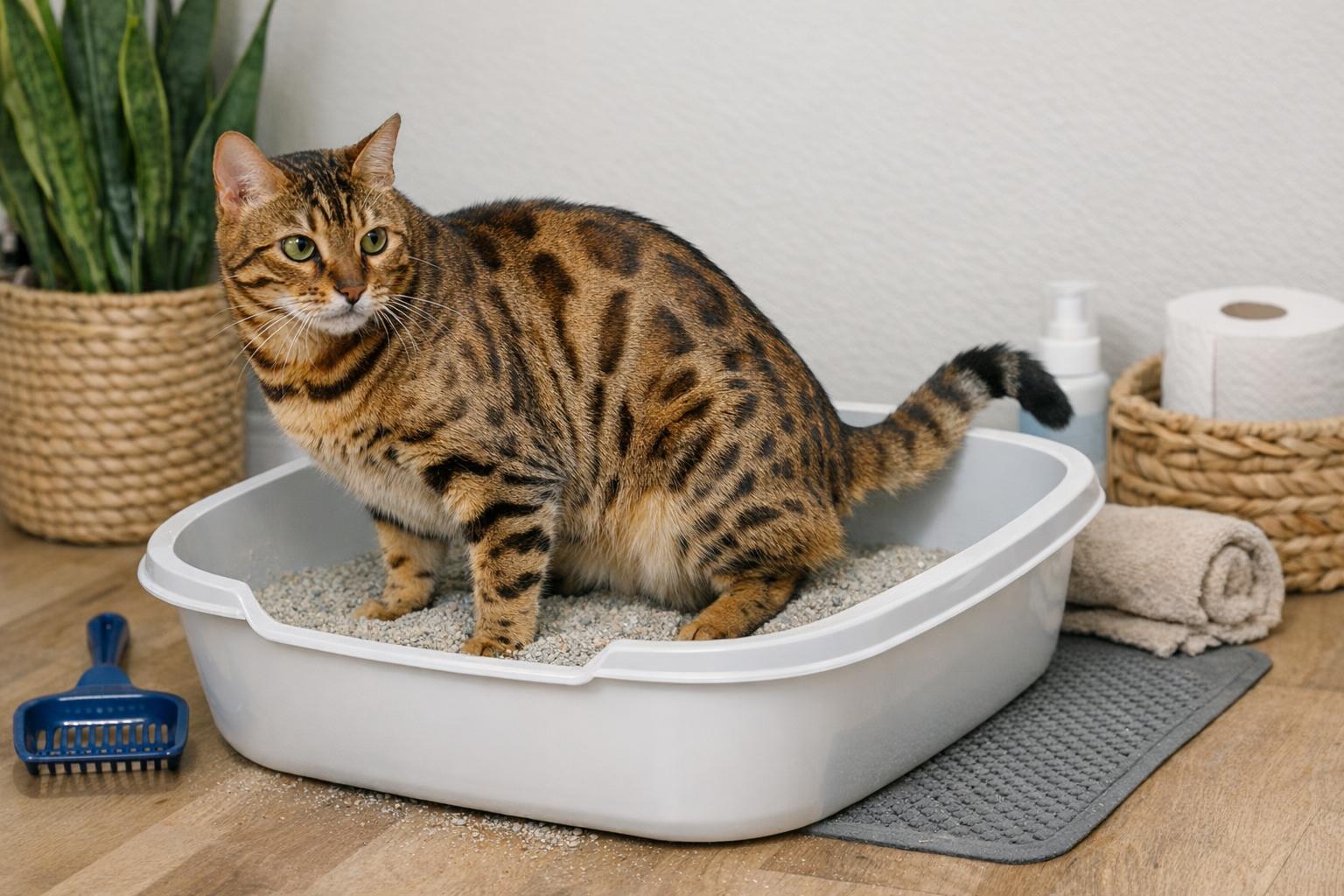
Dehydration is the biggest short-term danger with prolonged diarrhea. Check skin tenting: gently lift skin at the back of the neck; it should spring back quickly. Dry gums, sunken eyes, or lethargy are red flags. Keep a close eye on litter box visits. Note frequency, consistency, and any changes in color or smell.
Save a sample if you can. If you go to the vet, a fresh stool sample helps diagnose parasites, bacteria, or dietary causes. If you treat at home, track progress: steady improvement over 24–48 hours is a good sign.
### When To Call Your Veterinarian
Call right away if you see blood in the stool, repeated vomiting, severe abdominal pain, or if your cat becomes very weak. Also call if diarrhea in cats lasts more than two days in adults, or any time a kitten or a sick senior has ongoing loose stool. Persistent or recurrent cat diarrhea could mask infections, inflammatory bowel disease, parasites, or more serious conditions.
If your cat is on medication, has been exposed to toxins, or has a sudden, severe change in behavior alongside diarrhea, get them examined. Diagnostics like fecal testing, bloodwork, or imaging can reveal underlying problems that home care can’t fix.
### Practical Tips That Help
– Keep the litter box clean so you notice changes fast.
– Offer food in small ceramic bowls at floor level; some cats are picky about container type.
– Avoid abrupt diet switches. If you do change food, mix it gradually over a week.
– If treating at home, stick to the plan for 48 hours and be ready to pivot if things don’t improve.
Cat digestive upset relief at home is about small, sensible moves: hydrate, rest the gut briefly, and reintroduce gentle food. If uncertainty or severity creeps in, don’t hesitate to call for professional advice — vets prefer early calls to emergency dramas. And remember: every cat is different; what works for one may not work for another, so obserbe closely and act accordingly.




Leave a Reply