



A scrape or a soft abscess doesn’t always need a trip to the clinic. You just need practical fixes that are cheap, quick, and safe. Below I describe straightforward, field-tested steps for common issues, the plain materials that work, and when to stop and call the vet.
## Home Remedies For Horses You Can Use Around The Barn
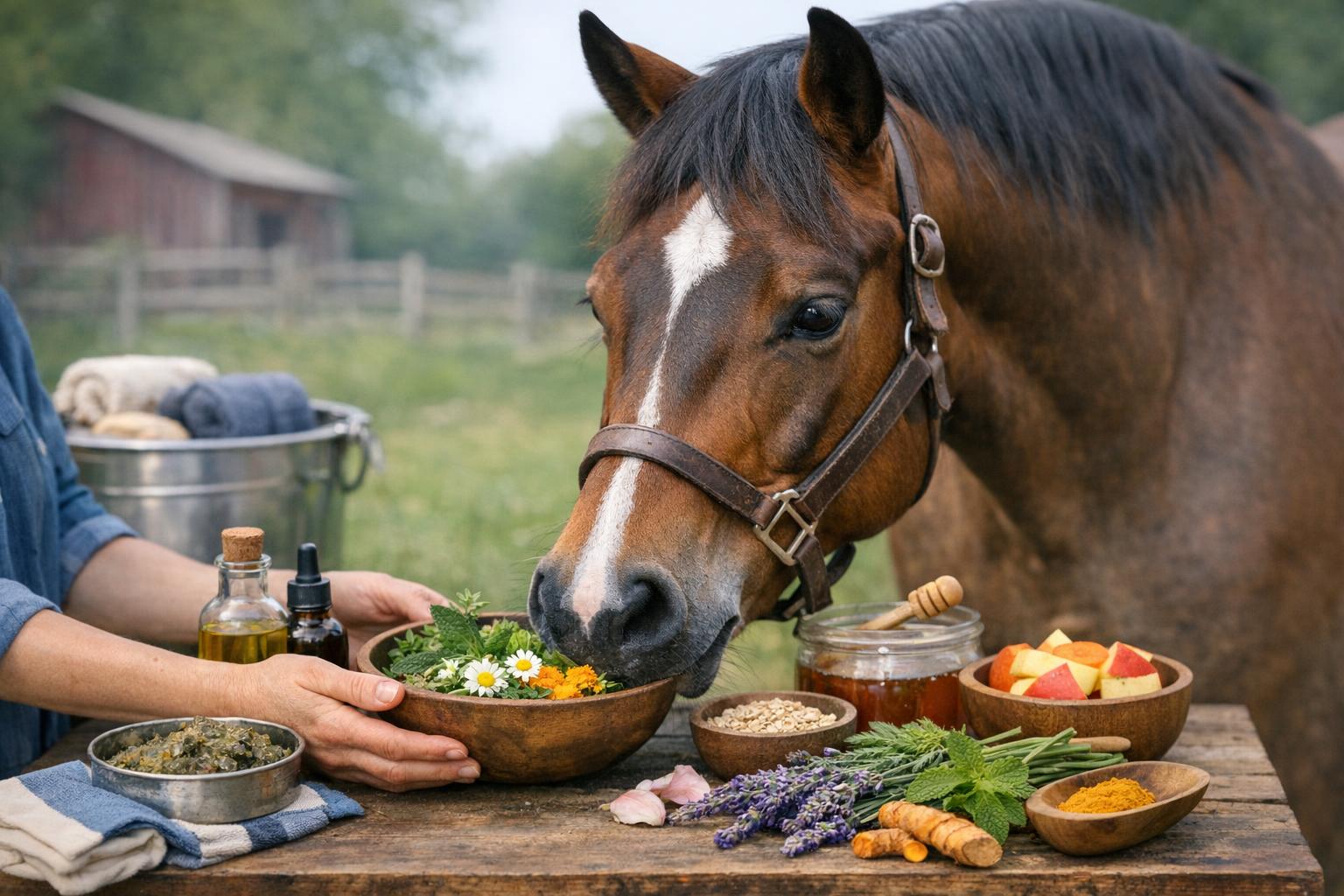
Small wounds, minor thrush, and mud fever are the sorts of things you can often handle on your own if you’ve got basic supplies. I keep a small kit in my trailer: sterile saline, honey, clean gauze, Epsom salt, apple cider vinegar, and an extra set of bandages. Those items cover a lot of ground when it comes to home remedies for horses.
### Cleaning And Managing Minor Wounds
Clean is the priority. Rinse the area with lukewarm saline (about one teaspoon of salt per pint of boiled, cooled water). Pat dry with a clean dressing. For superficial cuts, medical-grade honey applied in a thin layer helps prevent infection and supports healing. Wrap loosely if you need to keep dust off.
#### Supplies And Technique
– Saline or clean water for initial flush.
– Sterile gauze; avoid cotton that leaves fibers in the wound.
– Medical honey or an antiseptic recommended by your vet.
Change the dressing daily and watch for increased heat, swelling, or foul smell. Those signs mean you should call your veterinarian.
### Dealing With Abscesses And Hot Spots
Abscesses usually need to be opened, but they often do that on their own. Warm compresses help bring them to a head faster. Make a poultice with Epsom salt dissolved in warm water; apply for 10–20 minutes twice daily. Once it drains, keep the area clean and protected so it heals without recontamination.
## Hoof And Foot Care Tips That Actually Work
A wet, ignored hoof will develop thrush. Simple routines prevent more work later: pick feet daily, keep stalls dry, and apply a thrush treatment when you see black, smelly material in the sulcus.
### Thrush First Aid
Vinegar has mild anti-fungal properties and can be used in a 50:50 solution with water to help clean the frog area, but only after scraping out loose debris. Follow up with a commercial thrush product for stubborn cases. If the lameness persists, a farrier or vet should examine the hoof. Good farriery is part of basic horse care and prevents many problems.
### Abscesses Starting Under The Hoof
If the horse suddenly becomes lame, check for a sole abscess. Clean around the site, use a warm Epsom soak, and poultice. Never pare aggressively without knowing exactly where the abscess is — you can make things worse. If the horse’s pain is severe, contact your vet.
## Digestive Upsets, Colic Signs, And Gentle Interventions
Minor digestive upset often responds to hay, water, and time. Remove grain and restrict grazing for a short period. Offer small amounts of palatable hay frequently so they keep chewing and producing saliva.
### What You Can Do Immediately
– Pull grain and sugary treats.
– Encourage water intake; entice with warm water if they’re refusing cold.
– Light walking can help move gas through the gut.
But be plain about it: colic can be deadly. Increased respiratory rate, rolling, persistent pawing, not eating, or getting worse despite these measures means you need professional care now. Don’t wait. That’s part of responsible equine care.
## Skin Issues: Mud Fever, Rain Rot, And Sunburn
Mud fever responds to keeping the area dry and cleaning with a gentle antiseptic. For rain rot, groom the hair away so air can reach the affected skin, and use a topical antimicrobial. Sunburn on white faces needs sunscreen made for horses or zinc oxide applied thinly; repeated burns lead to chronic problems.
### Simple Routines That Help Prevent Skin Trouble
– Regular grooming and clipping heavy feathering where mud collects.
– Drying wet areas quickly after turnout.
– Using appropriate fly sheets or masks to prevent rubbing and open sores.
These are basic elements of horse care that save time and money later.
## Eyes, Noses, And Minor Respiratory Support
If an eye gets dusty, flush with sterile saline. For a runny nose, first check the color and consistency of discharge. Clear is less concerning than thick or bloody discharge. Don’t use home antibiotics in an eye; that’s a job for the vet. Simple saline rinses and a clean environment are often enough for irritations.
### When To Escalate
Bad odors from the nose, pus, or reduced appetite paired with fever require veterinary attention. In the field, keeping the horse comfortable and well-hydrated while you wait for the vet is the right move.
## Fly Control And Itch Relief Without Toxins
Flies stress horses and aggravate wounds. Keep manure picked, use fans in stables, and put on fly masks and sheets during fly season. For itchy, rubbed skin, a brief wash with diluted apple cider vinegar can soothe irritation; let the coat dry fully. A targeted topical recommended by your vet is better than home concoctions if the irritation is intense.
## When To Call The Vet, Not Try Another Home Remedy
A real part of responsible horse care is knowing when your toolkit stops being enough. High fever, inability to stand, severe lameness, persistent colic signs, deep wounds, or eye injuries merit immediate professional care. Don’t try to be a hero — phone your vet and describe the signs clearly.
### Practical Record-Keeping
Keep a small notebook in the barn. Note treatments you tried, times, and any change. That information helps your vet diagnose faster and avoids repeated or conflicting treatments. I tend to scribble quick notes on bandage changes and the time the poultice was applied. It’s simple, but it’s helpful.
## Small, Useful Extras To Keep On Hand
Keep a box that travels with you: sterile saline, a vet wrap, heavy gauze, medical honey, Epsom salt, apple cider vinegar, a thermometer sized for large animals, and a reliable flashlight. Knowing exactly where your kit is saves time when minutes matter. Also, make sure your trailer has basic first-aid gear for the road.
Use these home remedies for horses as honest, temporary measures — stabilizing and comforting while you decide if the problem can be handled on-site or needs professional attention. Some situations will resolve with simple care; others won’t. Trust your eyes, trust your horse’s behavior, and call for help when things don’t clearly improve. And yes, sometimes the vet will thank you for the clear notes and a tidy treatment history — something I’ve learned the hard way during a late-night emergency when the horse wouldn’t recieve my full attention until dawn.







Leave a Reply