






## Reptile Terrarium Temperature Guidelines For Common Species
Getting the heat right is the single most practical thing you can do for a captive reptile. These reptile terrarium temperature guidelines are about more than a number on a thermometer; they shape appetite, digestion, immune function, and behavior. Treat this like plumbing: it’s invisible when it works, and painfully obvious when it doesn’t.
Different species need different profiles. A bearded dragon thrives with a basking spot that hits the mid-30s Celsius, while many geckos prefer a gentler gradient. Use the guidelines below as a framework, then dial settings to match the animal in front of you.
### How Thermal Gradients Work Inside A Tank
Reptiles are ectotherms. They move to adjust body temperature. A correct thermal gradient gives them choice. If you only provide one uniform temperature, the animal can’t thermoregulate.
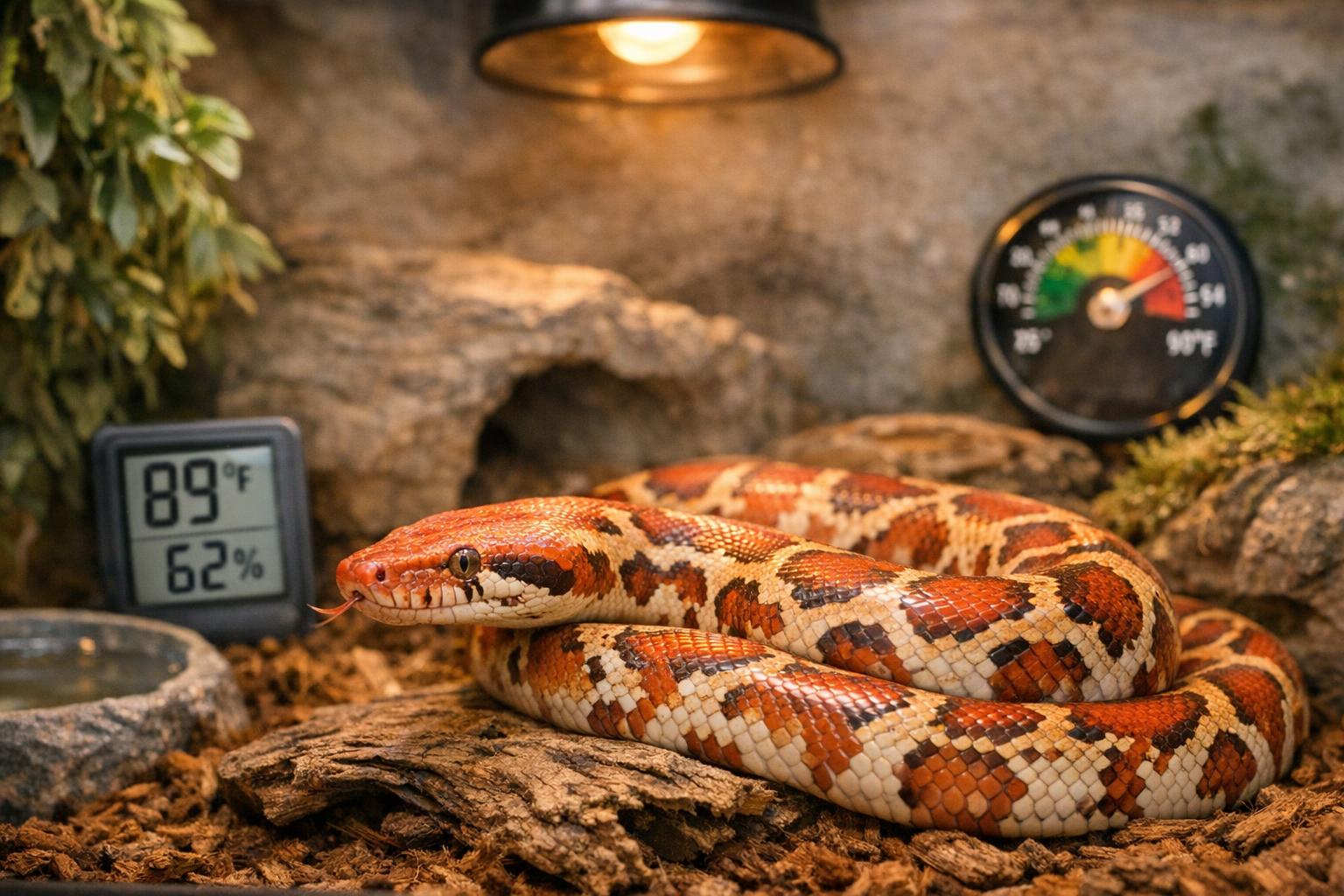
Set up three basic zones: a basking area, a warm-refuge, and a cool retreat. Measure each zone at the level the reptile uses—on the surface, not at the light fixture. For arboreal species, take readings higher in the enclosure. For ground-dwelling species, measure at substrate level.
### Target Ranges For Popular Pets
Below are rough targets. They’re starting points, not rules carved in stone.
– Bearded Dragons: Basking 38–42°C; Warm side 30–35°C; Cool side 24–28°C.
– Leopard Geckos: Basking/Hot spot 30–33°C; Cool side 24–27°C; Night 18–20°C.
– Corn Snakes: Daytime warm spot 28–32°C; Cool side 20–24°C; Night 18–22°C.
– Ball Pythons: Basking/Hot spot 31–33°C; Ambient 27–29°C; Cool side 24–26°C.
These numbers reflect how dense the body needs to be to digest and move. If your animal isn’t eating, it’s worth checking whether your terrarium temperature is wrong before altering diet or meds.
### Choosing The Right Equipment
Match the equipment to the species and enclosure type. A long, low tank favors heat tape or under-tank heaters. Tall, arboreal cages do better with ceramic heat emitters or halogen bulbs.
– Thermostats: Buy a reliable thermostat. It’s the safety valve for your setup.
– Thermometers: Use at least two. A digital probe and an infrared surface gun work well together.
– Humidity Tools: Heat affects humidity. Plan for a humid hide or misting if your species needs moisture.
Don’t trust bulb wattage alone. Two enclosures with the same bulb can have very different reptile terrarium temperature profiles because of size, substrate, or airflow.
### Placement And Hotspots
Put the heat source at one end of the enclosure to create gradient. Avoid placing lights directly over plastic hides or glass decorations that can develop dangerously hot spots. Check for hotspots with a thermometer; your hand is not a reliable gauge.
If the basking bulb sits above a rock or log, measure the rock surface, not the air. Rocks hold heat and can create secondary radiative hotspots. That’s useful when controlled. It’s lethal when ignored.
### Nighttime Temperatures And Darkness
Many reptiles tolerate—and need—a night drop in temperature. Tropical species often only need a small dip. Desert species may need more. Nighttime drops help regulate hormones and mimic seasonal shifts.
Use ceramic heat emitters if you need heat at night without adding light. Avoid leaving bright bulbs on overnight; they disrupt circadian rhythms.
### Humidity Interactions
Heat and humidity are married variables. Increase one and the other can change. A warm, dry basking area with a cool, humid hide usually works for mixed-requirement species. But don’t assume humidity readings in one corner represent the whole enclosure.
Measure humidity where the animal rests. If your reptile basks in a humid patch, fungal issues can follow. If it needs humidity to shed, give it a discrete humid hide rather than raising the whole enclosure’s average.
### Calibrating With Sensors
Good sensors are cheap insurance. Place probes at the basking spot, the midpoint, and the cool end. Log readings over several days; temps shift with room conditions and seasonal heating. Look for patterns. If the basking spot fluctuates by more than a couple degrees during the day, tighten thermostat control.
An infrared gun helps spot hot or cold patches quickly. But don’t rely on it alone. Surface temps differ from the air around them, and your reptile feels both.
### Species-Specific Adjustments
Some reptiles require microclimates. Crested geckos and many chameleons like distinct vertical gradients. For them, you need a vertical heat source and multiple sensors at different heights.
Breeding animals often need modest seasonal shifts—slightly cooler nights or a few weeks of lower daytime temps—to trigger reproductive behaviors. Hatchlings and juveniles usually require warmer ambient temps to fuel rapid growth. Adjust carefully; young animals can’t survive prolonged cold.
### Common Mistakes To Avoid
People make avoidable errors that lead to health problems.
– Using a heater without a thermostat. This is asking for trouble.
– Measuring only one spot. Temperature is a map, not a point.
– Overheating through enclosure size miscalculations. A bulb that’s fine in a small tank may scorch a larger one.
– Ignoring humidity when changing heat. The two interact in ways that affect breathing and skin health.
– Believing a single thermometer gives the whole story. Multiple readings are necessary.
If a reptile shows lethargy, poor shedding, or reduced appetite, check the terrarium temperature first. It’s the easiest fix.
### Tips For Safe Heat Sources
Place heat mats under a portion of the enclosure, not the entire base. Use thermostats designed for reptile equipment. Secure bulbs with ceramic fixtures that tolerate high heat. Replace bulbs according to the manufacturer since output drops over time even when the bulb still glows.
When using heat rocks, be cautious. They can cause burns if they malfunction or if the animal can’t escape. If you use one, monitor it closely and pair with a thermostat.
### Monitoring Behavior Not Numbers
Numbers matter. Behavior matters more. Watch where your reptile spends time. If a lizard basks constantly, the cool end might be too cool. If it never basks, the basking spot might be too hot or too dim. A snake hiding constantly could be stressed, insecure, or out of its comfort range.
Set up feeding trials and observe digestion. Proper reptile terrarium temperature guidelines will produce consistent bowel movements and steady weight. Any sudden change in behavior should trigger a temperature audit.
### Seasonal And Room Considerations
Room temperature often dictates what your equipment must do. In a cool basement, you may need more robust heating. In a warm sunroom, you might need to shade the enclosure during summer.
Plan for winter. Heating systems in a house can vary dramatically overnight. Use thermostats and battery backups if you live somewhere with unreliable power. Small adjustments can prevent big problems.
### Record Keeping And Small Experiments
Keep a simple log. Note daytime highs, nighttime lows, and any behavior changes. If you alter the reptile terrarium temperature by a few degrees, give the animal several days to adapt before drawing conclusions.
Try small experiments: raise the warm zone by a degree or two and see whether appetite improves. Change one variable at a time. That way you know what worked.
### When To Call A Vet
If your reptile shows chronic issues—weight loss, persistent respiratory signs, or failed shedding—get a veterinary exam. Temperature problems can produce symptoms that mimic disease, but infection can also produce symptoms that look like temperature stress. Diagnostics and a professional opinion save time and reduce suffering.
### Practical Setup Checklist
– Proper thermostat for each heater.
– At least two thermometers: one probe, one infrared or remote sensor.
– Sensors placed at basking surface, midpoint, and cool end.
– Humid hide or water feature if needed by the species.
– Backup power plan for critical heat sources.
These are small investments compared to vet bills. They also mean your pet will behave more naturally, which is the whole point.
#### Troubleshooting Fast: What To Do First
If something looks wrong, don’t panic. Check the thermostats. Check the sensors. Move the animal to a safe, temporary environment if temps are dangerously off. Replace suspect equipment. Then run controlled tests to verify the setup.
#### When You Should Adjust The Range
Slow, deliberate adjustments work best. If you need to raise basking temp, increase by 1–2 degrees and monitor for a week. If the animal is shedding poorly or seems sluggish, consider raising ambient temps slightly. For breeding, small seasonal shifts usually suffice.
#### Maintaining Consistency Over Time
Calibrate sensors periodically. Replace bulbs on a schedule. Keep spare thermostats and bulbs on hand. Consistency is what keeps a healthy terrarium running long term. Temperatures can shift occassionally with hidden changes—new furniture near the tank, a change in your home heating, a worn bulb. Small maintenance prevents sudden problems.
Keep these reptile terrarium temperature guidelines handy. They’re practical, tested, and tuned to how reptiles actually live—not how we wish they behaved.





























































Leave a Reply