
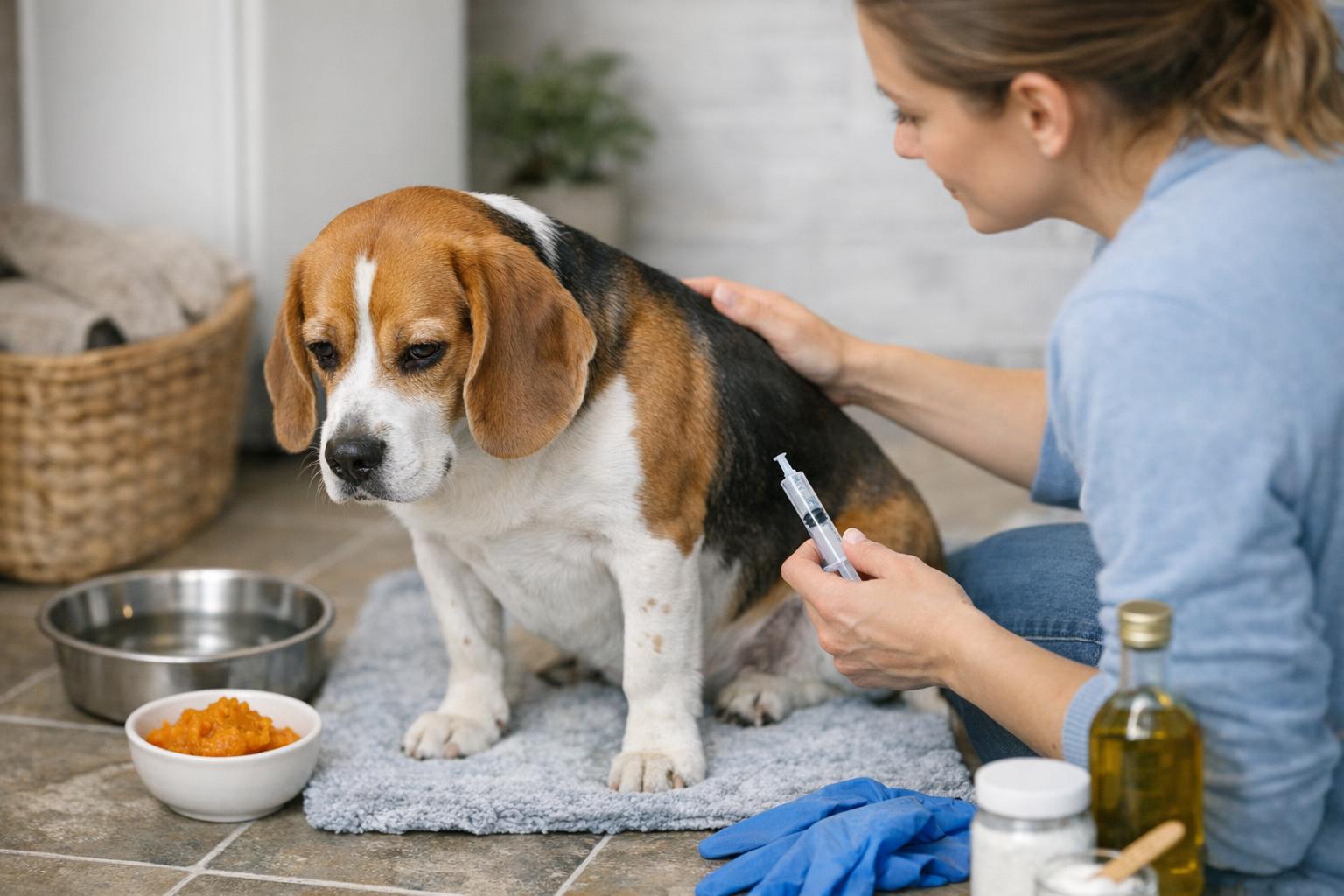
Every dog owner knows the stomach-sinking panic when their pup strains and produces dry, tiny pebbles of feces. The drama is real — your dog looks uncomfortable, you worry, and you want immediate, effective help. This article will rip the bandage off the fear and give dramatic but practical steps on how to relieve hard stools in dogs at home so you can get fast relief safely and confidently.
## How To Relieve Hard Stools In Dogs At Home: Quick Relief
Dogs with constipation or dog hard stools can be miserable, but many simple, safe home measures can soften stool, rehydrate the colon, and restore normal bowel movements. The following remedies are evidence-informed, straightforward, and built for quick application. Use them sensibly and call your veterinarian if signs worsen.
### Why Dogs Get Hard Stools
Hard stools happen when stool spends too long in the colon and excess water is absorbed. Causes include dehydration, sudden diet changes, low fiber diets, ingestion of hair or foreign objects, certain medications, and underlying health problems. Older dogs and brachycephalic breeds are more prone to constipation. Recognize that dog hard stools are a symptom, not a diagnosis.
### When To Call The Vet Immediately
If your dog shows severe abdominal pain, repeated vomiting, lethargy, inability to pass stool (straining with nothing produced), blood in the stool, or signs of bowel obstruction, seek veterinary care right away. For mild to moderate hard stools you can try home relief, but stop and call your vet if there is no improvement in 24–48 hours.
## 1. Pumpkin And Warm Water — Fast, Safe Relief
This is the most popular, gentle first-line remedy for hard stools. Canned plain pumpkin is high in soluble fiber and safe for almost all dogs.
#### Ingredients/Materials
– 1/4 to 1/2 cup plain canned pumpkin (not pumpkin pie filling) per 10–20 lb of dog; adjust for weight
– Warm water
– Measuring spoon
#### Step-By-Step Creation And Application
1. Measure the pumpkin based on your dog’s weight: roughly 1 teaspoon per 10 lb for small dogs, 1 tablespoon per 10 lb for larger dogs. For rapid relief, use the higher end once.
2. Mix the pumpkin with a small amount of warm water to create a loose, pourable paste. This increases hydration and helps the pumpkin move through the gut.
3. Offer the mixture by itself or mixed into a small portion of food. Monitor for acceptance — most dogs like pumpkin’s mild taste.
4. Administer once or twice daily. If stool softens within 24–48 hours, continue for several days to reestablish regularity.
5. If there’s no improvement after 48 hours, stop and contact your veterinarian.
## 2. Psyllium (Fiber) And Hydration Protocol
Psyllium husk adds bulk and moisture-binding fiber that can normalize stool consistency. This remedy is formal and measured — do not improvise dosing.
#### Ingredients/Materials
– Psyllium husk powder (plain, unflavored)
– Warm water
– Syringe or spoon for dosing
#### Step-By-Step Creation And Application
1. Dose carefully: 1/2 teaspoon for small dogs (under 20 lb), 1 teaspoon for medium dogs (20–50 lb), and 1–2 teaspoons for large dogs (over 50 lb), once daily. Start low and adjust.
2. Mix the psyllium into at least 1–2 tablespoons of warm water per dose to allow it to swell (it expands significantly).
3. Administer immediately; psyllium will thicken as it hydrates. If your dog is reluctant, mix into a small amount of palatable wet food.
4. Ensure your dog drinks water. Psyllium works only when sufficient fluid is available; dehydration plus psyllium can worsen obstruction.
5. Use for a few days while monitoring stool. If constipation persists, stop and consult your vet for further diagnostics.
### Important Safety Notes For Fiber Use
– Avoid giving large amounts without veterinary guidance.
– Psyllium can swell in the esophagus if not given with adequate water—always follow with additional water or food.
– Fiber works slowly; for very acute hard stools, pair with the pumpkin method.
## 3. Olive Oil Or Mineral Oil For Rapid Lubrication (Use Cautiously)
A thin coat of oil can lubricate the colon and help pass dry, compacted stool. Use the lowest effective dose and avoid repeated unsupervised use.
#### Ingredients/Materials
– Food-grade olive oil or mineral oil (pharmaceutical grade)
– Syringe or spoon
#### Step-By-Step Creation And Application
1. Use olive oil for a gentler, edible option: 1 teaspoon for small dogs (under 20 lb), 1 tablespoon for medium dogs (20–50 lb), 1–2 tablespoons for large dogs (over 50 lb). For mineral oil, consult your vet for exact dosing — mineral oil can interfere with nutrient absorption.
2. Offer oil mixed into a small amount of food to reduce refusal.
3. Monitor for 12–24 hours. If stool softens and passes, reduce usage thereafter and address underlying diet/hydration.
4. Do not use mineral oil in very young, elderly, or debilitated dogs without veterinary approval because of aspiration risk.
### When Oil Is Appropriate And When To Avoid
Use oil if stool is dry and compact but not if vomiting or aspiration risk exists. Avoid if your dog has pancreatitis history; oils can stimulate fat-sensitive conditions.
## Additional Quick Home Care Tips For Immediate Relief
### ### Hydration Boosts
Offer small amounts of fresh water frequently. Bone broth (unsalted) can entice drinking and add electrolytes. Avoid broth with onion/garlic or excess salt.
### ### Gentle Exercise
Short, regular walks stimulate gut motility. Encourage movement rather than long, forced exercise.
### ### Temporary Diet Change
Switch to a bland, wet diet for 24–48 hours — boiled chicken and rice or a vet-recommended GI diet. Wet food naturally increases moisture in stool.
## Common Mistakes That Make Hard Stools Worse
### ### Overdoing Laxatives And Human Medications
Never give human laxatives, stool softeners, or enemas without veterinary advice. Mis-dosing can cause electrolyte imbalance or bowel damage.
### ### Feeding Inappropriate Foods
Avoid dairy (can cause diarrhea but also worsen gut upset), bones, and high-fat treats. Sudden fiber-heavy changes without fluids can exacerbate hard stools.
### ### Ignoring Dehydration
Adding fiber without increasing water intake is a frequent error. Always pair fiber remedies with extra hydration.
## How To Monitor Progress And When To Escalate Care
Look for softer stool volume, decreased straining, improved appetite, and normal energy. If there’s no improvement within 48 hours, or if new worrying signs appear, call your veterinarian. Persistent dog hard stools can indicate obstructions, neurological problems, or metabolic disease that require diagnostics like x-rays, bloodwork, or specific treatments.
### Red Flags Requiring Immediate Veterinary Attention
– Repeated vomiting
– Severe abdominal pain or swelling
– Bloated abdomen
– Passing little or no stool despite intense straining
– Blood in stool or very dark, tarry stool
This plan gives you actionable, fast strategies for how to relieve hard stools in dogs at home while emphasizing safety and the limits of home care. Use the remedies as described, monitor closely, and seek professional help if the situation does not improve or if red flags appear.

Leave a Reply