
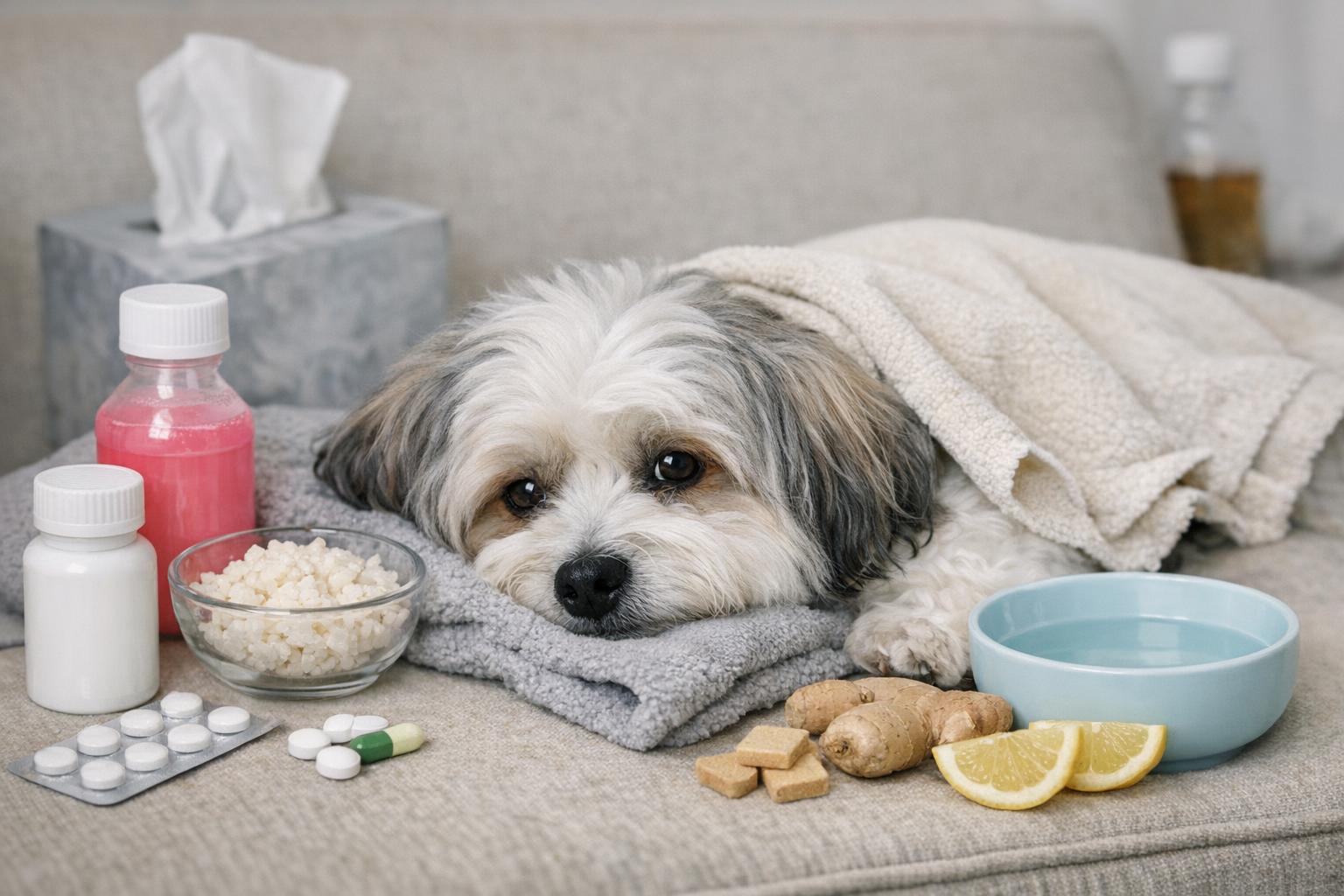
Hey there — your pup is looking a little green around the gills and you want to help fast without panicking. Good call. An upset tummy in dogs is common and usually manageable at home, but it helps to know the signs, safe home remedies, and when to call the vet. This article will walk you through practical, gentle dog stomach bug treatment options you can use right away, plus clear instructions for each remedy so you don’t have to improvise under stress.
## Recognizing A Dog Stomach Bug: Signs To Watch For
Dogs can’t tell us when their belly is upset, so we read the clues. Typical signs of a stomach bug (gastroenteritis or a mild intestinal upset) include sudden vomiting, diarrhea, decreased appetite, lethargy, and sometimes slight fever. A dog with a stomach bug may also strain or show signs of discomfort, lick lips frequently, or act restless.
### When To Worry
If vomiting or diarrhea is severe, contains blood, or lasts more than 24–48 hours in an adult dog, seek veterinary care. Puppies, seniors, and dogs with preexisting conditions should be seen sooner. Also watch for signs of dehydration: tacky gums, sunken eyes, or reduced skin elasticity. These aren’t the time for DIY; that’s vet territory.
## Dog Stomach Bug Treatment: At-Home Care And When To See A Vet
When you’re dealing with a mild stomach bug, the immediate goals are to rest the gut, prevent dehydration, and reintroduce easy-to-digest food gradually. The following dog stomach bug treatment steps are safe for most healthy dogs and aim to stabilize them before a vet visit, if needed. Always adjust for your dog’s size and health status, and call your vet if you’re unsure.
### Gentle First Steps
– Remove food for 8–12 hours for adult dogs (shorter for small breeds) but continue offering small amounts of water or an oral electrolyte solution. This gives the gut a chance to settle.
– Keep the dog warm and comfortable; stress can worsen symptoms.
– Monitor bowel movements, vomiting frequency, and hydration.
## 1. Bland Diet Fast: A Gentle Dog Stomach Bug Treatment
This is the classic first-line remedy. The bland diet is designed to be low-fat, low-fiber, and easy to digest.
### Ingredients
– Plain boiled white rice
– Plain boiled, skinless chicken breast (no bones, no seasonings)
– Optionally: plain canned pumpkin (not pumpkin pie filling) for firming stool
#### Step-By-Step Creation And Application
1. Boil rice and chicken separately until fully cooked and soft.
2. Shred the chicken finely and mix with rice in a 1:2 ratio (chicken:rice) for small dogs; use closer to 1:1 for larger dogs.
3. Offer small portions — about 1–2 tablespoons for very small dogs or 1/4–1/2 cup for medium dogs — every 3–4 hours initially.
4. Watch for improvements over 24 hours. If vomiting stops and the stool firms, gradually reintroduce regular food over 2–3 days by increasing the normal food portion and decreasing bland diet amounts.
5. If symptoms persist beyond 48 hours or worsen, discontinue home treatment and consult your vet.
## 2. Homemade Electrolyte Solution For Mild Dehydration
Keeping your dog hydrated is essential during a stomach bug. Commercial canine electrolyte products are best, but you can make a simple solution at home for short-term support.
### Ingredients
– 1 liter (about 4 cups) of clean water
– 1 tablespoon of sugar (or honey if you prefer, but not for diabetic dogs)
– 1/2 teaspoon of salt
– Optional: a pinch of baking soda if vomiting is not frequent
#### Step-By-Step Creation And Application
1. Dissolve the sugar and salt in the water; add baking soda only if vomiting has decreased and your dog can keep fluids down.
2. Offer small amounts frequently — a teaspoon to a tablespoon every 10–15 minutes for small breeds, a few tablespoons for larger dogs.
3. Use a turkey baster, syringe (without needle), or shallow bowl for reluctant drinkers.
4. Continue until normal urination resumes and mucous membranes (gums) look moist. If your dog rejects the solution or vomits it within minutes repeatedly, stop and contact your vet.
## 3. Probiotic Pumpkin Paste For Gut Balance
A probiotic approach helps restore healthy gut flora after a stomach bug. Plain canned pumpkin provides soluble fiber; adding a canine probiotic can shorten recovery.
### Ingredients
– 2 tablespoons plain canned pumpkin
– 1 teaspoon plain yogurt with live cultures (for adult dogs without dairy sensitivity) or a canine-specific probiotic powder
– Optional: a pinch of ground ginger (helps nausea in small amounts)
### Step-By-Step Creation And Application
1. Mix pumpkin with the probiotic or yogurt until smooth.
2. Offer the mixture alone as a treat or mix into the bland diet once vomiting has stopped for at least 12 hours.
3. Dosage: 1 teaspoon for small dogs, 1–2 tablespoons for medium to large dogs, once or twice daily for up to 5–7 days.
4. Monitor stool consistency and overall energy. If diarrhea persists despite use, discontinue and consult your vet.
## Comfort Measures And Practical Tips
– Keep a clean area and frequent potty breaks for dogs with diarrhea.
– Use puppy pads or incontinence supplies if needed for short periods.
– Avoid over-the-counter human anti-diarrheal medicines unless directed by a veterinarian — some are toxic to dogs.
– If your dog chews on foreign objects or likely ate something inappropriate, inform your vet; treatments differ when toxins or obstructions are involved.
### Safe Foods To Avoid
Do not feed fatty scraps, dairy (unless dog is known to tolerate yogurt), spicy foods, bones, or anything with artificial sweeteners like xylitol (highly toxic). These can worsen a stomach bug or introduce new problems.
## When To See A Vet Immediately
Some situations require immediate professional care rather than home dog stomach bug treatment:
– Repeated vomiting or diarrhea with blood
– Signs of severe dehydration (collapse, pale gums, very slow capillary refill)
– Sudden, severe abdominal pain or a distended belly
– Known ingestion of toxins, large bones, or foreign objects
– Puppies, very old, pregnant, or medically compromised dogs with GI symptoms
### Diagnostic Steps Vets May Take
When you bring your dog in, expect the vet to assess hydration, obtain bloodwork, possibly take X-rays or ultrasound (if obstruction is suspected), and recommend IV fluids, antiemetics, or specific medications depending on the cause.
## Preventing Future Upsets With Simple Habits
Preventing another episode is often easier than treating one. Consistent feeding schedules, avoiding table scraps, keeping toxic foods and trash secured, and slowly transitioning to new foods can reduce gut upsets. Consider a high-quality diet appropriate for your dog’s age and size and maintain regular deworming and vaccine schedules.
### Travel And Boarding Precautions
When traveling or boarding, bring your dog’s usual food and a note about their diet, and check that the facility avoids sudden diet changes. Stress during travel/boarding can trigger stomach upsets too, so familiar items (blankets, toys) help.
If you’d like, I can tailor a basic home-care sheet for your dog’s size and age or suggest specific probiotic brands and dosing.




Leave a Reply