






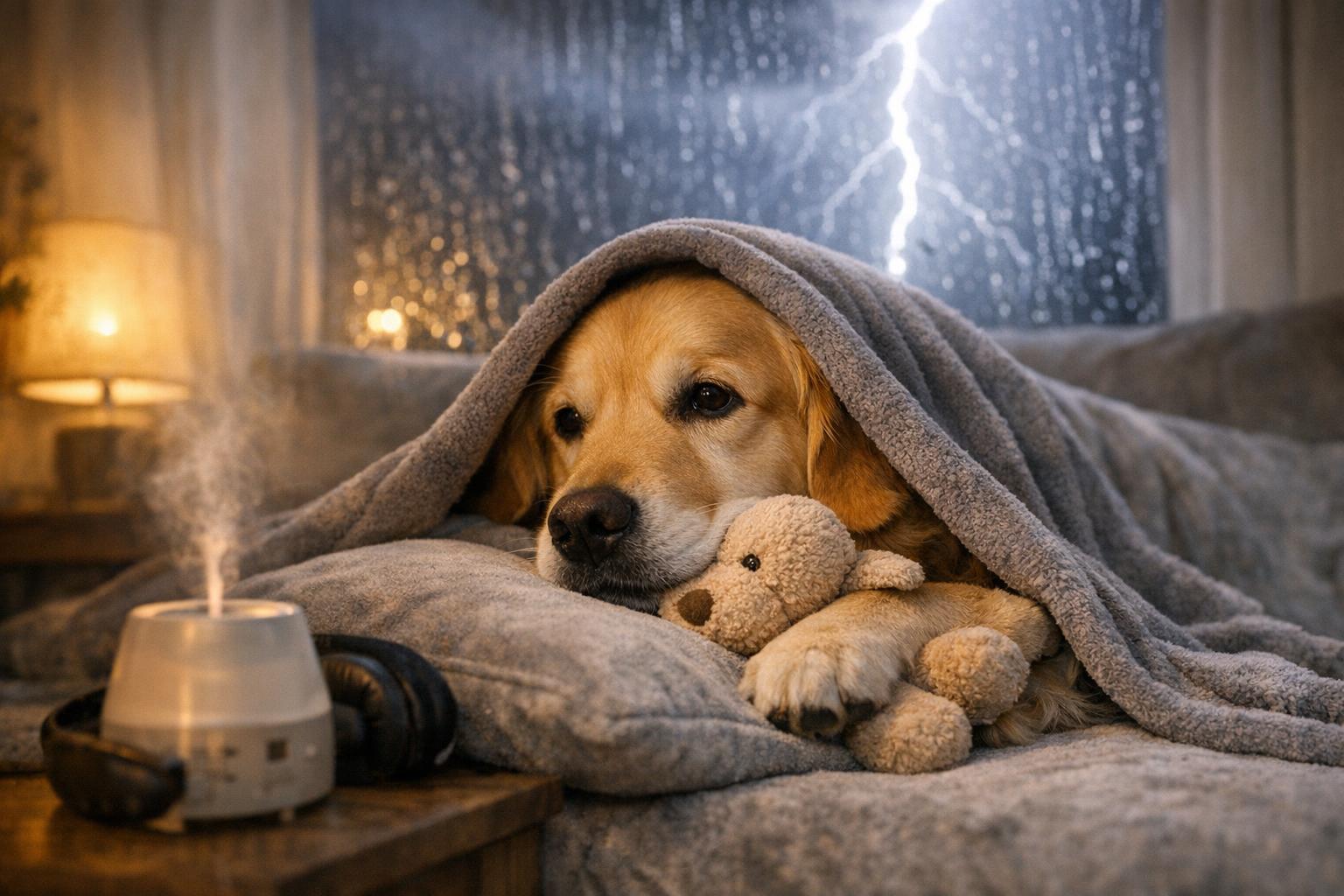
If your dog is terrified of thunder, you’re not alone — and you don’t have to watch them panic while you feel helpless. Thunderstorms are a common trigger for noise anxiety in dogs, and with a mix of immediate comfort, sensible environmental changes, and structured training, you can help your pet feel safe again. Let’s walk through practical, friendly, and evidence-based ways to turn that shake-and-hide behavior into calm cuddles (or at least fewer shredded pillows).
## Noise Anxiety: Dog Is Terrified Of Thunder — Gentle Relief Options
### Why Loud Storms Trigger Fear In Dogs
Dogs hear much higher frequencies than we do and can detect thunder’s sudden, unpredictable booms from farther away. Past experiences, genetics, and even the dog’s age can influence their reaction. When a dog is terrified of thunder, their nervous system floods with adrenaline, making escape, hiding, trembling, panting, drooling, or destructiveness common responses.
### Signs Your Pup Is Suffering During Storms
If your dog is terrified of thunder, you might notice pacing, clinging, trying to bolt out of the house, excessive barking, and attempts to hide in small spaces. Some dogs will also show physical signs like shaking, drooling, or loss of appetite. Recognizing these signals early helps you act faster and more effectively.
### Immediate Calming Tips You Can Do During A Storm
If a storm hits and your dog is terrified of thunder, use low-stress, immediate interventions:
– Move them to an interior room with fewer windows.
– Turn on calming background noise (soft classical music or white noise).
– Offer a secure bed or crate if they already use it willingly.
– Speak softly and avoid punishing or over-coddling; both can reinforce fear.
Now for the practical remedies — more formal and instructive so you can follow them step-by-step.
## Remedy 1: Pressure Wrap (Thundershirt-Style) For Acute Relief
#### Materials Required
– A commercially made pressure wrap (Thundershirt or equivalent) or
– Thick stretchable fabric (e.g., elastic bandage or a snug T-shirt) sized appropriately for the dog
– Measuring tape (optional, for accurate fit)
#### Creation And Application Steps
1. Measure the dog if using custom fabric: chest girth and length from base of neck to base of tail to ensure proper coverage.
2. If using a commercial product, select the correct size according to the manufacturer’s guidelines.
3. If improvising, use a snug T‑shirt or wrap: place the fabric over the dog’s shoulders and gently wrap around the chest, securing with minimal pressure. Ensure freedom of movement for legs and neck, and check that breathing is not restricted.
4. Introduce the wrap during calm times first: have the dog wear it for 10–15 minutes while offering treats to build positive association.
5. During a storm, apply the wrap and observe. If the dog appears more agitated, remove it and reassess fit. If the dog relaxes (less panting, softer body posture), keep it on until the storm passes.
Clinical evidence supports the use of consistent, gentle pressure to reduce anxiety in some dogs. Use this as an acute intervention rather than a stand-alone long-term cure.
## Remedy 2: DIY Calming Kit For The Home Environment
#### Ingredients / Materials
– Calming pheromone diffuser (Adaptil or similar) or pheromone spray
– Low-volume classical music playlist or white-noise machine
– Thick blankets, a secure crate or den-like bed
– Safe chew (long-lasting, vet-approved)
– Anxiety-reducing scent (lavender sachet; use only low concentrations and observe tolerance)
#### Creation And Application Steps
1. Position the pheromone diffuser in the room where the dog spends most time; follow manufacturer instructions for placement and activation. If using spray, apply lightly to bedding 30 minutes before storm exposure.
2. Create a “den” by placing thick blankets and a bed in an interior room or crate. Ensure the crate entrance remains open if the dog prefers choice.
3. Start a low-volume playlist of calming music 10–20 minutes before expected storm windows (if forecasted). Continuous low-level sound helps mask sudden spikes and reduces startle responses.
4. Offer a safe chew or a food-stuffed toy as an enrichment that encourages relaxation and a positive association with the environment.
5. Keep lighting dim and avoid sudden movement. Monitor the dog’s reaction and adjust scent intensity or remove the diffusor if irritation occurs.
This kit is designed to change the storm’s environmental cues and offer both psychological and sensory buffering.
## Remedy 3: Desensitization And Counterconditioning Program (Long-Term)
#### Materials / Tools
– Recorded thunder sounds at adjustable volume
– Treats of high-value and small size
– Clicker or marker word (optional)
– Session logbook for tracking progress
#### Creation And Application Steps
1. Baseline: Note the dog’s current reaction to thunder recordings at very low volume. If the dog shows stress at any level, reduce volume further or pause training for the day.
2. Pairing: Play recorded thunder at a barely-audible level while immediately rewarding calm behavior with tiny, high-value treats. The goal is to create a new association: thunder sounds = good things.
3. Gradual Increase: Over days to weeks, slowly increase volume in tiny increments only while the dog remains relaxed. Each session should be short (5–10 minutes), and progress should not cause stress.
4. Add Functional Context: Practice in different rooms, and include mild distractions so the dog learns to remain calm in varied settings.
5. Reinforce Real-Life Exposure: On low-stress storm-like evenings (or during simulated thunder), use the pressure wrap and calming kit alongside training to maximize positive association.
6. Track Progress: Use a log to record volume levels, dog’s behavior, and duration of calm. Adjust pace based on the dog’s comfort. Do not rush.
Desensitization requires consistency and patience. For severe cases, consult a certified behaviorist to create a tailored, professionally guided protocol.
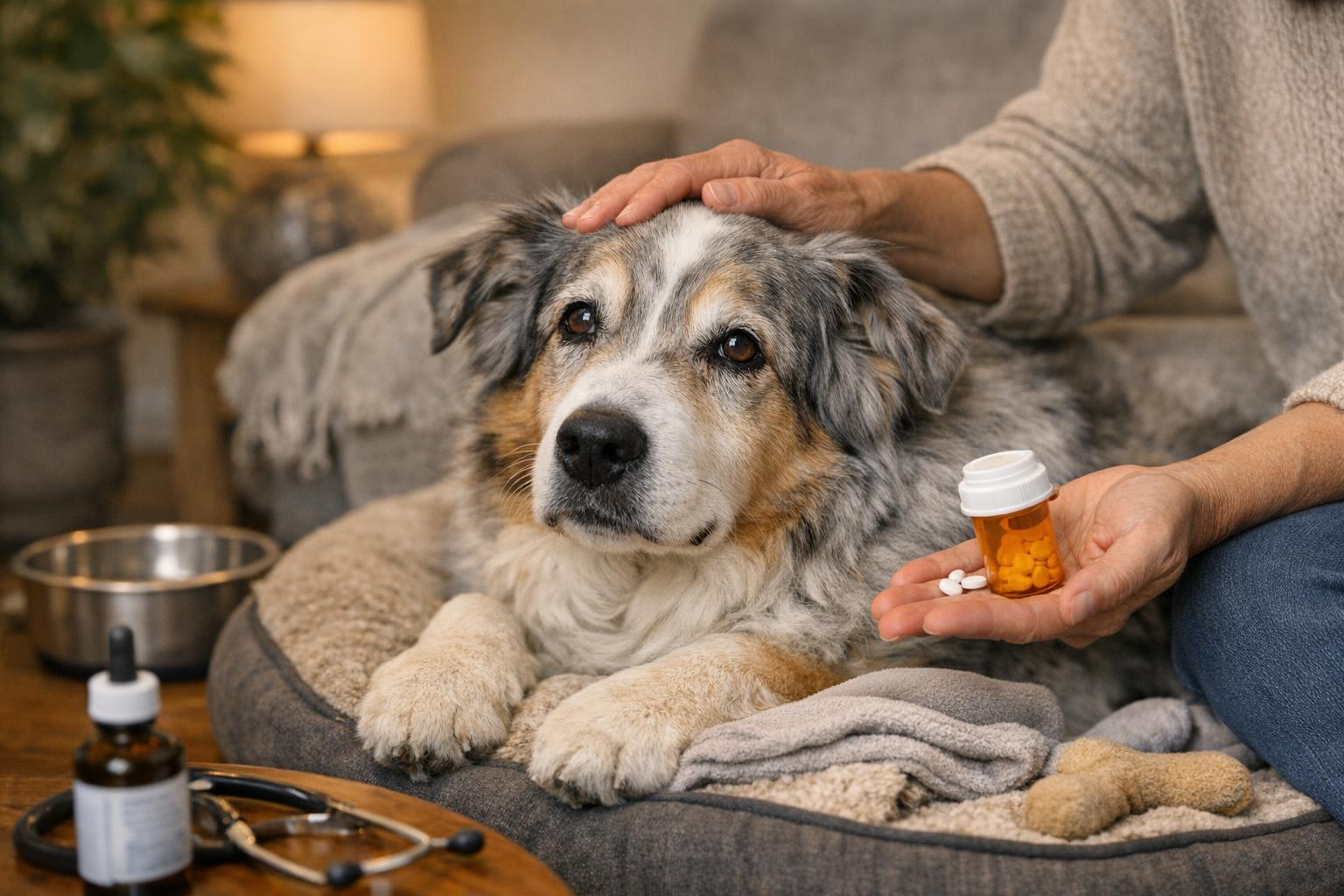
## Remedy 4: Natural Supplements And Vet Guidance
#### Materials / Ingredients
– Melatonin (vet-recommended dosage)
– L-theanine supplements formulated for canines
– Fish oil (omega-3) for general brain health
– Veterinary-prescribed anxiolytics if indicated
#### Creation And Application Steps
1. Consult your veterinarian before starting any supplement or medication; dosage ranges vary by weight and health status.
2. If approved, introduce one supplement at a time to monitor effects and tolerance.
3. Administer supplements consistently according to the schedule recommended by your vet. Keep a medication log.
4. For severe anxiety unresponsive to behavioral and environmental interventions, discuss prescription options and short-term use during storm seasons.
5. Reassess regularly with your veterinarian to optimize dosing and check for interactions or side effects.
Clinical supervision ensures safe, effective use of supplements and medications as part of a comprehensive plan.
### When To Seek Professional Help
If your dog is terrified of thunder to the extent of self-harm, extreme destructive behavior, or complete shutdown, consult your veterinarian or a certified professional behaviorist promptly. Professional intervention can include behavior modification, medication, or both, tailored to your dog’s needs.
### Quick Emergency Soothing Steps
If you find yourself mid-storm and your dog is terrified of thunder:
– Move to a small windowless room.
– Put on calming music and a pressure wrap.
– Offer a long-lasting chew and stay calm yourself.
– Avoid forcing the dog to interact; let them choose proximity.
If the dog’s response is worsening or medical signs appear (vomiting, collapse), seek urgent veterinary care.
If you try these approaches and still find limited improvement, a combined plan of behavior modification plus veterinary-prescribed support often gives the best results for dogs whose fear is severe or longstanding.


























Leave a Reply