




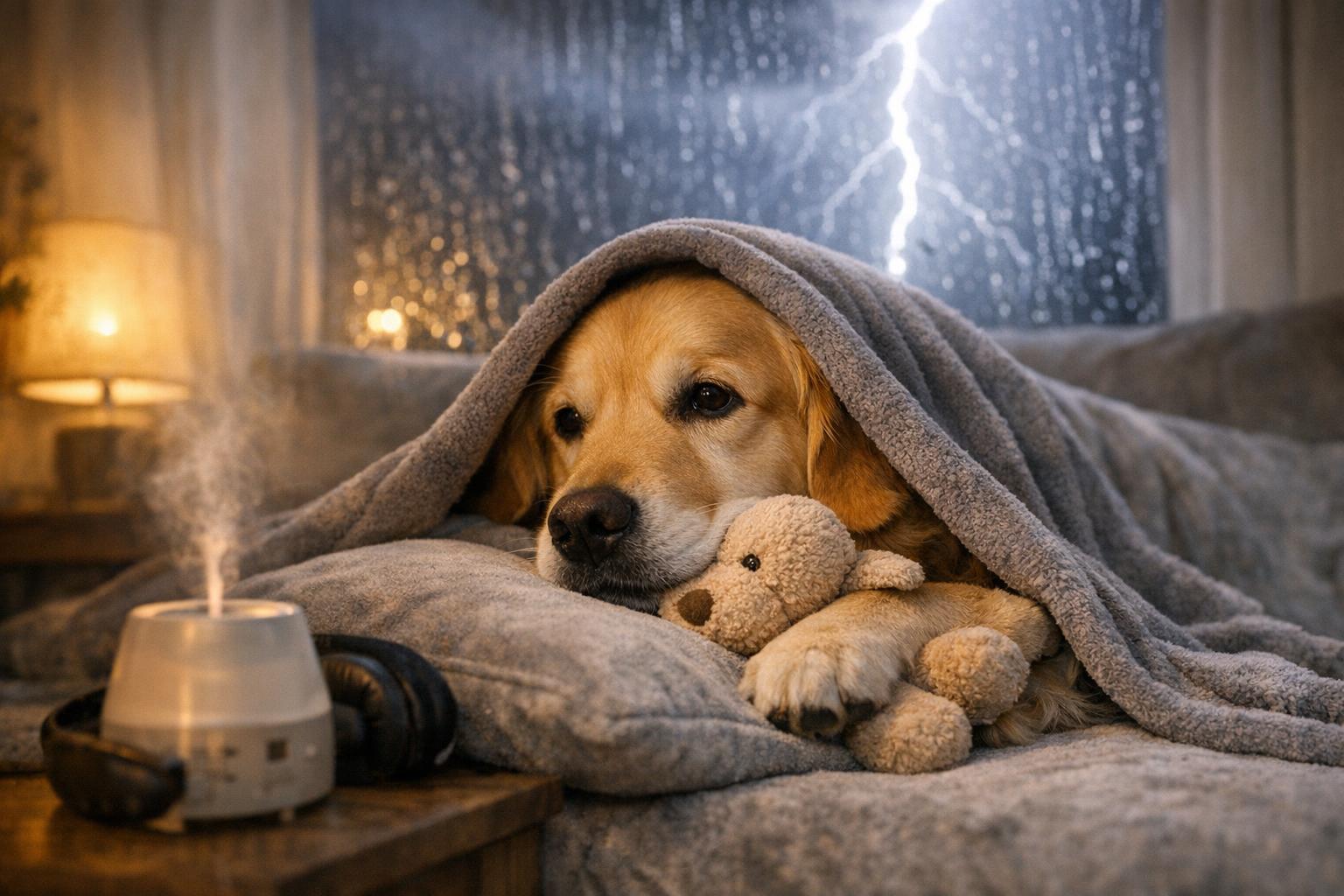
Many dogs experience acute stress during sudden or persistent loud sounds; such responses—commonly labeled noise anxiety—can impair quality of life for both animals and owners. This article examines behavioral signs, assessment principles, and three evidence-informed home remedies that can reduce reactivity to sound. Each remedy includes required materials and a formal, stepwise protocol for preparation and application. Veterinary consultation is advised when symptoms are severe or when medication may be necessary.
## Signs And Assessment Of Noise Anxiety
Accurate recognition of noise anxiety is the first step in a structured plan. Differentiating normal startle responses from persistent anxiety guides whether home interventions are appropriate.
### Behavioral Indicators
Typical behavioral indicators of noise anxiety include:
– Sustained trembling, panting, pacing, or attempts to escape during and after exposure to loud sounds.
– Vocalization (barking, whining) that is prolonged and disproportionate to the stimulus.
– Destructive behaviors directed at exits, doors, windows, or crates.
– Avoidance behaviors and increased clinginess or withdrawal following noise events.
Documentation of episodes—time, duration, environmental conditions, and specific noises—assists with pattern recognition and later desensitization work.
### Medical Considerations
Medical causes and comorbidities may mimic or exacerbate noise anxiety. A formal veterinary examination should rule out hearing loss, pain, endocrine imbalances, or neurologic conditions. If pharmacologic support is under consideration, diagnosis and dosing must be determined by a veterinarian. Home interventions described herein are adjunctive measures and not replacements for professional medical advice when needed.
## 1. Counterconditioning And Desensitization
Counterconditioning and desensitization constitute a foundational behavioral remedy for noise anxiety. The objective is to reduce fear through incremental exposure paired with positive outcomes, thereby changing the dog’s emotional response to triggering sounds.
### Materials Required
– A collection of recorded sounds (low-volume, representative of triggers).
– High-quality speakers or headphones designed for gradual volume control.
– High-value food rewards (small, soft treats).
– A quiet, controlled room with minimal visual distractions.
– Timer and notebook for session logging.
### Step-By-Step Protocol
1. Baseline Assessment: Determine the lowest sound level at which the dog exhibits mild attention but not stress. Use recorded samples of the offending noise played at very low volume.
2. Create a Reward Contingency: Immediately pair the low-level sound with a consistently desirable reward. For example, present a treat within 1–2 seconds of sound onset.
3. Establish Short, Frequent Sessions: Conduct multiple short sessions per day (5–10 minutes each) to avoid fatigue or sensitization. Record responses after each session.
4. Gradual Intensity Increase: When the dog reliably accepts the sound at a given volume without stress for several consecutive sessions, increase volume by a small increment (5–10%). Continue pairing with rewards.
5. Vary Contexts and Timing: Once progress occurs in one environment, introduce other controlled settings and different times of day to generalize the response.
6. Introduce Real-World Elements: After tolerance is established with recordings, simulate more realistic conditions (e.g., slight physical movements, doors closing) while maintaining positive reinforcement.
7. Maintain and Monitor: Continue periodic reinforcement to preserve progress. If regression occurs, reduce intensity and rebuild gradually.
Progress will vary by individual; some dogs require weeks to months. The process should be halted or reduced if signs of escalation appear, and veterinary behavior consultation sought as necessary.
## 2. Calming Aromatherapy For Noise Anxiety
Calming aromatherapy can be an adjunctive home remedy to mitigate physiological arousal associated with noise anxiety. When used conservatively and with veterinary approval, select botanicals may contribute to a calmer environment during predictable noise events.
### Materials Required
– High-quality Lavandula angustifolia (true lavender) essential oil—only if cleared by a veterinarian.
– Distilled water.
– Unscented vegetable glycerin or witch hazel (as an emulsifier).
– Clean 100–200 ml spray bottle with a fine mist nozzle.
– Optional: ultrasonic diffuser (used intermittently, not continuously).
Note: Some essential oils are toxic to dogs. Avoid pine, tea tree (Melaleuca), eucalyptus, and other known toxic oils. Always confirm suitability with a veterinarian and perform a small environmental test before regular use.
### Step-By-Step Creation And Application
1. Veterinary Clearance: Obtain explicit approval from a veterinarian to use lavender or any botanical product, particularly for brachycephalic breeds, puppies, pregnant or nursing animals, or pets with respiratory disease.
2. Preparation of Spray: Combine 100 ml distilled water with 5 ml (approximately 1 teaspoon) vegetable glycerin in the spray bottle to aid dispersal. Add one drop of true lavender essential oil. Cap and invert gently to mix. Label with contents and date.
3. Environmental Test: Prior to use around the dog, spray once at arm’s length and observe for 10–15 minutes for any aversive reaction in the room’s occupants, including the dog.
4. Application Protocol: If no adverse reaction occurs, mist the air in the room peripheral to the dog’s location—avoid direct sprays onto the dog, bedding, or food. Use sparingly: 1–2 sprays at onset of noisy events and no more than once every 2–3 hours.
5. Diffuser Use: If employing an ultrasonic diffuser, operate it intermittently (15–30 minutes) and in a well-ventilated space. Place the diffuser away from the dog’s head and sleeping area.
6. Monitor Response: Observe respiratory rate, behavior, and appetite. Discontinue immediately if any signs of distress, drooling, coughing, lethargy, or skin irritation occur.
Formulations with hydrosols (e.g., chamomile water) offer an alternative with reduced risk and may be preferable where essential oils are contraindicated.
## 3. Pressure Wraps And Safe Space Management
Physical support and environmental modification are pragmatic measures that reduce perceived threat and promote autonomic regulation in dogs with noise anxiety.
### Materials Required
– Commercial pressure garment (e.g., ThunderShirt) sized appropriately, or a long, snug-fitting cotton wrap.
– Secure crate or dedicated den-like area with bedding and familiar items.
– Sound-dampening materials (heavy curtains, rugs, acoustic panels optional).
– Soft music or white-noise source to mask transient noises.
### Step-By-Step Application And Conditioning
1. Selection And Fitting: Choose a pressure garment designed for canine use, or fashion a snug cotton wrap. Ensure fit is firm but not constrictive—two fingers should slide between garment and skin easily.
2. Positive Association Training: Introduce the garment during neutral times. Reward the dog for voluntary approach, then for brief wearing sessions. Increase duration gradually while maintaining calm activities and rewards.
3. Create A Safe Space: Establish a den-like area with the dog’s bed, toys, and clothing carrying the owner’s scent. Place this space away from windows where exterior noises are more prominent.
4. Soundproofing Measures: Add heavy curtains and rugs to the room to reduce reverberation. Where feasible, close windows and operate gentle masking sound sources (soft classical music or low-level white noise) to buffer transient loud events.
5. Use During Noise Events: When a predictable noise event (e.g., fireworks, thunderstorms) is anticipated, fit the pressure wrap and guide the dog to the safe space. Remain present if practical and use calm, neutral reassurance rather than excited consolations which can reinforce anxious behavior.
6. Reinforcement And Review: After the noise event, provide reward and quiet time in the safe space. Log effectiveness and adjust garment fit, location, or masking sound based on observed comfort.
### Monitoring And When To Seek Veterinary Assessment
Ongoing evaluation is necessary. If the dog displays escalation (self-injury, severe escape attempts, prolonged dysfunction) despite consistent home interventions, refer to a veterinary behaviorist for assessment of pharmacologic adjuncts or intensive behavioral therapy. Persistent respiratory signs, skin reactions, or other medical concerns warrant immediate veterinary evaluation.
Please perform all interventions with attention to animal welfare, and consult a licensed veterinarian before initiating aromatherapy products or if there is any doubt regarding underlying medical conditions.









Leave a Reply