



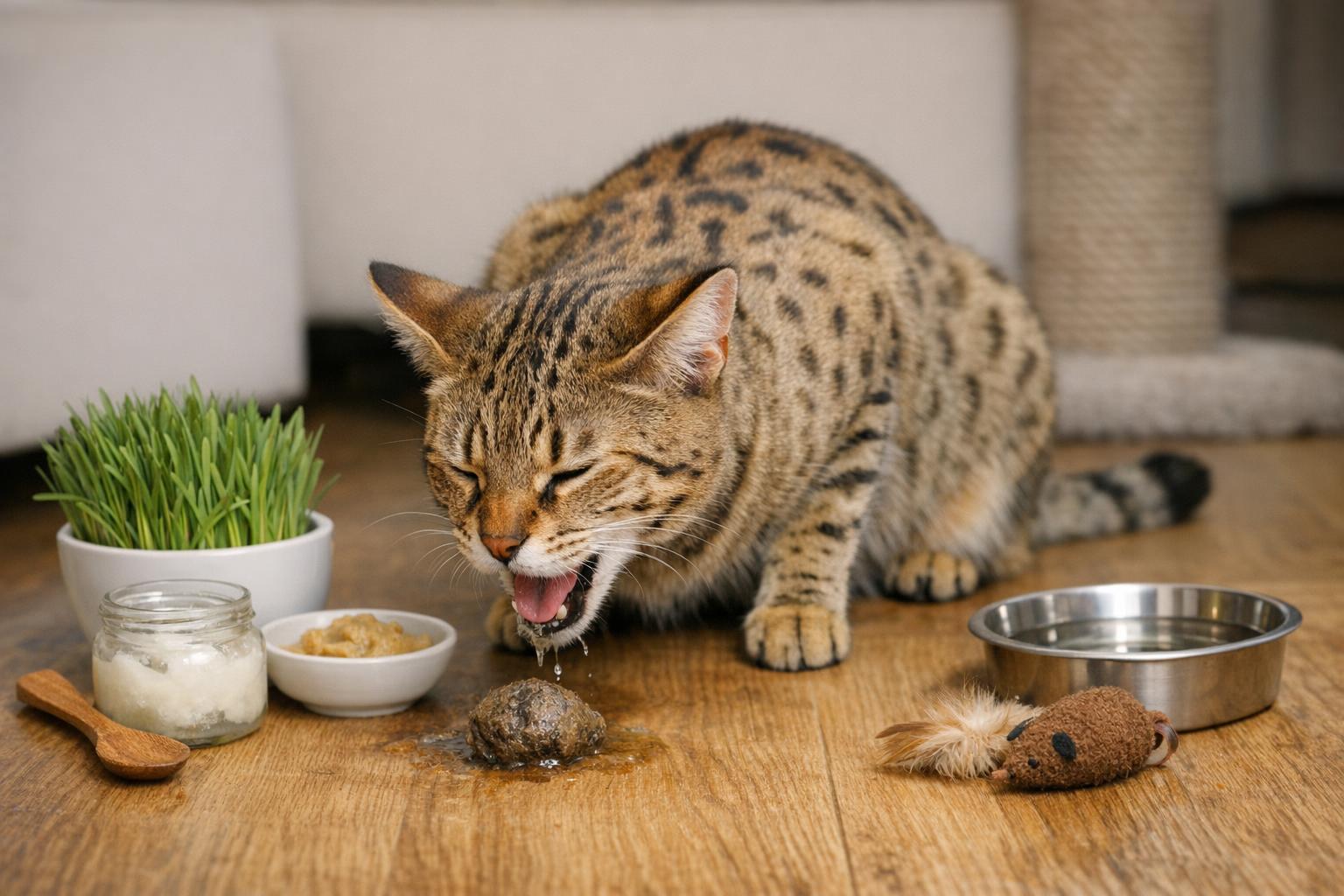
Hello there — if your whiskered roommate has been hacking and you’re worrying about crunchy camouflaged tumbleweeds on the rug, you’ve come to the right place. This article walks through safe, vet-friendly home remedies and practical care for when a cat coughing up hairball becomes a recurring (and frankly, gross) event. Friendly, sensible, and with just a pinch of humor — because someone has to laugh when a purring sock-launcher hacks up a fur torpedo.
## Hairball Support: Cat Coughing Up Hairball Home Remedies
### Why Cats Cough Up Hairballs
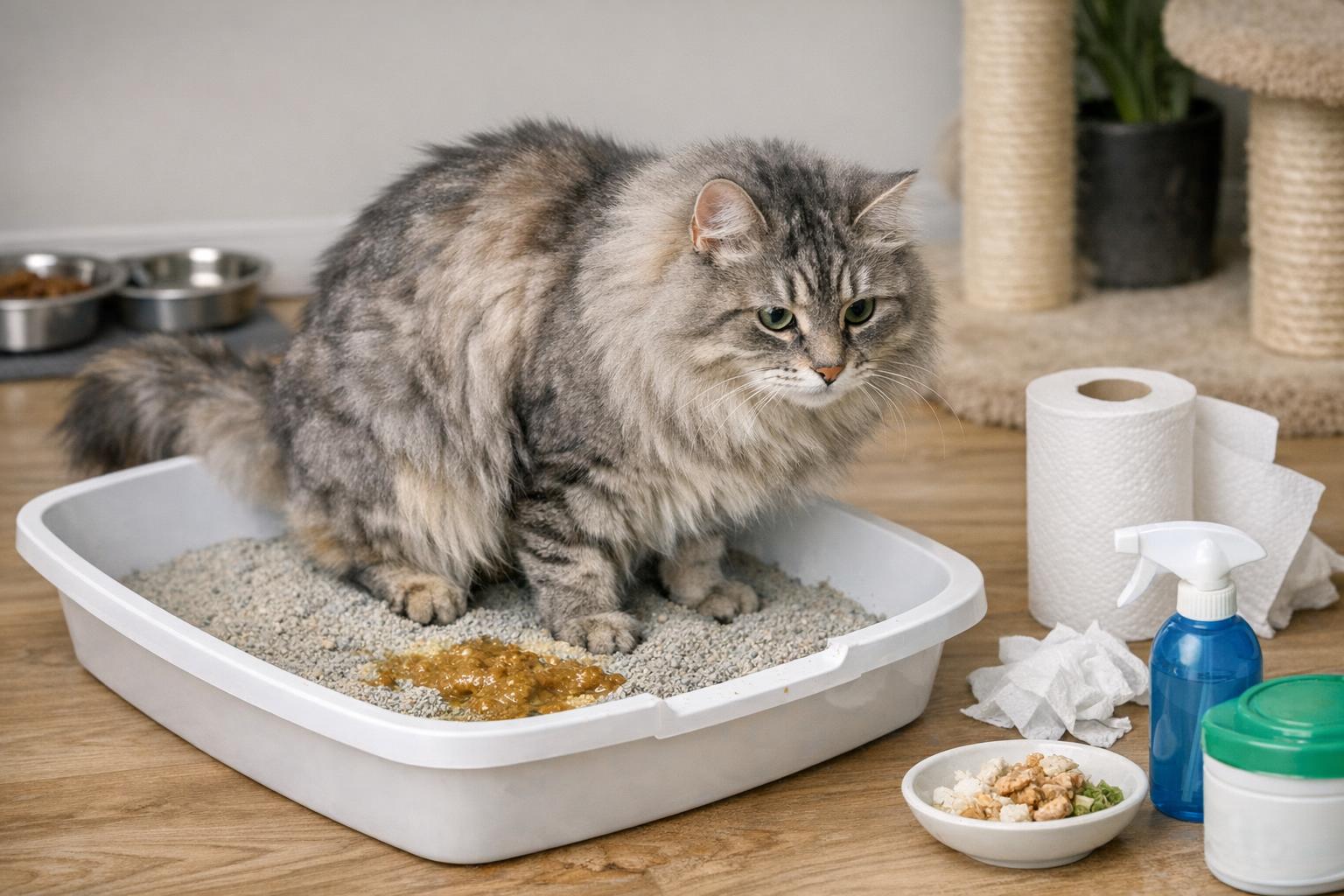
Cats groom themselves constantly, and loose hair travels from tongue to stomach. Most hair passes through the digestive tract, but some collects and forms a hairball that the cat eventually regurgitates. Seeing your cat coughing up hairball now and then is normal, but frequent episodes or signs of distress are not.
When you notice a cat coughing up hairball, consider these common factors:
– Long or thick coats shed more loose fur.
– Heavy seasonal shedding increases hair intake.
– Over-grooming due to stress or skin problems.
– Digestive motility issues that slow hair passage.
If the episode includes repeated gagging, lethargy, loss of appetite, vomiting unrelated to hairballs, or constipation, contact your veterinarian promptly.
## Cat Coughing Up Hairball: When To Seek Veterinary Care
### Signs That This Is More Than A Hairball
If you’re seeing a cat coughing up hairball and any of the following appear, it’s time for a vet visit:
– Persistent retching with no hair expelled
– No appetite for 24 hours or more
– Vomiting that contains food or bile repeatedly
– Significant changes in litter box habits (straining, diarrhea, no stool)
– Rapid breathing, drooling, or obvious pain
### Diagnostic Steps Your Vet May Take
Your vet may perform a physical exam, abdominal palpation, X-rays, ultrasound, or blood work to rule out obstructions, foreign bodies, or metabolic issues. Don’t delay — a suspected obstruction can become an emergency quickly.
## 1. Remedy: Canned Pumpkin Fiber Boost
Formal, Veterinary-Friendly Instructions
Ingredients/Materials
– Plain canned pumpkin (100% pumpkin, no spices or pie filling)
– Measuring spoon
– Cat’s regular food bowl
Why This Helps
Pumpkin is high in soluble fiber and helps bulk and lubricate the passage of ingested hair through the gut. It’s a gentle, safe option widely recommended by vets.
Step-by-Step Creation and Application
1. Measure Dose: For small cats (under 8 lbs) start with 1/4 teaspoon once daily. For average adult cats (8–12 lbs) give 1/2 teaspoon once daily. For larger cats up to 1 teaspoon once daily. Start low and observe.
2. Mix: Blend the pumpkin into your cat’s wet food or on top of dry kibble. Ensure the pumpkin is evenly distributed so your cat eats it all.
3. Monitor: Use daily for up to 7–14 days if hairball events recur. If helpful, continue intermittently as a preventive measure.
4. Adjust: If loose stools develop, reduce the dose by half. If constipation persists, stop and consult your vet.
Notes: Use only plain canned pumpkin. Pumpkin pie filling contains sugars and spices unsafe for cats.
## 2. Remedy: Edible Oil Lubrication (Olive Or Coconut)
Formal, Precise Dosage And Administration
Ingredients/Materials
– Extra virgin olive oil or food-grade coconut oil
– Measuring spoons
– Syringe without needle (optional, for picky eaters)
– Small bowl
Why This Helps
A tiny amount of edible oil can help lubricate the hairball and assist passage. This is a short-term aid, not a long-term solution. Use conservative doses — oils are calorically dense and can cause diarrhea if overused.
Step-by-Step Creation and Application
1. Choose Oil: Pick plain extra virgin olive oil or melted coconut oil (no additives).
2. Dose Carefully: For most adult cats, 1/4 teaspoon per dose is safe; for larger cats up to 1/2 teaspoon. For kittens or very small cats, use 1/8 teaspoon or consult your vet.
3. Administer:
a. Mix the oil into wet food or a small amount of favorite wet treat.
b. If your cat refuses, draw the dose into a syringe and place it gently at the side of the mouth, allowing them to swallow.
4. Frequency: Use once; if hairball issues continue, repeat once after 48 hours. Do not use daily for more than a week without vet guidance.
5. Monitor: Watch for loose stools. If diarrhea occurs, stop the oil and consult your vet.
Warning: Never use mineral oils or unapproved lubricants intended for human plumbing — edible oils only.
## 3. Remedy: Grooming Routine + Hydration Plan
Formal Grooming Protocol And Hydration Steps
Materials Needed
– Soft slicker brush or de-shedding tool (size appropriate)
– Water fountain (optional but recommended)
– Grooming wipes for sensitive areas
– Treats for positive reinforcement
Why This Helps
Removing loose fur before ingestion is the safest long-term strategy. Adequate hydration keeps stool softer and helps hair pass through the digestive tract.
Step-by-Step Creation and Application
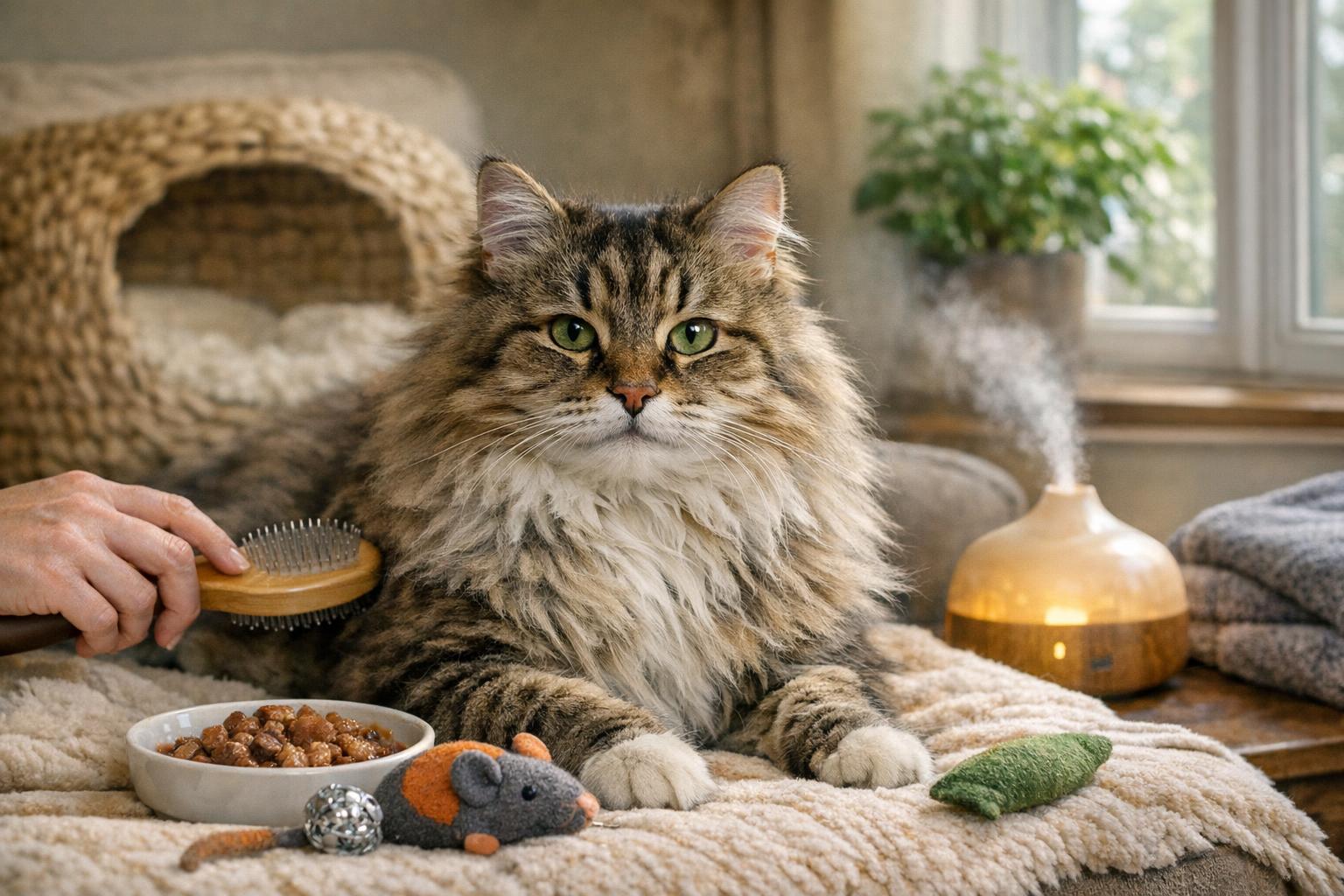
1. Establish Routine: Brush short-haired cats 2–3 times weekly, long-haired cats daily. Sessions can be 3–10 minutes depending on tolerance.
2. Use Proper Tools: Slicker brushes or rubber curry brushes work well. For heavy shedders, a de-shedding tool reduces undercoat.
3. Reward: Give a small treat or cuddle after grooming to build a positive association.
4. Hydration: Provide fresh water constantly. Consider a pet fountain — flowing water encourages drinking.
5. Wet Food Rotation: Incorporate wet food meals 3–4 times per week to increase moisture intake; this supports gut motility.
6. Monitor Coat Condition: If you notice excessive matting or bare patches, consult your vet for possible dermatologic or behavioral causes.
## Dietary Support And Over-The-Counter Options
### Safe Supplements And Commercial Pastes
When a cat coughing up hairball becomes annoying, commercial hairball pastes (malt-based) are effective and formulated to be palatable and safe. Probiotic supplements designed for cats can improve digestion and stool quality, helping hair move along.
Dosage and Use
Always follow product labels and preferentially choose veterinary-recommended brands. Start with the smallest recommended dose and watch for tolerance.
### Foods Designed For Hairball Control
Some dry and wet cat foods are formulated with extra fiber and controlled fat to reduce hairball formation. Transition slowly over 7–10 days, mixing increasing proportions of the new food to avoid digestive upset.
## Behavioral And Environmental Tips To Reduce Hairball Frequency
### Reduce Stress Grooming
Cats sometimes over-groom due to boredom or anxiety. Increase interactive play sessions (10–15 minutes twice daily), provide vertical spaces and hiding spots, and rotate toys to reduce stress-related grooming.
### Keep The Home Fur-Minimized
Regular vacuuming, using lint rollers, and maintaining a clean environment reduces the amount of loose fur available for your cat to ingest.
## When Home Remedies Aren’t Enough
If your cat coughing up hairball persists despite the above measures, or if episodes escalate in frequency or severity, schedule an appointment with a veterinarian. They can assess for:
– Gastrointestinal obstruction
– Thyroid disease
– Parasites
– Skin conditions that lead to over-grooming
Vets may recommend diagnostic imaging, prescription diets, or medicated treatments if an underlying issue is found.
### Emergency Signs
Take your cat to an emergency clinic if you see:
– Repeated retching with no expulsion
– Severe lethargy or collapse
– Visible distress or severe abdominal pain
You’re doing the right thing by learning how to help. A few small, safe changes at home — plus a quick consult with your vet if things feel off — will usually get both you and your cat back to normal, hairballs included.











Leave a Reply