






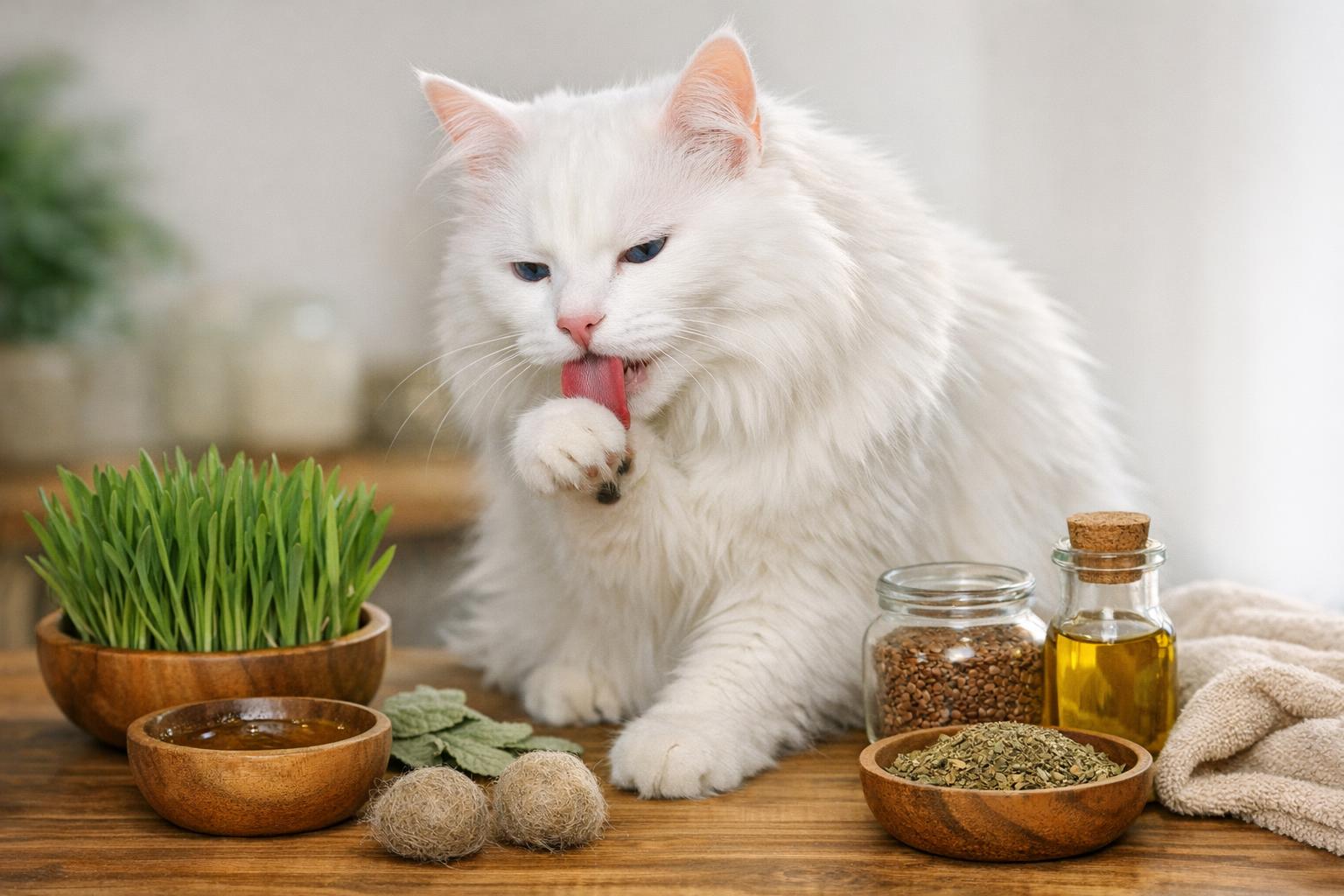
Cats and hairballs are a classic combo: your lap, a purr, and then a magnificent little fur torpedo. If you’d rather avoid the surprise projectile, or if your kitty seems uncomfortable, there are gentle ways to help without a vet visit for every sneeze. Below you’ll find safe, natural approaches and clear, step-by-step remedies for hairball treatment for cats that you can try at home.
## Why Hairballs Happen And When To Worry
Most cats groom obsessively, which is adorable until it isn’t. When cats lick themselves, loose fur gets stuck in their tongue and swallowed. Normally it passes through the gut, but sometimes it forms a ball that the cat retches up. Occasional hairballs are normal; frequent vomiting, lethargy, loss of appetite, or constipation means see your veterinarian.
### Signs Your Cat Needs Extra Help
– Repeated retching with little to nothing produced.
– Constipation or painful abdomen.
– Lack of appetite or changes in behavior.
– Lethargy or signs of dehydration.
### Prevention Beats Panic
Regular brushing, a fiber-rich diet, and hydration are the simplest, most effective ways to reduce hairball frequency. Targeted hairball treatment for cats should be gentle and safe, especially for older cats or those with digestive issues.
## 1. Hairball Treatment For Cats — Pumpkin Puree (Gentle Laxative)
Pumpkin isn’t just for pies; plain canned pumpkin is a mild, natural fiber source that can help move fur through the digestive tract.
#### Ingredients/Materials
– 100% plain canned pumpkin (no spices, no pie filling)
– Measuring spoon
– Small bowl
#### Step-By-Step Creation And Application
1. Measure the Dose: For adult cats, start with 1/2 teaspoon once to twice daily. For kittens under 6 months, use 1/4 teaspoon once daily. Adjust gradually under observation.
2. Mix With Food: Stir the pumpkin into wet food or a small portion of kibble moistened with water. Make sure it’s blended so your cat doesn’t pick around it.
3. Monitor: Watch stool consistency and frequency for several days. Pumpkin should soften and increase stool bulk; reduce if loose stool occurs.
4. Duration: Use for short-term support (up to 7–10 days) unless your vet advises longer-term use.
Notes: Pumpkin adds soluble and insoluble fiber and is low risk. Avoid pumpkin pie filling or anything with added sugars.
## 2. Olive Oil Or Fish Oil Lubrication (Use With Caution)
Oils can sometimes help hair pass more easily, but misuse can cause loose stools or hide underlying problems. When used carefully, a small amount can be effective.
#### Ingredients/Materials
– High-quality extra virgin olive oil or veterinary-formulated fish oil supplement
– Measuring spoon
– Small dish
#### Step-By-Step Creation And Application
1. Choose the Right Oil: Use plain extra virgin olive oil or a fish oil supplement made for pets. Do not use seasoned oils or mineral oil unless directed by a vet.
2. Dose Carefully: Give 1/4 teaspoon for small cats and 1/2 teaspoon for larger cats once daily, mixed into food.
3. Observe For Side Effects: If you see diarrhea, vomiting, or signs of distress, stop immediately and consult your vet.
4. Short-Term Use Only: Oils are a temporary aid. Overuse can lead to nutritional imbalances or chronic loose stools.
Important: Never force-feed oil; always mix into food. If your cat has pancreatitis, liver disease, or is overweight, consult your veterinarian before using oils.
## 3. Regular Grooming Routine And Dietary Adjustments
This one’s less “home remedy” and more “smart maintenance.” Proper grooming and dietary tweaks are foundation-level hairball management.
### Ingredients/Materials
– Slicker brush or grooming glove
– Cat-specific hairball control wet food or high-fiber dry food (veterinary-recommended if possible)
– Water fountain (optional but helpful)
### Step-By-Step Routine
1. Brush Regularly: For long-haired cats, brush daily. Short-haired cats benefit from brushing 2–3 times per week. Gentle strokes and praise make grooming a bonding time.
2. Introduce Hairball Formula Food: Swap in hairball control formulas gradually over 7–10 days. These diets often include extra fiber to help move fur through the gut.
3. Increase Hydration: Use a pet water fountain or add small amounts of water to dry food to keep stools soft.
4. Monitor Results: Track frequency of hairballs and stool quality. If no improvement after 4–6 weeks, consult your vet for alternative strategies.
### When Grooming Isn’t Enough
If your cat grooms excessively due to stress, allergies, or skin conditions, hairballs may persist. Addressing the underlying cause (Feliway diffusers for anxiety, flea control, skin care) often reduces hairball incidents.
## Natural Cat-Safe Supplements And How To Use Them
There are over-the-counter products and natural supplements that target hairball issues. Use only pet-specific products and follow label instructions or vet guidance.
### Common Options
– Malt-Based Pastes: These are lubricants and palatable treats that many cats take willingly. Use as directed on the package.
– Fiber Supplements: Psyllium husk or powdered fiber can be added in tiny amounts to food, but check with your vet for correct dosing.
– Probiotics: A healthy gut can move material more efficiently. Choose feline formulations.
### Administration Best Practices
– Introduce new supplements slowly and one at a time.
– Keep a log of what you try and how your cat responds.
– Avoid human laxatives or medications unless prescribed by a veterinarian.
## Home Environment Tips To Reduce Hairball Incidents
Small changes around the house can make grooming less necessary and reduce swallowed hair.
### Enrichment And Stress Reduction
– Provide interactive toys and climbing spaces to reduce stress grooming.
– Rotate toys to keep interest high.
– Use pheromone diffusers or calming supplements if anxiety seems to trigger over-grooming.
### Seasonal Considerations
During shedding season, increase brushing frequency and consider a light dietary tweak to support coat and skin health.
## When To Call The Vet Immediately
Some signs suggest a true medical emergency, not a situation for at-home hairball treatment for cats.
### Emergency Signs
– Not producing stools for 24–48 hours.
– Persistent vomiting with weakness or collapse.
– Visible abdominal pain, swelling, or severe distress.
– Blood in vomit or stool.
### Diagnostics Your Vet May Do
– Abdominal X-rays or ultrasound to detect blockages.
– Bloodwork to rule out metabolic issues.
– Fecal exams for parasites that can complicate digestion.
## A Few Safety Notes And Common Myths
– Myth: Mineral oil is always safe. Reality: Mineral oil can be aspirated and lead to pneumonia; only use veterinary-recommended products.
– Myth: More oil equals faster results. Reality: Excess oil causes diarrhea and masks problems.
– Myth: All fiber is equal. Reality: Different fibers act differently; use cat-appropriate sources like canned pumpkin or vet-approved supplements.
### Final Practical Tips
– Keep a small notebook of your cat’s bathroom habits and any remedies tried.
– Always give new foods or supplements in small test amounts over several days.
– Be gentle and patient with grooming; positive reinforcement works wonders.
Now you’ve got a toolkit of safe, practical, and natural approaches for hairball treatment for cats. Try the mild pumpkin route or carefully dosed oils if needed, maintain a consistent grooming and hydration routine, and consult your vet for persistent or severe problems. Your cat (and your sofa) will thank you.





























































Leave a Reply