






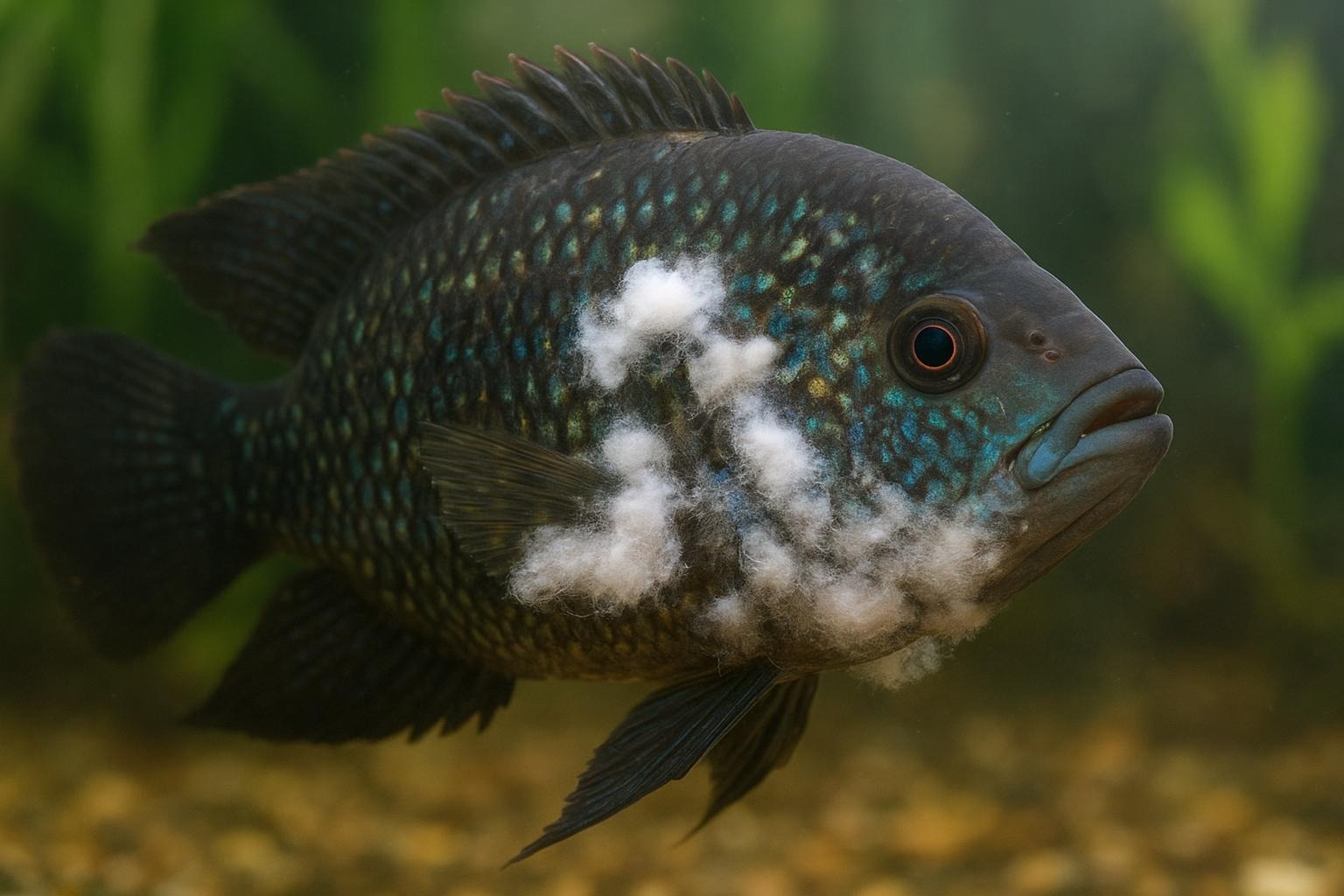
## Recognizing Fish With Cotton Wool Disease
If you’ve ever peered into your tank and spotted what looks like tufts of cotton clinging to fins or the body of one of your fish, you may be facing a classic fungal problem. Fish with cotton wool disease typically show white, fluffy growths that can appear almost like moldy cotton candy stuck to the skin. Beyond the visual, affected fish may hide more, breathe faster, lose appetite, or scratch against decorations. Don’t panic — it’s common, usually treatable, and often a sign that something in the aquarium environment needs attention (or that your fish got nicked during a scuffle).
### What Cotton Wool Disease Actually Is
Cotton wool disease is most often caused by freshwater fungi in the genus Saprolegnia. These opportunistic organisms take advantage of damaged skin, poor water quality, or weakened immunity. Unlike some bacterial infections that can look similar, fungal tufts are typically more cottony, filamentous and white or grey — whereas some bacterial infections (like Columnaris) can appear brownish or ulcerative and feel slimy.
### Who’s At Risk
Young fish, newly acquired fish, and those recovering from injuries or parasitic treatments are particularly vulnerable. Overcrowding, sudden temperature swings, high ammonia or nitrite, and abrasive décor increase the odds that you’ll see a case of fish with cotton wool disease.
## Causes And Risk Factors
### Water Quality Issues
Dirty water is fungal growth’s invitation letter. High ammonia or nitrite, elevated organic waste, and low oxygen all stress fish and erode their natural defenses.
### Physical Damage And Stress
Fights, sharp ornaments, and rough handling during netting can cause skin breaks. Those tiny wounds are where fungi love to set up camp.
### Poor Quarantine Practices
Bringing new fish home without a quarantine tank increases the risk of introducing spores to a healthy community tank. That’s why many experienced keepers quarantine newcomers for two weeks.
## Remedy 1: Quarantine, Water Correction And Salt Treatment
When treating fish with cotton wool disease, the first practical move is to isolate the affected individual and fix the environment. This remedy focuses on basic, effective aquarium medicine.
#### Ingredients / Required Materials
– Dedicated quarantine (treatment) tank with heater and sponge filter
– Dechlorinated water at the same temperature and pH as the main tank
– Aquarium salt (not table salt; explicitly labeled aquarium or marine salt)
– Water test kit (ammonia, nitrite, nitrate, pH)
– Net and clean towel
– Aeration (air stone or sponge filter)
– Commercial antifungal product (e.g., methylene blue or a labeled aquarium fungicide) — optional but recommended if available
#### Step-By-Step Creation And Application
1. Prepare The Quarantine Tank: Fill the QT tank with dechlorinated water matched to the main tank’s temperature and pH. Run the filter and aerator to stabilize oxygen levels.
2. Transfer The Fish Gently: Use a soft net or container to move the affected fish. Minimize stress and avoid scraping the lesions.
3. Dose Aquarium Salt: Add aquarium salt at a therapeutic concentration of 1 tablespoon (about 15–18 g) per 5 US gallons (19 L). This is a commonly used general-purpose dose to inhibit many fungi and protozoans. Note: aquarium salt can stress or kill invertebrates and some live plants; use only in a fish-only QT.
4. Test And Correct Water: Ensure ammonia and nitrite are zero. If not, perform partial water changes and address the source of waste. Maintain stable temperature (no sudden swings) and good oxygenation.
5. Consider A Commercial Antifungal: If you have a reputable aquarium antifungal (follow the product label exactly), add according to directions. Methylene blue can be helpful in many fungal infections; dosages vary by product.
6. Daily Water Maintenance: Perform 20–30% water changes daily, re-dose the salt proportionally after each change, and monitor the fish closely for improvement over 3–7 days.
7. Continue Treatment Until Clear: Maintain the regimen until all fuzzy growths disappear and the fish is eating and behaving normally for several consecutive days.
Be formal and precise here: follow product labels for any medicated treatments, monitor water chemistry daily, and do not mix treatments unless directed by a vet or product manufacturer.
## Remedy 2: Targeted Hydrogen Peroxide Spot Treatment And Medicated Baths
If the infection is localized and you want a more targeted approach, this remedy offers a focused option. Use this carefully and only in a quarantine tank.
#### Ingredients / Required Materials
– 3% hydrogen peroxide (store-bought, pharmacy grade)
– Small treatment container (bucket or bowl) with dechlorinated water at tank temperature
– Disposable syringe or pipette (1–5 ml)
– Timer or watch
– Sponge filter or gentle aeration in the quarantine tank
– Protective gloves and eye protection
#### Step-By-Step Creation And Application
1. Prepare A Calm Treatment Area: Set up the small treatment container with dechlorinated water at the same temperature as the QT tank. Fill a second small bowl with plain QT water for rinsing if needed.
2. Spot Treatment With 3% H2O2: Draw a small amount of 3% hydrogen peroxide into the syringe. Gently restrain the fish in a wet hand or position it in a narrow container so you can access the lesion. Apply one or two drops of 3% H2O2 directly onto the cottony area. You should see gentle bubbling as the peroxide reacts — this helps remove fungal hyphae and debris.
3. Observe For Adverse Reaction: If the fish shows severe stress, rinse immediately in the rinsing bowl and return to the QT. If the reaction is mild and the fish recovers in minutes, repeat once daily for up to three days.
4. Consider Short Baths Only If Experienced: Short peroxide baths can be effective but require exact timing and concentration; they carry more risk and should only be done by keepers familiar with the process or guided by a veterinarian.
5. Follow Up With Salt And Medicated QT: After spot treatments, continue the quarantine salt regimen (see Remedy 1) and consider adding a commercial antifungal if no improvement is seen.
Formality note: hydrogen peroxide is effective as a topical antiseptic, but misdosing can harm delicate fish tissue. Use only 3% solutions and apply carefully. If unsure, stop and consult an aquatic veterinarian.
### Safety And Contraindications
– Never use aquarium salt-based treatments in tanks with snails, shrimp, or many live plants — they’re sensitive to even low salinity changes.
– Malachite green is effective but banned for food fish in many jurisdictions and can be toxic to invertebrates. Use only approved products and follow labels.
– Avoid mixing peroxide with other medications in the same water; reactions can reduce effectiveness or create harmful byproducts.
## When To Call A Vet Or Seek Advanced Treatment
If your fish with cotton wool disease shows rapid deterioration (lethargy, heavy breathing, ulcers, refusing food) or multiple fish are affected despite treatment, seek professional help. An aquatic vet can prescribe systemic antifungals, perform cultures to confirm the pathogen, and advise on best medicated approaches. Some severe cases need formalin-based or specialized treatments only a vet should supervise.
### Aftercare And Monitoring
After visible recovery, keep the recovered fish in quarantine for several days to ensure the fungus doesn’t recur. Strengthen long-term defenses with stable water parameters, a high-quality varied diet, and reduced crowding. If your community tank had a case of fish with cotton wool disease, consider preventive measures for the whole system: check filtration, improve water changes schedule, and quarantine new arrivals in the future.
## Practical Prevention Tips
– Quarantine new fish for at least two weeks.
– Keep water chemistry stable and perform routine testing.
– Avoid rough décor and use nets gently.
– Feed a balanced diet to support immune health.
– Don’t overmedicate; monitor and treat only as needed.
A little vigilance goes a long way. Spotting a case of fish with cotton wool disease early and acting calmly — isolating the fish, correcting water quality, and using targeted treatments — gives you a great chance of sending those fuzzy filaments packing. And if you need to laugh about it, remember: the fungus is a coward; it retreats once you take away its buffet.





























































Leave a Reply