






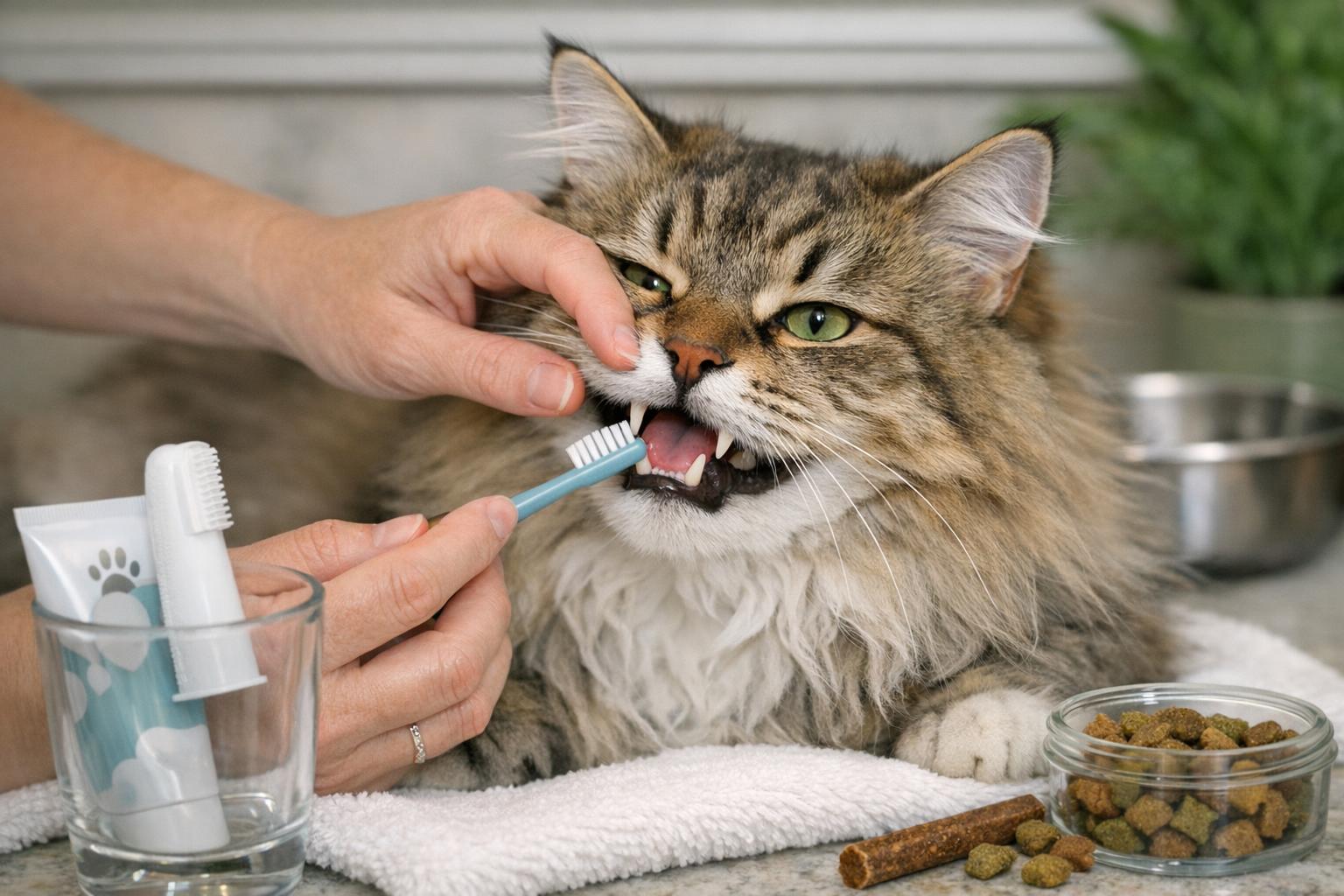
## Start Small: Home Dental Care For Cats In Practical Steps
If you want to keep your cat’s mouth healthy, the single best place to begin is at home. Home dental care for cats doesn’t have to be a wrestling match or something you save for crisis mode. It is a set of small, repeatable habits that protect teeth, reduce plaque, and keep your cat comfortable. Do one thing reliably and build from there.
### Spot Problems Early
Cats hide pain well. What looks like normal behavior can mask inflamed gums or a broken tooth. Look inside when you can. Lift the lip gently, check for red gums, brownish tartar at the gumline, missing teeth, or a bad smell. If your cat smells like fermented fish when you lean in, that’s not normal. These are tangible signs of poor cat dental health and should prompt a vet visit.
### Tools That Make It Work
You do not need fancy gadgets. A few reliable items will cover most needs:
– A soft-bristled cat toothbrush or a finger brush.
– Enzymatic toothpaste made for cats; never use human paste.
– Dental wipes or pads for cats who won’t tolerate brushing.
– A dental water additive if brushing is impossible.
Those items support basic cat dental hygiene. If your cat lets you brush, use a small circular motion on the outside surfaces of the teeth. Focus where plaque gathers — the upper canine and premolars.
## Why Routine Beats Occasional Scrubbing
Brushing once every few months doesn’t move the needle. Plaque forms quickly, and once mineralized into tartar it needs professional scaling. Short daily sessions or at least several times per week make a bigger difference than long weekly scrubs. The goal is consistency, not perfection.
### How To Introduce Brushing Without Freaking Your Cat Out
Start by letting your cat taste the toothpaste. Most formulas are poultry- or fish-flavored and act like training treats. Next, touch lips and teeth during play and petting sessions so the action feels normal. Gradually move from lip touching to gentle rubs on the tooth surface with your finger. If that goes well, swap to a finger brush, then a small toothbrush.
Keep sessions to one minute at first. Stop before your cat gets irritated. Reward with a tiny treat or a calm pet. Over time the brushing can be extended. This incremental approach is one of the most reliable ways to establish cat dental hygiene.
#### When Brushing Isn’t Possible
Some cats will never accept a brush. In those cases, wipes, dental gels, or water additives can help. Dental wipes can reduce plaque on the outer surfaces. Gels with enzymes break down bacterial films. They aren’t as effective as brushing, but they lower the bacterial load and can reduce gingivitis.
## Diet, Chews, And Their Limits
Food matters. Some dry diets are formulated to reduce tartar by mechanically abrading tooth surfaces. Dental treats and chews can also help. But don’t assume a dental-labeled product replaces home care. They work best when used with regular brushing and checkups.
### Choose Foods That Support Cat Dental Health
Look for products with veterinary backing or clinical studies. Avoid high-sugar treats and human foods that stick to teeth. Add a dental chew once or twice a week, not as the only strategy. Think of diet and chews as support players, not the captain.
#### Misleading Labels
Manufacturers sometimes use vague terms like “helps reduce plaque.” Read the fine print. If the claim is supported by a peer-reviewed study or recognized by a vet dental association, it’s more likely to have a real effect. Don’t buy a product solely because it looks reassuring on the shelf.
## Recognize When It’s A Veterinary Problem
Even the best home dental care can’t fix severe periodontal disease. Signs you should see a vet: constant bad breath, drooling, difficulty eating, pawing at the face, and visible infection. Also, if you notice weight loss or behavioral changes, oral pain could be the cause.
Professional cleaning under anesthesia removes tartar below the gumline — the part you cannot reach with a brush. Some cats need extractions or antibiotics. Discuss with your vet a realistic plan for ongoing home care after any professional procedure.
### Cost Versus Value
A professional dental cleaning seems expensive until you consider the alternatives. Chronic oral infections can spread to the heart, kidneys, and liver. Preventing these systemic issues with basic home dental care for cats and routine professional cleanings is usually cheaper in the long run.
## Handling Anxious Or Aggressive Cats
If your cat resists, you’re not alone. Use these tactics:
– Low-light, quiet rooms reduce stress.
– Wrap small, squirmy cats in a towel with the head exposed.
– Try short, positive sessions rather than long attempts.
– Consider pheromone sprays and calming supplements during training.
For some cats, a sedated visit to show them the toothbrush and have a single supervised session helps break the fear. Always prioritize safety — for you and your pet.
## Caring For Kittens Starts Early
Introducing home dental care for cats when they are kittens is easier. Start with lip lifting and short tooth-touching from 6–8 weeks old to build tolerance. Use kitten toothpaste and a soft brush. Early exposure reduces resistance later and sets expectations for both of you.
### What To Teach New Cat Owners
Teach new owners to check the mouth weekly. A quick look will reveal how rapidly changes happen. Show them where to look for plaque build-up and how to recognize inflamed gums. Demonstrating a two-minute routine makes the idea concrete and less intimidating.
## Tracking Progress And Problems
Keep a simple log of brushing frequency and any odd findings. Date the first instance of bad breath or bleeding gums. These notes help your vet see trends and time interventions more effectively. A phone photo of the mouth can be surprisingly useful in a telemedicine consult.
### When To Consider Specialist Care
Some cats develop complex dental issues like stomatitis or resorptive lesions. These require a dentist with veterinary dental expertise. If standard cleanings and basic home care don’t improve the condition, a referral is appropriate.
## Small Changes That Yield Big Benefits
Switch toothpaste if your cat loses interest. Rotate between a gel and wipes. Use a play-and-brush routine to keep sessions friendly. Little changes, repeated, improve cat dental hygiene more than heroic, occasional efforts.
### Avoid These Common Mistakes
Don’t use human toothpaste. Don’t push for a full brushing session on day one. Don’t ignore persistent bad breath. These are the things that turn manageable problems into serious health issues.
Keep an eye on behavior while you care for the mouth. A cat that suddenly avoids the hard side of the kibble or drops food while eating may be signaling pain. Be proactive; catching problems early preserves teeth and comfort.
Teh simple routines you set up now will save a lot of hassle later.





























































Leave a Reply