






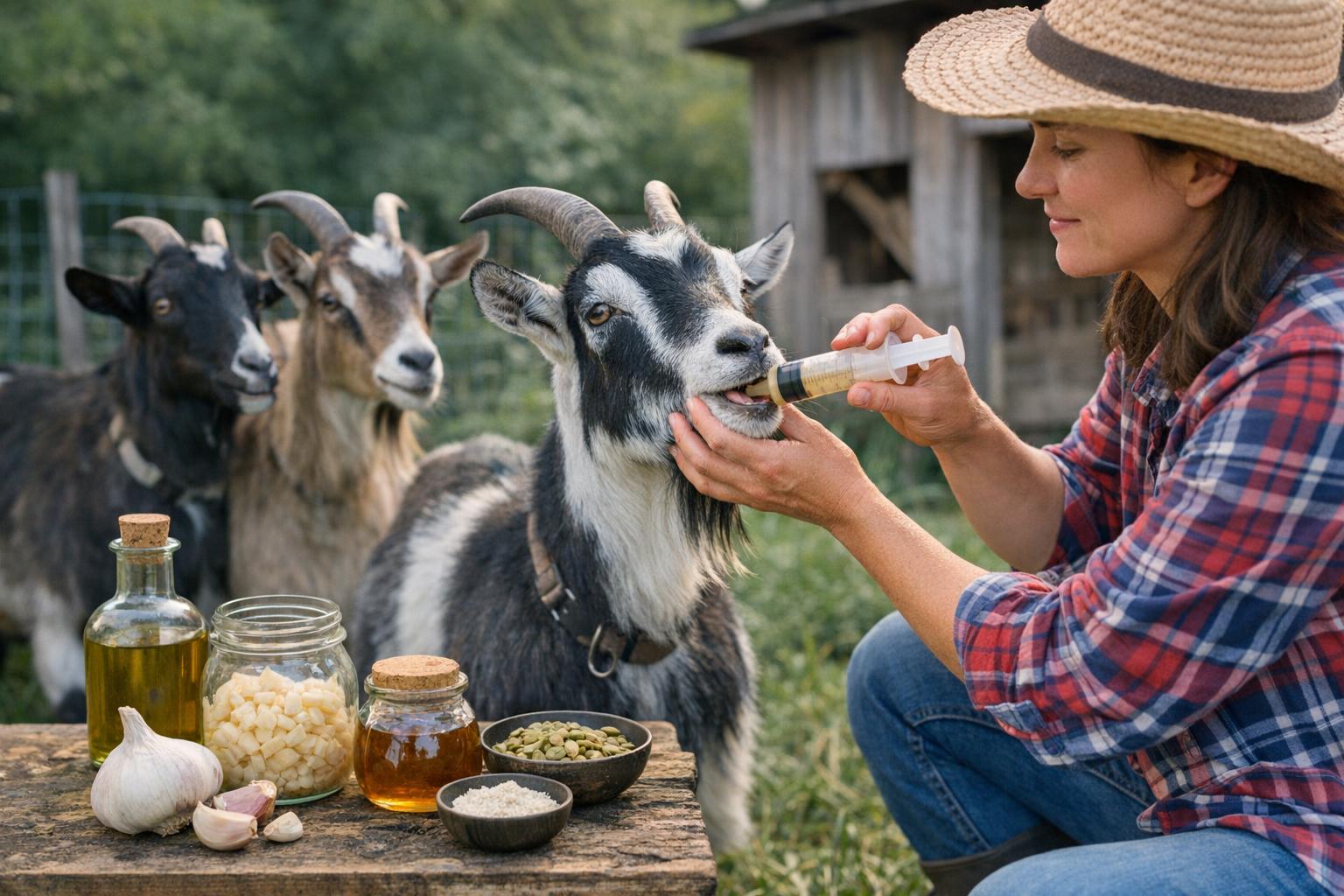
You can help keep worm problems under control without reaching for chemicals first. Home remedies are not magic bullets, but used right they reduce worm burden, slow reinfestation, and buy time between vet treatments. Start with what you can see and manage: animals, pasture, and feed.
## Goat Deworming Home Remedy That Works
Natural approaches that actually move the needle tend to combine husbandry, nutrition, and targeted herbal help. A single trick seldom suffices. Think of this as a toolkit you tighten over time.
### Observe And Test Before You Treat
Look for pale gums, loose shiny coats, weight loss with good feed, or bottle jaw. Those are signs worms may be a problem. The gold standard is a fecal egg count; if you don’t have one, at least note which goats show symptoms and monitor them closely.
– Is one goat losing weight while others thrive? That matters.
– Do you see diarrhea or scouring in kids? Act faster.
– Are worm numbers seasonal at your place? Make notes.
Routine checks save drugs. They also help you decide when to try a goat deworming home remedy and when to call the vet.
### Nutrition And Pasture Management For Goat Parasite Control
Worms thrive when goats are stressed or poorly fed. Good hay, mineral access, and fresh water strengthen immune response. Rotate pastures and avoid overgrazing; goats pick up most internal parasites from low grazing areas. Raising feeders off the ground reduces exposure.
Rest paddocks for at least 60 days when possible. If you can’t, move goats to taller forage or browse-heavy areas. Young goats and pregnant does need extra attention — their immunity dips, and they are the most vulnerable.
#### Targeted Grazing And Stocking Density
If you keep goats in smaller acreage, reduce stocking density. Dilution of infective larvae lowers exposure. You don’t have to be perfect; even small moves reduce worm pressure.
### Practical Home Remedies That Help
When you’re aiming for goat parasite control without immediate pharmaceuticals, try approaches with some practical backing and low risk.
#### Pumpkin Seeds
Raw, crushed pumpkin seeds contain cucurbitin, which can paralyze worms in the gut. Offer crushed raw seeds mixed into feed for a week as a mild adjunct. It’s safe and goats generally like them.
#### Garlic
Garlic has been used widely as a natural dewormer. Use sparingly; raw garlic mixed into feed over several days can support internal defense. Don’t overdo it — too much garlic can cause digestive upset in some animals.
#### Diatomaceous Earth (Food Grade)
Some keepers use small amounts of food-grade diatomaceous earth in feed for its abrasive effect on parasites. Evidence is mixed, and it’s not a stand-alone solution. If you try it, choose food-grade, and use it only as a supplement alongside other measures.
#### Herbal Blends
Certain herbs (wormwood, thyme, fennel) are used traditionally. They can be bitter and goats might refuse them; dosages are tricky. Use a reputable herbalist formula and treat herbs as supportive rather than curative.
### Practical Application And Dosage Notes
With home remedies, consistency matters more than big one-off doses. Give pumpkin seeds or garlic daily over a short course. If you see no improvement in a week or signs worsen, stop and consult a vet. Don’t rely solely on home remedies for heavy infestations.
### When To Use Chemical Dewormers
If a fecal egg count is high or goats show anemia, weight loss, or bottle jaw, use a proven dewormer under guidance. Overusing dewormers breeds resistance. Integrate chemical treatments into a broader goat parasite control plan rather than as the go-to every time.
## Goat Deworming Home Remedy For Healthy Goats At Home
This section is the practical checklist I keep on the tack room wall. It’s short and useful.
### Quick Home-Remedy Checklist
– Improve forage and minerals first. Good body condition makes remedies work better.
– Rotate pastures and keep stocking low.
– Offer a 5–7 day course of crushed raw pumpkin seeds for mild loads.
– Add small, occasional doses of garlic mixed into feed for palatability and support.
– Monitor fecal consistency and body condition. Use fecal egg counts when possible.
### Quarantine And Treat New Animals
Always isolate new or returning animals for at least two weeks and check fecal samples. Treat only if needed. New arrivals often bring new strains of parasites — that’s how resistence spreads.
#### Use Smart Timing
Treating at strategic times helps: before breeding, after kidding, and before moving onto clean pasture. These are times when parasite exposure spikes. Strategic treatments reduce overall drug use and keep things manageable.
### Signs You’re Not Winning
If goats remain dull, lose weight, show pale mucous membranes, or a kid dies unexpectedly, don’t tinker with home remedies. Those are red flags for heavy infestation or other disease. Call your vet. Home remedies are for light support and prevention, not for emergency rescue.
### Record Keeping For Long-Term Control
Keep a simple ledger. Note treatments, fecal counts, pasture rotations, and responses. Over seasons you’ll spot patterns — which pastures are hot, which animals are chronic shedders. Culling persistent high-shedders is a hard but effective part of goat parasite control.
### Practical Tips From The Barn
I started using crushed pumpkin seeds because a neighbor swore by them. They helped a lightweight doe recover condition over a few weeks when combined with better feed. I still used a vet-approved dewormer later when counts spiked. The point: mix tools and watch results.
A word on safety: avoid human dewormers unless prescribed for goats by a vet. Dosing errors can be dangerous. Also, store home remedies cleanly; spoiled garlic or old seeds cause gut upset.
Keep the approach simple. Feed better. Move the goats. Use low-risk herbal supports. Test when you can. Treat smart when you must. It keeps worm problems manageable without turning your herd into a chemical dependet farm.








Leave a Reply