




## Ferret Nail Trimming Tips For Confident Owners
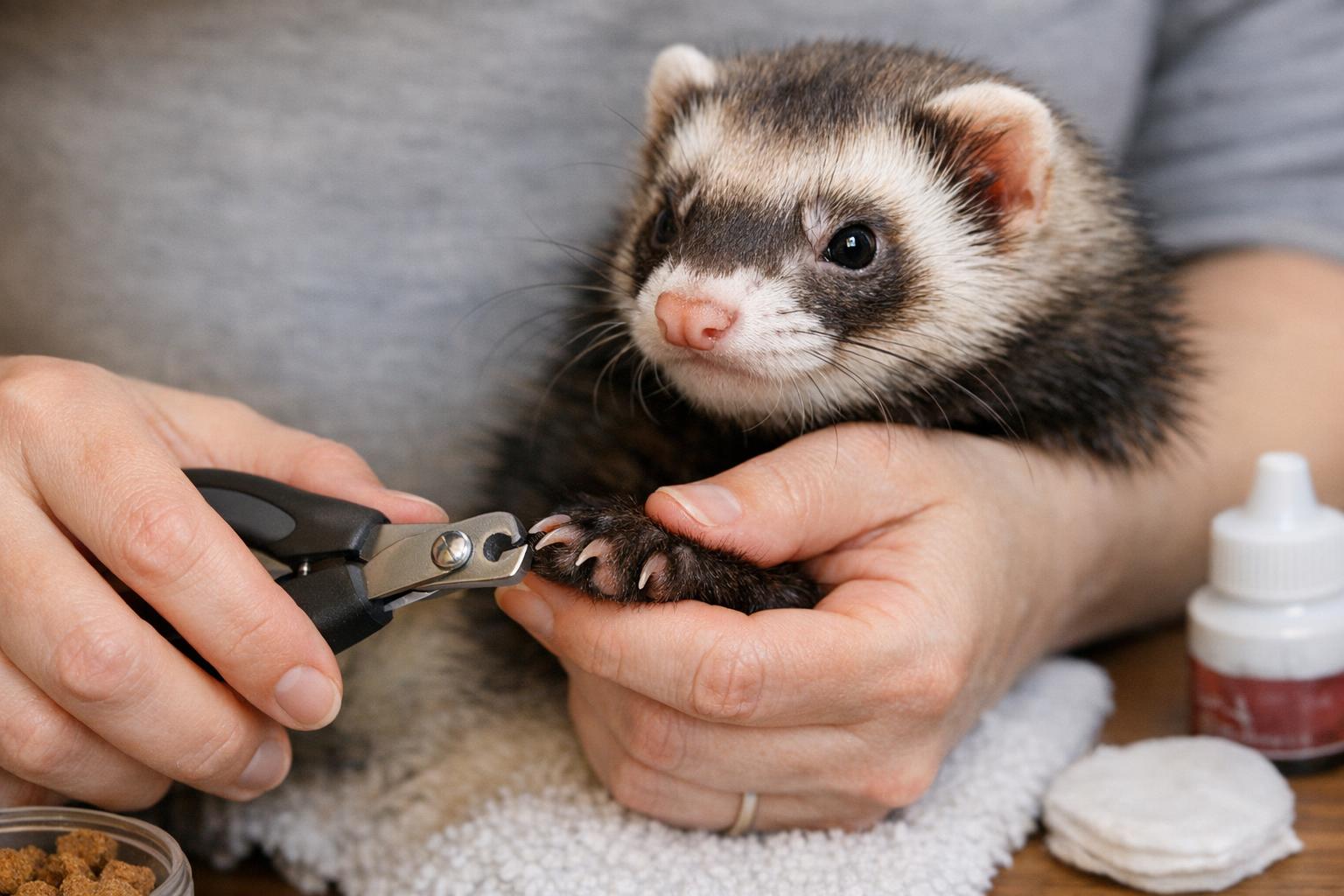
Clipping your ferret’s nails is one of those chores that looks harder than it is once you get a rhythm. Most ferrets need attention every few weeks; skip it and you’ll find snags, furniture scratches, or a sore paw from nails curling into pads. These ferret nail trimming tips are meant to make that routine straightforward and less stressful for both of you.
### Why Regular Trimming Matters
Ferret nails grow fast and can become sharp little hooks. Long nails make it harder for a ferret to grip surfaces and can change how they walk. Beyond comfort, long nails can tear or split, which is painful and invites infection. You’ll also avoid the common household damage—fabric, skin, and bedding won’t suffer as much when nails are kept short.
### What Healthy Nails Look Like
Healthy claws are translucent or slightly opaque, smooth, and end in a gentle curve. The quick—the pinkish area inside light-colored nails—shouldn’t be exposed. With dark nails you won’t see the quick, so you clip conservatively. If the nail looks ragged, split, or has dark streaks, take extra care. Touch the paw; if the ferret pulls away when you press the nail base, there may be soreness or an ingrown nail.
## When To Trim And How Often
Timing depends on how active your ferret is and their environment. A heavily used litter box or lots of climbing can wear nails down naturally. But most indoor ferrets need trimming every 2–4 weeks. Check them weekly at first. That helps you learn their growth rate and notice any changes.
### Signs It’s Time To Clip
A few reliable clues:
– You can hear nails click on tile or hard floors.
– The tips brush your skin when your ferret walks over you.
– Nails start to curl or snag fabric.
If any of those are happening, schedule a short trimming session that day.
## Tools You’ll Need
Good equipment makes this easy.
### Basic Kit Essentials
– A pair of small animal nail clippers or human guillotine clippers. Avoid large dog clippers; they can crush or splinter the nail.
– A styptic powder or pencil for quick bleeding control.
– Sharp, clean scissors to trim stray fur around the nails if needed.
– A towel for light restraint.
– A flashlight or headlamp for seeing the quick in light-colored nails.
### Choosing Clippers
There are two popular styles: guillotine and scissor-style. Guillotine clippers are handy for small nails and give a clean, single motion. Scissor-style clippers feel sturdier and give you more control if the nail is thick. Try both if you can; some people prefer one for small, delicate feet and the other for thicker nails.
## Gentle Restraint And Setup
The goal is calm. Don’t wrestle your ferret into submission. Set up in a quiet room with limited escape routes. A partner can help by holding the ferret on their lap while you clip. If you’re solo, wrap the ferret in a towel with one paw exposed. This keeps the ferret secure without making them fight.
### Position Ideas
– Lap hold: Place the ferret across your thighs, belly-up, and gently hold the base of the paw.
– Table top: Sit on a low stool and let the ferret stand on a towel-covered surface while you hold them by the scruff and base of tail.
– Towel burrito: Wrap the ferret so only one paw pokes out at a time. This helps for ferrets who try to bite.
## Step-By-Step Clipping Technique
Take it slow. You don’t need to do every nail in a single sitting. Break the session into 2–3 minutes if the ferret is getting anxious.
### How To Clip Safely
1. Expose the nail and gently extend it.
2. Look for the quick. In white nails, it appears as a gray or pink triangle near the base.
3. Clip the tip—no more than 1–2 millimeters beyond what you can safely see. If unsure, cut less.
4. Repeat for each nail, pausing to soothe your ferret.
If you see a dark dot in the center of a dark nail, that can be the quick; avoid cutting close to that area.
These ferret nail trimming tips are worth repeating: take small, conservative cuts and stop if the ferret protests. You can always finish later.
### Dealing With Dark Nails
When you can’t see the quick, clip in tiny bits. After each small snip, check the cut surface; when you switch from smooth to slightly chalky texture, you’re getting close. Another method is to use a nail grinder; it slowly shortens the nail and reduces the risk of accidentally hitting the quick.
## If You Hit The Quick
It happens. One wrong move and there’s a tiny bleed. Stay calm—ferrets recover quickly from small bleeds.
### Quick First Aid
Press styptic powder into the tip to stop bleeding. If you don’t have styptic, cornstarch works in a pinch. Apply steady pressure for a minute or two. Keep the ferret warm and quiet afterward. If bleeding continues beyond 10 minutes or you notice swelling or limping, contact your vet.
## Training For Calm Behavior
Ferrets respond to routine and rewards. Train your ferret to accept paw handling long before you need to clip nails.
### Exercises That Help
– Handle the paws daily for 30–60 seconds while giving a treat afterwards.
– Practice brief towel wraps, then release and reward.
– Make nail sessions part of a positive routine, like after playtime when the ferret is tired.
These small training steps are the backbone of successful ferret nail trimming.
## Using Treats And Rewards
Find the treats your ferret loves—chicken bits, small pieces of cooked egg, or commercial ferret treats. Use tiny rewards so the session doesn’t turn into a full feeding. Praise in a calm voice and pet them gently. Over time they’ll learn that paw handling predicts a reward, not a threat.
### Avoiding Overfeeding During Sessions
If you reward a lot during grooming, the ferret may expect treats every time. Alternate treats with praise and brief play. That maintains value and keeps sessions short.
## Trimming Squirmers Or Fearful Ferrets
Some ferrets never sit still. For these, split tasks into micro-sessions—one or two nails at a time, several times a week.
### Alternatives To Forcing It
– Visit a vet or groomer for a quick, professional clip.
– Use a nail grinder while someone soothes the ferret.
– Ask your vet about behavior tips if fear or aggression is severe.
If your ferret becomes aggressive or panicky, stop. You’ll make more progress by slowing down and building trust.
## Handling Older Ferrets And Special Needs
Senior ferrets might have arthritis, reduced mobility, or thinner skin. Their nails can be brittle or thicker.
### Adjustments For Seniors
– Use gentler restraint and more frequent breaks.
– Clip more often but take smaller amounts off each time.
– Check for signs of joint pain before starting; if they flinch when you touch the paw base, a vet visit may be needed.
Ferrets with medical issues may need special tools or professional help to avoid harm.
## Groomingg And Nail Care Beyond Clippers
Trimming is only one part of paw health. Keep fur around the pads trimmed to avoid matting or trapped debris. Check between the toes for foreign objects. Regularly inspect nails for infections, discoloration, or uneven wear.
### When To File Instead Of Clip
If a nail splits or is jagged, a gentle filing smooths rough edges and lowers the risk of catching. Use a small emery board or a pet-specific file. Filing also helps with dark nails where the quick is hard to see.
## Common Mistakes To Avoid
There are a few pitfalls owners fall into that make nail care harder.
### Mistake: Waiting Too Long
Long gaps between trims mean you must take off more at once, increasing the chance of cutting the quick. Keep to a regular schedule.
### Mistake: Using The Wrong Tools
Large dog clippers can crack small nails. Dull clippers crush the nail instead of cutting cleanly. Replace tools that feel blunt.
### Mistake: Rushing
Hasty clips lead to accidents. Slow down, breathe, and take breaks. You’ll save time in the long run by avoiding painful mistakes.
## When To Seek Professional Help
If you’re not comfortable clipping, if the ferret has infected or ingrown nails, or if bleeding won’t stop, get a vet involved. Professionals can trim nails quickly and safely and teach you technique. They can also treat underlying issues like fungal infections or nail bed injuries.
### Signs A Vet Visit Is Needed
– Persistent limping after a trim
– Swelling or discharge around the nail
– Nails that look deformed or are splitting repeatedly
– A sudden change in nail color or texture
A visit can reveal deeper problems, like metabolic issues that affect nail health.
## Nail Trimming For Kits Versus Adults
Young ferrets, or kits, have smaller, more translucent nails. You can usually see the quick easily, so take that opportunity to teach calm paw handling from the start. Kits tolerate shorter sessions and often adapt quickly.
### Tips For Kits
– Use the smallest clippers you can find.
– Keep sessions extremely short—one to three nails at a time.
– Build positive associations with soft praise and tiny treats.
As they grow, their tolerance and nail thickness will change, so adjust technique.
## Dealing With Dark-Colored Nails
Dark nails are intimidating because the quick is invisible. The safest approach is incremental trim-and-check. Clip a minuscule amount and look at the end. When the center starts to change from a shiny look to a slightly dull center, stop. A grinder works well here because it reduces the nail slowly and evenly.
### Tools That Help
A headlamp or small flashlight makes a big difference when examining nails. Some owners prefer a loupe or magnifying glass for precision.
## Nail Health And Diet
Diet affects nail strength. A balanced ferret diet with appropriate protein levels helps maintain healthy nails. If nails become brittle or soft, check nutrition and consult a vet. Supplements aren’t usually necessary but can be recommended in specific cases.
## Environmental Tricks To Reduce Trimming Frequency
Design choices can reduce how often you need to clip. Rough surfaces like supervised outdoor walks on concrete or placing textured pads in play areas wear nails down naturally. Be careful with sharp or rough surfaces that might injure paws. Observation is key—adjust the environment based on how your ferret responds.
### Toys And Activities That Help
Wheel running, safe climbing structures, and supervised outdoor exploration on weathered surfaces can help keep nails short. Rotate toys to keep the ferret engaged and moving in ways that promote natural wear.
## Record Keeping
Keep a small log of nail sessions: date, how many nails clipped, and any reactions. Over a few months you’ll see patterns—maybe one paw needs attention more often, or the quick grows faster after seasonal changes. That small habit saves frustration later.
## When A Ferret Won’t Cooperate
Some ferrets resist no matter what. If training and careful desensitization fail and you can’t get a safe clip at home, schedule regular appointments with a vet or groomer. Professionals handle these situations often and can make the process quick and less traumatic.
### Professional Options
Many vets clip nails as part of routine exams. There are also mobile groomers who come to your home for less stressful sessions. If you choose a groomer, ask about their experience with ferrets specifically.
## Using A Grinder Versus Clippers
Grinders are gentle and reduce the chance of cutting the quick, but they are noisy and some ferrets hate the vibration. Clippers are quick but require more precision. Try both tools during calm moments to see which your ferret tolerates. Some owners start with clippers and use a grinder for smoothing.
## Tracking Progress And Building Confidence
Each successful session, no matter how small, builds trust. Celebrate consistency rather than perfection. Over time your ferret will recognize the routine and respond with less stress. Keep practicing handling even outside clipping times—short daily sessions of paw touching pay off.
### Small Wins Matter
If you manage two nails without a fuss, that’s progress. Reward the ferret, put them away for a nap, and mark it in your log. Those tiny victories compound.
## Bleeding Emergencies And When To Panic
A little bleed after hitting the quick is normal and usually easy to manage. If bleeding is heavy, continuous beyond 10–15 minutes despite pressure and styptic, or if the ferret shows signs of weakness, seek emergency veterinary care. Always keep contact info for your vet and an after-hours clinic handy.
## Cultural And Behavioral Considerations
Some ferrets come from backgrounds where they were handled less and will take longer to acclimate. Be patient. Their behavior reflects what they’ve learned. Repeated calm, gentle handling changes that history quickly.
## Small Adjustments For Different Temperaments
A bold, curious ferret might tolerate quick restraining, while a shy one needs slow desensitization. Tailor your approach. Keep language soft, movements small, and sessions predictable. Over time, even the most nervous ferret can learn to tolerate basic care.
## Safety Items To Keep Close
Always keep styptic powder, a clean towel, a flashlight, and a phone nearby when you clip nails. If someone is assisting you, explain their role ahead of time so they don’t accidentally squeeze or startle the ferret.
### Emergency Kit Checklist
– Styptic powder or cornstarch
– Small bandage material
– Antiseptic wipes
– Contact info for your vet
If you need to stop and assess, do it. Safety first—yours and the ferret’s.
## Learning From Mistakes
Nobody learns without a few missteps. If you cut the quick, apologize in your tone, not in an overdramatic way, and move on with a calm first-aid routine. Ferrets sense your mood; stay steady. Over time you’ll refine your technique and build a routine that works for your household.
## Creative Ways To Make Clipping Easier
Some owners play a quiet recording of their voice or put a familiar blanket on the table. Others do gentle foot massages while the ferret watches a short video of moving objects. Find small rituals that reduce anxiety, and keep them consistent.
## When Behavior Changes Suddenly
If a ferret that once tolerated trimming becomes resistant, consider health causes. Pain, dental issues, or recent traumatic experiences can change behavior. A vet check can rule out medical causes before you spend weeks re-training.
## Know When To Let A Pro Step In
There’s no shame in admitting you’re not comfortable. A single professional session can teach you posture and technique and rebuild confidence. After that, you might handle regular trims at home—more likely you’ll maintain the rhythm and avoid bigger problems.
## Final Notes On Safety And Confidence
Confidence comes from practice and preparation. Keep sessions calm, keep cuts conservative, and reward progress. These ferret nail trimming tips are practical steps to make a routine task less stressful and more predictable for both you and your ferret.



















Leave a Reply