





## Why Dogs Fear Storms
Some dogs react to thunder like it’s a life-or-death event. They pant, tremble, hide under furniture, chew, or bolt through a screen. It’s not just about loud noise. Sudden changes in barometric pressure, bright lightning, static in the air, and even the smell of rain can trigger a cascade of stress hormones. Owners call it “thunder phobia.” Veterinarians call it a common, treatable behavior problem. Either way, figuring out what helps is practical work, not guesswork.
### The Biology Behind Panic
Dogs are wired to notice sudden changes. A low rumble or a flash of light can signal danger to an animal evolved to detect predators. For some dogs the brain connects thunder with an intense adrenaline response. That response gets stronger every time a storm reinforces the fear. That’s how thunderstorm anxiety dogs develop a pattern: each storm makes the next one worse.
### How Owners Make It Better Or Worse
A big mistake is reacting with either harsh punishment or frantic coddling. Scolding increases fear. Hovering with panicked energy tells the dog that the world is dangerous. Calm, steady presence helps. That doesn’t mean you ignore a shaking dog — it means you act in ways that reduce stress and start to retrain the association between storms and safety.
## Calming Techniques For Dogs During Thunderstorms At Home
This is where you need specific, repeatable actions. Use techniques that reduce sensory input, provide reassuring structure, and allow learning that storms are survivable.
### Immediate Steps To Reduce Panic
Start with the basics right when you hear thunder.
#### Create A Safe Space
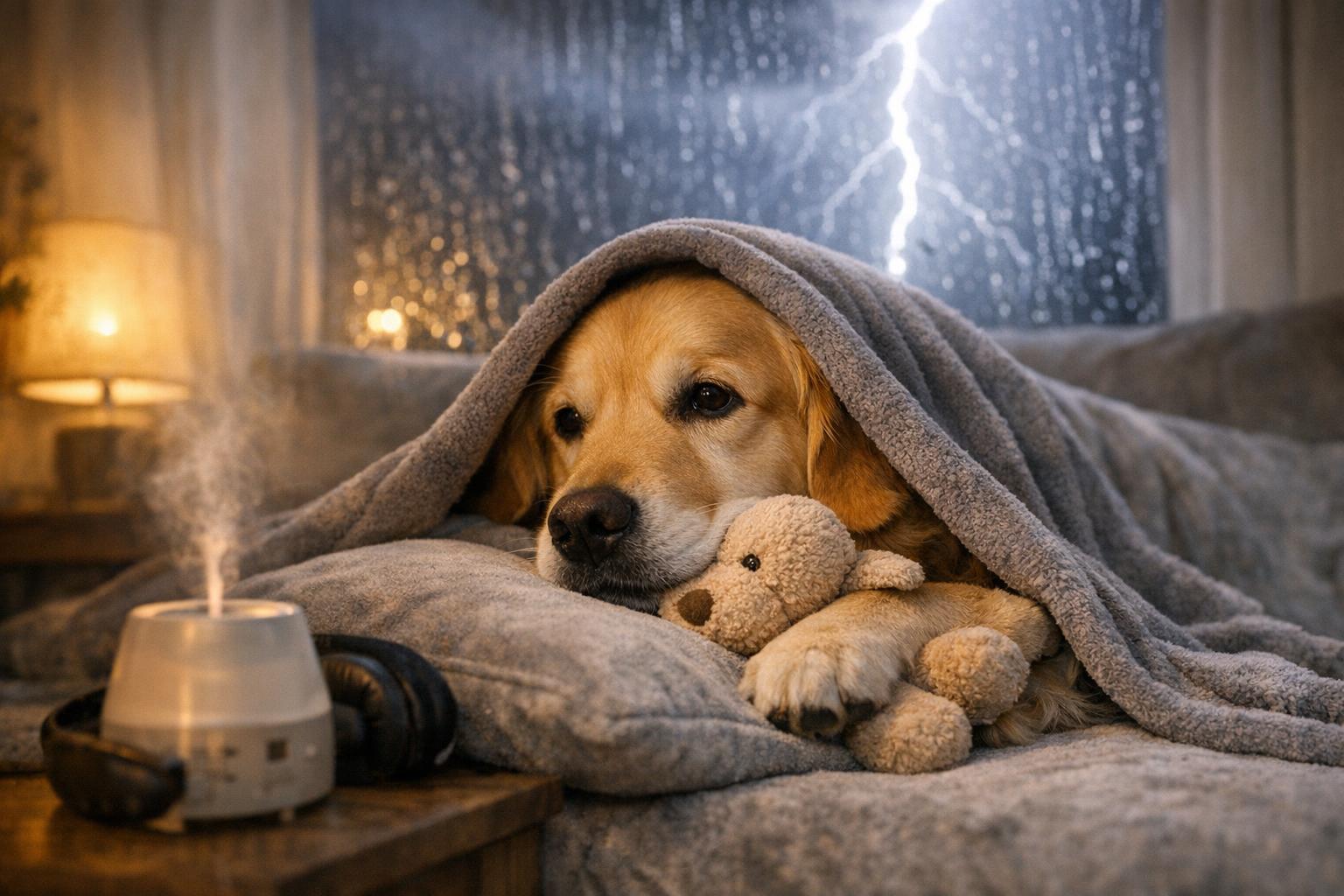
Find or make a den-like area: a crate with blankets, a closet, or a low-ceiling corner. Close curtains and windows to muffle sound and block flashing light. Some dogs like tight spaces because the walls dampen noise. If your dog is crate-trained and sees the crate as a safe zone, that’s ideal. Put an old T-shirt with your scent in there. The familiar smell can be soothing.
#### Apply Gentle Pressure
Pressure wraps, like a Thundershirt or a snug towel wrap, apply gentle pressure that calms many dogs. It’s similar to swaddling an infant. Don’t make it painful; it should feel like a secure hug. Some dogs love it immediately, others need time to accept the garment.
#### Use Sound To Mask Thunder
Turn on a fan, white noise machine, or radio at moderate volume. Music with a steady, slow tempo works well. There are playlists and albums created for dogs; they can lower heart rate. Avoid extremes: louder is not better. The goal is to mask the unpredictable thunder with a predictable, non-threatening sound.
#### Stay Nearby, Stay Calm
Your energy matters. Move slowly, speak in a soft, even tone. If the dog seeks you out, pet gently — long, slow strokes along the chest and shoulders can lower stress. Don’t carry on in a high-pitched, worried voice. If the dog hides and wants to be left alone, that’s fine too. Forcing interaction often backfires.
### Practical Safety Measures
Storms can startle dogs into dangerous behaviors like running off.
– Make sure ID tags and microchip info are current. A frightened dog will try to escape.
– Secure gates and yard fencing before storms come; check for weak spots.
– If the dog tends to bolt, consider walking them in a safe area before storms hit so they get exercise and the urge to roam is reduced.
## Training And Desensitization Strategies
Short-term fixes help during a storm, but long-term work rewires the fear. That’s where desensitization and counterconditioning come in.
### How Systematic Desensitization Works
Play low-volume recordings of thunder during calm times while the dog is relaxed and engaged in something positive — a chew toy, puzzle feeder, or licking mat. Start at a volume the dog barely notices. Reward calm behavior with high-value treats, not just kibble. Gradually raise the volume over weeks or months. The goal is to change the dog’s emotional reaction: thunder equals good things.
You want slow progress. If you push too hard — too loud, too fast — you’ll spike the dog’s anxiety and reinforce the fear. Think small steps. Ten seconds at a barely-audible level, paired with treats, then stop. Repeat and increase only when the dog remains relaxed.
### Counterconditioning Techniques
Counterconditioning pairs the scary stimulus with something the dog loves. If your dog goes crazy for cheese, give tiny pieces while playing the thunder recording very softly. Use the best stuff you have. Not every dog is motivated by food — for some, a favorite toy or a ball toss works better. Over time the dog will start expecting something positive during thunder instead of danger.
This takes consistency. Work in short sessions, multiple days a week. Keep training sessions playful, not pressured.
### Incorporate Routine And Predictability
Dogs feel safer with routines. If you can predict storms (weather apps and radar are helpful), try a predictable pre-storm routine: walk, play, then settle in the den with a chew or lick mat. The routine signals safety and reduces the element of surprise.
## Products, Supplements, And Professional Help
If training and home methods fall short, there are vetted products and medical paths to consider.
### Over-The-Counter And Natural Aids
Pheromone diffusers like Adaptil mimic calming hormones and help some dogs. Calming supplements containing L-theanine, chamomile, or melatonin sometimes reduce anxiety. Results vary by dog. These are generally safe but treat them as adjuncts, not cures.
CBD oil has anecdotal support; research is still emerging. Talk with your vet to avoid interactions with other medications.
### Prescription Medications
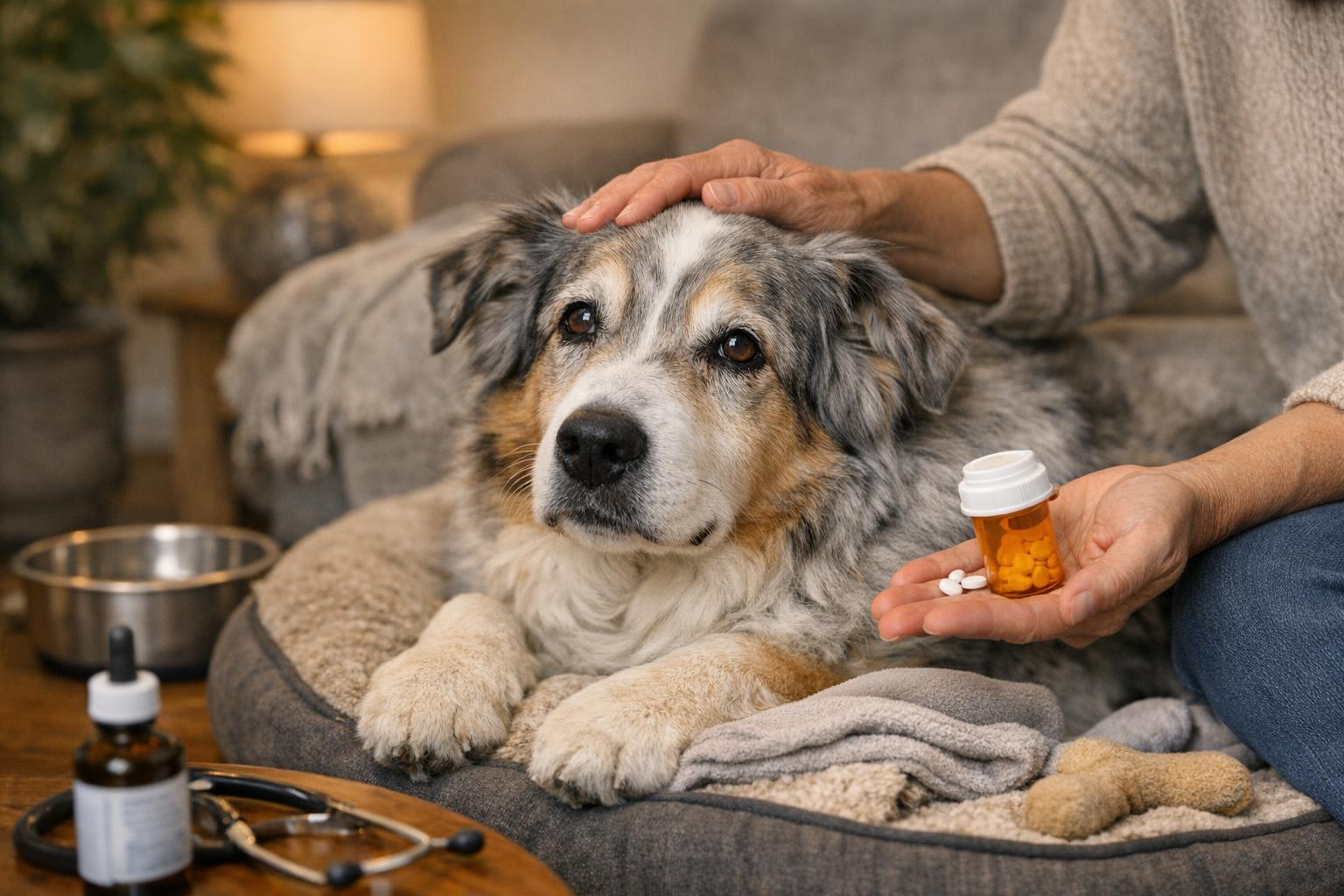
For moderate to severe cases, medication prescribed by a veterinarian can be lifesaving. Drugs commonly used include trazodone, gabapentin, alprazolam, and certain SSRIs for long-term management. Medication can blunt panic and make desensitization training possible. Never give a dog human meds without veterinary guidance; dosage and drug choice depend on weight, health, and other medications.
### Behaviorists And Trainers
If your dog shows extreme reactions — persistent destructive behavior, self-injury, or aggressive responses when frightened — consult a certified applied animal behaviorist or a veterinary behaviorist. These professionals design tailored plans combining medication, training, and environmental changes. Working with an experienced trainer can speed progress and prevent well-meaning mistakes.
## Small Changes That Add Up
You don’t need a dramatic overhaul to help a terrified dog. A few small, consistent practices make storms manageable.
### Exercise Before Weather Hits
A tired dog is calmer. If a thunderstorm is predicted, take a longer walk earlier in the day. Mental enrichment — scent games, puzzle toys, short training sessions — also reduces baseline anxiety.
### Create A Predictable Comfort Kit
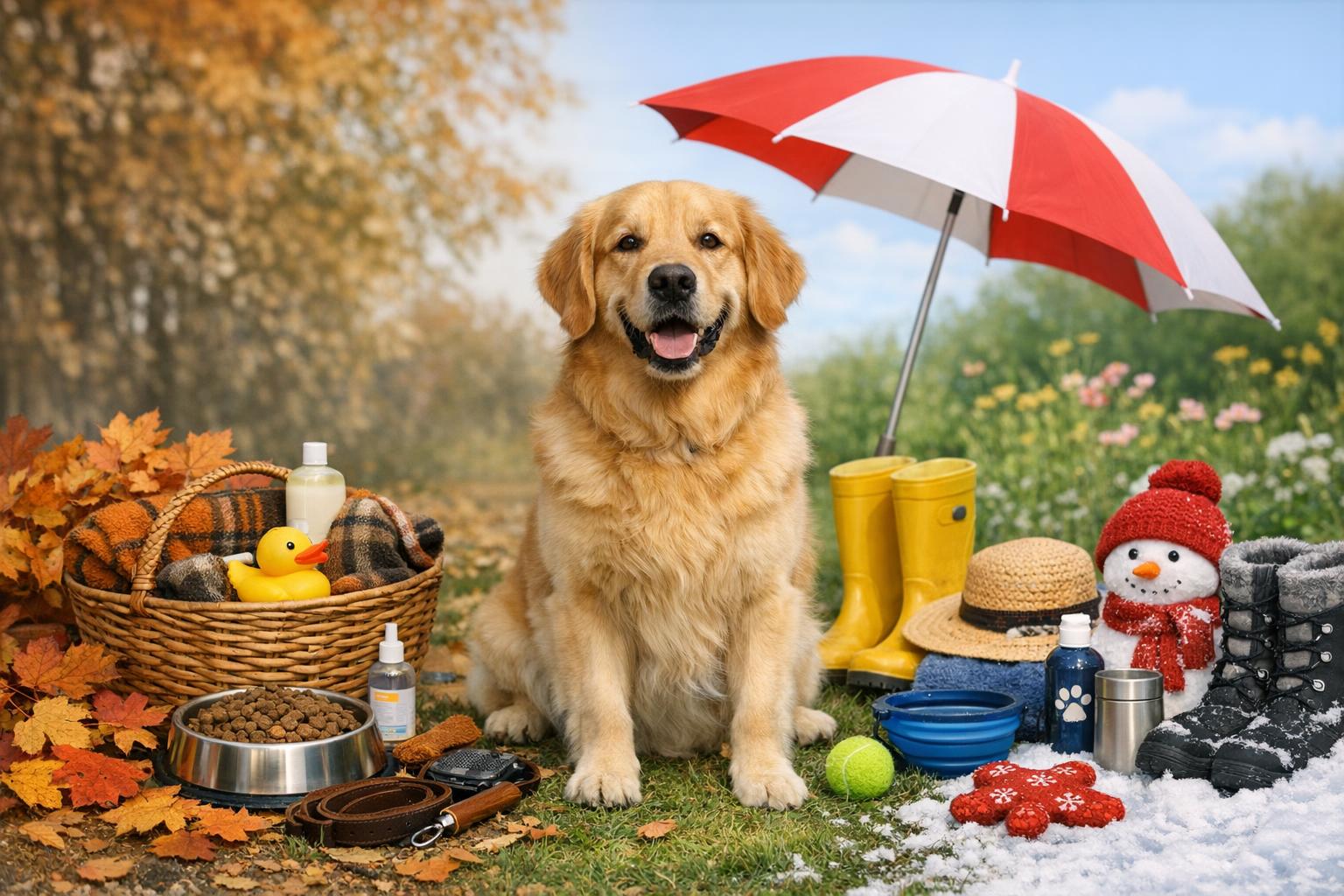
Keep a bag near your den with treats, favorite toys, a blanket with your scent, and the calming garment. When the sky darkens you won’t be scrambling. The speed of your response can matter; having tools at hand reduces human stress too.
### Manage Expectations With Visitors And Kids
Explain to family members that calm is contagious. Kids who scream at thunder make things worse. A quiet adult approach helps kids learn the correct way to behave around a fearful pet.
## What Not To Do
Avoid these common mistakes because they slow progress or worsen fear.
### Don’t Punish Or Scold
Punishment increases fear and undermines trust. If your dog pees from terror, scolding will only create new anxieties around you.
### Don’t Force Exposure
Dragging a dog into loud conditions to “toughen them up” is counterproductive. Forced exposure can create trauma responses that are much harder to reverse.
### Don’t Over-Comfort With Panic
This one’s tricky. Some reassurance is fine, but if you mirror the dog’s panic — rushing around, acting frantic — you signal that the storm is dangerous. Stay calm. Hold the space steady.
## When To Seek Immediate Help
If your dog injures themselves, continuously vomits, becomes aggressive when frightened, or shows signs of extreme panic that don’t respond to basic measures, call your vet. They can rule out medical causes and advise on emergency meds or a behavior plan.
### Long-Term Tracking
Keep a storm journal. Note behaviors, what helped, what didn’t, and how long recovery took after a storm. That log helps you and any professional you consult to spot patterns and adjust strategies.
## Real-World Examples That Work
I worked with a collie mix who shredded two couches during a single severe storm. We started with a tight wrap and a crate outfitted with a calming pheromone diffuser. The owner used a radio to mask thunder and practiced desensitization sessions in the weeks between storms. After three months the dog still disliked storms but no longer destroyed furniture. Progress looked like quieter panting, shorter hiding episodes, and fewer attempts to escape.
Another dog, a small terrier, needed meds plus counterconditioning. Medication closed the panic window enough for the terrier to accept short, controlled exposures to recorded thunder paired with chicken. Within four months the terrier could remain in the den during moderate storms and would take treats during some thunder bursts — a huge change.
Sprinkling in these practical measures — safety, pressure wraps, sound, routine, targeted training, and vet support — builds resilience. Not every dog becomes utterly calm. The goal is better days, fewer injuries, and less fear. It’s work, but it’s do-able.
Note: sometimes the solution is as simple as a consistent den, pressure wrap, and a predictable pre-storm routine. Other times the plan requires professional help and meds. Either path is legitimate.
Weird things happen — a dog that hated Thundershirts loved them after a week, another dog would not wear one at all. Expect surprises. Be patient and keep notes so you can fine-tune what your dog needs.
Recieve storm updates through an app, give the dog exercise early, set up the den, and act calm. Over time those small efforts change the meaning of thunder for your dog. And yes, some dogs will always prefer to snuggle with their human during a storm. That’s okay. Offer calm guidance, not panic. The results build slowly, then faster, then you’ll notice a real difference. Comfor and predictability win out more often than people expect.

























Leave a Reply