






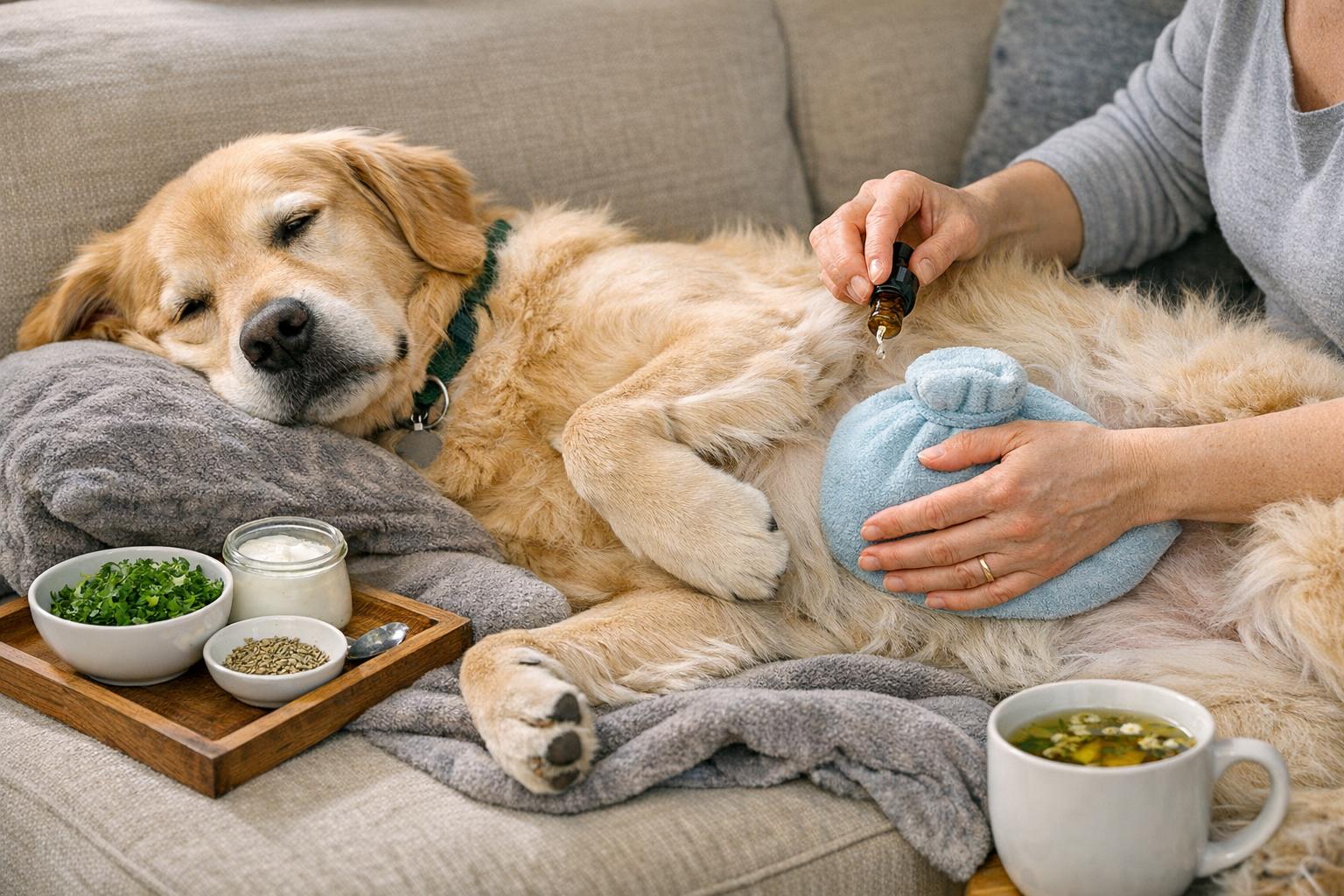
## Gentle Home Remedy For Dog Gas You Can Use Tonight
Dogs get gassy. Sometimes it’s a passing annoyance after they sniffed a mystery snack. Other times it’s a recurring issue that makes family life awkward and your dog uncomfortable. A gentle home remedy for dog gas can calm a sensitive belly without a trip to the vet for every episode. It won’t fix every cause, but used carefully it can bring quick gas relief and let you both sleep easier.
### Why Gas Happens And What To Watch For
Gas forms when food ferments in the gut or when air is swallowed. Eating too fast, abrupt diet changes, table scraps, or certain foods are common triggers. Larger breed dogs and brachycephalic breeds swallow more air, so they often have more dog flatulence. Parasites, food intolerances, pancreatitis, and dental problems can also cause chronic symptoms.
Look for these signs that your dog needs help:
– Loud belly noises, bloating, repeated passing of gas.
– Loss of appetite or lethargy paired with gas.
– Vomiting, diarrhea, or pronounced abdominal pain.
If you see extreme bloating, repeated vomiting, or the dog is painful, see a vet right away. Those can be signs of emergency conditions. For mild, routine gas, try a simple, gentle home remedy for dog gas first.
### A Practical, Gentle Home Remedy For Dog Gas
The most reliable, least risky home fix is plain canned pumpkin puree. Not the spiced pie filling—just 100% pumpkin. It’s a low-risk fiber source that firms stool and eases digestion. Fiber helps regulate transit time so food doesn’t just sit and ferment. That reduces the bacteria-driven gas that causes the stink.
How to use it:
– Small dogs (under 20 lb): start with about 1 teaspoon mixed into their meal.
– Medium dogs (20–50 lb): try 1–2 teaspoons.
– Large dogs (over 50 lb): 1–2 tablespoons is a reasonable starting point.
Mix it into their food for a few meals and watch for improvement within 24–48 hours. If your dog is on a strict veterinary diet or has diabetes, ask your vet first. Pumpkin adds calories and carbs, so keep that in mind for dogs on weight control plans.
### Other Gentle Options That Help
Yogurt with live cultures can be useful for some dogs. Plain, unsweetened yogurt provides probiotics that sometimes improve gut balance and offer gas relief. Start with a quarter teaspoon for small dogs and up to a tablespoon for larger dogs. Not every dog tolerates dairy. If your dog gets loose stools after dairy, stop immediately.
Fennel seeds are a traditional human remedy for gas and can be given in tiny amounts. A pinch crushed and mixed into food might ease mild bloating for some dogs. Use this sparingly and never rely on herbal fixes alone for ongoing dog flatulence.
A slow-feeder bowl or puzzle toy can reduce swallowed air. Pouring food into several small meals during the day prevents large, fast gulps that promote gas. Exercise after meals also helps move gas along; a short walk can do wonders.
### When Probiotics Or Supplements Make Sense
If pumpkin and feeding changes don’t help, consider a canine-specific probiotic or digestive enzyme. These products are formulated for dogs and can reduce excessive fermentation. Choose a brand with strains shown to survive the stomach and reach the gut. If you try an over-the-counter option, give a consistent trial of 2–3 weeks before judging effectiveness.
Activated charcoal is sometimes suggested for acute gas, but use it cautiously and only under vet guidance. It can absorb medications and nutrients, so it’s not a go-to household remedy.
### Simple Feeding Habits That Cut Gas
Food itself often causes more gas than anything else. Change what you feed before you add herbs or pills.
– Avoid table scraps. Fatty, rich, or onion- and garlic-containing foods are notorious gas triggers.
– Introduce new diets slowly over a week. Sudden switches frequently cause dog flatulence.
– Measure portions. Overfeeding leads to fermentation and more gas.
– Keep an eye on protein sources. Some dogs react to beef or dairy; rotating proteins can reveal sensitivities.
A small, deliberate change in feeding often reduces episodes of gas faster than any supplement.
#### How To Spot Food Sensitivities At Home
If you suspect a specific food, use a simple elimination approach. Remove one suspect ingredient for two weeks and watch for improvement. Reintroduce it and see if symptoms return. Keep a quick log of meals and any episodes. It’s low-tech and effective, but stick with single changes so you know what helped.
### When To Contact Your Vet
Ongoing or severe gas can be a symptom of a bigger problem. Call your vet if you notice:
– Marked abdominal swelling.
– Pain when touched.
– Persistent vomiting or diarrhea.
– Sudden weight loss alongside dog flatulence.
Your vet may recommend fecal testing for parasites, bloodwork, or imaging to rule out underlying disease. Sometimes a prescription hypoallergenic diet or medication is the right step. Home remedies are helpful, but they shouldn’t delay professional care when it’s needed.
### A Few Real-World Tips That Work
I’ve seen clients try weird fixes that did more harm than good. Here are the practical, low-risk habits that actually produce results.
1. Swap a feeding schedule: three small meals beats one or two big ones for gas-prone pups.
2. Use plain pumpkin before buying supplements. It’s cheap and safe, and it often cuts gas quickly.
3. Slow feeders and raised bowls help some dogs, but test to see what your dog prefers.
4. If you travel or change food, add a teaspoon of pumpkin during the transition period.
These approaches aren’t glamorous, but they’re low effort and they work.
#### When Home Remedies Don’t Stop The Problem
If you’ve used pumpkin, adjusted feeding, and tried a vet-approved probiotic with no change, deeper diagnostics are warranted. Persistent gas with poor appetite or weight loss deserves a full checkup. Your vet may suggest an elimination diet overseen by a professional or tests to check for chronic pancreatitis, inflammatory bowel disease, or small intestinal bacterial overgrowth.
Even with the best intentions, some conditions require meds or a specialized diet. That doesn’t mean your home care was useless. It often narrows the suspect list and helps your vet find the right solution faster.
## Quick At-Home Checklist For Fast Gas Relief
Follow this simple checklist when a bout of gas starts:
– Remove access to table scraps and trash.
– Add a small spoon of plain pumpkin to the next meal.
– Break meals into smaller portions for 24–48 hours.
– Offer a short walk after meals.
– Monitor for worsening signs.
If the problem persists past 48–72 hours or your dog seems unwell, call your veterinarian. Trying a gentle home remedy for dog gas is a good first move, but don’t let it replace care when your dog needs it. The goal is practical, humane care that stops the smelling and gets belly comfort back on track.
Keep in mind: not every remedy suits every dog. Some dogs need a medical approach. For many, though, simple steps deliver meaningful gas relief and make home life nicer for everyone. And yes, occasional weakness for human food will happen. You’ll caugh them in the act sometimes, but the right home routine handles the fallout.



















Leave a Reply