





## Basic Principles Of Tarantula Care
Tarantulas are simple animals, but they respond strongly to the microclimate inside their enclosure. Get temperature or humidity wrong and they show it in behavior: refusing food, prolonged pre-molt, or excessively excavating. This article lays out practical, specific guidance so you can set up a stable environment that matches a tarantula’s natural needs.
Temperature and humidity aren’t independent. Warmer air holds more moisture. That means raising heat often raises humidty, and cooling drops it. Plan around that relationship instead of treating each variable in isolation.
### Why Stable Conditions Matter
Tarantulas do most of their biological work at the edge of a narrow comfort zone. Molting and egg development are especially sensitive. A spike in heat can dehydrate them. A steep drop in humidity can stall a molt. You want a habitat that mimics their native climate with gentle daily variation, not extremes.
## Tarantula Enclosure Humidity And Temperature Guidelines For Common Species
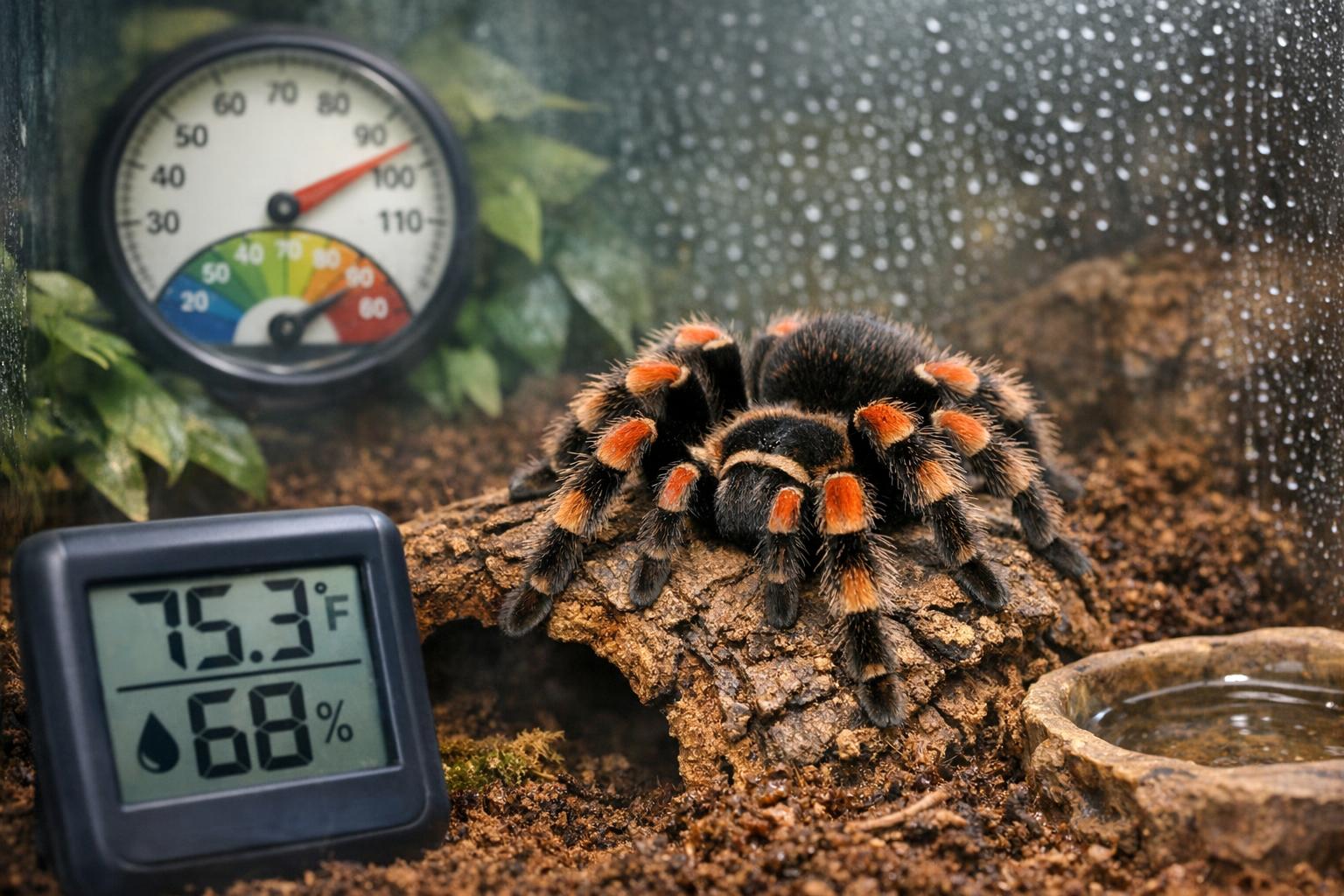
This section gives practical target ranges for groups of tarantulas. Use these as starting points, then tweak for individual quirks. Measure inside the hide and near the substrate surface — those are the places the spider actually spends time.
### Terrestrial New World Species (Example: Grammostola, Brachypelma)
– Temperature: 70–78°F (21–26°C)
– Humidity: 60–75%
These are the classic beginner tarantulas. They like a warm, slightly humid microclimate but not swampy. A medium water dish and a substrate that holds some moisture is sufficient. If you keep them too dry, they’ll drink constantly and may have rough molts. Too wet and you invite mold.
### Arboreal And Semi-Arboreal Species (Example: Avicularia, Poecilotheria, Aphonopelma)
– Temperature: 72–80°F (22–27°C)
– Humidity: 65–80%
Arboreal species often require higher humidity and good air circulation. They live in tree cavities where moisture cycles more rapidly. Use tall enclosures with ventilation near the top and a thicker layer of cork bark or imitation plants to create microclimates. Misting once daily in the evening usually works, but watch for condensation.
### Desert And Dry Habitat Species (Example: Psalmopoeus, Chromatopelma cyaneopubescens)
– Temperature: 75–85°F (24–29°C)
– Humidity: 50–65%
These species evolved in arid zones. They need warmer temps and lower humidity. Overly moist enclosures cause lethargy and fungal issues. Keep a shallow water dish and allow the substrate to dry between light mistings.
### Tropical Rainforest Specialists (Example: Theraphosa, some Xenesthis)
– Temperature: 75–82°F (24–28°C)
– Humidity: 75–90%
Large rainforest species demand high humidty and stable warmth. Provide deep substrate for burrowing, a large water source, and consistent misting. These tarantulas are more sensitive to dehydration during premolt, so maintain steady conditions.
### Juveniles And Slings
Young tarantulas often need higher humidity than adults because their surface area to volume ratio makes them lose water faster. Keep slings at the upper end of the species range. Closed micro-habitats such as small tubs or vial enclosures can maintain humidity without constant misting. Watch for mold; change substrate if it becomes saturated.
## Measuring And Monitoring Equipment
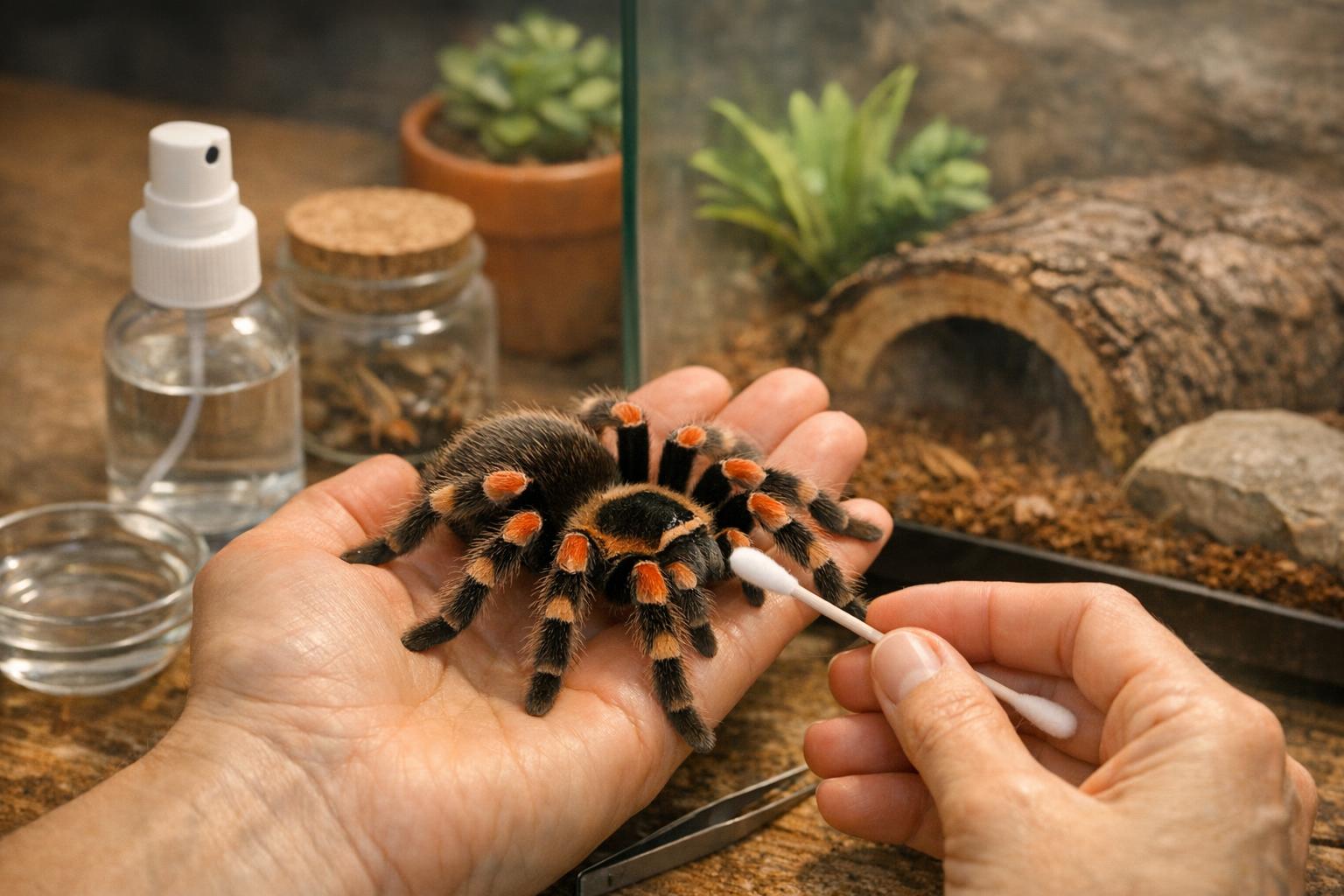
You can’t manage what you don’t measure. A cheap analog gauge gives you a number but often lags. Digital thermometers and hygrometers with probes are better because you can place probes inside hides and near the substrate.
### Essential Tools
– Two hygrometers: one inside the enclosure and one near the hide.
– Two thermometers: same idea; cross-check readings.
– A digital thermometer-hygrometer combo with probe for finer placement.
Calibration matters. Check cheap sensors against a known standard or use the wet-salt method to test accuracy. Replace unreliable units. It’s annoying but worth it.
#### Where To Place Sensors
Place one sensor at spider level in its primary hide and one near the substrate surface on the opposite side of the enclosure. That gives you a humidity gradient map so you can see what parts of the enclosure are dry and which remain moist.
## Substrate, Water, And Microclimates
Substrate choice affects both humidity and the tarantula’s comfort. Use substrates that retain moisture without souring.
### Substrate Options
– Coconut coir: Retains moisture, resists compaction, good for many species.
– Peat moss: Holds water well but can get acidic if kept soggy.
– Organic topsoil mixed with coir: Good for burrowers.
– Vermiculite or perlite can be mixed to increase aeration.
Depth matters. Burrowing species need 4–8 inches or more. Arboreals prefer shallow layers because they don’t burrow.
### Creating Wet-Dry Gradients
Most tarantulas appreciate a dry area and a moist area. Put a damp substrate on one side and dry on the other. The spider will choose. Use a water dish at the moist end; evaporating water keeps that side humid. In taller enclosures, a small moss patch or a piece of bark wrapped in sphagnum provides a humid retreat off the ground.
### Water Dishes And Humidity
A large water dish increases localized humidity. For high-humidity species, add a shallow dish and keep it topped up. For dry species, use a small dish and check for algae. Clean dishes weekly. Replace water more often in warm rooms.
## Heating: Methods And Risks
Most tarantulas don’t require extra heat if room temperature sits in the species range. Only add heat when ambient temps fall below the lower end of the recommended range.
### Safe Heating Options
– Ceramic heat emitters in thermostatically controlled setups.
– Under-tank heating pads set under 25–33% of the enclosure floor for burrowers.
– Room heaters if you want to avoid localized hot spots inside the tank.
Avoid free-floating heat rocks — they cause burns. Thermostats are not optional if you add any heat source.
#### Placement Rules
Put heat under or to one side of the enclosure so spiders can thermoregulate by moving to the cooler end. Never heat an enclosure without monitoring; you can accidentally cook the tarantula.
## Ventilation And Airflow
Good airflow reduces stagnant pockets that grow mold but too much ventilation makes it hard to keep humidty high. Balance is species-specific.
– Arboreal enclosures: Provide ventilation near the top and small vents lower down. This mimics tree cavities where air exchange is common.
– Terrestrial set-ups: Fewer vents lower on the walls, and a tighter lid can help maintain humidity.
– Rainforest species: Keep more vents but add a humidity source like live moss or a misting schedule to compensate.
If you see persistent condensation on the walls, ventilation may be too low for the enclosure size. Wipe the walls occasionally but not so much that you disrupt the microclimate.
## Misting, Spraying, And Humidity Maintenance
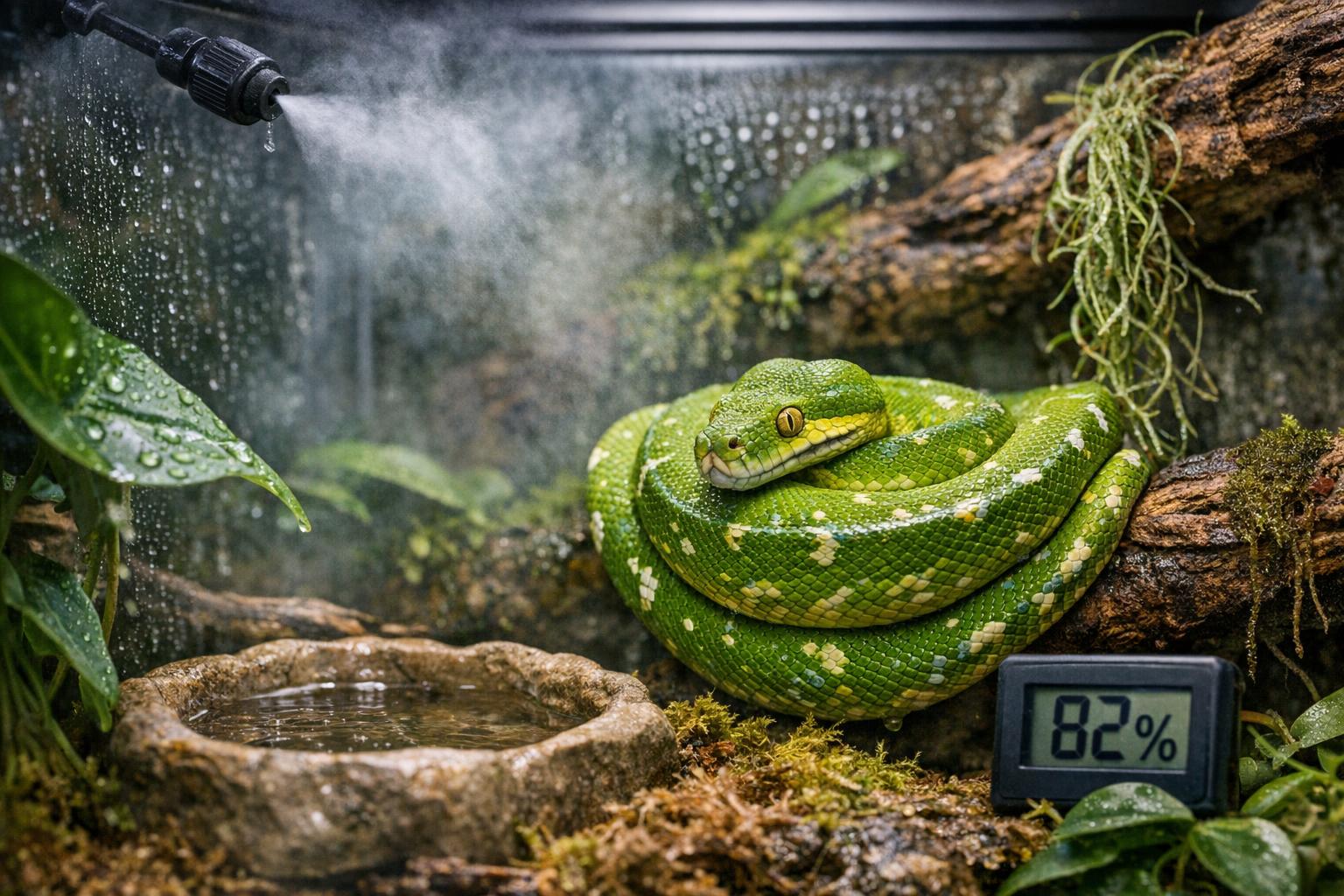
Misting is a blunt tool. Done right it refreshes humidity and allows the spider to drink droplets. Done wrong it creates a mold farm.
– Mist lightly in the evening for arboreals.
– For terrestrial New World species, mist once every 2–3 days depending on substrate moisture.
– For dry species, a single mist weekly or just keep water in the dish.
When you mist, aim for spots rather than an even spray. Create small wet patches that evaporate slowly. Keep misting routines consistent; tarantulas respond to rhythms.
### Natural Signs To Watch
– Tucked legs and curling indicate dehydration or impending molt.
– Increased webbing near the water source means the spider is trying to trap moisture.
– Refusal to leave a hide can indicate unsuitable temps or humidity.
If a spider refuses food but appears normal otherwise, check humidity and temperature first. Food refusal is often environmental, not appetite.
## Molting: Extra Care And Common Problems
Molting is the most critical time. Tarantulas need elevated humidity and minimal disturbance.
– Raise humidity by 5–10% above normal during premolt, especially for slings.
– Reduce handling and vibration.
– Ensure a large, clean water dish is available.
– Provide a stable, warm area; avoid sudden drops or heat spikes.
If a molt starts and the spider struggles, keep humidity stable and avoid interfering unless absolutely necessary. Disturbing a molting tarantula leads to fatal complications.
## Signs Of Too Much Moisture And How To Fix It
Mold, fungus gnats, and a sour smell are red flags. They mean substrate is staying too wet.
– Increase ventilation and reduce misting.
– Remove moldy substrate and replace with fresh, slightly drier material.
– Use a shallow bowl of silica gel in the cabinet (not inside the enclosure) if room humidity is the problem.
– Move the enclosure away from bathrooms, kitchens, or poorly ventilated basements.
A little surface mold is not instantly lethal, but it’s a symptom of poor maintenance. Fix the cause rather than constantly wiping the symptoms.
## Seasonal Adjustments And Room Placement
Ambient room conditions change with the seasons. You’ll need to adapt the enclosure.
– Winter: Rooms can dip below species ranges. Add a thermostat-controlled heater.
– Summer: Heatwaves raise both temperature and humidity. Add ventilation and reduce misting.
– Placement: Avoid direct sunlight. Heat gain from a window creates hot spots and erratic conditions. Side tables and interior shelves are better.
Keep a log for 2–4 weeks whenever you change placement so you can spot trends.
### Using Thermostats And Timers
A thermostat tied to a heat source prevents overheating. Timers control misting devices so humidity doesn’t stay constantly high. Both make your husbandry predictable and less stress-inducing for the spider.
## Species-Specific Tweaks That Matter
Every species has behavioral quirks tied to microclimate. Poecilotheria tolerate drier air but prefer nightly humidity spikes. Grammostola thrive with less ventilation and higher daytime temps. Theraphosa needs deep substrate and stable high humidty or you’ll see slow growth.
Watch the spider for two weeks after any change. Feeding patterns, web placement, and activity levels reveal whether your adjustments are helping.
## Troubleshooting Common Problems
If your tarantula stops eating, check the basics first: humidity, temperature, and recent molts. If it’s lethargic, measure both temp and humidty at different points in the enclosure. If wall condensation is heavy but the spider’s side is dry, your sensor placement is wrong. Move probes.
When in doubt, err on the side of mild warmth and slightly higher humidity for species that originate in humid climates. For desert species, prioritize dryness and moderate warmth.
## Practical Examples From Real Setups
I keep a Brachypelma on coconut coir with a large water dish and a hide on the moist side. Room temps sit at 72–74°F, and hygrometers read 65–70% at the hide. It molts cleanly twice a year. A colleague keeps an Avicularia in a tall, ventilated enclosure with moss pockets and misting at night. Humidity ranges 75–80% and the spider is active and webbing. Another friend tried to keep a desert species with daily misting and ended up with fungal problems until they switched to a shallow dish and less frequent sprays.
These examples underline the core message: match the microclimate to the species and monitor closely.
## When To Consult An Expert
If you see prolonged refusal to eat lasting more than a feeding cycle, repeated failed molts, or obvious signs of infection, consult an experienced keeper or vet who specializes in invertebrates. Global forums and local clubs often have members who can help you read the signs. Don’t guess with treatment if the animal is in obvious decline.
Keep learning. Tarantula caretaking is part science, part observation. Measure, adjust, observe. Over time you’ll learn the slight differences that make each species thrive or suffer.
Occassionally you’ll hit a snag that a photo or a temp log can solve. Keep records. They help you spot patterns and avoid repeating mistakes. Tempertaure and humidity control are the backbone of healthy tarantula husbandry; get them right and the rest falls into place.


















Leave a Reply