
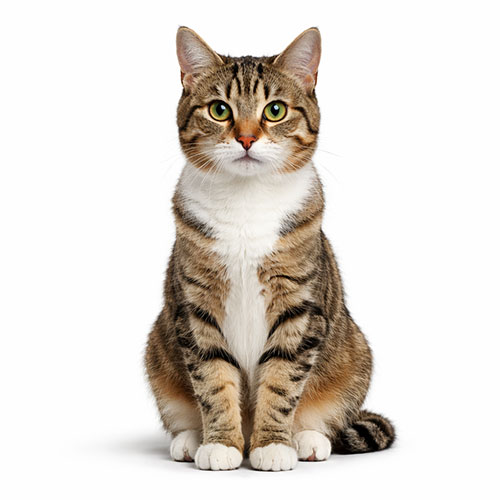

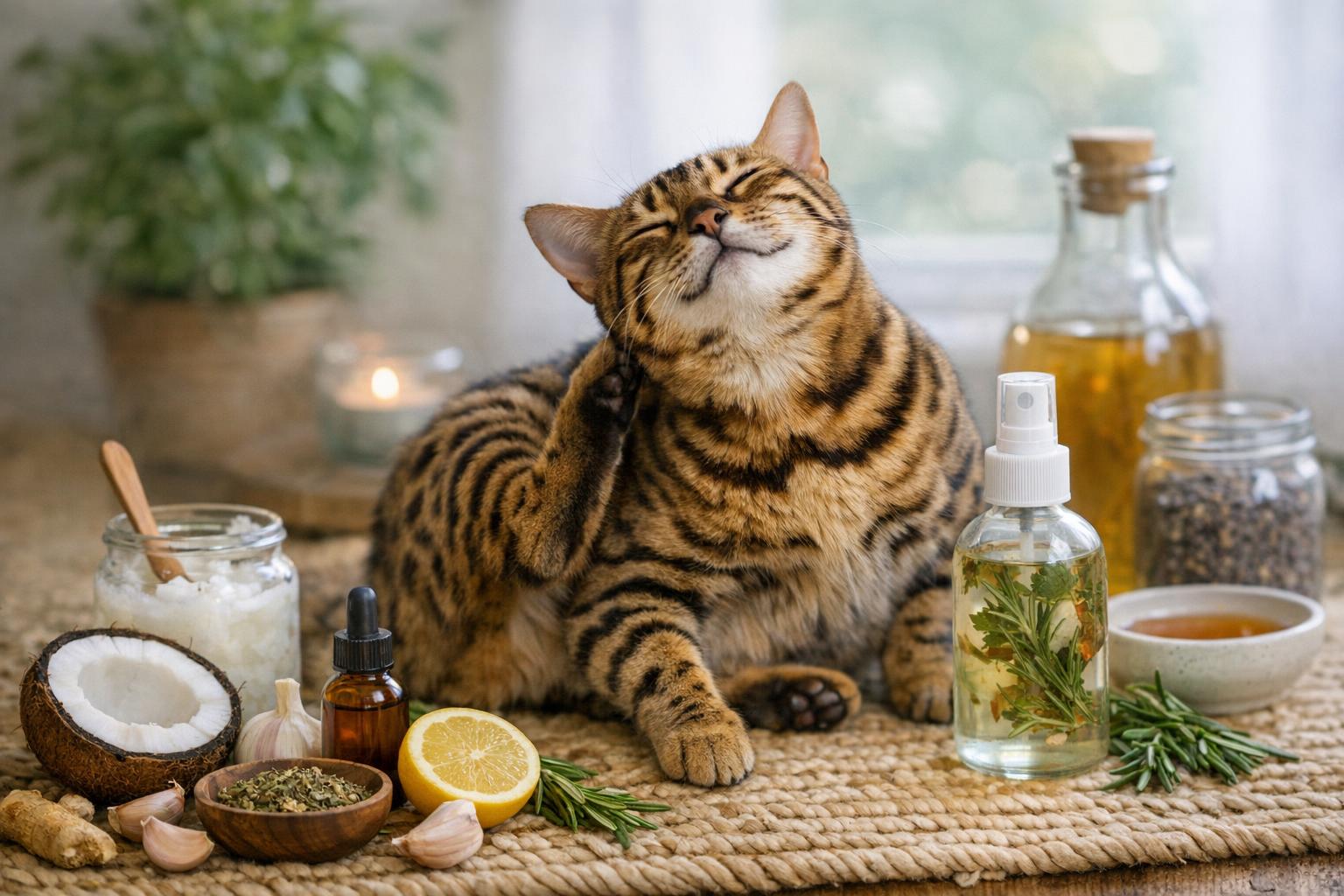
If your cat has been auditioning for a percussion solo with nonstop scratching, you’re not alone — flea allergy in cats is common and itchy. This article walks you through gentle, practical home care and safe DIY remedies to ease your cat’s discomfort while you tackle the fleas at home. A little patience, clean habits, and correct application of these treatments can make a big difference without resorting to harsh chemicals right away.
## Treatment For Cat Flea Allergy: Gentle Home Approaches
Flea allergy dermatitis (FAD) is essentially your cat’s immune system overreacting to flea saliva. Even a single flea bite can send a hypersensitive cat into a spinning, scratching spiral. The goal of any treatment for cat flea allergy is twofold: relieve the allergic reaction and remove or prevent fleas from biting in the first place.
### How Flea Allergy Dermatitis Works
A cat becomes sensitized to proteins in flea saliva. With subsequent bites, the immune response causes itching, redness, hair loss, and sometimes secondary skin infections. While commercial flea preventives are often necessary, targeted home care can reduce symptoms and support recovery. Remember: home remedies are for mild to moderate cases and are best combined with environmental control and veterinary guidance.
### Signs To Watch For
– Intense scratching, especially at the tail base
– Patchy hair loss or scabs
– Red, inflamed skin or hot spots
– Overgrooming, licking, or biting at certain areas
Spotting fleas or flea dirt (tiny black specks) in the coat confirms the pest culprit. If your cat shows signs of infection (pus, open sores, fever, lethargy), see your vet promptly.
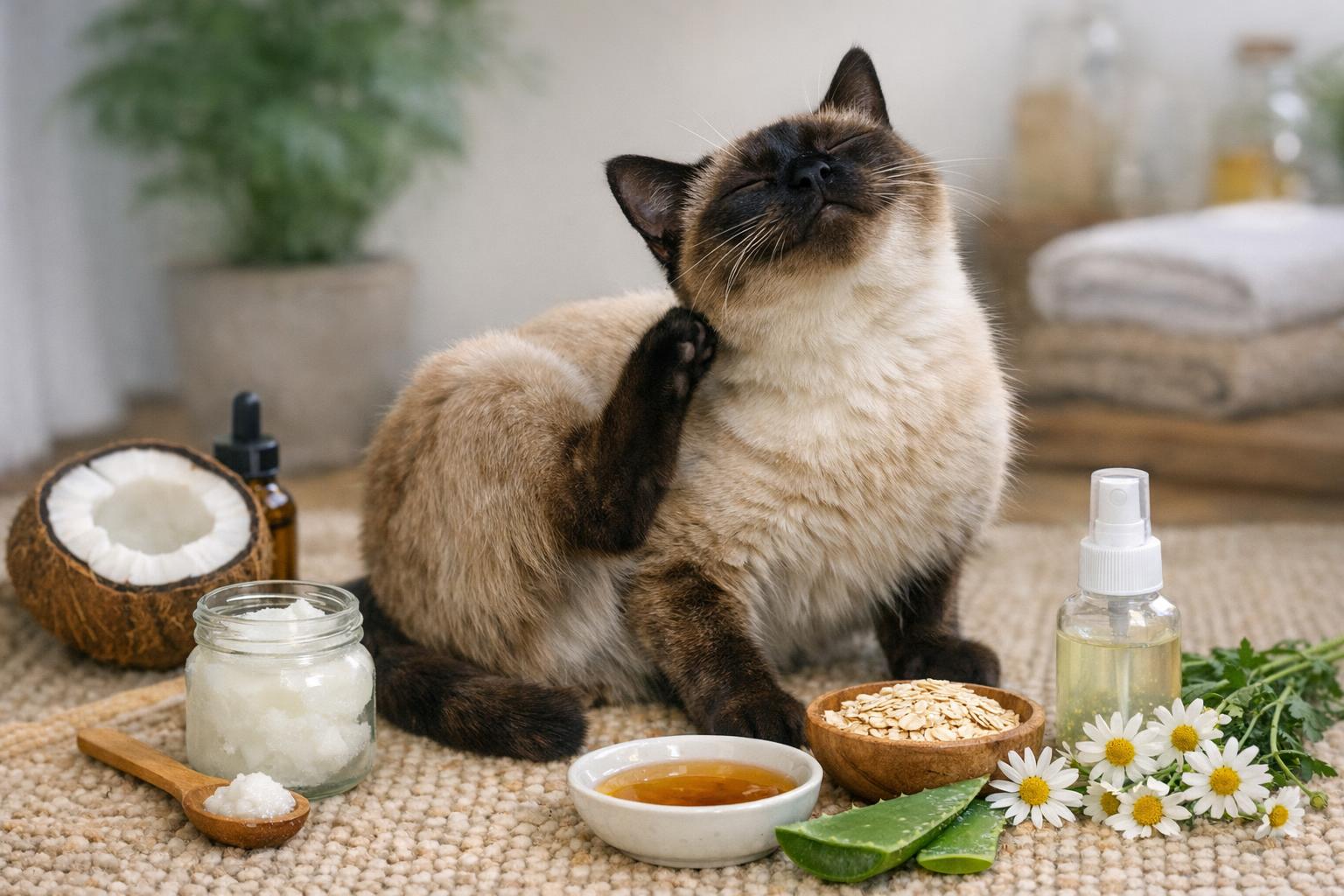
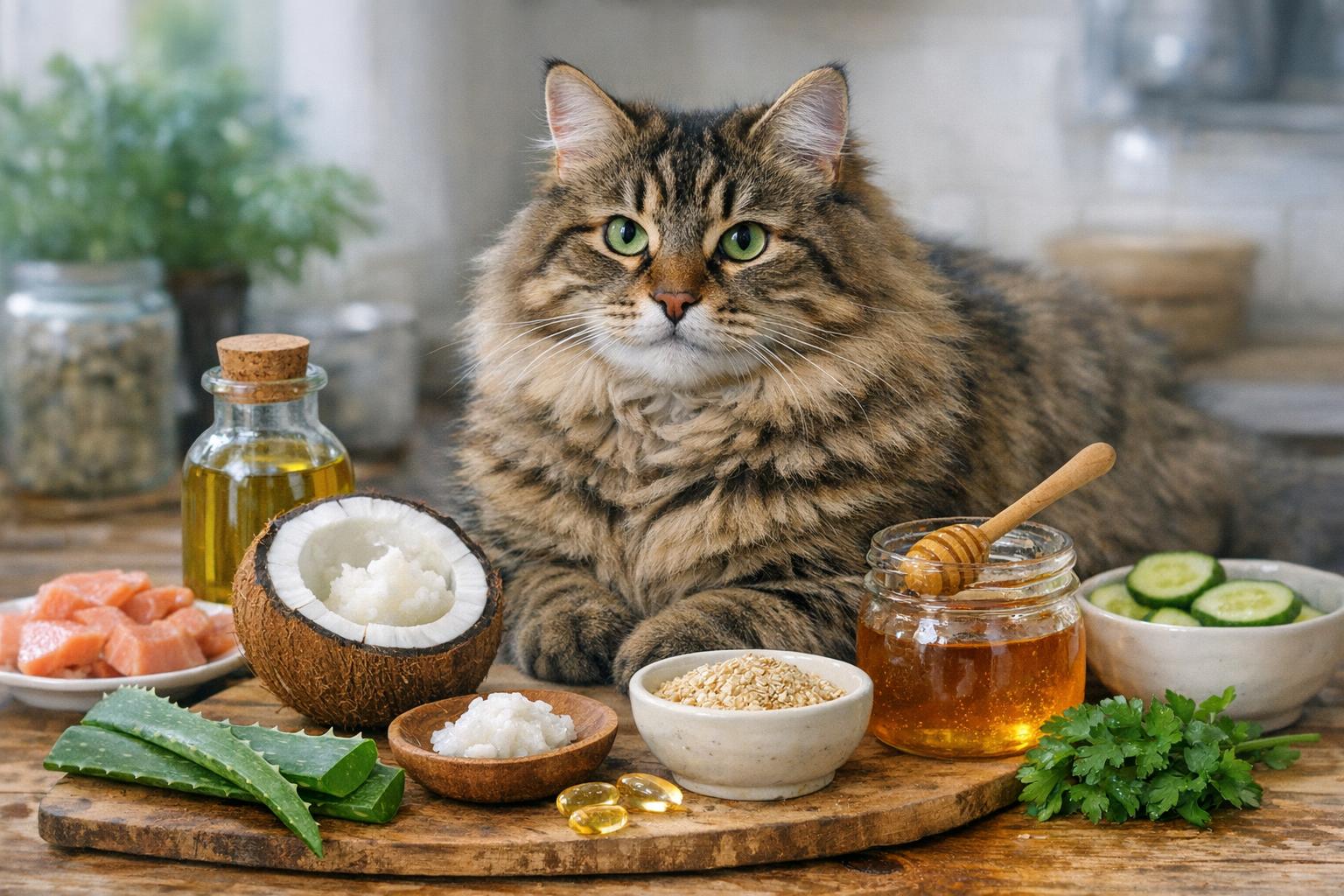
## 1. Coconut Oil And Oat Bath (Soothing Topical Care)
This bath-based remedy aims to soothe irritated skin and create a less attractive surface for fleas. It’s supportive care — not a flea-killer — but it helps manage symptoms of a treatment for cat flea allergy while you address the infestation.
### Ingredients Or Materials
– 1 cup colloidal oatmeal (finely ground plain oats)
– 2 tablespoons virgin coconut oil (food grade)
– 1–2 cups warm water (for a paste) and more for bathing
– A soft towel and a quiet room
### Creation And Application Steps
1. Mix the oatmeal and coconut oil with warm water to create a smooth paste or a milky soaked bath depending on coat length.
2. Place your cat in a safe, slip-proof basin or sink. Keep the experience calm — talk softly and use treats if your cat tolerates them.
3. Apply the paste gently to affected areas (do not force into ears, eyes, or open wounds). For full-body bathing, pour warm oatmeal water over the coat, massaging gently.
4. Let sit for 5–10 minutes, then rinse thoroughly with warm water.
5. Pat dry with a towel; avoid blow dryers unless your cat is used to them and the setting is cool.
Precautions: Use this only on cats that accept baths. If your cat has raw, bleeding wounds or deep infections, skip this until a vet assesses the skin.
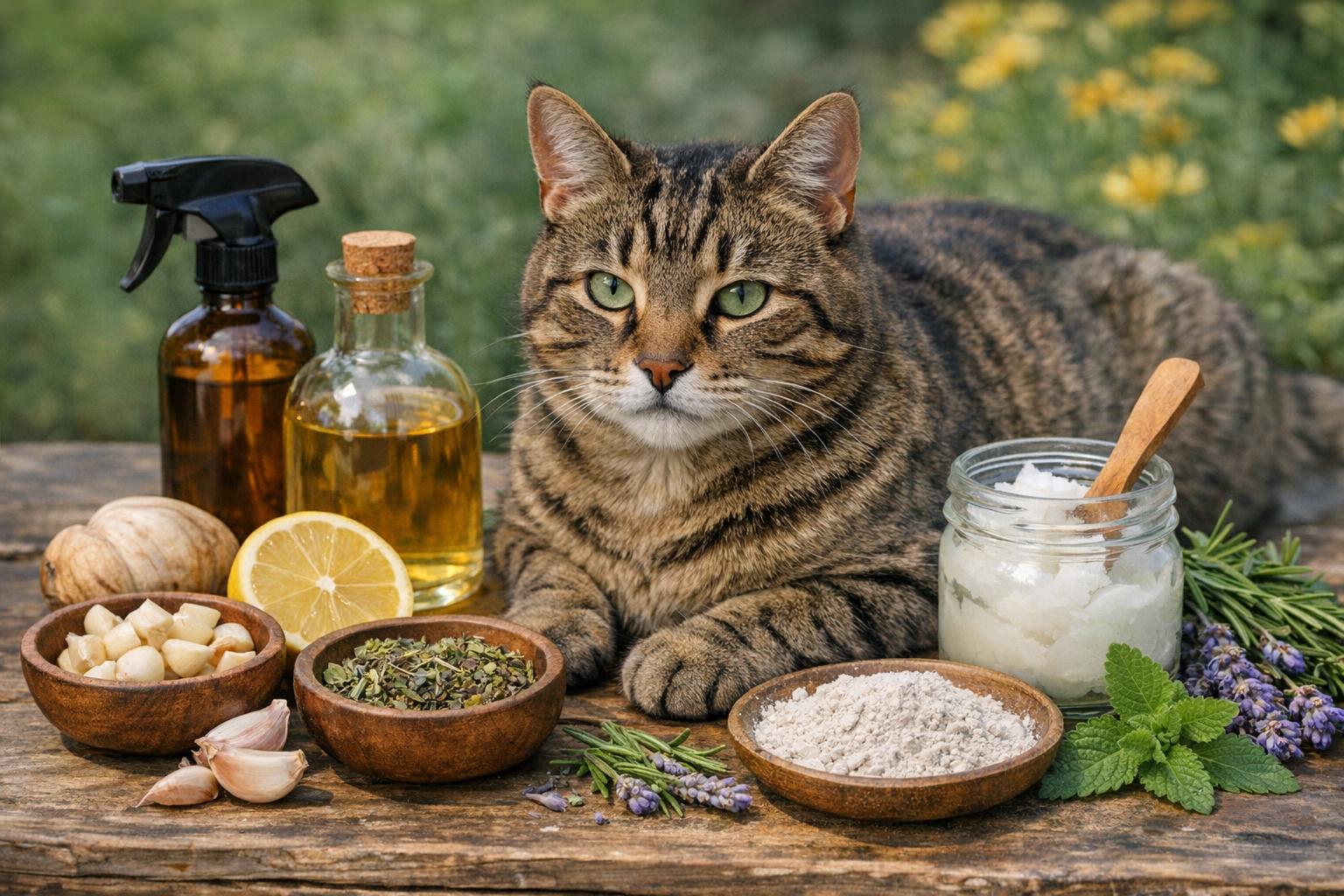
## 2. Apple Cider Vinegar Spot Treatment (pH Support And Flea Deterrence)
Apple cider vinegar (ACV) is sometimes used to alter the skin environment slightly and can discourage fleas temporarily. Use this as a spot treatment rather than a full-body remedy. This is a supportive component of a broader treatment for cat flea allergy, not a standalone cure.
### Ingredients Or Materials
– 1 part apple cider vinegar (organic, unpasteurized is fine)
– 1 part clean water
– A spray bottle or soft cloth
– Cotton balls (optional)
### Creation And Application Steps
1. Dilute ACV with an equal part of water (50/50 solution).
2. Test a small area first: apply a tiny amount to a patch of healthy skin and wait 24 hours to monitor for irritation.
3. If no irritation occurs, lightly spray or dab the solution onto flea-prone areas (tail base, neck, under belly). Do not apply to open wounds or very irritated skin.
4. Reapply once daily for 3–7 days while monitoring the skin.
Precautions: ACV can sting on raw skin. Avoid use on cats with broken skin. If your cat grooms heavily after application, this topical frequency should be reduced and discussed with your vet.
### When To Use This As Part Of A Plan
In a comprehensive treatment for cat flea allergy, ACV spot treatment is best used to support symptomatic relief while you deploy safe flea control (vacuuming, washing bedding, treating other pets, and possibly vet-approved flea products).
## 3. Environmental Deep Clean (Home-Wide Flea Control)
A treatment for cat flea allergy must include environmental management. Even if your cat is soothed, fleas in carpets, bedding, and furniture will keep biting. This numbered remedy focuses on removing eggs, larvae, and adult fleas from your living space.
### Ingredients Or Materials
– High-powered vacuum cleaner with attachments
– Frequent-wash laundry detergent
– Hot water access
– Diatomaceous earth (food grade) or boric acid (optional; use with caution)
– Pet-safe laundry bags or enclosed washing area
### Creation And Application Steps
1. Strip and wash all pet bedding, throw blankets, and any washable cushions in the hottest water safe for the fabric. Dry on high heat for at least 20–30 minutes to kill eggs and larvae.
2. Vacuum carpets, rugs, upholstery, baseboards, and under furniture daily for two weeks. Immediately empty or dispose of vacuum bags or the canister contents outside.
3. Apply food-grade diatomaceous earth very lightly to dry carpets and rugs if you choose an extra non-chemical control. Leave for 48 hours, then vacuum thoroughly. Use gloves and a dust mask; keep pets and children away during application.
4. Continue environmental cleaning on a schedule: weekly washing, daily or frequent vacuuming, and cleaning around doors and window sills.
Precautions: Use insecticidal products only if they’re labeled safe for homes with cats, and follow all instructions. Many over-the-counter flea foggers and lawn treatments contain permethrins or other chemicals toxic to cats — consult your vet before using them.
### Integrating Remedies Into A Safe Routine
Combine topical soothing (Coconut Oil & Oat Bath), pH-support spot treatments (ACV), and rigorous environmental cleaning to form a coherent treatment for cat flea allergy. Each part addresses a different layer: symptom relief, minor deterrence, and removal of breeding sites. Maintain good grooming and monitoring to assess progress.
### When To See Your Vet
If symptoms persist more than a week despite home care, if your cat develops open sores, signs of infection, or systemic illness (loss of appetite, lethargy), contact your veterinarian. A professional assessment may result in prescription antihistamines, steroids for severe inflammation, medicated shampoos, or a safe, effective flea-control product tailored for your cat’s age, weight, and health status. For an effective long-term treatment for cat flea allergy, coordinating with your vet is essential to prevent recurrence and manage secondary infections.
If you’d like, I can help you pick vet-safe flea products, create a household cleaning schedule tailored to your home, or adapt these remedies for kittens or multi-cat households.













Leave a Reply