






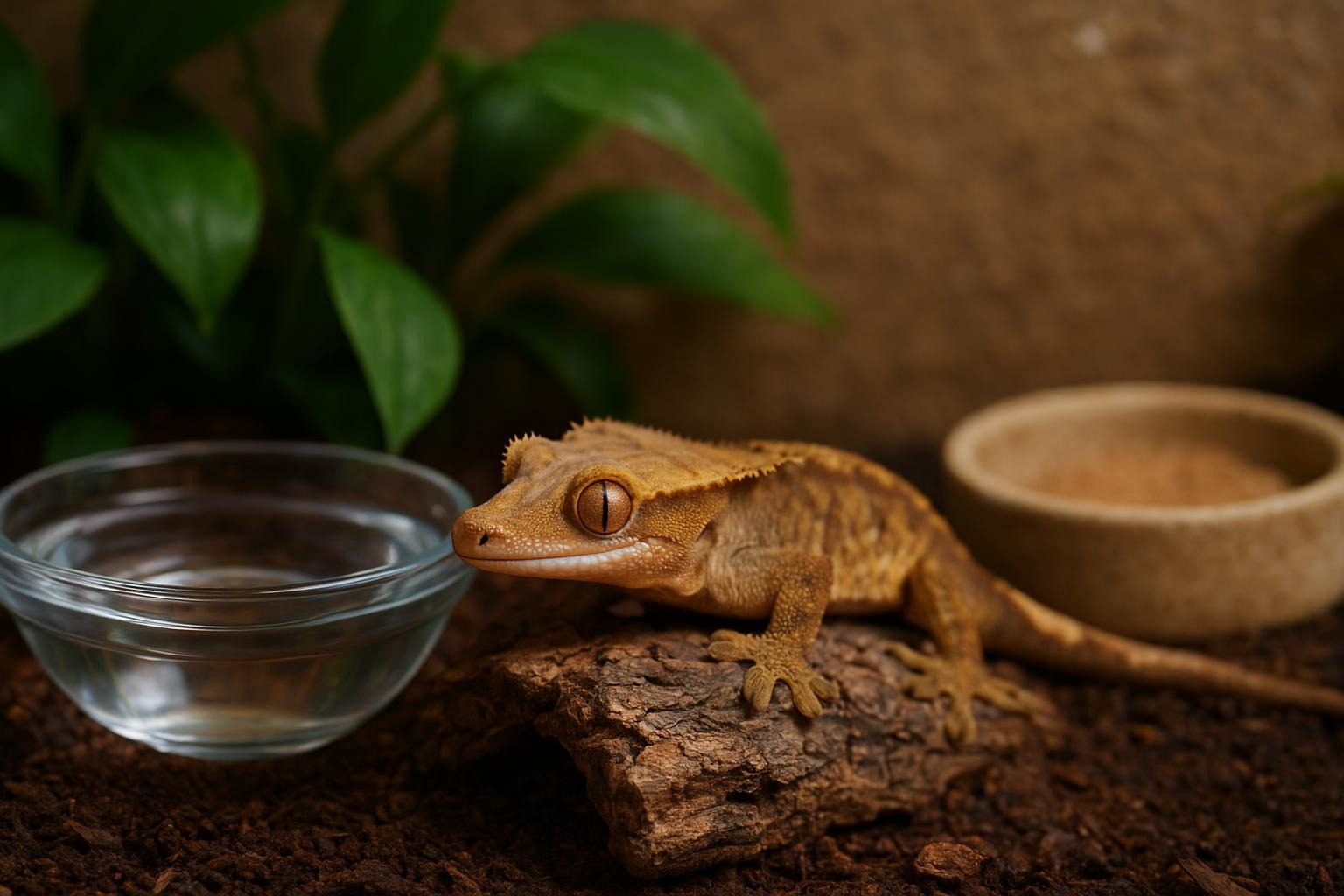
## Crested Gecko Temp: Optimal Range And Why It Matters
Crested geckos are famously chill — they don’t need blazing-hot basking spots like some desert lizards — but that doesn’t mean their temperature needs can be ignored. Maintaining a steady crested gecko temp in the right range keeps digestion working, supports immune function, and helps with normal activity and shedding. Think of it like setting the thermostat for a tiny, nocturnal roommate who mostly judges you for your plant choices.
Crested gecko temp is ideally kept between about 72°F and 78°F (22°C–26°C) during the active period, with nighttime dips into the high 60s°F (around 20°C). Short, mild deviations are usually tolerated, but prolonged cold (under ~65°F) or heat (above ~82°F) can cause stress, slowed metabolism, or serious health issues. This article covers simple, low-cost home remedies to gently correct temperature problems when you can’t immediately replace or upgrade a full heating system.
### Sizing Up Temperature: Tools And Simple Checks
You don’t need expensive lab gear, but reliable measurement is essential. A cheap digital thermometer with a probe, an infrared (IR) gun for quick reads, and a second thermometer near the hide give you confidence. Place one probe at mid-height on a wall in the enclosure and another inside the gecko’s favorite hide to gauge the microclimate. Crested gecko temp inside hides is often a few degrees warmer than ambient, which is fine as long as it stays in the safe window.
Be aware that surface readings (from an IR gun) and air readings (from thermometers) will differ. IR guns show surface temperature, so don’t rely on them alone for air temperature at the gecko’s typical level. Regular checks — morning and evening for a few days — reveal patterns and help you decide whether a home remedy is appropriate.
## 1) Passive Insulation Method To Stabilize Crested Gecko Temp
This is the gentlest first aid: improve the enclosure’s ability to hold a steady temperature by reducing drafts and increasing thermal mass.
#### Ingredients Or Materials
– Thick towel or blanket (for covering part of the tank)
– Styrofoam sheet or rigid foam insulation (cut to size)
– Extra cork bark or hollow log hide to increase thermal mass
– Thermometer(s) for monitoring
#### Steps: Creation And Application
1. Measure the back and sides of the enclosure that face cooler room areas. Cut the rigid foam insulation to fit the back panel and tape it on the outside. This reduces heat loss through the glass or thin walls.
2. Place an extra cork log or ceramic hide inside on the warm side of the tank. These objects act as thermal mass, slowly releasing heat and evening out temperature swings.
3. Drape the towel or blanket over the top and part of the sides in the evening (not covering any screen vents fully). Leave some ventilation so humidity and fresh air aren’t trapped. This will raise and stabilize night temperatures by a few degrees.
4. Monitor the crested gecko temp at the gecko’s hide and ambient air for several hours after changes. Adjust coverage or insulation thickness if temps go above target.
Formal notes: This approach reduces energy loss passively and is low-risk. Do not cover heat sources, airflow vents entirely, or create airtight conditions that could raise humidity to unsafe levels. Monitor humidity closely as insulation can increase it.
## 2) Temporary Heat Source: Rice Sock Or Hot Water Bottle Hide For Targeted Warming
If your gecko is noticeably chilly and needs a localized, gentle heat boost, a controlled rice sock or small hot water bottle placed under a hide provides immediate relief without overheating the whole room.
#### Ingredients Or Materials
– Clean cotton sock or small fabric pouch
– Uncooked rice (or flaxseed as an alternative)
– Microwave or kettle (for heating)
– Small ceramic hide or plastic hide with a hollow base
– Thermometer to verify surface temperature
#### Steps: Creation And Application
1. Fill the sock or pouch about two-thirds full with uncooked rice. Tie or sew the end closed securely.
2. Heat the rice sock in a microwave in 20–30 second intervals until warm, not hot. Total time varies by microwave; aim for a surface temperature around 95°F–100°F (35°C–38°C). If using a hot water bottle, fill with warm (not boiling) water and test.
3. Place the warm rice sock under or inside the hide so the gecko can choose to sit near it. Ensure the surface temperature at the hide’s floor does not exceed ~100°F; the gecko should not be forced into direct contact with hot surfaces.
4. Keep this setup as a temporary measure (a few hours at a time). Remove or replace the rice sock if it cools or reaches unsafe temperatures. Repeat as needed, monitoring the crested gecko temp inside the hide.
Formal guidance: This is a short-term remedy for mild, acute chill. Never leave hot items unattended for prolonged periods. Do not use heat sources that could burn or emit fumes. Always verify temperatures with a reliable thermometer; tactile feel is insufficient and risky.
### 3) Low-Wattage Under-Hide Heat Mat (Budget Approach)
For longer-term but still budget-conscious fixes, a low-wattage heat mat under a hide can offer stable, localized warmth. Use a mat intended for reptiles and connect it to a thermostat to avoid overheating.
#### Ingredients Or Materials
– Low-wattage reptile heat mat (10–15W for small enclosures)
– Thermostat or rheostat compatible with the mat
– Adhesive tape or mounting bracket (as recommended by manufacturer)
– Thermometer placed at the hide floor level
#### Steps: Creation And Application
1. Mount the heat mat on the outside bottom or under a wooden hide per manufacturer instructions — never stick directly to glass unless specified.
2. Attach the mat to a thermostat set to maintain the target crested gecko temp for the hide area (around 75°F–80°F).
3. Place a thermometer inside the hide at floor level to confirm the mat’s effect and fine-tune thermostat settings.
4. Check daily for any wiring issues or hotspots. Replace mat if it shows signs of wear.
Formal note: Always use reptile-specific mats with appropriate electrical safety standards. Using a thermostat is not optional for long-term use; uncontrolled mats can overheat enclosures.
### Safety Checklist And Monitoring For Any Home Remedy
– Verify temperatures with at least two thermometers positioned where the gecko spends time.
– Keep humidity in the normal range (50%–80% depending on your genus and plants); insulating measures can raise humidity, so ventilate appropriately.
– Avoid direct skin contact between heat sources and the gecko; burns can happen quickly.
– Use remedies as temporary fixes while arranging a long-term, proper heating solution.
– If you use electrical devices, check cords and connections daily for damage and secure them away from water sources.
Watch behavior: a lethargic gecko, loss of appetite, rapid breathing, or unusual skin tone are signs of thermal stress. If you see these, stop the remedy and seek veterinary advice.
### Common Mistakes With Crested Gecko Temp
People often overreact by cranking heaters to maximum or by leaving temporary heat sources in place indefinitely. Both can create hotspots, dehydration, and stress. Another frequent error is relying solely on ambient room temperature; microclimates inside hides and plant cover matter more. Finally, using heat sources without a thermostat or failing to monitor for at least a few days increases risk.
### When To Call A Vet Or Upgrade Your Setup
If your crested gecko’s behavior doesn’t normalize after temperature adjustments, if its body temperature remains consistently outside the safe range despite remedies, or if you notice signs of illness (refusal to eat for multiple feedings, weight loss, respiratory issues), contact an exotic-pet veterinarian. Home remedies are stopgaps; they’re great for troubleshooting or travel, but not substitutes for a properly designed enclosure with reliable heating, thermoregulation, and humidity control.
Keep in mind that “crested gecko temp” management is about consistency and choice: provide a range and let your gecko choose what it needs. A calm approach, proper monitoring, and simple, safe home remedies will get you through most hiccups — and possibly earn you a smirk from that tiny, judgmental roommate.























Leave a Reply