





If you’re reading this because you’ve just inherited a curious little corn snake, found one in the backyard, or are politely considering adopting a scaled roommate, learning how to handle a snake safely at home is one of the best things you can do for both you and the snake. Handling isn’t just a social nicety for reptiles — it’s an important part of husbandry, health checks, and building trust.
## How To Handle A Snake: Safety First
Handling a snake should always start with safety and respect. Whether the snake is your pet or a wild visitor, the basic principles are the same: know what you’re dealing with, control the environment, and keep both you and the animal calm. If you’re asking how to handle a snake, pause and identify the species or at least determine whether it is venomous. If there’s any doubt about venom, call local animal control or a herpetology expert—do not attempt to handle it yourself.
### Know The Snake You’re Handling
Different species have different temperaments. Ball pythons are often calm, whereas some colubrids may be flighty. Wild snakes behave differently from captive-bred pets; stress levels are higher and unpredictability increases. Learn body language: a relaxed snake moves smoothly and often flicks its tongue; a defensive snake may coil, hiss, or S-loop as a pre-strike posture.
### Prepare The Space And Yourself
Temperature matters. Snakes are ectotherms; they handle better at their normal active temperature range. Make sure the room is warm enough so the snake isn’t sluggish or hyperactive. Clear the area of other pets and loud noises. Wear clothes that cover your arms if you’re nervous, and remove jewelry that could snag.
#### Tools And Supplies To Have Ready
– Snake hook (for larger or nervous snakes)
– A secure towel or snake handling bag for transport
– A secure container with ventilated lid for temporary holding
– Gloves (optional; use leather for larger constrictors only; beware reduced sensitivity)
– Hand sanitizer and wound supplies for after-handling hygiene
### Approach And Pick-Up Technique
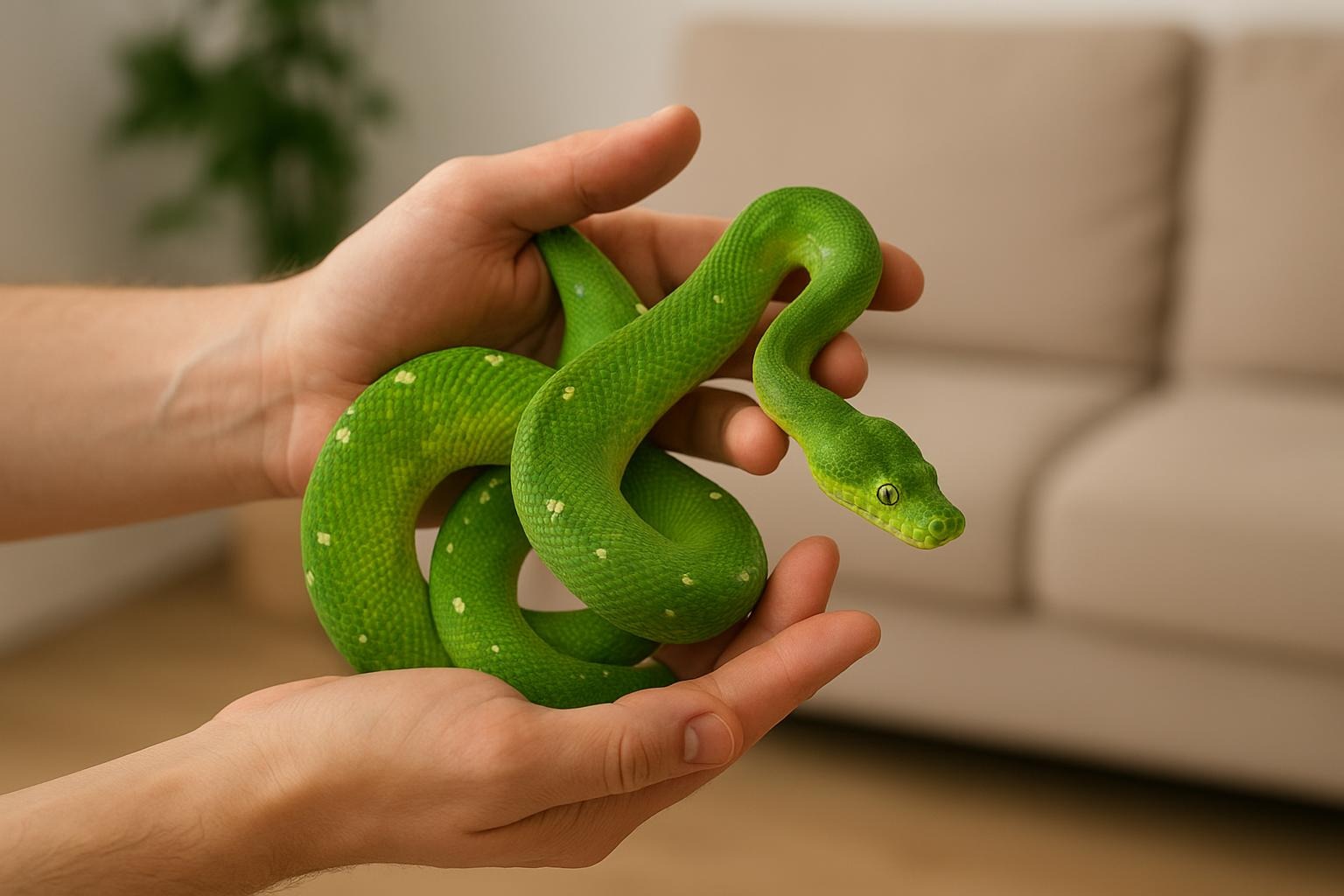
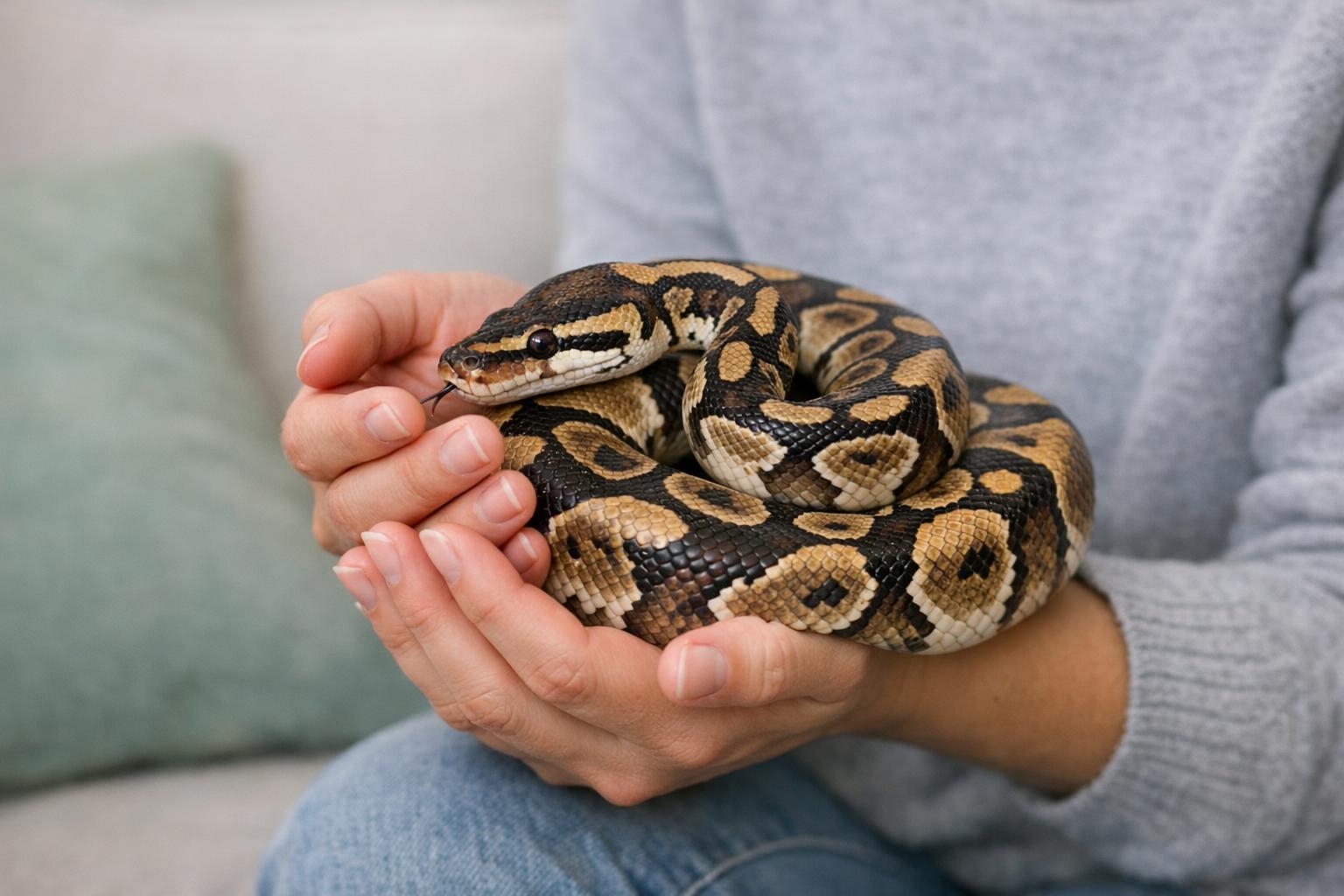
Approach slowly and from the side, not overhead—sudden movements can trigger defensive strikes. Place a hand gently a little behind the head to support the front third of the body, and the other hand under the mid-body or near the tail to support the remainder. Lift smoothly and keep the body supported; let the snake move and adjust on your hands rather than forcing it into a position.
If the snake is large (constrictors or big pythons), use a second person and a hook. Don’t grab by the tail only; it stresses the animal and can cause injury.
### Handling Etiquette: What To Do And What To Avoid
Keep sessions short, especially for new or recently fed snakes—30 minutes or less is a good baseline. Avoid handling right after feeding (wait at least 48–72 hours) or during shedding. Don’t let the snake roam freely in areas with hidden dangers (open water bowls, hot surfaces, small gaps). Avoid sudden movements, and never punish a snake for defensive behavior; it’s reacting to instinct.
### Recognizing Stress And When To Stop
Signs of stress include frantic knotting (holding onto furniture or climb attempts), prolonged hiding attempt, refusal to move, ballistic striking, or persistent hissing. If these happen, gently return the snake to its enclosure and give it time to calm down. Knowing how to handle a snake includes knowing when not to handle one.
## Transporting And Returning A Snake Safely
When moving a snake between enclosures or to a vet, use a secure container. If moving a pet snake, you can guide it into a pillowcase and then into a ventilated carry box for short transports. For wild captures, use a snake hook and secure bagging technique; release it at the capture site unless species or location requires otherwise.
### Clean Hands, Clean Habits
Always wash your hands before and after handling. Snakes rely heavily on chemical cues; detergents or human scents can stress them. After handling, hand hygiene is essential to reduce the small but meaningful risk of salmonella transmission.
#### Remedy 1: Handling Prep Kit (A Preventive “Remedy” For Safer Handling)
Materials Required:
– Snake hook appropriate to snake size
– Soft towel or handling bag
– Secure travel box with vents
– Disposable gloves (for those who prefer)
– Small chair or stool (stable seating)
– Thermometer for ambient room temperature
Creation And Application (Formal Instructions):
1. Inspect all equipment for damage and cleanliness. Disinfect containers after each use with a reptile-safe disinfectant and rinse thoroughly.
2. Warm the handling area to the snake’s active temperature zone (check species-specific requirements; most common pet snakes are comfortable between 78–88°F / 25–31°C).
3. Place the towel or bag near the enclosure entrance to encourage calm movement onto a familiar surface.
4. Use the snake hook to coax nervous snakes gently—slide the hook under the body and lift gradually. Never use a hook to strike or prod forcefully.
5. Support the snake’s body with both hands as described above. Keep the back pressure minimal and let the snake coil across your arm rather than gripping it tightly.
6. After handling, return the snake to its enclosure gently, allow it to move off you voluntarily if possible, and disinfect tools. Wash your hands thoroughly.
This kit reduces stress, protects you from bites, and makes transfers predictable—an ounce of preparation prevents a pound of startled slither.
#### Remedy 2: First Aid For Suspected Non-Venomous Snake Bite
Materials Required:
– Clean sterile gauze and adhesive bandage
– Antiseptic (chlorhexidine or povidone-iodine)
– Clean water or saline solution
– Elastic bandage (for limb immobilization)
– Phone to call medical or veterinary services
Creation And Application (Formal Medical Guidance):
1. Ensure scene safety. If the snake might be venomous, evacuate the area and call emergency services immediately. Do not attempt to capture the snake unless trained and certain of species and safety.
2. For confirmed non-venomous bites, keep the bitten person calm and immobilize the affected limb at heart level or slightly below to reduce blood flow to the site.
3. Gently cleanse the bite area with water or saline to remove foreign material. Apply an antiseptic to reduce infection risk.
4. Cover the wound with sterile gauze and secure with a light dressing. Do not apply a tourniquet, do not cut the wound, and do not attempt to suck out venom—these actions can cause additional harm.
5. Monitor for signs of infection or allergic reaction (increasing pain, redness, swelling, fever, difficulty breathing). Seek professional medical attention for tetanus updates, antibiotics, or further treatment if needed.
6. For pets bitten, transport to a veterinarian promptly with the bite details; follow similar wound-cleaning steps, but recognize animals often require professional debridement and antibiotics.
When providing first aid, err on the side of caution and seek professional care; local protocols and venom considerations vary widely, and trained responders should assess risks.
### Building Confidence Over Time
Handling a snake is a skill, not a talent you’re either born with or not. Start slow, learn the species-specific cues, and make handling a predictable, low-stress routine. Positive experiences build trust: gentle handling sessions combined with consistent husbandry will make both of you happier.
### Common Mistakes To Avoid
Don’t handle a snake after it has recently eaten or while shedding, don’t use force or quick jerks to control the animal, and don’t ignore signs of stress. Also, never house-sit a snake if you’re unsure how to manage its temperature, feeding, or handling needs—knowledge is the best safety tool.
If you keep in mind these basic principles of respect, preparation, and gentle technique, you’ll be well on your way to knowing how to handle a snake safely at home without turning every interaction into a drama.













Leave a Reply