

## Understanding Why Your Dragon Has Dry Skin
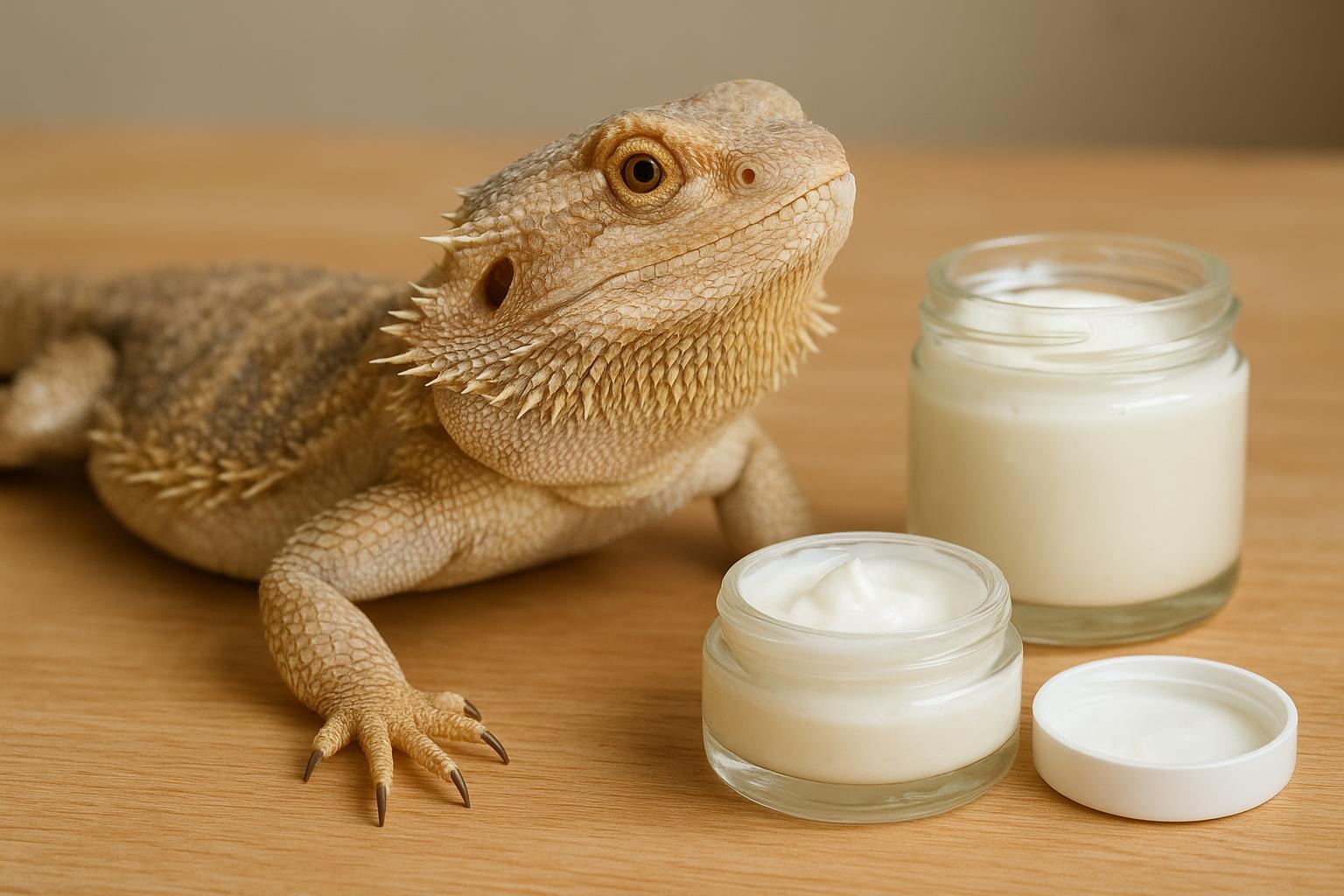
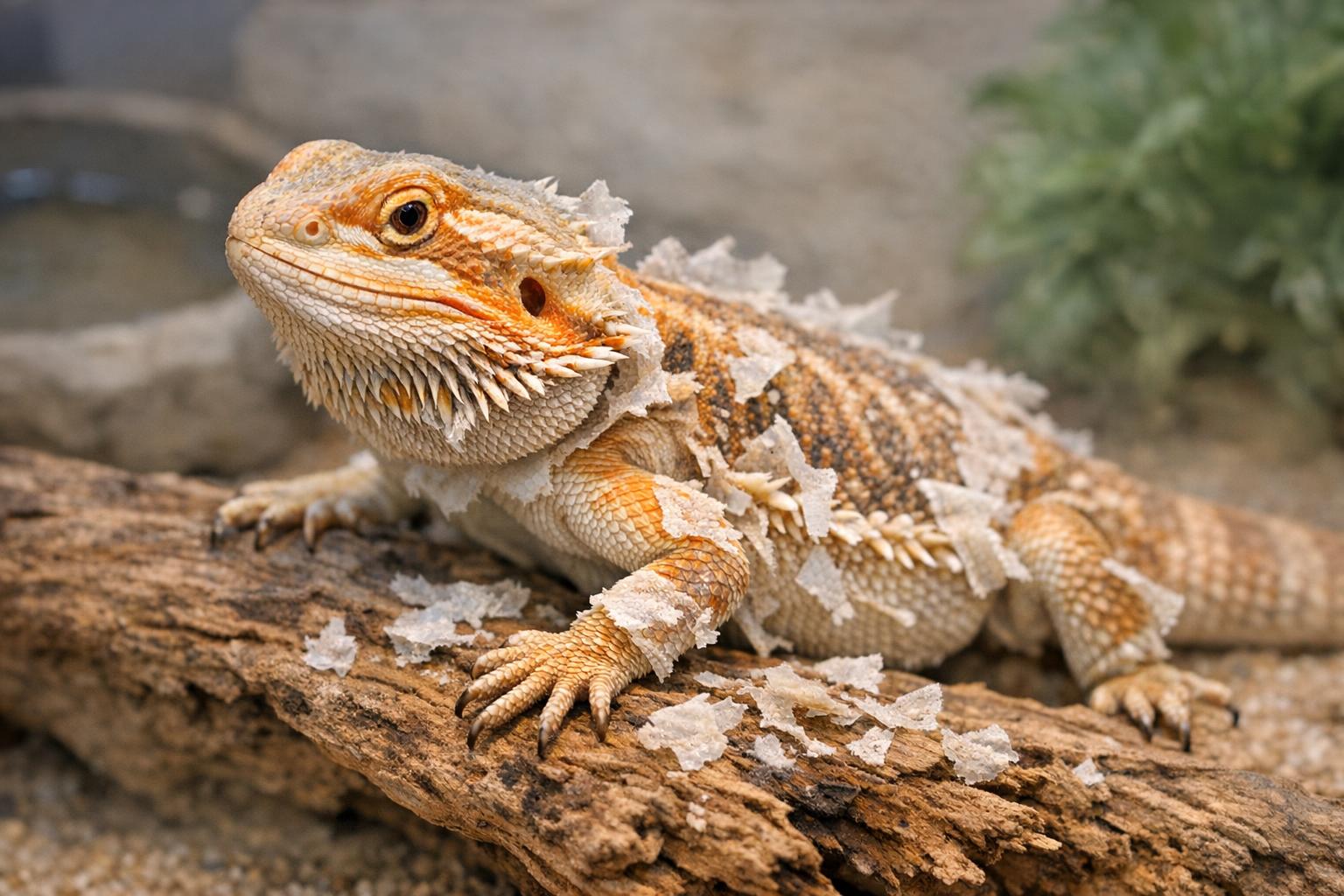
Bearded dragons shed regularly as they grow, and that flaky stage can look alarming if you’re not used to it. But sometimes what looks like ordinary shedding is actually persistent bearded dragon dry skin — a sign that something in the environment, diet, or care routine needs adjusting. Think of it like a human with chronically chapped skin: a quick lotion fixes the seasonal stuff, but persistent cracking means time to investigate.
### Normal Shedding Versus Problematic Dry Skin
Most bearded dragons will shed in patches, losing skin around the head, back, and tail. That’s normal. Problematic dry skin is more persistent, presents as dull, dusty scales that don’t come off with soaking or gentle rubbing, or is accompanied by redness, sores, or behavior changes. If your dragon seems uncomfortable, refuses food, or has stuck shed on toes or tail tips, pay extra attention.
### Common Causes To Check First
– Low humidity or too-cool basking temps
– Insufficient drinking or bathing opportunities
– Poor diet lacking in hydration-rich greens and supplements
– Inadequate UVB or incorrect temperature gradient
– Parasites, fungal or bacterial infections, or impaction
## 1. Warm Soaks For Rehydration
A warm soak is the simplest home remedy and often the quickest relief for bearded dragon dry skin. This is supportive care — not a cure for underlying disease — but it can soften stubborn shed and help hydration.
Ingredients / Materials
– Shallow plastic tub or sink
– Clean, lukewarm water (about 90–95°F / 32–35°C)
– Thermometer to check water temperature
– Soft towel for drying
– Optional: soft toothbrush (for gently loosening stuck shed, used strictly after soaking)
Step-by-Step Soak Procedure
1. Prepare the water in a shallow tub so your dragon can sit with their belly submerged but their head comfortably above water. Check temperature with a thermometer.
2. Gently place your bearded dragon into the water. Stay with them at all times.
3. Allow soaking for 10–20 minutes. Watch for signs of stress; if your pet is trying to climb out frantically, end the soak sooner.
4. After soaking, gently rub areas with loose skin using a soft, damp cloth or a very soft toothbrush. Never force shed that’s not ready.
5. Thoroughly dry your dragon and return them to their warm basking spot so they can thermoregulate and finish drying naturally.
Frequency Guidance
– For mild issues: soak 2–3 times per week until the skin improves.
– For stubborn stuck shed: daily short soaks for up to a week can help, but consult a vet if no progress.
## 2. Humidity Boosting And A Humidity Hide
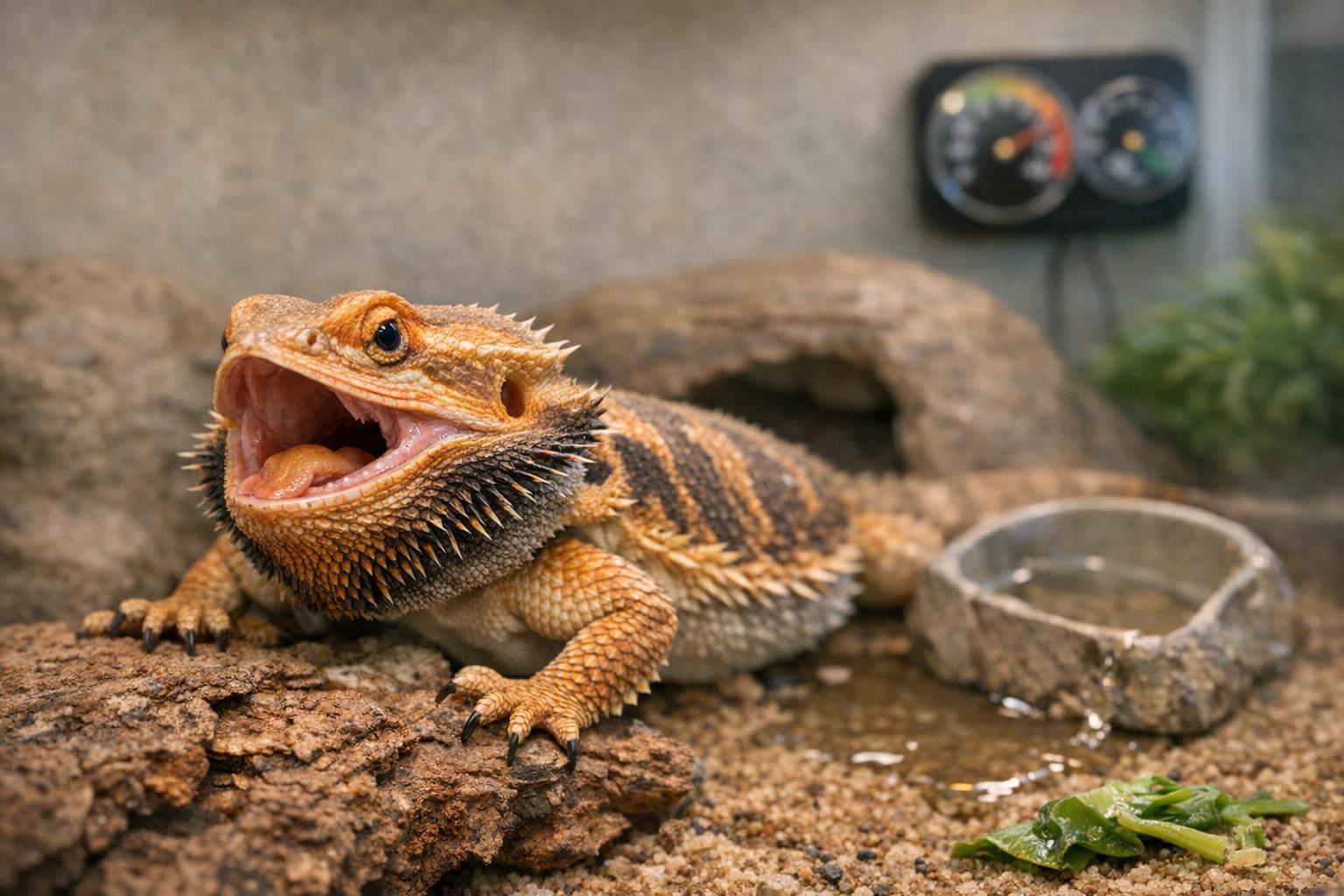
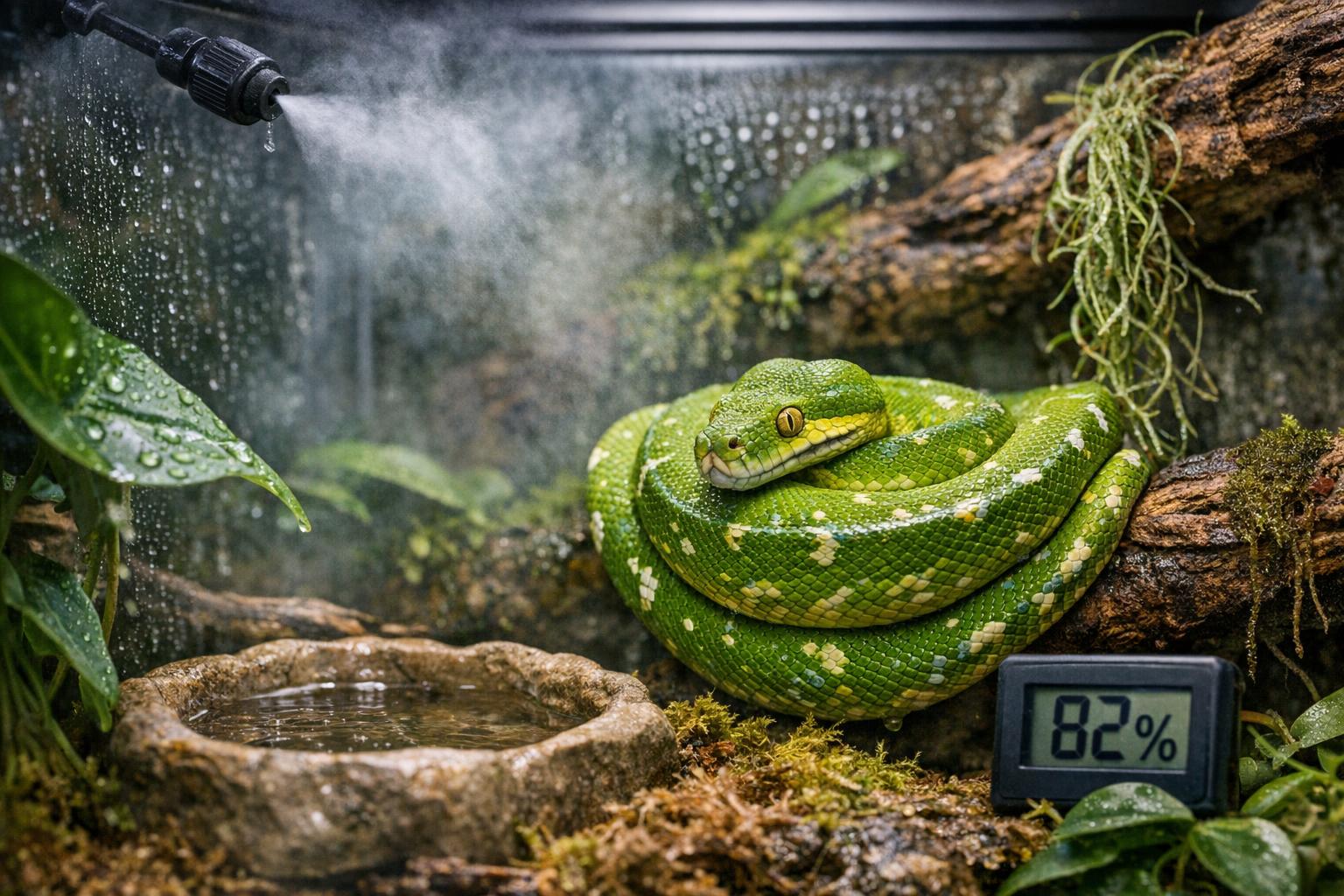
Low ambient humidity is a common contributor to bearded dragon dry skin. A simple humidity hide gives a localized microclimate that helps with shedding without flooding the entire enclosure.
Ingredients / Materials
– Small plastic or wooden box with an entrance hole
– Moist substrate (damp sphagnum moss, coconut fiber, or paper towel)
– Hygrometer to measure humidity
– Optional: small hide decor to secure the box
Step-by-Step Creation And Use
1. Select a box slightly larger than your dragon so they can turn around comfortably.
2. Cut an entrance hole on one side at ground level.
3. Fill the box with damp (not soaking) sphagnum moss or another moisture-retaining substrate.
4. Place the humidity hide on the warm side of the enclosure near the basking area but not directly under a heat lamp.
5. Monitor humidity inside the hide — it should be higher than the tank baseline, around 40–60% inside the hide while keeping general tank humidity lower (~30–40% is typical for adults).
6. Encourage your dragon to use the hide by placing it where they usually feel secure; some will use it immediately, others may take time.
Safety Notes
– Change and re-moisten substrate regularly to avoid mold growth.
– Avoid creating a constantly wet tank; bearded dragons need alternating dry and humid zones.
### Safe Humidity Levels For Different Ages
Juveniles commonly appreciate slightly higher humidity (about 40%) compared with adults (around 30–40%). Excess humidity across the whole tank can promote respiratory infections, so localize humidity with a hide.
## 3. Relieving Bearded Dragon Dry Skin During Shed
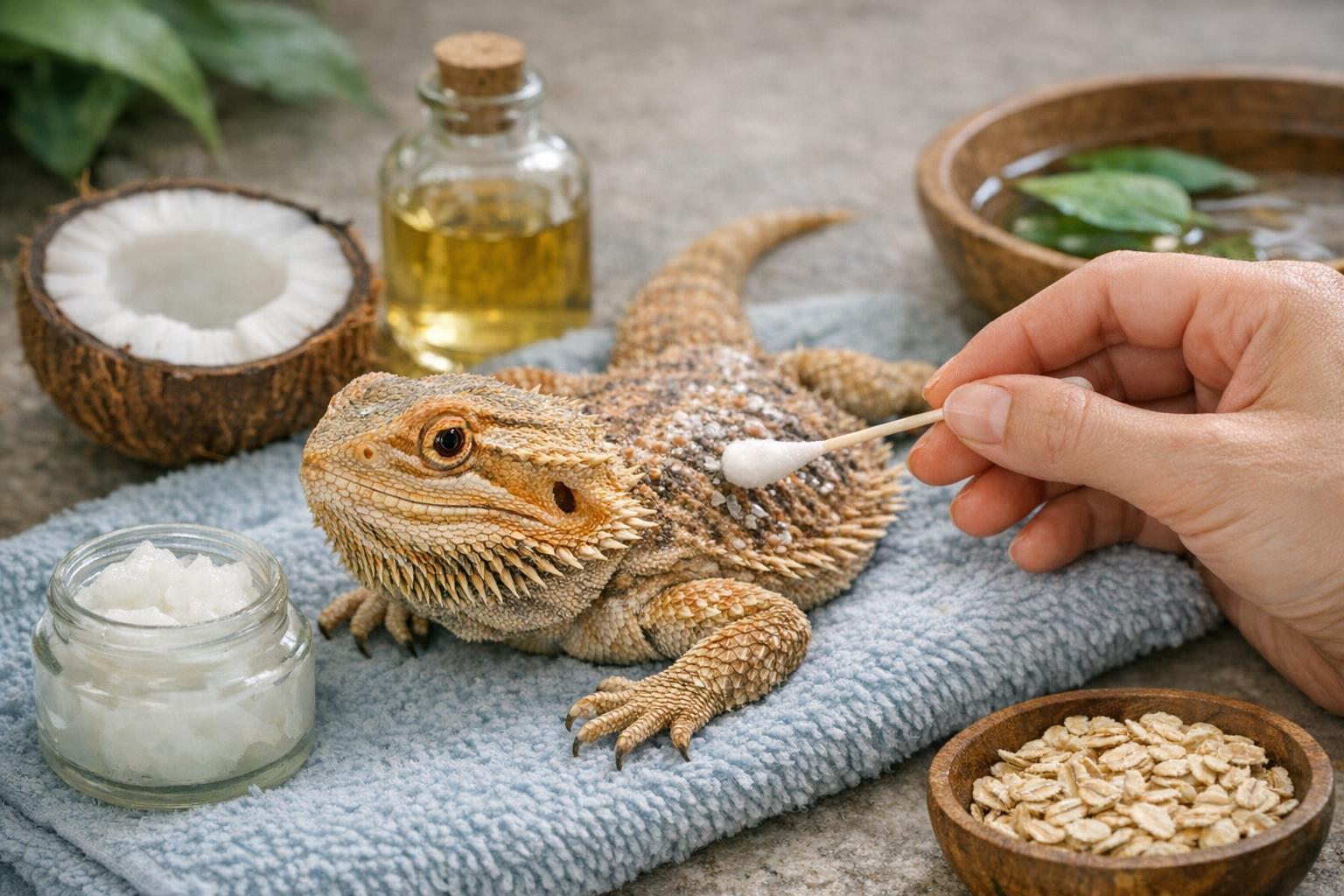
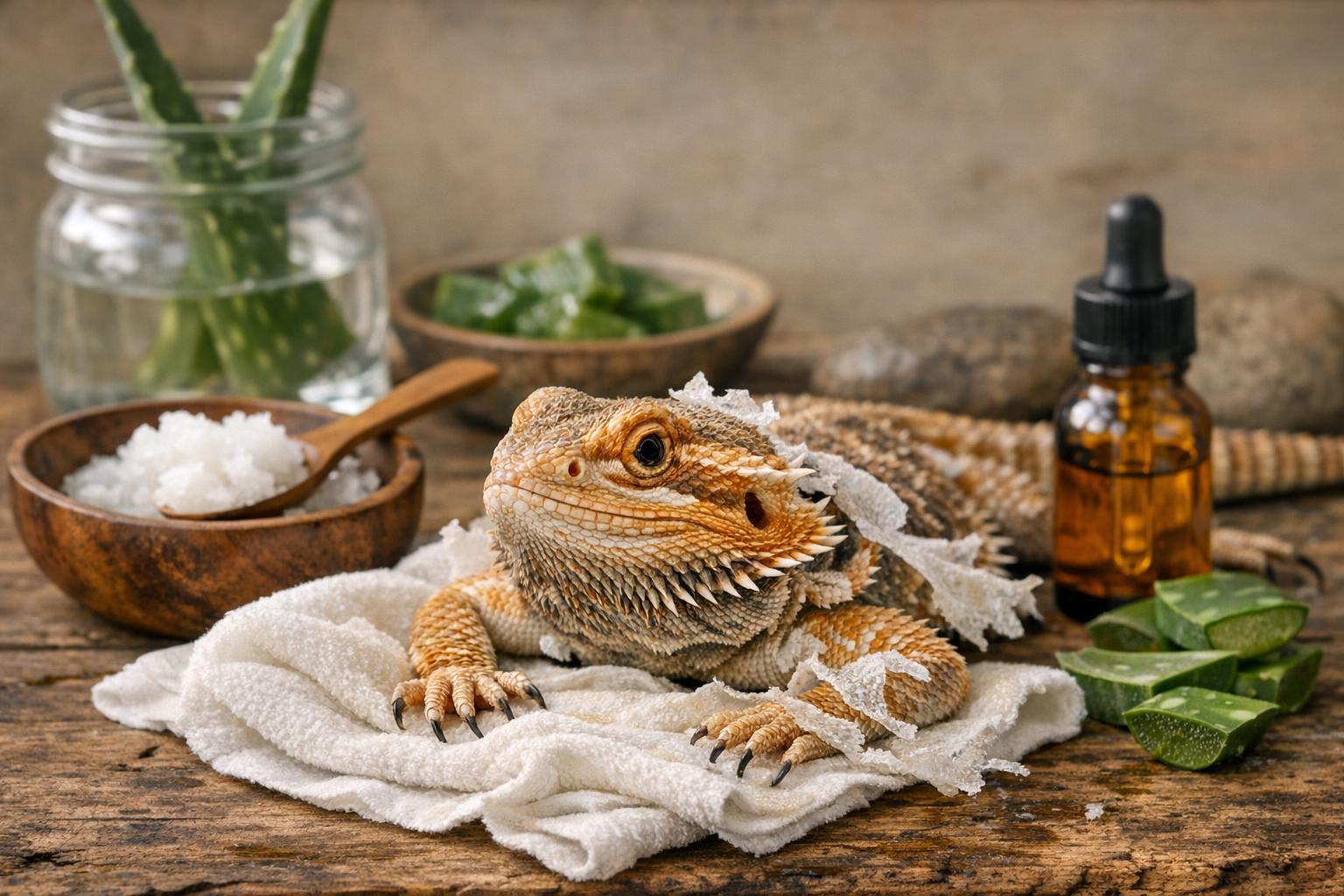
When skin becomes problematic during shedding — stuck flakes, especially around limbs and tail — targeted care is needed. This remedy focuses on safely assisting the shed and using a conservative topical option.
Ingredients / Materials
– Pure aloe vera gel (100% aloe, no alcohol, fragrances, or additives)
– Clean cotton swabs or soft cloth
– Warm soak materials (see Remedy 1)
– Gloves (optional for handlers)
Step-by-Step Application For Stuck Shed
1. Soak your bearded dragon as described in Remedy 1 to soften the skin.
2. After soaking and gently drying, apply a tiny amount of pure aloe vera gel to areas of stuck shed using a cotton swab. Use sparingly — you only need a thin film.
3. Gently massage the area for 30–60 seconds to help loosen the dead skin. Do not pull at flakes.
4. Re-soak if necessary, then use a soft toothbrush very gently to remove loosened shed.
5. Monitor the area daily for improvements or signs of irritation. If skin becomes inflamed, stop topical use and consult your vet.
Clinical Notes
– Only use pure aloe vera without additives. Many commercial gels contain alcohol or fragrances that irritate reptile skin.
– Avoid oils (mineral, coconut, or vegetable) on large areas — oils can clog pores and trap moisture improperly, increasing infection risk.
– Never apply topical products to open wounds, bleeding, or obviously infected skin.
#### When Not To Use Topical Remedies
Do not apply any home topical if:
– The skin is broken, oozing, or has a foul odor.
– Your dragon is lethargic, refusing food, or shows other systemic signs.
– You’re unsure about the substance’s purity — if in doubt, skip it and call a vet.
## 4. Diet And Hydration Adjustments To Prevent Dry Skin
Long-term prevention of bearded dragon dry skin depends heavily on diet and readily available water.
Ingredients / Materials
– Fresh water bowl large enough for soaking
– Hydration-rich greens (collard greens, dandelion greens, mustard greens)
– Gut-loaded feeder insects (crickets, dubia roaches)
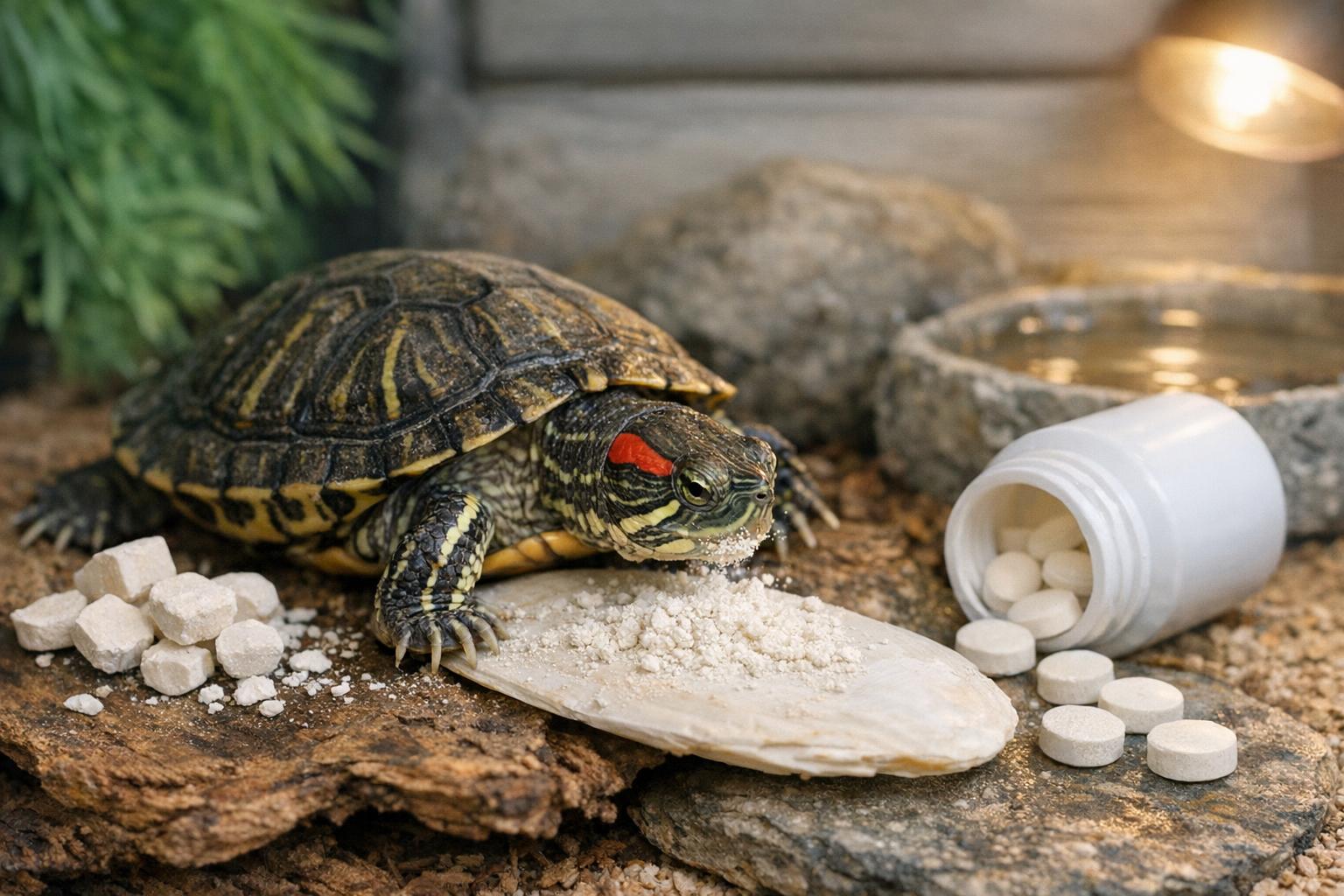
– Reptile calcium supplement with vitamin D3 (as recommended by your vet)
– Multivitamin supplement (reptile-specific)
Step-by-Step Dietary Strategy
1. Offer fresh, leafy greens daily; chop into manageable pieces for juveniles.
2. Provide gut-loaded insects with a variety of foods to increase moisture and nutrient content.
3. Make sure a water dish is always available and large enough for soak sessions; some dragons prefer to drink after soaking.
4. Dust insects with calcium at the frequency your vet recommends and include a reptile multivitamin weekly or as advised.
5. Monitor intake; decreased appetite or picky eating can contribute to dehydration and poor skin health.
### Supplements And UVB Role
Proper calcium/vitamin balance and reliable UVB exposure are essential. Inadequate UVB leads to poor vitamin D synthesis and metabolism, which can indirectly affect skin and scale health. Replace UVB bulbs per manufacturer recommendations and ensure correct bulb distance.
## When Home Care Isn’t Enough
If you’ve tried these home remedies and your dragon shows persistent patches of bearded dragon dry skin, open sores, weight loss, or behavioral changes, contact a reptile veterinarian. Issues like fungal infections, parasites, metabolic bone disease, or impaction require professional diagnosis and targeted treatment. A vet can perform skin scrapings, bloodwork, or prescribe safe topical or systemic treatments that are beyond home care.
Remember, modest pampering helps — warm soaks, a humidity hide, and better diet will solve many cases of mild bearded dragon dry skin — but don’t be shy about calling the pro if things look off. After all, you’re aiming for a healthy scaly roommate, not a lizardly mystery novel.





Leave a Reply