

## Understanding Why Paw Pads Crack And When It Becomes A Problem
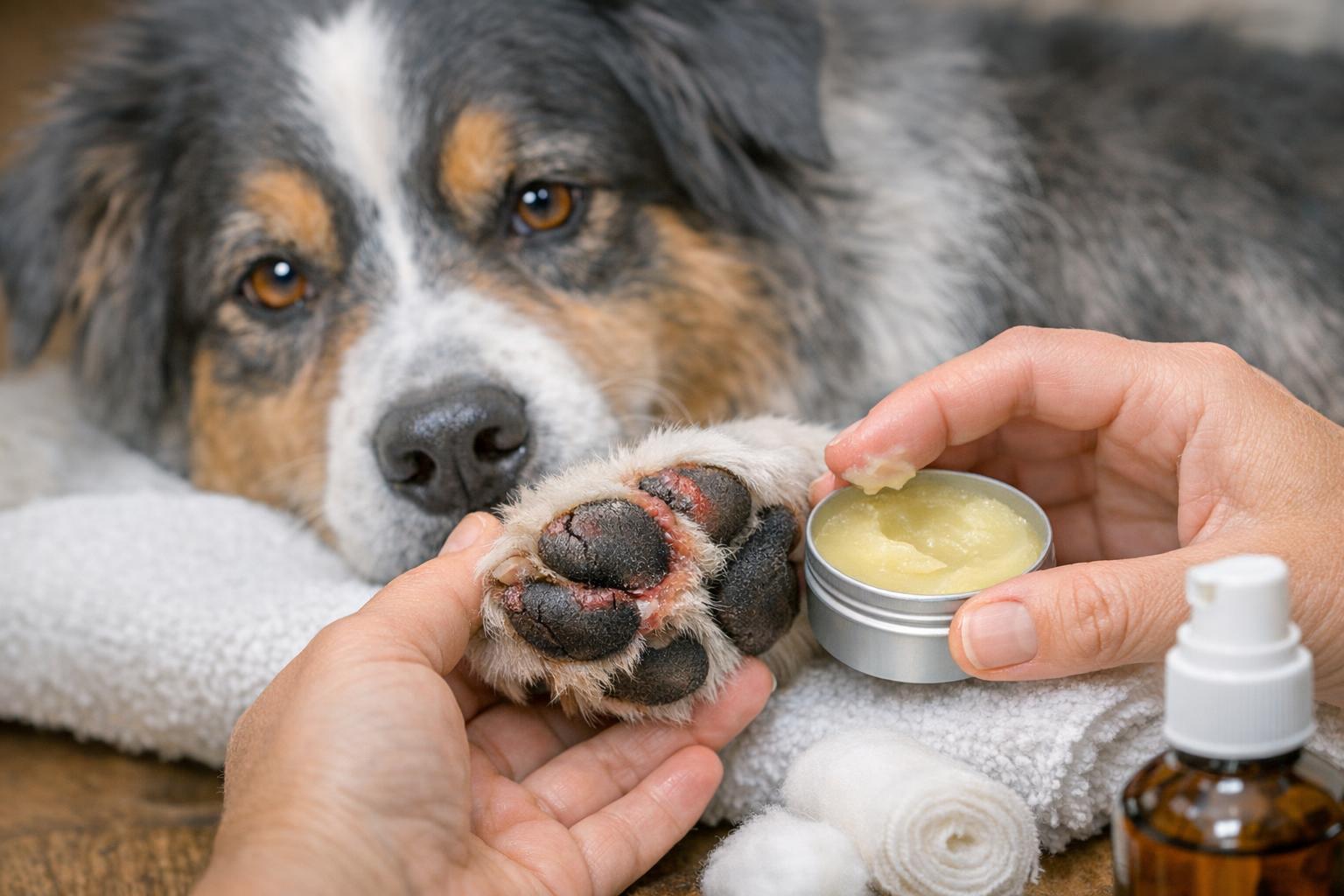
Cracked paw pads are a common issue in dogs and some other pets that walk on rough surfaces. Paw pads serve as shock absorbers and protective cushions, but they can become dry, abraded, or split due to environmental exposure, hard or hot surfaces, chemicals, allergies, nutritional deficiencies, or repetitive trauma. A small superficial fissure may be manageable at home, but a deeper tear or a paw pad injury that bleeds, shows swelling, or causes limping needs prompt veterinary attention.
### Signs Of A Paw Pad Injury
– Visible splits, fissures, or raw tissue on the pad
– Limping, favoring a paw, or reluctance to walk
– Licking, chewing, or guarding the affected paw
– Blood, pus, foul odor, or swelling around the pad
– Broken nails or foreign bodies embedded in the pad
## How To Treat Cracked Paw Pads At Home: Natural Remedies
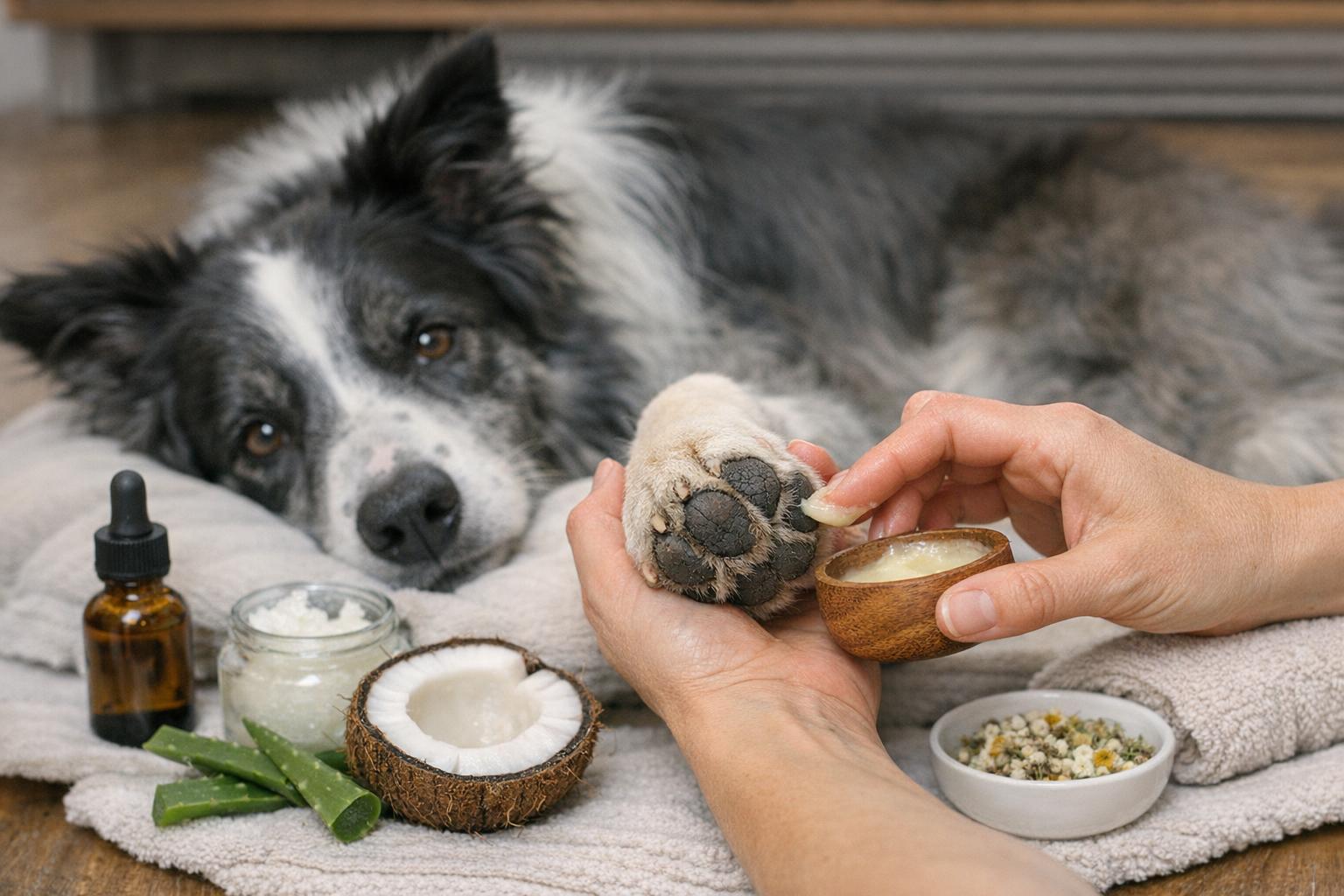
Below are practical, evidence-minded options for how to treat cracked paw pads at home using natural ingredients and safe DIY balms. These remedies focus on cleaning, protecting, and moisturizing the pad to encourage healing while minimizing infection risk. If your pet has a severe paw pad injury, an infected wound, or persistent lameness, consult your veterinarian immediately.
### 1. Beeswax, Olive Oil And Coconut Balm For Moisture And Protection
Ingredients/Materials:
– 1 tablespoon beeswax pellets (or grated beeswax)
– 2 tablespoons extra virgin olive oil
– 2 tablespoons organic coconut oil
– Small, clean container with lid
– Double boiler or heatproof bowl and pot
– Cotton swabs and clean gauze
Creation And Application Steps:
1. In a double boiler, gently melt the beeswax with the coconut oil and olive oil on low heat until fully combined. Stir to create a smooth mixture.
2. Pour the warm mixture into a clean container and allow it to cool and solidify.
3. Clean the pet’s paw with lukewarm saline or a dilute chlorhexidine rinse and pat dry with sterile gauze.
4. Using a clean cotton swab, apply a thin layer of the balm directly to the cracked areas. Avoid deep wounds—do not pack balm into open, bleeding fissures.
5. If your pet tolerates it, cover the paw with a breathable bandage or a paw sock for 1–2 hours to prevent licking and to allow absorption. Repeat application 2–3 times daily until the pad improves.
This balm creates an occlusive barrier to lock in moisture and protect the pad from further abrasion while the natural oils deliver emollient and mild anti-inflammatory benefits.
### 2. Medical-Grade Honey (Manuka) Dressing For Antimicrobial Support
Ingredients/Materials:
– Medical-grade Manuka honey or medical-grade honey dressing
– Sterile non-stick gauze pads
– Vet wrap or self-adhesive bandage
– Saline solution for initial cleaning
Creation And Application Steps:
1. Clean the affected pad with lukewarm saline and gently dry with sterile gauze.
2. Apply a thin layer (about 1–2 mm) of medical-grade honey over the cracked area. Do not use kitchen honey; only medical-grade honey is recommended for wound care.
3. Place a sterile non-stick gauze pad over the honey layer and secure with vet wrap, taking care not to cut off circulation.
4. Replace the dressing once or twice daily, reapplying honey after each cleaning until the pad shows consistent improvement.
Medical-grade honey offers antimicrobial and osmotic benefits that can reduce bacterial load and promote granulation tissue, making it useful for mild-to-moderate paw pad injuries that are not deeply open.
### 3. Aloe Vera And Vitamin E Soothing Gel For Inflammation And Repair
Ingredients/Materials:
– Pure aloe vera gel (no additives) or fresh aloe leaf gel
– Vitamin E oil (capsules can be pierced)
– Small bowl and clean spoon
– Cotton pads
Creation And Application Steps:
1. If using fresh aloe, extract inner gel and strain to remove fibers. If using commercial gel, ensure it’s pure and pet-safe.
2. Mix 1 tablespoon of aloe vera gel with the contents of 1–2 vitamin E capsules until uniform.
3. Clean the paw with saline, then apply a thin layer of the mixture to the cracked area using a cotton pad.
4. Allow to absorb; cover with a lightweight sock or bandage if the pet is likely to lick it off. Apply twice daily until improved.
Aloe vera soothes inflamed tissue and vitamin E supports skin repair; combined they can reduce discomfort and support hydration of the pad barrier.
### 4. Saline Rinses And Simple Cleansing For Initial Care
Materials:
– Sterile saline solution (0.9% NaCl) or homemade sterile saline (see your vet for guidance)
– Clean gauze or soft cloth
Creation And Application Steps:
1. Flush the paw gently with room-temperature saline to remove debris and reduce contamination.
2. Pat the area dry with sterile gauze.
3. For minor, non-bleeding fissures, follow up with one of the moisturizers or balms described above.
Saline is a safe first step to clear contaminants and reduce infection risk before applying any topical remedy.
### 5. Protective Measures To Prevent Re-Injury
Materials:
– Pet booties or paw protector socks
– Paw balm for daily maintenance
Steps To Use:
1. Apply an emollient balm after treatment to maintain moisture.
2. Fit protective booties for walks on hot pavement, ice-melt chemicals, or rough terrain.
3. Limit walking on abrasive surfaces until the pad has healed.
Using protective coverings reduces repeated trauma and helps healing progress when you are implementing how to treat cracked paw pads at home.
#### When To Seek Veterinary Care For A Paw Pad Injury
Not all cracked paw pads are safe to manage at home. Contact your veterinarian if you observe:
– Deep or wide fissures that expose raw tissue
– Continuous bleeding or swelling
– Signs of systemic illness (fever, lethargy)
– Persistent limping after initial home care
– Discharge with foul odor suggesting infection
A veterinarian can assess the extent of the paw pad injury, prescribe systemic antibiotics if necessary, or perform debridement and advanced wound care.
#### Preventive Care And Long-Term Maintenance
– Keep paw pads moisturized with a vet-approved paw balm during dry seasons.
– Avoid walking pets on hot pavement or treated sidewalks; test surfaces with your hand.
– Trim excess fur between toes to reduce matting and debris adherence.
– Rinse paws after exposure to ice-melt chemicals or long walks on abrasive terrain.
– Ensure balanced nutrition; fatty acids and adequate vitamins support skin health and reduce susceptibility to cracked paw pads.
### Practical Tips For Home Treatment Sessions
– Always clean the wound first; topical remedies applied to dirty wounds can trap bacteria.
– Use bandaging only as needed and avoid tight wraps that compromise circulation.
– Prevent licking: short-term use of an Elizabethan collar or bootie may be needed to allow topical agents to work.
– Monitor daily; if the area looks worse after 48 hours, stop home treatment and seek veterinary care.
## Frequently Asked Questions When Learning How To Treat Cracked Paw Pads At Home
### Can I Use Human Lotions Or Ointments On Dog Paw Pads?
Human products may contain fragrances, essential oils, or other additives that are toxic or irritating to pets. Use pet-specific or vet-recommended balms and natural ingredients listed above.
### Is Vaseline Or Petroleum Jelly A Good Option?
Petroleum jelly can temporarily soften the pad but creates a barrier that may trap bacteria and is often easily licked off. Natural, breathable balms with beeswax and oils are generally preferable for ongoing care.
### How Long Does It Take For A Paw Pad To Heal?
Superficial cracks may begin to improve in 5–10 days with appropriate home care; deeper injuries may require weeks and veterinary intervention.
Remember that knowing how to treat cracked paw pads at home empowers you to address mild cases safely, but always prioritize professional assessment for severe or worsening conditions.


Leave a Reply