

Does your pup look like they’re trying to pass a brick and starring in their own silent drama? Relax — constipation in dogs is common, usually fixable at home, and rarely a reason to panic. Below you’ll find friendly guidance, clear steps to try, and the red flags that mean it’s time for the vet. Think of this as a cozy corner of home remedies with a touch of practical science and a dash of canine empathy.
## What To Do If My Dog Is Constipated: Quick Assessment
Before handing over any spoonfuls of pumpkin or ordering an at-home enema kit, take a calm five-minute assessment. Ask these quick questions:
– How long has my dog been straining? (Less than 24 hours vs. multiple days matters.)
– Is my dog eating, drinking, and acting normally otherwise?
– Any vomiting, blood in stool, severe abdominal pain, or lethargy?
– Could my dog have swallowed something non-food (toy parts, bones, hair ties)?
If your dog is bright, alert, eating, drinking, and only mildly straining for less than 24–48 hours, home remedies can be reasonable. If there’s vomiting, bloody stool, obvious pain, or refusal to eat, contact a veterinarian right away — these are signs of something more serious.
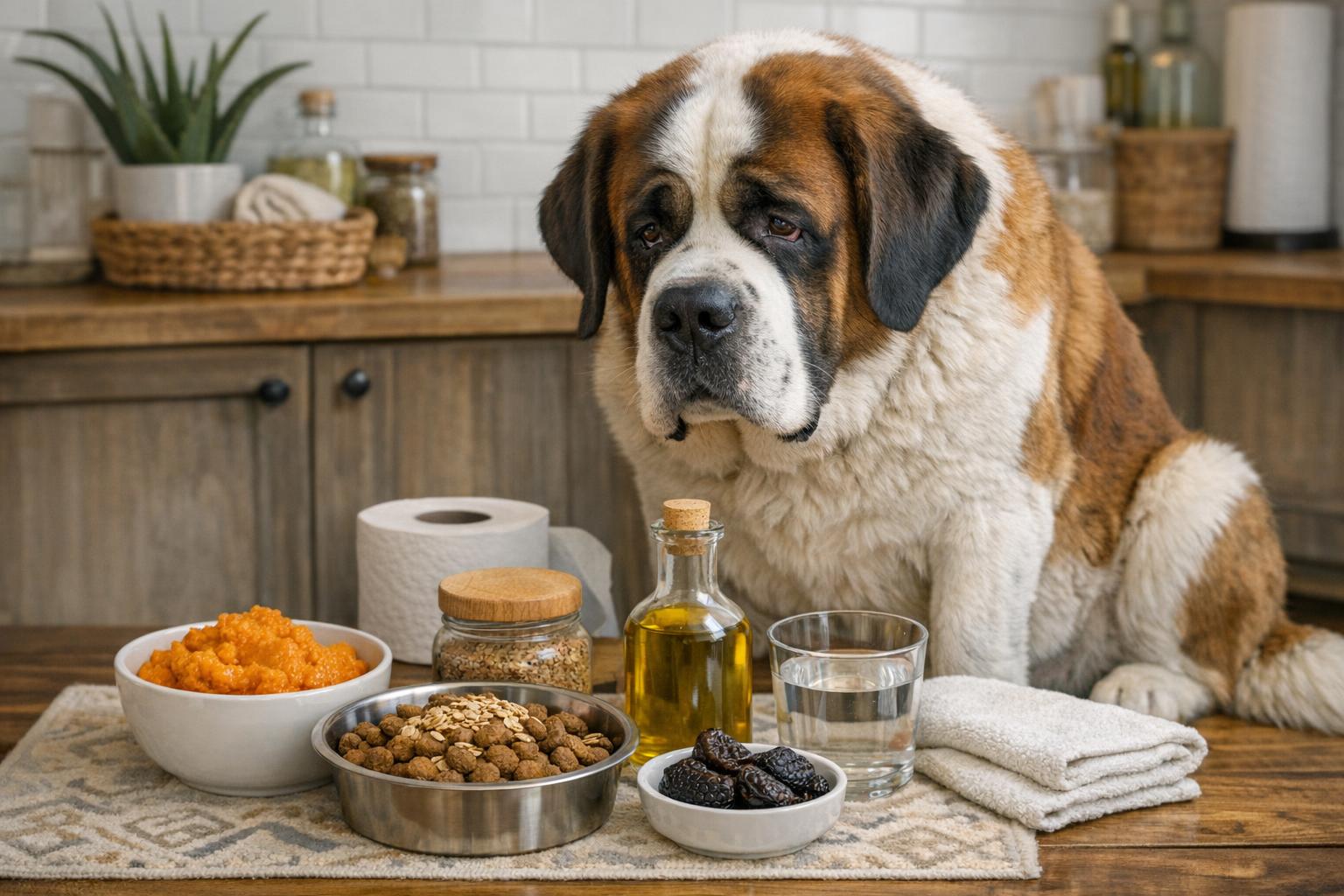
## Remedy 1: Fiber Boost With Canned Pumpkin
When folks ask “what to do if my dog is constipated,” canned pumpkin often gets top billing — and with good reason. Pure pumpkin (not spiced pie filling) is a safe, natural source of soluble fiber that helps rehydrate and bulk stool.
Ingredients / Materials
1. Canned 100% pure pumpkin (not pumpkin pie filling)
2. Measuring spoon
3. Mixing bowl (optional)
Step-By-Step Creation And Application
1. Measure based on size: small dogs (up to 10 lb) — 1 teaspoon; medium dogs (10–30 lb) — 1–2 teaspoons; large dogs (30–60 lb) — 1 tablespoon; giant breeds — up to 2 tablespoons once or twice daily.
2. Mix the pumpkin into your dog’s regular food or offer it directly on a spoon.
3. Continue for up to 3 days while monitoring stool. If there’s no improvement after 48–72 hours, consult your vet.
4. Do not give more than recommended — too much fiber can cause diarrhea or lead to other digestive upset.
Notes: Plain canned pumpkin is differing from pumpkin pie filling, which contains sugar and spices that can upset your dog.
## Remedy 2: Hydration And Gentle Dietary Adjustments
Hydration is one of the simplest fixes. Stool becomes hard and difficult to pass when the colon reabsorbs too much water. Improving fluid intake and adjusting diet can often answer “what to do if my dog is constipated” in a reassuringly ordinary way.
Ingredients / Materials
1. Fresh water available at all times; consider a second bowl
2. Broth: low-sodium chicken or beef (no onions or garlic)
3. Wet (canned) food or moistened kibble
Step-By-Step Creation And Application
1. Increase accessible water: place multiple bowls around the house; change water frequently to encourage sipping.
2. Offer a small amount of warm, low-sodium broth to entice drinking — limit to a few tablespoons for small dogs and up to a 1/2 cup for larger dogs per offering, monitored over the day.
3. Replace one meal with wet food or add warm water to dry kibble to increase moisture content in the stool.
4. Monitor urine output and stool production. If your dog won’t drink or is vomiting, contact your vet.
Formal Note: Do not use sports drinks or electrolyte solutions meant for humans unless approved by your veterinarian. Dogs have different electrolyte requirements.
## Remedy 3: Olive Oil Or Mineral Oil — Use With Caution
Lubricants can sometimes ease stool passage, but they require care. Olive oil is milder and generally safer than mineral oil when used sparingly. Mineral oil can interfere with nutrient absorption and cause aspiration if the dog vomits, so avoid it unless directed by your vet.
Ingredients / Materials
1. High-quality extra virgin olive oil
2. Measuring spoon or oral syringe
Step-By-Step Creation And Application
1. Dosage: small dogs — 1/4 teaspoon; medium — 1/2 teaspoon; large — 1 teaspoon; extra large — up to 1 tablespoon, given once only.
2. Administer orally by mixing into food or placing directly in the mouth using a syringe.
3. Wait several hours to observe stool passage. Do not repeat dosing without veterinary guidance.
4. If there is no improvement, or if you see vomiting or respiratory distress, contact your vet immediately.
Formal Caution: Avoid mineral oil at home without veterinary instruction due to aspiration risk and interference with medication absorption.
### When Gentle Laxatives Might Be Suggested By A Vet
If home measures fail, some vets may recommend an osmotic laxative (e.g., polyethylene glycol — Miralax) for short-term use. This should only be dosed under veterinary guidance. Never improvise with human stool softeners or laxatives without professional dosing instructions.
## Remedy 4: Movement, Massage, And Warm Baths
Exercise stimulates gut motility; a brisk walk can be surprisingly effective. Gentle abdominal massage and a warm bath can also help relax muscles and encourage bowel movements.
Ingredients / Materials
1. Leash for a short brisk walk
2. Towels and warm (not hot) water for a bath
3. Hands for a gentle massage
Step-By-Step Creation And Application
1. Take a calm 10–20 minute brisk walk to stimulate peristalsis.
2. If your dog tolerates handling, place them on their side and use gentle clockwise circular motions across the abdomen — apply light pressure, watch for discomfort.
3. A warm bath can relax the dog and abdominal muscles; keep the water warm, not hot, and limit bath time to 5–10 minutes.
4. Observe for signs of pain. Stop immediately if the dog shows distress or abdominal tensing.
Formal Note: Never apply force or deep pressure. If the dog cries out or pulls away, it could indicate abdominal pain requiring veterinary evaluation.
### Signs It’s Time To Call The Vet
If you’ve tried reasonable home remedies and your dog still hasn’t passed stool after 48–72 hours, or if any of the following occur, contact a vet:
– Vomiting, especially repeated or with bile
– Lethargy or collapse
– Bloated, tense, or painful abdomen
– Blood in stool
– Straining without production for more than a day
– Signs of urinary blockage (straining to urinate, small amounts)
## What To Do If My Dog Is Constipated And There’s Chronic Or Recurrent Trouble
If constipation recurs, the vet will investigate underlying causes: dietary issues, dehydration, pain, medications, spinal or pelvic problems, or even an obstructing mass. Diagnostic steps may include physical exam, abdominal X-rays, bloodwork, and possibly colon flushing. Chronic management often involves diet change to a higher-fiber formulation, routine hydration strategies, and sometimes prescribed stool softeners.
#### Preventive Habits To Reduce Future Constipation
– Maintain consistent access to fresh water.
– Keep daily exercise routine.
– Feed a balanced diet with appropriate fiber; consult your vet for recommendations.
– Avoid feeding bones, high-fat scraps, or indigestible items.
– Regular grooming for long-haired breeds: reduce hairballs that can complicate digestion.
## When You Should Not Attempt An Enema At Home
It might be tempting to search “what to do if my dog is constipated” and go straight to doing an enema. Don’t. At-home enemas can cause rectal injury, electrolyte imbalance, or aspiration if performed incorrectly. Discuss enemas with your veterinarian; if they’re recommended, have a professional perform it or give clear step-by-step veterinary instruction.
A final reassuring note: most cases of mild constipation in dogs resolve with simple home care — pumpkins, water, walks, and a little patience. But pay attention to the serious signs above; when in doubt, a quick call to the vet will save stress for both you and your four-legged friend.



Leave a Reply