




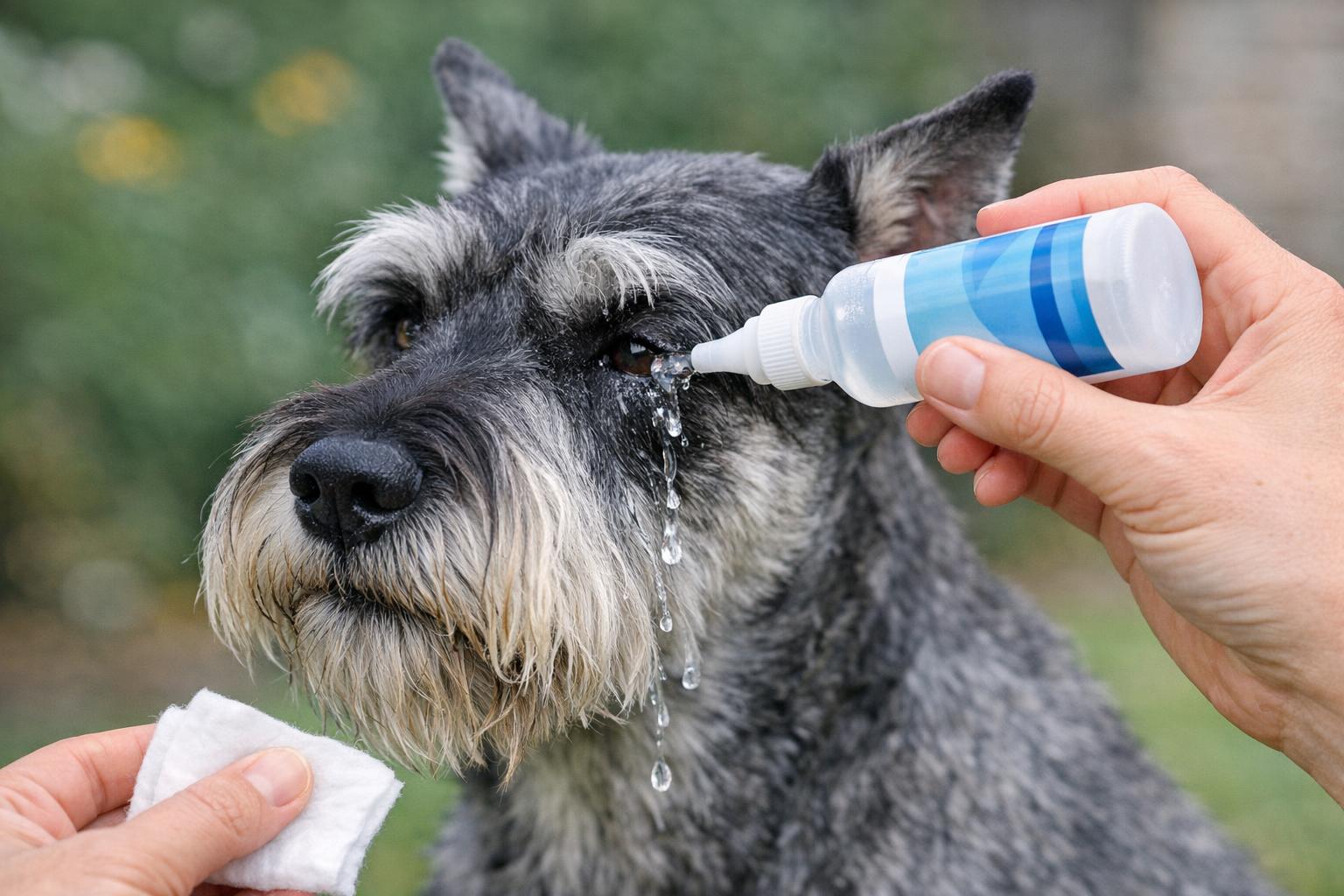
You love your dog’s face almost as much as they love yours—those big, expressive eyes deserve gentle, sensible care. If you’ve ever wondered about rinsing tear stains, debris, or pollen away without resorting to harsh chemicals, this article will walk you through safe, practical options and how to make and use a sterile saline eye wash for dogs at home. Think of it as basic eye first-aid: calm, effective, and with less drama than a dog who needs a bath.
## Eye Care Essentials Sterile Saline Eye Wash For Dogs
When a foreign particle, pollen, or mild irritation makes your pup blink and squint, a sterile saline eye wash for dogs can be a soothing first step. It helps flush out irritants, dilute discharge, and hydrate dry surfaces. This is not a cure-all—it’s a gentle, usually safe rinse you can use to provide relief until you can see your veterinarian if needed.
### How Dog Eyes Differ From Human Eyes
Dog eyes produce tears and have a protective tear film just like humans, but differences in eyelid shape, fur near the eye, and tear drainage can lead to breed-specific problems. Brachycephalic dogs (think pugs and bulldogs) and long-haired breeds often experience more irritation. A plain, isotonic sterile saline solution matches the eye’s natural salt concentration, minimizing stinging and tissue stress.
### Common Situations Where A Rinse Helps
– Mild debris, dust, or pollen in the eye
– Watery or sticky discharge from mild irritation
– After grooming to remove shampoo residue near the eye
– Before applying topical eye drops (to clear crust or mucus)
Using a sterile saline eye wash for dogs in these situations can reduce discomfort and prevent you from accidentally rubbing the eye with fingernails or a towel.
## Sterile Saline Eye Wash For Dogs: When And Why To Use It
Use a sterile saline eye wash for dogs for short-term relief or immediate flushing after a known exposure (e.g., shampoo in the eye, dust cloud, chemical splash from household cleaners — see emergency section). It’s important to know when the rinse is appropriate and when veterinary care is required.
### Red Flags That Need A Vet Immediately
– Sudden, severe cloudiness or visible change in the eye
– Intense pain, constant squinting, or pawing at the eye
– Blood in the eye or from the eyelids
– Vision changes or disorientation
– Symptoms that worsen after initial rinse
If you observe any of these, contact your veterinarian or an emergency clinic without delay.
### Safety Notes Before You Rinse
– Do not use homemade saltwater unless you follow sterile creation steps below. Tap water or impure solutions can introduce infection.
– Avoid any antiseptic or human eye drops unless directed by a vet.
– Do not force the eye open aggressively; be gentle and reassuring.
## How To Make And Use A Sterile Saline Eye Wash For Dogs (Remedy)
Below is a formal, step-by-step method to prepare and apply a sterile saline eye wash for dogs. This is intended for short-term use; store-bought, single-use sterile saline ampoules are preferable when available.
#### Required Materials And Ingredients
1. Medical-grade sodium chloride (USP) powder or premeasured sterile saline packets OR prefilled sterile saline ampoules (preferred)
2. Sterile distilled water (not tap water)
3. Sterile mixing container (glass or heat-resistant)
4. Sterile syringe without needle or sterile disposable eye dropper bottle (15–30 mL)
5. Clean towels
6. Disposable gloves (optional but recommended)
7. Tweezers sterilized by boiling (if removing visible debris is necessary and safe)
8. Marker and tape for labeling date and time
#### Preparation Steps (Creating Sterile Saline)
1. Wash your hands thoroughly and work on a clean surface. Put on gloves if using.
2. If using USP sodium chloride powder, measure 9 grams of sodium chloride per liter of sterile distilled water to create a 0.9% isotonic saline. For small batches: dissolve 0.9 grams in 100 mL sterile distilled water. Use a scale for accuracy.
3. Heat the solution to boiling for at least one minute to ensure sterility, then reduce heat and simmer for 10 minutes. If using pre-sterilized packets or single-use ampoules, skip heating.
4. Allow the solution to cool in a covered, clean container to avoid airborne contamination.
5. Draw cooled saline into a sterile syringe or pour into a sterile dropper bottle without touching the tip. Label with the date and time.
Note: If you have prefilled single-use sterile saline eye wash for dogs (ampoules) from a pharmacy or vet, these are already sterile and eliminate the need for home mixing.
#### Application Steps (Using The Saline)
1. Prepare your dog in a calm, upright position on your lap or a table. Ask a helper to gently hold the dog if needed.
2. Gently clear loose crust with a warm, damp sterile cloth—do not rub the eyeball. If a visible foreign body is stuck to the eye surface, do not attempt to remove it yourself; seek veterinary care.
3. Hold the sterile syringe or dropper about 1–2 cm from the eye. Do not touch the eye with the tip to maintain sterility.
4. Administer 2–5 mL of saline into the affected eye, letting it flow across the eyeball from the inside (near the nose) outward. If you’re using a dropper, apply 3–5 drops.
5. Allow the dog to blink and shake off excess. Wipe away discharge with a clean, damp sterile cloth. Repeat once if debris remains visible.
6. Dispose of any unused saline prepared without single-use precautions after 24 hours. If using prefilled sterile ampoules, discard after opening as per instructions.
Be formal and systematic when preparing and applying the rinse: sterility and accurate concentration are essential to avoid creating harm while attempting to help.
## Practical Tips For A Calm Rinse Experience
– For nervous dogs, offer gentle praise and treats between steps. A relaxed dog makes accurate application easier.
– Use a towel to cradle or swaddle a small, wriggly dog—this limits sudden movements near the eye.
– If you can’t get a steady hold or your dog resists strongly, stop and seek veterinary assistance rather than risking an accidental poke.
### Storage And Shelf-Life
Store homemade sterile saline in a sterile, sealed container in the refrigerator and label with the time prepared. Use within 24 hours unless you’ve prepared it under strict sterile conditions and stored it per veterinary guidance. Single-use ampoules are preferred—they eliminate contamination risk and are easy to carry for travel.
### Troubleshooting Common Issues
– If redness or discharge increases after the rinse, do not repeat the rinse repeatedly; contact your vet. Increased symptoms can indicate infection or a deeper injury.
– Cloudiness that doesn’t clear with flushing needs professional assessment. Some corneal injuries require topical antibiotics or other specific treatments.
## FAQs About Sterile Saline Eye Wash For Dogs
What if my dog hates the rinse?
– A little resistance is normal. Use soft tones, rewards, and a quick, confident application. If fear is extreme, your vet can demonstrate or sedatives may be used in severe cases.
Can I use human saline?
– Only if it is labeled sterile and preservative-free. Human ophthalmic saline ampoules are often acceptable, but confirm with your vet first. Do not use multipurpose contact lens solutions or saline with additives.
How often can I rinse?
– For routine rinsing of mild debris, once is usually enough. If your vet prescribes ongoing rinses (post-surgery or for certain conditions), follow their exact schedule.
If the eye condition doesn’t improve after using a sterile saline eye wash for dogs, veterinary evaluation is the responsible next step. Eye conditions can change quickly, and prompt care prevents long-term problems.
Remember: a well-timed, properly prepared sterile saline eye wash for dogs is a low-risk, practical tool in home pet care, but it’s one part of an overall approach—keep your vet’s number handy and don’t hesitate to ask for help when in doubt.




























Leave a Reply