




## Canine Eye Care Basics
Eyes are compact, complicated, and a little dramatic — kind of like that friend who always needs sunglasses indoors. When it comes to canine eye care, a little daily attention goes a long way. Healthy eyes mean a happier dog and fewer surprise vet visits (and fewer guilt trips from you when you think you missed something obvious). This section covers the fundamentals every pet parent should know before we get into practical home remedies.
Dogs’ eyes have some normal quirks: mild tearing, a thin film that clears with a blink, and the occasional small speck of debris. Regular monitoring is the most effective preventive step for canine eye care. By checking the eyes regularly you build a baseline of what’s “normal” for your dog — color of the sclera, level of discharge, symmetry between the two eyes — and you’ll spot changes faster.
## Recognizing Normal Vs. Abnormal
Knowing the difference between routine eye behavior and signs that call for intervention can save time, money, and stress.
Normal signs:
– Clear cornea (the transparent front of the eye).
– White sclera or slightly pink, depending on breed.
– Mild, watery discharge after excitement or wind exposure.
Abnormal signs that need attention:
– Green, yellow or thick pus-like discharge.
– Persistent redness, cloudiness, or visible third eyelid.
– Frequent squinting, pawing at the eye, or light sensitivity.
– Sudden changes in vision or a visible mass on/near the eye.
If you notice any of the abnormal signs above, it alters your priorities in canine eye care — stop home remedies and contact your vet. Some eye problems require professional treatment to prevent permanent damage.
## Daily Grooming Habits For Healthier Eyes
Daily grooming is a gentle, consistent way to support eye health. Think of it as a spa appointment that lasts 30 seconds and includes zero cucumbers.
Face trimming: Long hair around the eyes, particularly in long-coated breeds, can irritate the eye surface or trap foreign material. Keep hair trimmed so it doesn’t constantly rub the cornea.
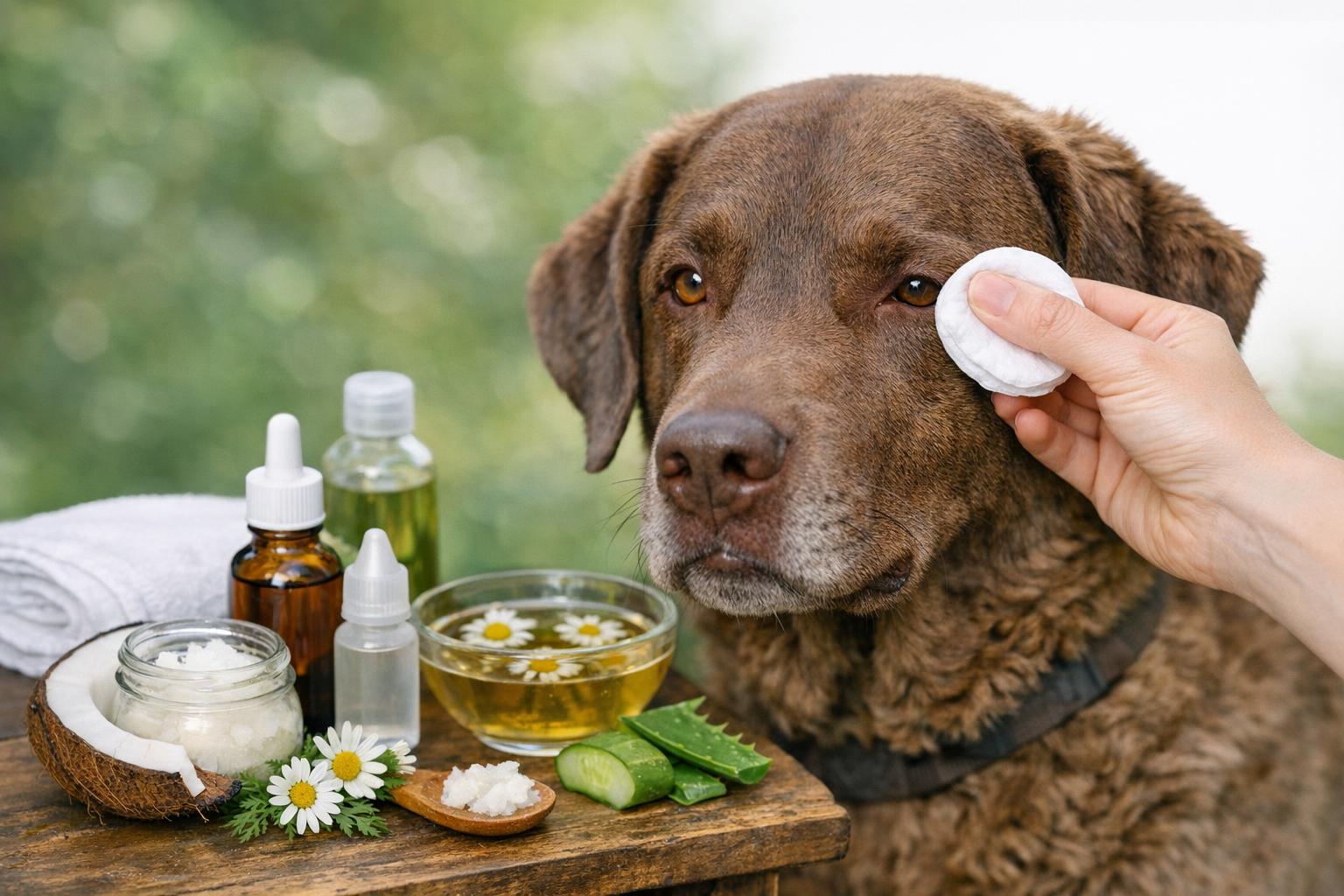
Wiping: Use a soft, clean cloth or sterile saline-soaked gauze to wipe away crust or tear tracks. Wipe from the inner corner outward, using one side for each wipe and a fresh cloth between eyes.
Bath-time caution: Avoid shampoo or conditioner in the face area. If product gets into the eyes, rinse with plain saline immediately.
Diet and hydration: Proper nutrition supports tear production and overall eye health. Dehydration and poor diet can magnify eye issues, so good food and fresh water are part of routine canine eye care.
## When To Call A Vet
No home remedy should replace prompt veterinary care when an eye problem appears severe. Call your vet immediately if your dog has:
– A sudden onset of severe pain or trauma to the eye.
– Signs of vision loss (bumping into objects, disorientation).
– A chemical burn or an object embedded in the eye.
– Symptoms that worsen despite basic home care.
Vets can perform a fluorescein stain, measure intraocular pressure, and assess for infections, ulcers, or glaucoma—conditions that need urgent medical management.
## Red Flags To Watch For
Certain signs can signal a real emergency rather than a minor nuisance:
– Intense redness with swelling and discharge.
– A cloudy or blue appearance to the eye.
– Any blood visible in the eye or around it.
– Prolonged squinting longer than a day or two.
If those occur, refrain from administering home drops or ointments unless directed by your vet; inappropriate products can worsen the situation.
### 1. Saline Eye Rinse For Minor Irritation
This is a first-line, low-risk remedy for flushing dust, pollen, or mild irritants from the eye. Use this for short-lived problems only — persistent symptoms need professional evaluation.
#### Ingredients / Materials
1. Sterile isotonic saline solution (0.9% sodium chloride) — single-use vials are ideal.
2. Clean, lint-free gauze or soft cotton pads.
3. A quiet space and a helper if your dog is squirmy.
#### Creation And Application Steps
1. Wash your hands thoroughly and sit where you can comfortably hold your dog’s head.
2. Open a single-use sterile saline vial. Do not reuse the vial after opening.
3. Gently restrain the dog’s head. Lean your dog’s head slightly back; you can have the dog sit on your lap or a table.
4. Flush the eye by gently squeezing the saline into the corner of the eye so it flows across the cornea. Use 1–3 mL per flush. Avoid touching the eye with the vial tip.
5. Use gauze to gently blot away excess saline and loosened debris from the outer corner moving outward. Do not rub the cornea.
6. Repeat once if needed. If irritation, squinting, or discharge persists beyond a few hours, stop home care and contact your vet.
Tone for this remedy: formal and procedure-focused. Use sterile materials and avoid household solutions like tap water or homemade mixes for rinsing.
### 2. Chamomile Compress For Mild Redness And Swelling
Chamomile can provide soothing relief for inflamed eyelids or mild redness, but it’s not a substitute for antibiotics or anti-inflammatories when infection or injury is involved.
#### Ingredients / Materials
1. 1 chamomile tea bag (caffeine-free, plain chamomile).
2. 1 cup freshly boiled water cooled to lukewarm.
3. Sterile gauze pads or soft, clean cloth.
4. Timer or clock.
#### Creation And Application Steps
1. Steep the chamomile tea bag in boiled water for 5–10 minutes, then remove the bag.
2. Allow the tea to cool completely until lukewarm. It must not be warm to the touch.
3. Soak a sterile gauze pad in the cooled tea and wring gently to remove excess moisture.
4. Apply the compress to the closed eyelid for 3–5 minutes. Do not force a compress onto an open or bleeding wound.
5. Use a fresh gauze pad for each application and discard after use. Repeat up to three times per day only for short-term symptomatic relief.
6. If swelling or redness does not improve within 24 hours or if discharge appears, discontinue home treatment and consult your veterinarian.
This remedy is intended for external, eyelid-level irritation; do not instill chamomile liquid directly into the eye.
### 3. Lubricating Gel For Dry Eyes (Keratoconjunctivitis Sicca) Support
For cases of mild chronic dryness where a vet has confirmed low tear production or recommended supportive lubrication, a veterinary ophthalmic lubricant may be used at home. Do not substitute human products unless a vet approves them.
#### Ingredients / Materials
1. Veterinary-recommended ophthalmic lubricant gel (preservative-free if long-term use).
2. Clean towel and calm environment.
3. Disposable gloves if desired.
#### Creation And Application Steps
1. Confirm product suitability with your veterinarian; obtain dosage and frequency instructions.
2. Wash hands and position your dog comfortably with head steady.
3. Gently pull down the lower eyelid to create a small pocket.
4. Apply the prescribed amount of lubricant (usually a small bead the size of a grain of rice) into the lower eyelid pocket. Avoid touching the applicator tip to the eye or eyelid.
5. Release the eyelid and allow your dog to blink, spreading the lubricant.
6. Repeat as directed by your veterinarian, often 1–3 times daily for chronic conditions. Store the product per label instructions.
7. Monitor the eye for improvement. If irritation or worsening occurs, stop use and contact your vet.
Use this approach only when advised by a clinician; inappropriate use can obscure signs of infection or worsen certain conditions.
## Practical Tips For Stress-Free Eye Care Sessions
Make eye checks and remedies less fraught:
– Reward cooperation with a quiet praise and a small treat.
– Practice short sessions to build tolerance; don’t force a full rinse on the first attempt.
– Use a calm voice and slow movements. Dogs are more cooperative when they aren’t startled.
– Keep a log of symptoms: date, discharge color, any remedy applied, and response. This helps your vet diagnose patterns.
By paying attention, using safe, vet-approved home techniques, and knowing when to escalate to professional care, you’ll handle most minor issues confidently. Regular grooming and sensible, sterile remedies are the backbone of effective canine eye care — ideal for keeping those soulful peepers bright and comfortable.














Leave a Reply