






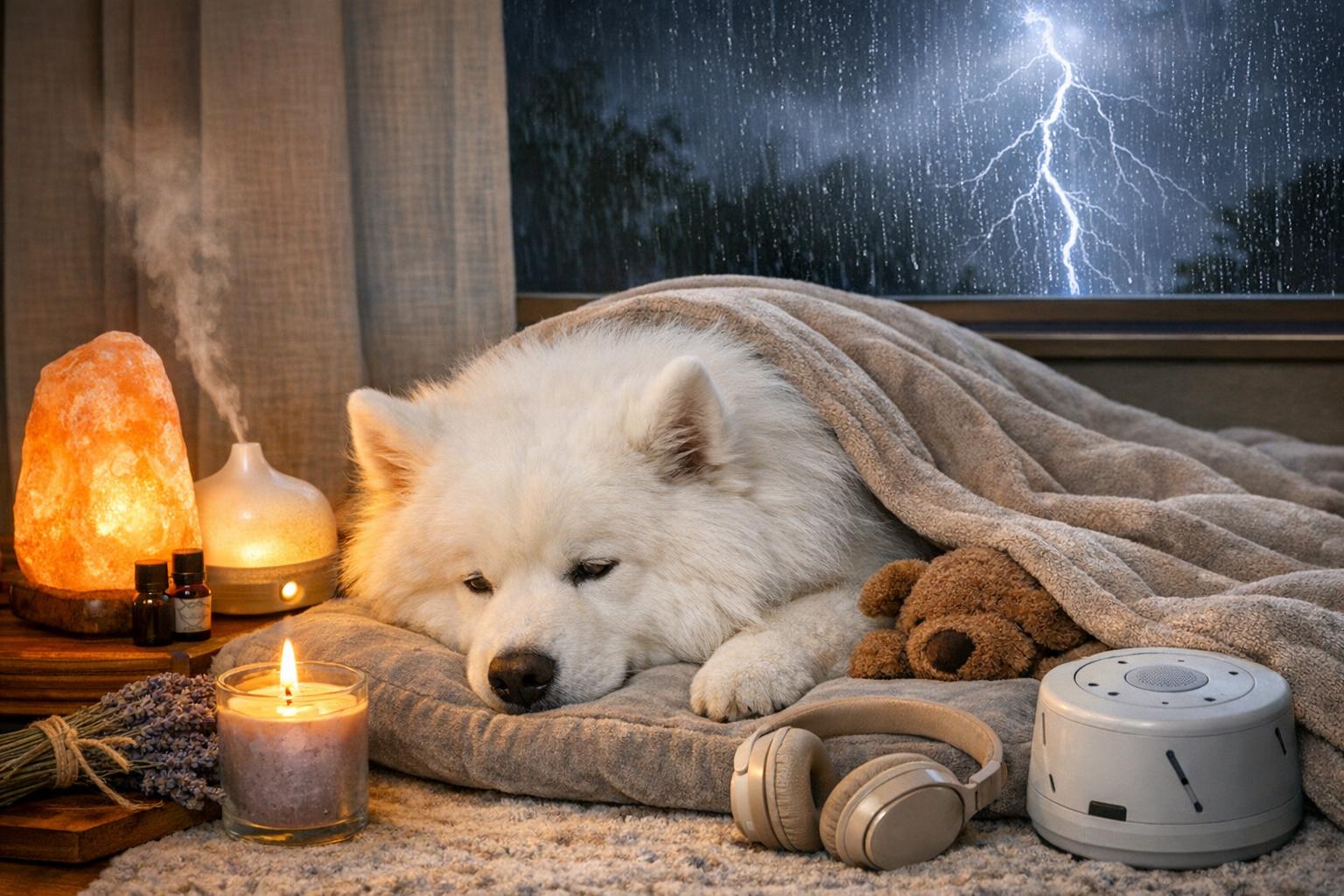
## Dog Scared Of Thunder? Calm Home Remedies
If your dog is scared of thunder, you’re not alone — many dogs find storms unsettling and their humans find the pacing, panting, and chewed-up slippers stressful. This article walks you through gentle, practical home remedies to reduce noise anxiety and help your canine companion feel safer during storms. Think of it as a toolkit: some cuddles, some calm smells, and a little science-backed structure. (Also: snacks. There will be snacks.)
### Why Thunder Feels So Big To Dogs
Dogs hear higher frequencies and lower thresholds than we do, so thunder is like a bass drum in a tiny room. Sudden pressure changes, the crack of lightning, and the visual flicker of bright flashes combine to make many dogs feel threatened. Behavior you might see includes trembling, hiding, drooling, pacing, escape attempts, or excessive vocalizing.
#### Signs Of Noise Anxiety To Watch For
– Hiding in unusual spots or trying to escape
– Pacing, trembling, or panting when a storm approaches
– Destructive behavior during storms
– Clinginess, loss of appetite, or urination/defecation in the house
## 1. Remedy: Create A Safe Den
Formal Explanation: Establishing a safe, sound-dampened den reduces exposure to the visual and auditory triggers that escalate anxiety. This is a low-cost, effective environmental modification that dovetails with behavioral strategies.
Ingredients / Required Materials:
– A sturdy crate or small room (bathroom or closet) with a door
– Thick blankets or comforter
– Pillow or familiar bedding
– Towels to block gaps and dampen sound
– A white noise machine or a portable fan
– Favorite treats and long-lasting chew or stuffed toy
Step-By-Step Creation And Application:
1. Choose Location: Select an interior room or closet away from windows where the dog already spends time. If using a crate, place it against a wall.
2. Sound Dampening: Line the crate or room with blankets and towels to muffle outside noise. Cover the crate partially with a blanket to reduce visual stimuli while leaving airflow.
3. Comfort Items: Place the dog’s regular bedding and a well-loved toy inside. Familiar scents reduce stress.
4. White Noise: Run a white noise machine or fan to provide consistent background sound; this masks sudden thunder booms.
5. Introduce Gradually: Encourage your dog to use the den during calm times with treats and short rewards. Make it positive: never force the dog in.
6. Use During Storms: When a storm starts, guide your dog to the den, close the door or cover openings, and stay nearby if possible. Offer chews or a stuffed Kong to associate the den with comfort.
## 2. Remedy: Thundershirt-Style Pressure Wrap (DIY)
Formal Explanation: Gentle, steady pressure can have a calming, proprioceptive effect for many dogs — similar to swaddling a baby. A pressure wrap reduces arousal and helps the nervous system settle without medication.
Ingredients / Required Materials:
– Wide, stretchable fabric (a soft baby wrap, yoga wrap, or non-elastic cotton wrap)
– Tape measure
– Safety pins or Velcro strips
– Scissors
– Treats for training
Step-By-Step Creation And Application:
1. Measure Your Dog: Use the tape measure to record girth (around chest behind front legs), neck circumference, and length from chest to lower back.
2. Cut And Prepare Fabric: Cut a rectangular piece of fabric that, when wrapped snugly, will cover the torso but not restrict breathing. Finish edges to prevent fraying.
3. Fastening System: Attach Velcro strips or sew on wide safety-pin bands for secure but adjustable closure. Ensure there are no sharp points.
4. Proper Fitting: Place the wrap around your dog’s torso, applying a firm, even pressure — snug but not tight. You should be able to slide two fingers under the fabric at any point.
5. Desensitize And Condition: Teach the dog to accept the wrap during calm periods. Put it on for short sessions, reward, and gradually extend time.
6. Use During Storms: Apply the wrap ahead of the storm’s peak. Combine with the safe den and white noise. Do not leave the dog unattended for long if they typically try to remove clothing.
### Safety Notes For Pressure Wraps
– Never wrap too tightly; watch for breathing difficulty, lethargy, or discomfort.
– Remove immediately if your dog seems distressed.
– Consult your veterinarian if your dog has cardiac, respiratory, or orthopedic conditions.
## 3. Remedy: Calming Aromatherapy Spray
Formal Explanation: Certain essential oils, diluted appropriately, can have a mild calming effect via olfactory pathways. Aromatherapy should be used conservatively and safely; pets are sensitive to concentrated oils.
Ingredients / Required Materials:
– Distilled water (100 ml)
– Food-grade vegetable glycerin (10 ml) or witch hazel (10 ml) as an emulsifier
– Lavender essential oil (Lavandula angustifolia) — 2 drops
– Roman chamomile essential oil — 1 drop (optional)
– A clean 100 ml spray bottle
– Labels for safety
Step-By-Step Creation And Application:
1. Prepare Emulsion: Pour distilled water into the spray bottle, then add glycerin or witch hazel to help the oils disperse.
2. Add Essential Oils Carefully: Add 2 drops of lavender and 1 drop of Roman chamomile into the bottle. This creates a very low concentration suitable for pets.
3. Shake Thoroughly: Close and shake to mix. Label the bottle clearly and note the dilution date.
4. Patch Test: Spray a small amount on a cloth and hold near your dog for a short period. Watch for sneezing, coughing, drooling, or signs of irritation.
5. Use During Storms: Lightly mist bedding, the den area, or a bandana (not directly on the dog) before a storm. Reapply every few hours if needed.
6. Storage and Safety: Keep out of reach of pets, store in a cool dark place, and discard if the dog shows sensitivity.
### Aromatherapy Safety Tips
– Never apply essential oils directly on a dog’s skin without veterinary guidance.
– Avoid oils toxic to dogs (tea tree, pennyroyal, wintergreen, etc.).
– Pregnant or nursing dogs and puppies under six months should not be exposed without vet approval.
## Training Basics: Desensitization And Counterconditioning
Formal Explanation: Behavioral modification pairs low-level storm sounds with positive experiences to change emotional responses over time. This process requires consistency and gradual progression.
How To Implement:
– Play Low-Level Storm Audio: Start at a volume that doesn’t trigger fear. Pair with high-value treats and praise.
– Gradually Increase Intensity: Over multiple sessions, slowly raise volume while ensuring the dog remains comfortable.
– Add Contextual Cues: Combine the audio with time spent in the safe den and application of the pressure wrap so the dog learns the full suite of coping tools.
– Reward Calm Behavior: Only give treats when the dog is calm. If fear appears, reduce intensity.
## Additional Practical Tips
– Routine Helps: Predictable feeding, walks, and playtime reduce baseline anxiety.
– Exercise Before Storms: A tired dog is less reactive. Aim for physical and mental stimulation earlier in the day when storms are forecast.
– Keep IDs Updated: If a dog scared of thunder bolts for the door, a secure collar with up-to-date tags and microchip information speeds return.
– Consult Professionals: If home remedies are insufficient, talk to a veterinarian or a certified applied animal behaviorist about medication or personalized training plans.
If you want, I can give a printable checklist for the den setup or a step-by-step plan for desensitization sessions you can follow over four weeks.







































Leave a Reply