






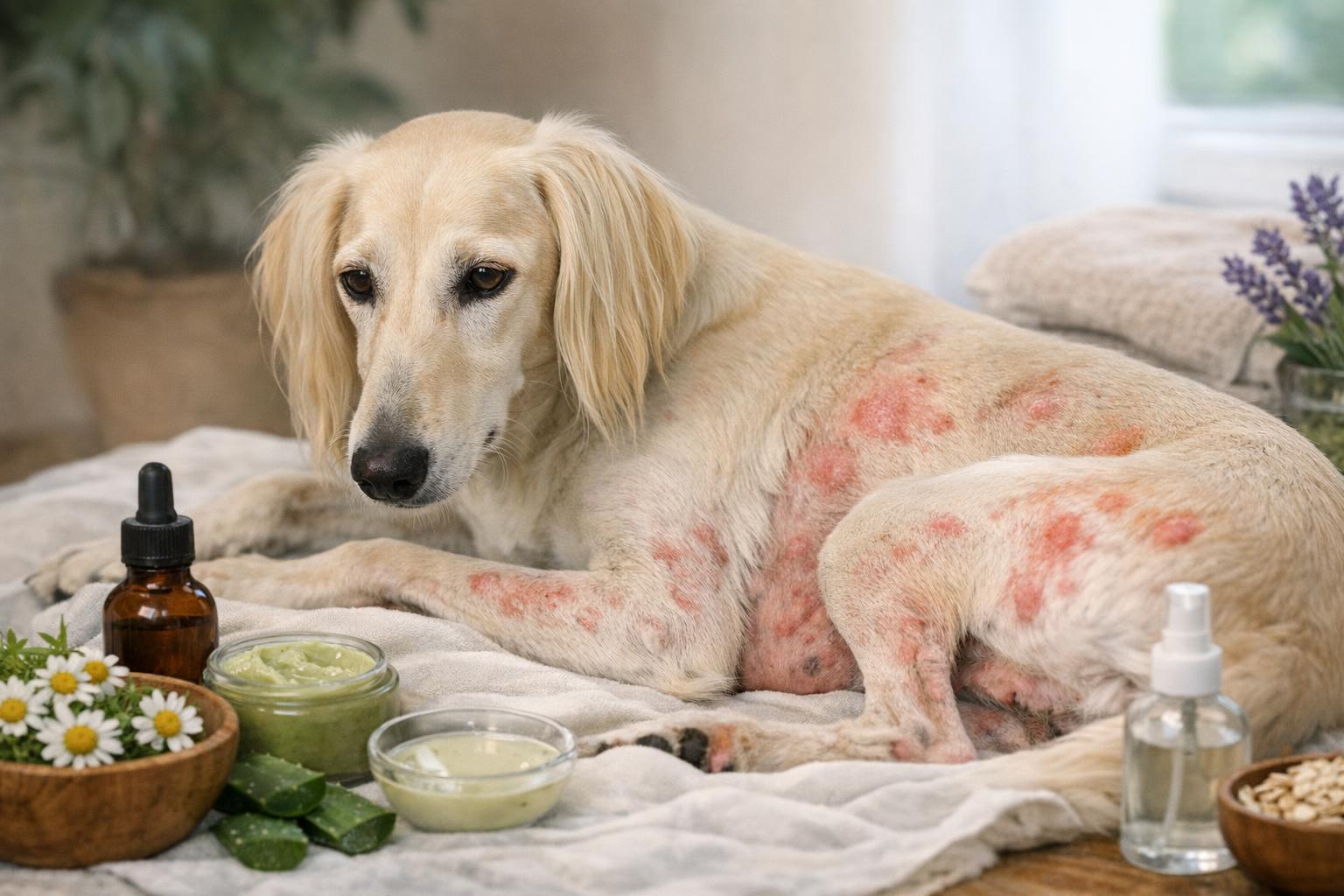
Allergies and skin trouble are common in dogs, and a scabby, itchy, or red patch can send any pet parent into mild panic (or full-on Googling). Understanding the different presentations helps you respond calmly and effectively. Below I’ll walk through the common types of rashes on dogs, how to recognize them, and provide three practical home remedies with clear ingredients and step-by-step application instructions. A bit of humor is allowed — your dog will still judge your fashion choices — but when it comes to treatment, I’ll be formal and precise.
## Common Types Of Rashes On Dogs
Dogs can develop rashes for many reasons: allergies, parasites, bacteria, yeast, friction, or even autoimmune problems. Here are the common types of rashes on dogs, how they look, and what typically causes them.
### Allergic Contact Dermatitis
Allergic contact dermatitis happens when a dog’s skin reacts to something it touched — a new shampoo, a certain grass, or a topical chemical. Signs include redness, localized swelling, small bumps, and intense scratching at the affected area. The location often gives you a clue: paws and belly for lawn chemicals, flank or torso for topical exposures.
### Flea Allergy Dermatitis
This is one of the most classic offenders on lists of types of rashes on dogs. It’s an allergic reaction to flea saliva. Even one flea bite can trigger severe itchiness, hair loss, and raised scabs (miliary dermatitis). Look near the tail base, lower back, and inner thighs. Intense scratching and “flea dirt” in the coat are common clues.
### Atopic Dermatitis (Environmental Allergies)
Atopic dermatitis is an inherited tendency to react to environmental allergens like pollen, mold, or dust mites. It typically causes recurrent itching, redness, ear infections, and chronic skin inflammation. Lesions often occur on the face, paws, underarms, and belly.
### Pyoderma (Bacterial Skin Infection)
Bacterial infections can develop secondarily in irritated skin. Pyoderma may show up as pustules, crusts, moist scabs, or areas that smell unpleasant. This type of rash can be localized or widespread and often needs vet-prescribed antibiotics if moderate to severe.
### Yeast Infection
Yeast overgrowth (Malassezia) causes greasy, brownish, smelly patches commonly in skin folds, paws, and ears. The coat may look dull, and dogs will lick or chew the area obsessively. Yeast rashes are a frequent component in the list of types of rashes on dogs associated with chronic allergies or underlying moisture.
### Acute Moist Dermatitis (Hot Spots)
Hot spots are localized, hot, oozing, painful sores that appear quickly. They’re usually caused by self-trauma (licking or chewing) in response to an initial irritation such as a bug bite or minor allergy flare. They can worsen fast and often need vet attention.
### Mange (Demodex and Sarcoptic)
Parasitic mites produce distinctive rashes. Sarcoptic mange is very itchy and contagious, causing redness, hair loss, and crusting. Demodex may cause patchy hair loss and secondary skin infections. Scabies-like intense scratching points toward mite issues.
## How To Tell Which Rash Your Dog Has
Diagnosing by sight alone can be tricky. Use pattern, location, and associated signs to narrow things down. For instance, if the rash is around the paws and ears with chronic licking, think environmental allergies or yeast. If the rash is sudden, localized, and very moist, think hot spot or secondary infection.
### Home Checks To Try
– Inspect coat for fleas, flea dirt, or eggs.
– Smell the skin — yeast has a distinct yeasty/musty odor.
– Feel the temperature — hot, inflamed areas suggest infection.
– Note the timeline and triggers (new food, new product, recent hikes).
If you’re unsure, or if the rash is spreading, painful, or the dog is unwell, consult your veterinarian. Many of the types of rashes on dogs will initially respond to home care, but infections and severe allergic reactions require professional treatment.
## 1) Home Remedy: Colloidal Oatmeal And Baking Soda Soothing Bath
This is a gentle, broadly useful bath to relieve itching and reduce inflammation. It works well for mild allergic dermatitis, environmental flares, and some itchy rashes on dogs.
Ingredients/Materials
– 1 cup colloidal oatmeal (or grind plain oats into a fine powder)
– 1/2 cup baking soda
– Lukewarm water (enough to fill a tub or basin for your dog)
– Soft towel
Creation And Application Steps
1. Prepare: Fill the tub or basin with lukewarm water — not hot. Hot water can worsen itching.
2. Mix: Stir the colloidal oatmeal and baking soda into the water until distributed.
3. Soak: Gently place your dog in the bath and allow the skin to soak for 10–15 minutes. Calmly massage the mixture into the affected areas if tolerated.
4. Rinse: Rinse thoroughly with lukewarm water, ensuring no residue remains.
5. Dry: Pat dry with a soft towel. Avoid vigorous rubbing.
Frequency: Use 1–2 times per week as needed. If the skin breaks or there is heavy discharge, stop and consult a vet.
## 2) Home Remedy: Chamomile And Green Tea Anti-Inflammatory Compress
A cool compress helps reduce localized inflammation and has mild antibacterial properties. This is helpful for small, inflamed patches, early hot spots, or after removing an irritant.
Ingredients/Materials
– 2 chamomile tea bags
– 2 green tea bags
– 2 cups boiling water
– Clean cloth or sterile gauze
– A shallow bowl
Creation And Application Steps
1. Brew: Place the tea bags in a bowl and pour the boiling water over them. Let steep for 10–15 minutes.
2. Cool: Remove tea bags, allow the liquid to cool to lukewarm or room temperature, then refrigerate briefly until pleasantly cool.
3. Soak: Soak a clean cloth or sterile gauze in the tea and wring out excess.
4. Apply: Hold the compress against the rash for 5–10 minutes. Repeat 2–3 times daily for 3–5 days.
Safety Notes: Do not apply to raw, heavily oozing wounds. If the area worsens or develops a foul odor, discontinue and seek professional care.
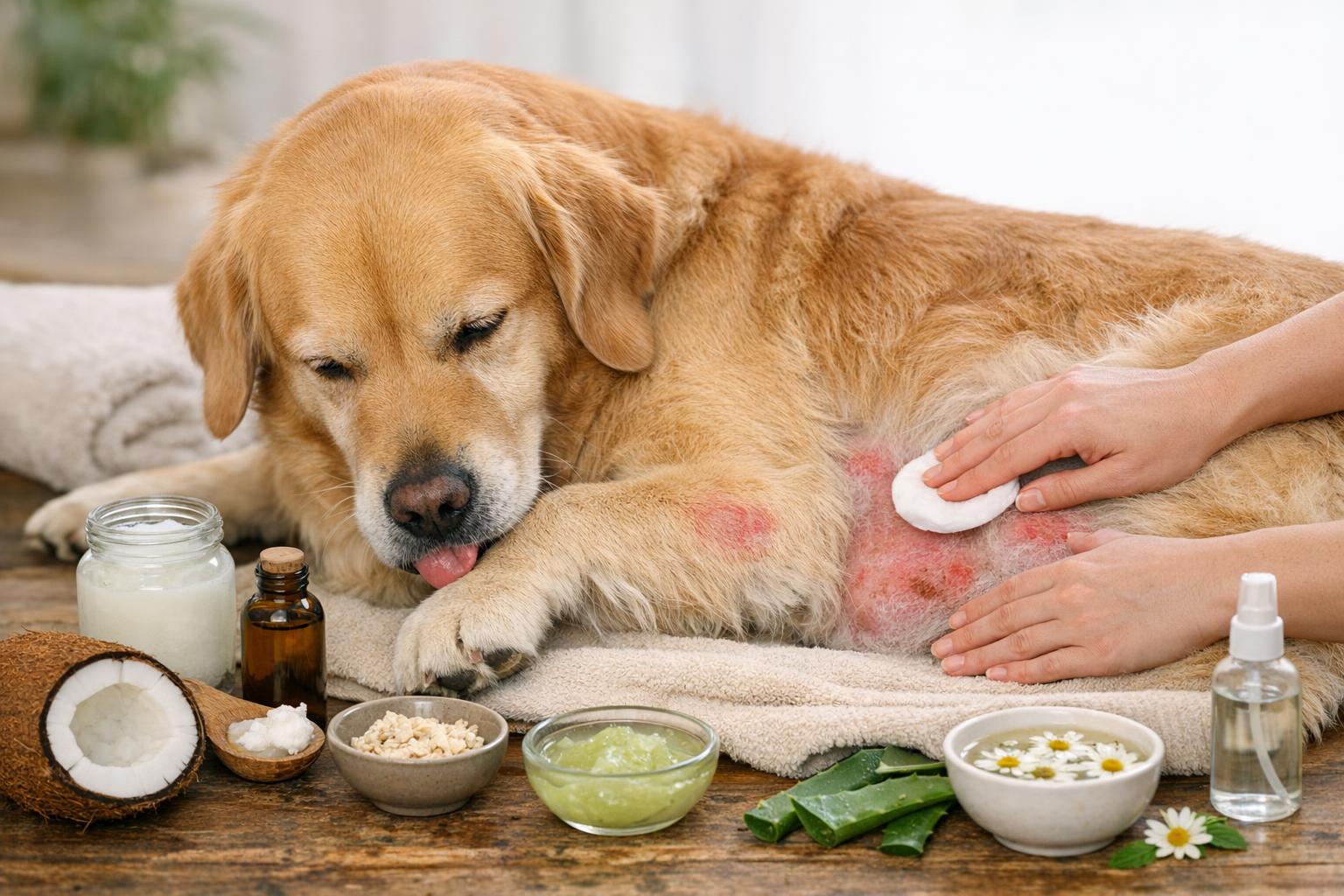
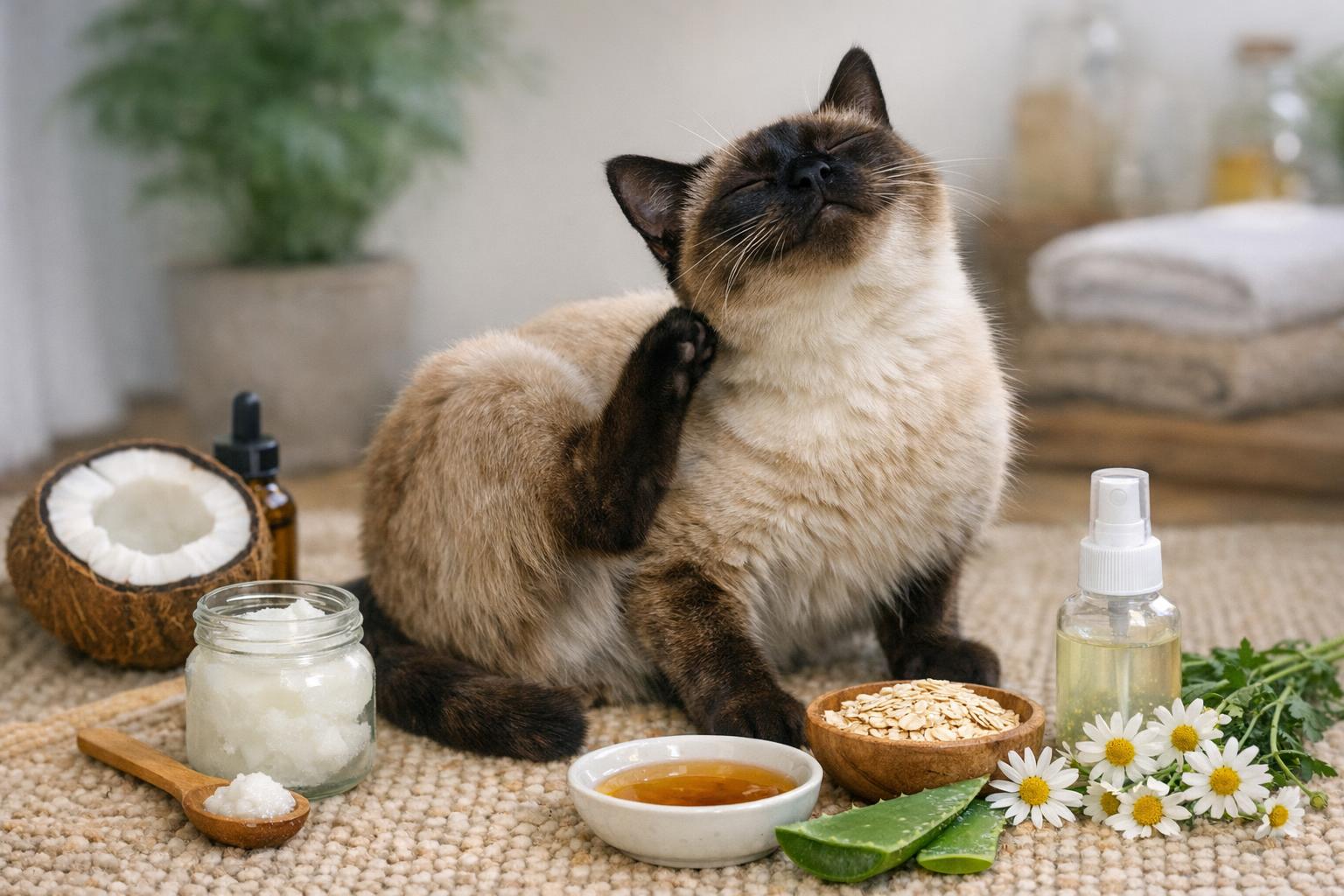
## 3) Home Remedy: Coconut Oil And Aloe Topical For Dry, Irritated Patches
This emollient combo helps hydrate dry patches and provides mild antimicrobial support. Best for dry, flaky rashes rather than open sores.
Ingredients/Materials
– Virgin coconut oil (fractionated if you prefer a non-greasy feel)
– Pure aloe vera gel (ensure it’s 100% aloe without alcohol or additives)
– Small clean jar
– Cotton swab or clean finger
Creation And Application Steps
1. Mix: Combine 1 tablespoon coconut oil with 1 teaspoon aloe gel in the jar. Stir to an even consistency. Store in a cool place; coconut oil may solidify in cold temperatures — gently warm if needed.
2. Test: Do a patch test on a small area first. Apply a small amount and observe for 24 hours for any adverse reaction.
3. Apply: If no reaction, apply a thin layer to the affected area 1–2 times daily using a cotton swab or clean finger.
4. Monitor: Continue up to a week; if no improvement, or if irritation increases, stop and consult your vet.
Cautions: Prevent licking after application — use an Elizabethan collar or distraction as needed. Avoid using on open, infected wounds.
### When Home Remedies Aren’t Enough
Home care can be effective for mild, recent rashes, especially when the trigger is known and manageable. However, certain red flags mean you should see a veterinarian promptly.
#### Red Flags
– Rapidly spreading rash, especially with fever or lethargy.
– Large, painful, open sores or heavy purulent discharge.
– Intense continuous scratching despite home treatment.
– Signs of systemic illness: vomiting, weakness, or loss of appetite.
– Rashes in young puppies, elderly dogs, or immunocompromised animals.
If any of these appear, professional evaluation is required — many of the types of rashes on dogs can lead to secondary infection or indicate underlying disease.
A thoughtful mix of observation, gentle home care, and timely veterinary guidance will usually get your pup back to comfy, itch-free days. If you want, tell me what your dog’s rash looks like (location, smell, behavior) and I can suggest which of the types of rashes on dogs it most resembles and whether a home remedy might be appropriate.



























Leave a Reply