



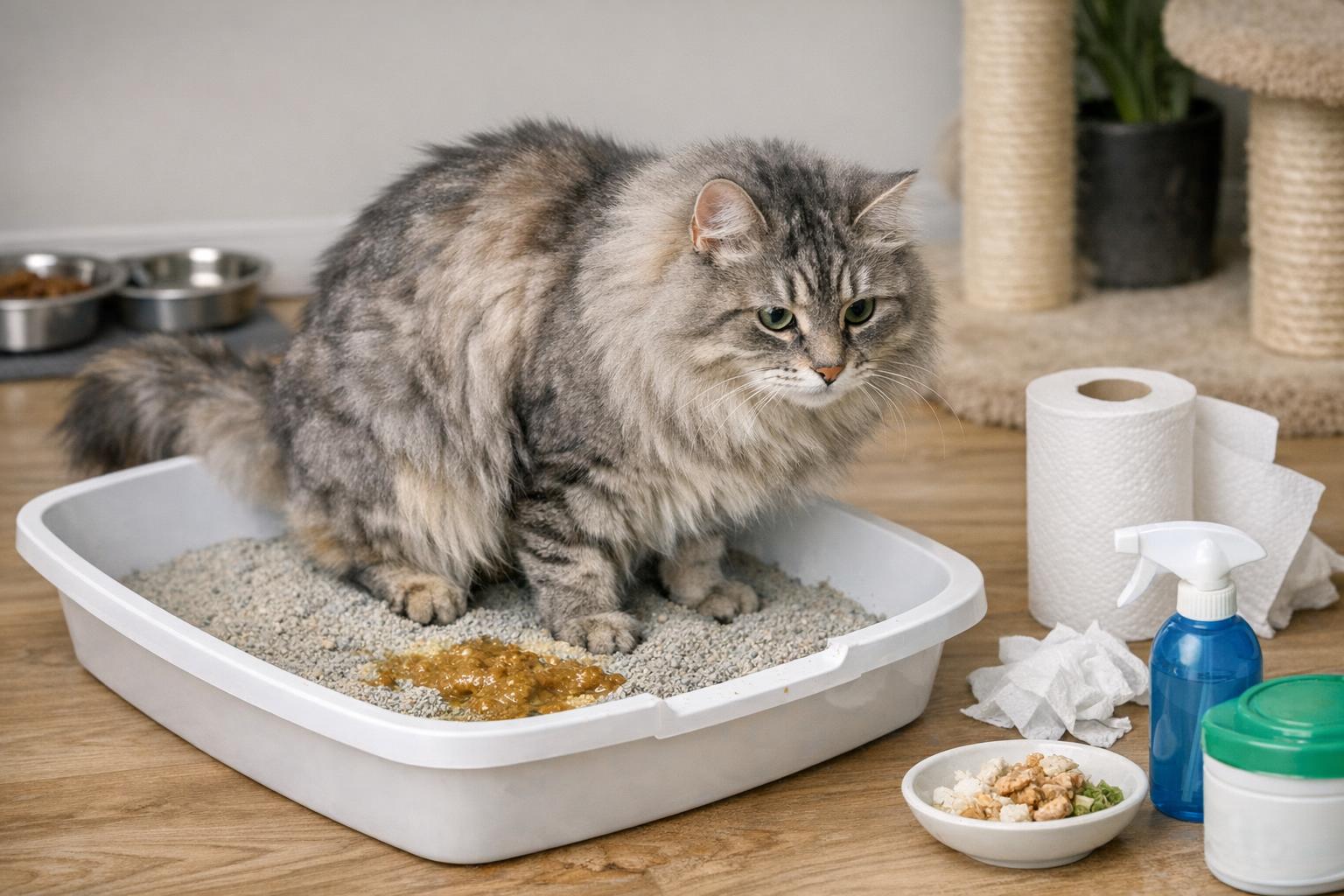
If you’ve ever tiptoed into the litter box like it’s a crime scene, you’re not alone. Finding abnormal stool is one of those “stop, breathe, call someone” moments for cat parents. Mild stomach upset can often be handled at home with gentle care, but when you see blood, your instincts are right to spike. This article walks through safe, conservative home steps you can take for bloody cat poop and diarrhea—things that are comforting, sensible, and won’t make your cat resent you for trying to force-feed pumpkin.
## 1. Bland Diet Reset For Mild Diarrhea
When To Use This Remedy
If your cat has had one or two loose stools or a small amount of blood and otherwise seems okay (eating, drinking, active), a 12–24 hour bland-diet reset can help. Do not use this if the cat is very young, pregnant, vomiting, lethargic, or showing worsening bleeding.
Ingredients / Materials
– Plain boiled chicken breast (no skin, no seasoning) or plain boiled lean turkey
– Cooked white rice
– Small measuring spoon and clean bowls
– Scale to monitor weight (optional but helpful)
Creation And Application (Formal Steps)
1. Prepare the Protein: Boil a single boneless, skinless chicken breast in unsalted water until cooked through. Cool and shred into small, easily chewable pieces.
2. Prepare the Carbohydrate: Cook white rice until soft. Do not add butter, salt, or oil.
3. Mix Ratio: Combine shredded chicken and rice at a 2:1 protein-to-rice ratio for an adult cat (adjust if your cat is very small).
4. Feeding Schedule: Offer small amounts (a teaspoon to a tablespoon depending on size) every 3–4 hours. Observe appetite and stool.
5. Transition Back: After 24 hours of forming stools that are normal in consistency and color, gradually reintroduce the regular diet over 2–3 days (mix increasing amounts of the regular food into the bland mix).
Notes
– Maintain fresh water at all times.
– If bloody cat poop persists or the cat becomes lethargic, stop home care and see a veterinarian immediately.
## 2. Pumpkin And Probiotic Gel For Bloody Cat Poop
When To Use This Remedy
This is appropriate for mild to moderate diarrhea where the stool shows small flecks or streaks of blood but the cat remains active and hydrated. This remedy focuses on restoring gut bulk and beneficial bacteria to support healing.
Ingredients / Materials
– Canned plain 100% pumpkin (not pie filling)
– A feline-specific probiotic (powder or gel recommended by your vet)
– Small measuring spoon
– Clean syringe (without needle) or a spoon for administering gel (if needed)
Creation And Application (Formal Steps)
1. Measure Pumpkin: Use 1/2 to 1 teaspoon of canned pumpkin for a small cat, up to 1 teaspoon for a larger adult. Pumpkin contains soluble fiber that firms stool and soothes the gut lining.
2. Add Probiotic: Add the recommended dose of a cat-specific probiotic to the pumpkin. Follow the product instructions or your vet’s guidance. Human probiotics are not always appropriate.
3. Serve: Mix thoroughly and offer on a small dish. If the cat refuses, deliver the mixture with a syringe into the mouth slowly and calmly.
4. Frequency: Administer the pumpkin-probiotic mix twice daily for up to 5 days while monitoring stool quality.
5. Monitoring: Watch for improvement in stool color and consistency. If bloody cat poop reduces and the cat’s behavior is normal, continue until resolved; otherwise consult a vet.
Safety Notes
– Only use plain pumpkin (no spices, sugar, or additives).
– If bleeding is heavy, pulpy, or accompanied by other symptoms, do not delay veterinary care.
## 3. Hydration Support With Bone Broth (Low-Sodium) And Electrolytes
When To Use This Remedy
Use when diarrhea is ongoing and there is risk of mild dehydration. Hydration helps mucosal healing in the gut and supports circulation, which can reduce further fragile bleeding in mild cases.
Ingredients / Materials
– Homemade unsalted bone broth (chicken or turkey bones; water)
– Veterinary electrolyte solution or unflavored, pet-safe electrolyte sachets (ask your vet for recommendations)
– Clean container and refrigerator storage
Creation And Application (Formal Steps)
1. Prepare Broth: Simmer bones in plenty of water for 4–6 hours. Do not add onion, garlic, salt, or spices. Strain thoroughly to remove all solids and any fat layer.
2. Cool And Skim: Chill the broth and remove any solidified fat from the surface. Fat can upset digestion.
3. Serve Warm: Offer small amounts (a tablespoon to a quarter cup depending on size) several times a day. Replace some drinking water with diluted electrolyte solution if recommended by your vet.
4. Monitor Intake: Ensure the cat is actually drinking. If not, a syringe (without needle) can be used to give a small volume every few hours.
5. Duration: Use for 24–72 hours during acute bouts. If diarrhea or bloody cat poop continues beyond 48 hours despite hydration, seek veterinary evaluation.
Important: If your cat is very weak or not drinking, do not rely on home fluids—this is an emergency.
### Understanding Common Causes Of Bloody Cat Poop
Bloody cat poop can stem from many things: parasites (like hookworms), sudden diet changes, dietary indiscretion, food allergies, inflammatory bowel disease, ingestion of foreign objects, or infectious agents. Small amounts of bright red blood usually indicate bleeding in the lower intestines or colon, while darker tarry stool comes from higher in the GI tract. Stress-related colitis can also produce fresh blood with diarrhea, especially in anxious cats. Even with likely benign causes, it’s important to monitor, because some causes require prompt medical treatment.
### When To See The Vet Immediately
– Any kitten, senior, or immunocompromised cat with bloody cat poop.
– Heavy bleeding, large clots, or black/tarry stools.
– Vomiting, collapse, disorientation, or severe lethargy.
– Refusal to eat or drink, or signs of dehydration (sunken eyes, tacky gums).
– Fever or abdominal pain when touched.
Diagnostic steps a vet may take include fecal testing for parasites, bloodwork, imaging (X-ray or ultrasound), and sometimes endoscopy or biopsy for persistent cases of bloody cat poop. Early vet involvement is vital when home measures don’t quickly improve the situation.
### Helpful At-Home Precautions And Record Keeping
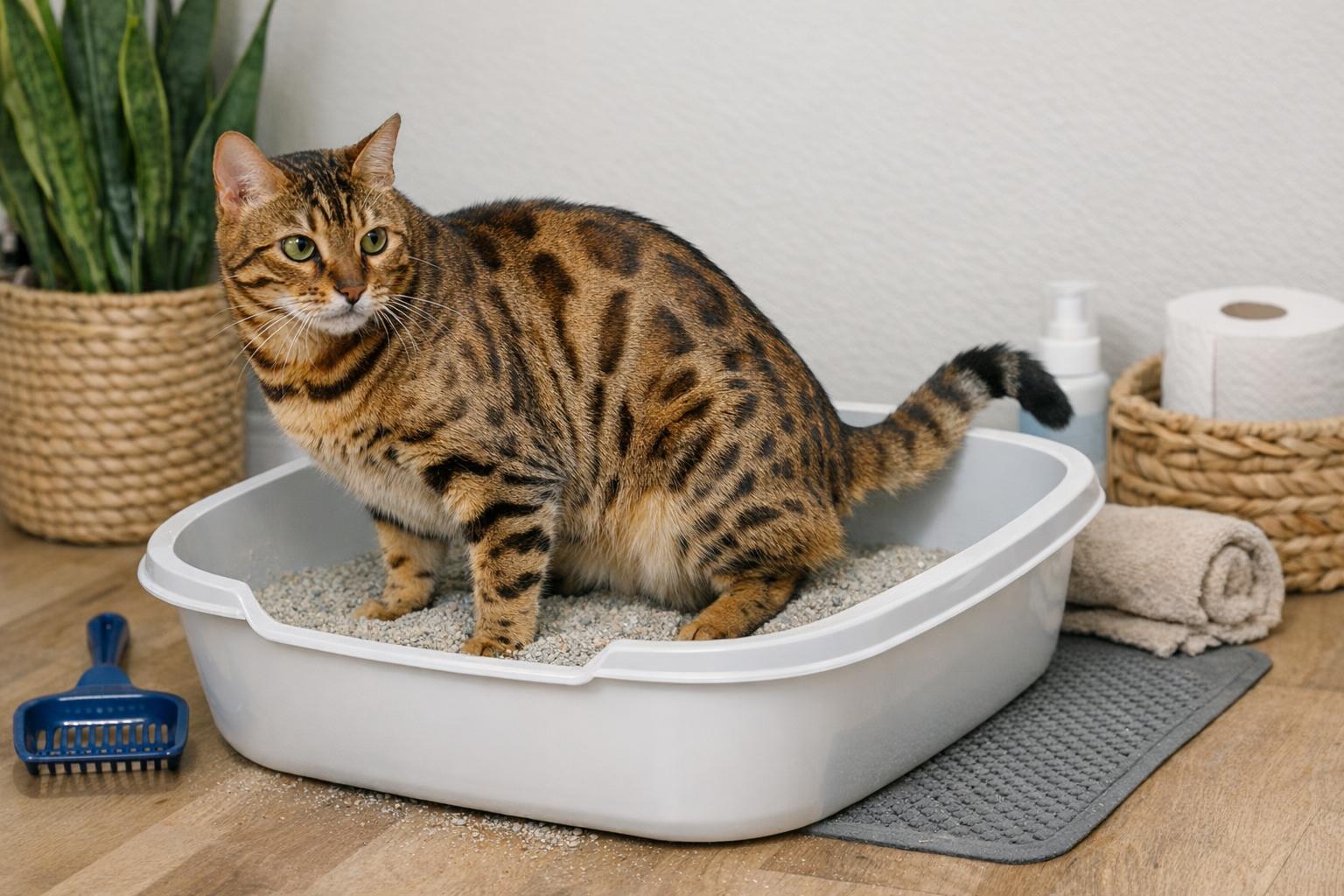
– Keep a Daily Litter Log: Note frequency, consistency, and any blood in the stool. This helps your vet. Attach photos if possible.
– Isolate New Foods: When introducing new diets, do it slowly over 7–10 days.
– Check For Toxins: Remove plants or household chemicals that could cause GI upset.
– Flea And Parasite Control: Maintain regular parasite prevention; many intestinal parasites cause bloody cat poop.
### Gentle Cleaning And Comfort Tips
If your cat’s rear is soiled from diarrhea, gently clean the area with a damp, warm cloth and pat dry. Avoid baby wipes with fragrances or alcohol. If the cat resists, a short warm water bath focusing only on the soiled area is okay, but do it calmly—stress can worsen GI symptoms. A comfortable, quiet space and easy access to water and the litter box help recovery.
### When Home Remedies Are Not Enough
If you’re using the remedies above and the bloody cat poop doesn’t improve in 24–48 hours, or the amount of blood increases, stop home treatment and contact your veterinarian. Home care is supportive—it’s not a replacement for diagnostics or treatments when a significant underlying condition is present.
Quick Tip (Because Humor Helps): If your cat gives you the ‘I will tolerate the bland diet for now’ look, remember you can bribe them with praise and a tiny treat after recovery—less messy and less likely to return you to crime-scene litter box duty.
No matter what, trust your instincts. Bloody cat poop is a sign your cat needs attention. These gentle home remedies can help in mild cases and buy time while you arrange veterinary care, but when signs point to serious illness, professional evaluation is the safest route.





Leave a Reply