




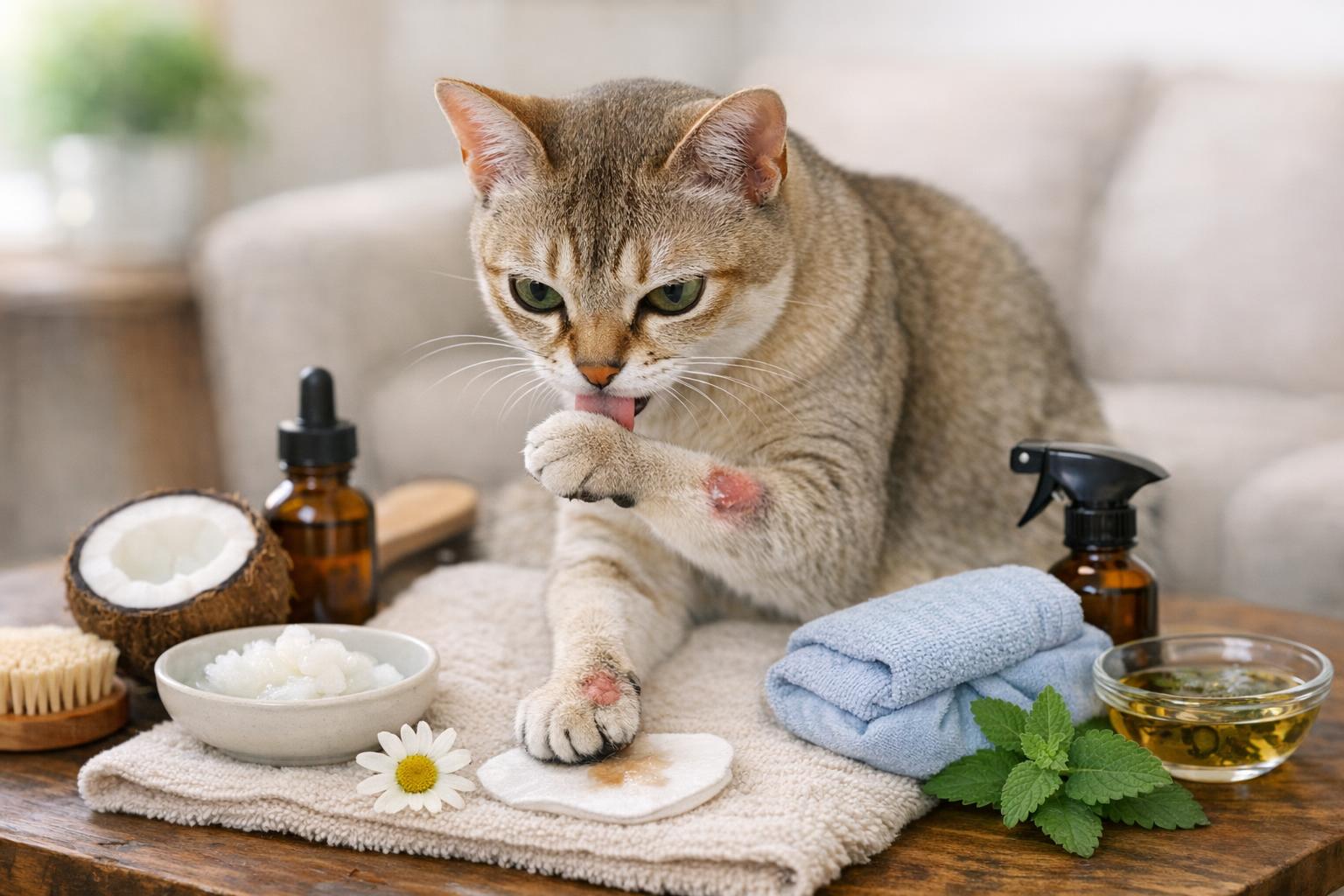
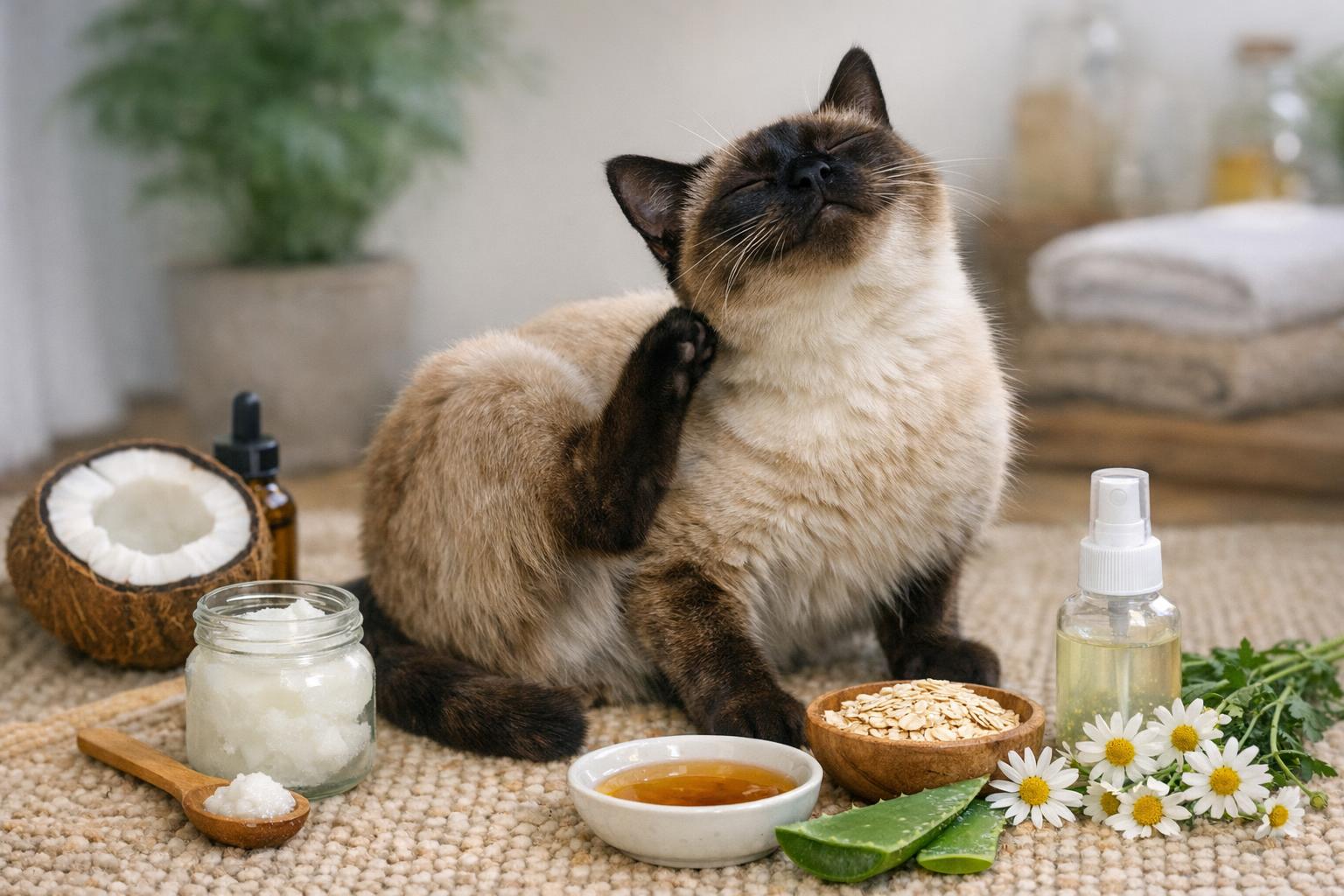
Cats lick. A lot. But when that routine polishing session turns into bald patches, raw skin, or round-the-clock licking, it’s time to take a calm, practical approach. This guide offers gentle at home ideas to help you handle feline overgrooming treatment with kindness, common sense, and a little DIY flair (no tiny cat-sized band-aids required).
## Gentle At Home Feline Overgrooming Treatment Options
Feline overgrooming treatment starts with observation. Before you reach for remedies, note when and where your cat grooms, whether the behavior follows a stressful event, and if there are visible skin changes. This will help you pick the right at home approach and know when veterinary care is required.
### Why Cats Overgroom
There are three frequently overlapping reasons:
– Medical: allergies, parasites, fungal or bacterial infections, or pain.
– Psychological: stress, boredom, or compulsive behaviors.
– Environmental: changes in routine, new household members (two-legged or four-legged), or even nearby construction noise.
### Identifying The Type Of Overgrooming
If the skin is inflamed, scabby, or has a smell, medical issues must be ruled out first. If the coat shows neat bald spots without much skin damage, stress-related overgrooming is more likely. Keep a simple diary: time of day, triggers, what you did afterward—this is a surprisingly effective diagnostic tool.
### When To See A Veterinarian
Feline overgrooming treatment can begin at home for mild, non-infected cases, but see the vet promptly if your cat has open sores, systemic signs (fever, lethargy), or if home remedies don’t show improvement in 7–10 days. Some conditions (parasites, fungal infections, significant allergies) require prescription medications and allergy testing.
## 1. Soothing Oat Bath For Irritated Skin
This is a gentle, supportive topical therapy ideal for cats with dry, flaky, or mildly irritated skin. Use it only on cats who tolerate bathing and never on painful, raw, or heavily infected wounds—those need veterinary attention.
Ingredients / Materials
– 1 cup colloidal oatmeal (finely ground oats labeled “colloidal” if possible)
– 4 cups lukewarm water (adjust quantity for cat size)
– A clean, soft towel
– A shallow basin or sink with a non-slip surface
– Optional: 1 tablespoon unscented aloe vera gel (ensure pure, without xylitol or alcohol)
Step-By-Step Preparation And Application
1. Preparation: Mix the colloidal oatmeal into lukewarm water until it forms a milky suspension. If using aloe vera, stir it in gently after the oats are mixed.
2. Test Temperature: Check the water temperature on your wrist; it should be comfortably warm, not hot.
3. Wet The Fur: Gently wet your cat’s coat by pouring water or using a soft cup. Avoid the head; use a damp cloth for the face.
4. Apply The Oat Bath: Pour the oatmeal water over affected areas and lightly massage for 2–3 minutes to allow the soothing compounds to contact the skin.
5. Rinse Or Leave Lightly Damp: For cats that tolerate rinsing, use lukewarm water to remove residue. For stressed cats, pat lightly with a towel and leave a thin layer to dry naturally; colloidal oatmeal is safe to leave if used sparingly.
6. Drying: Gently towel-dry. Keep your cat in a warm, calm area until fully dry.
Frequency: 1–2 times per week. Monitor for improvement. Discontinue if irritation increases.
## 2. Calming Herbal Spray To Reduce Stress
A behaviorally oriented feline overgrooming treatment often focuses on reducing anxiety. This mild, topical spray combines calming botanicals that may soothe skin and provide mild aromatherapeutic benefits. Use cautiously—cats are sensitive to certain essential oils, so this is a low-concentration, cat-safe formula.
Ingredients / Materials
– 1 cup distilled water
– 1 tablespoon witch hazel (alcohol-free)
– 1 teaspoon chamomile tea (brewed strong and cooled) or 1 chamomile tea bag
– 1 teaspoon dried lavender flowers (optional; use sparingly)
– A 2 oz amber spray bottle (clean and labeled)
– Fine mesh strainer or coffee filter
Step-By-Step Preparation And Application
1. Brew Chamomile: Steep the chamomile tea bag in a quarter cup of boiling water for 10 minutes. Allow to cool completely and then strain.
2. Combine Liquids: In a clean container, mix distilled water, cooled chamomile, and witch hazel. If using dried lavender, steep it in the chamomile and strain well to remove solids.
3. Bottle: Pour the liquid into the spray bottle through a fine mesh strainer or filter to remove particulate matter.
4. Patch Test: Spray a small amount onto a folded towel and press lightly onto a small area of your cat’s flank. Wait 24 hours to check for sensitivity.
5. Application: Lightly mist the area of concern from 8–10 inches away once or twice daily. Avoid spraying directly on the face, eyes, or broken skin.
6. Storage: Keep refrigerated and use within 7–10 days.
Clinical Note: Use this as part of a broader behavior plan—environmental enrichment, play sessions, and predictability are essential components of effective feline overgrooming treatment.
## 3. Barrier Balm For Hot Spots And Bald Patches
When grooming has led to exposed or irritated skin but no deep infection, a protective, soothing balm can prevent licking-driven worsening and support healing. This formula is intended for topical, short-term use and should not be applied to deep, oozing wounds.
Ingredients / Materials
– 2 tablespoons coconut oil (virgin, unrefined)
– 1 tablespoon shea butter
– 1 teaspoon calendula oil or infused calendula (optional)
– A small, clean container with lid
– Double boiler or microwave-safe bowl
Step-By-Step Preparation And Application
1. Melt: Combine coconut oil and shea butter in a double boiler and warm until fully melted. Do not overheat.
2. Add Calendula: Remove from heat and stir in calendula oil. Allow the mixture to cool slightly but remain pourable.
3. Transfer: Pour into the clean container and let solidify at room temperature or in the refrigerator.
4. Patch Test: Apply a small smidge to an area of uninvolved skin to check for reaction over 24 hours.
5. Apply To Affected Area: Using clean hands, apply a thin layer to affected skin once or twice daily. A small dab is usually enough; the goal is a protective film rather than a greasy coating.
6. Prevent Licking: Use an E-collar or soft cone if your cat licks the balm off. Frequent licking negates benefit and can irritate the skin further.
Safety Notes: Do not use if the area appears infected, has pus, or if the cat exhibits signs of systemic illness. If licking persists, barrier options should be used only as a bridge to veterinary treatment.
### Precautions And Safety
– Avoid essential oils like tea tree, eucalyptus, and pennyroyal—these are toxic to cats.
– If your cat has a known allergy to coconut, shea, or any plant oils, avoid balm ingredients accordingly.
– Always perform a patch test before wider application.
– Home remedies are supportive, not curative, for underlying diseases like ringworm, fleas, or food allergies.
### How To Monitor Treatment Success
Record the size and appearance of affected areas weekly, noting reductions in redness, crusting, and the frequency of grooming episodes. Improvement within 7–14 days is a reasonable expectation for mild cases; if there’s no improvement, escalate to veterinary care.
### When To Stop Home Remedies
Cease treatment and seek professional help immediately if your cat develops worsening redness, swelling, drainage, fever, or increased lethargy, or if the behavior intensifies despite intervention. A safe and effective feline overgrooming treatment plan often combines the right medical therapy with behavioral management—think of the home remedies here as the supportive cast, not the director.
A calm, observant approach plus a few gentle home treatments can make a real difference. And remember: sometimes your cat simply needs a more predictable schedule and a few extra play sessions. That, and maybe a tiny compliment on their impeccable fur-keeping taste.














Leave a Reply