




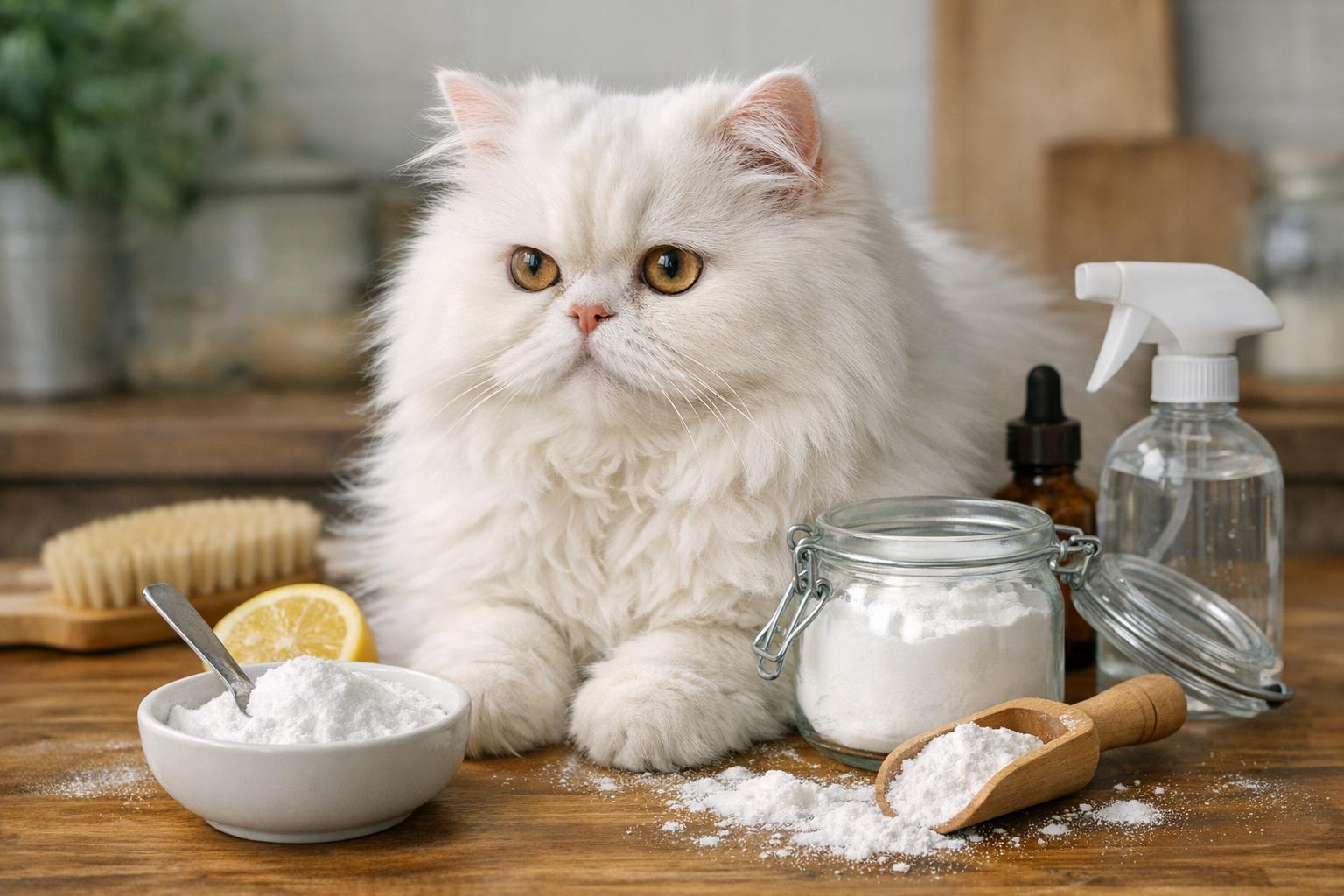
Cats and fleas: an eternal cat-and-mouse game (pun absolutely intended). If you’re reading about home remedies for fleas on cats baking soda, you probably want something gentle, inexpensive, and at least somewhat effective. Baking soda can play a role — mostly in the environment, not as a miracle cure for fleas living on the cat — but it needs to be used carefully. Below you’ll find clear, vet-minded guidance, two practical remedies (numbered), ingredient lists, step-by-step instructions, and safety notes. I’ll be friendly about it, but when it comes to application, I’ll be formal and specific.
## Home Remedies For Fleas On Cats Baking Soda: What Baking Soda Can And Can’t Do
Baking soda (sodium bicarbonate) is a mild abrasive and drying agent. In flea control it’s useful mainly for the environment: it can help loosen and dry out flea eggs and debris in carpets, bedding, and upholstery, making them easier to remove with vacuuming. It does not reliably kill adult fleas on a cat’s skin, and using baking soda directly on a cat’s coat risks irritation or ingestion during grooming. In other words: good for the house, limited for the cat.
Using baking soda as part of an integrated approach — along with regular vacuuming, washing bedding, mechanical removal with a flea comb, and veterinarian-recommended flea prevention — is practical and low-cost. Don’t rely on it as your only tool for a heavy infestation.
### Safety And Vet Guidance
Before trying any home remedy, consult your veterinarian. Cats have sensitive skin and delicate liver function; some home ingredients that seem innocuous to humans are unsafe for cats. If your cat is young, old, ill, pregnant, or has known skin problems, check with your vet before any topical application. If your cat shows redness, swelling, hair loss, excessive scratching, vomiting, or lethargy after any treatment, stop and call your vet right away.
## Remedy 1: Baking Soda Environmental Powder (For Carpets, Bedding, Upholstery)
This is the safest and most useful way to use baking soda in a flea-control plan. It helps loosen eggs and debris and makes vacuum removal more effective. Use this as a regular maintenance step and during an active clean-up.
Ingredients / Required Materials:
– Baking soda (sodium bicarbonate) — plain, unscented
– A stiff-bristled brush or broom
– Vacuum cleaner with attachments and a HEPA filter if available
– Laundry detergent
– Hot water (as tolerated by fabrics)
– Sealable plastic bags or a trash can with a tight lid
Step-By-Step Creation And Application:
1. Prepare Laundry: Strip all removable bedding, pet beds, blankets, and washable fabric toys. Place them in hot-water washing cycles appropriate for the fabric (check care labels). Use the hottest water safe for the material and a good detergent; heat helps kill fleas and eggs.
2. Apply Baking Soda: On carpets, rugs, and upholstery, sprinkle a thin, even layer of baking soda. You want coverage, not a mound — about a light dusting over the area.
3. Work It In: Using a stiff brush or broom, gently work the baking soda into carpet fibers and fabric surfaces. This helps loosen debris and eggs so the vacuum can lift them.
4. Let Sit: Allow the baking soda to sit for at least 15–30 minutes. For heavier infestation areas, up to a few hours is fine, but keep pets and children away during this time.
5. Vacuum Thoroughly: Vacuum slowly and carefully, using attachments for edges and crevices. Pay special attention to baseboards, under furniture, and pet-frequented spots. Immediately empty the vacuum canister or replace the bag, and seal debris in a plastic bag before discarding it in an outdoor trash can.
6. Repeat As Needed: Do this every few days during an infestation, then weekly as part of maintenance.
7. Follow With Laundering: Wash any area rugs and pet bedding in hot water and dry on high heat if fabric care allows.
Notes: Baking soda is best for environmental control — it won’t replace topical or oral vet-prescribed flea preventives. Consider combining this method with diatomaceous earth (food grade) for added mechanical control in the environment, but use DE safely and avoid inhalation.
## Remedy 2: Baking Soda Support With Flea Combing And Spot Use (For The Cat — With Caution)
If you’re determined to involve baking soda directly with the cat, do so cautiously and sparingly. The recommended approach focuses on mechanical removal (flea combing) and a very limited, controlled use of baking soda not intended to be left on the skin for long. Always talk to your vet before applying anything to your cat.
Ingredients / Required Materials:
– Flea comb (fine-toothed)
– A shallow bowl of soapy water (mild dish soap)
– A small pinch of baking soda (plain, unscented)
– Soft towel
– Gloves (optional)
– Vet-recommended topical or oral flea product (as advised)
Step-By-Step Creation And Application:
1. Prep Your Cat: Choose a calm, well-lit area and have treats ready. Brush your cat gently first to remove loose hair.
2. Comb Systematically: Work in small sections, combing from head to tail. Each pass, dip the comb into the soapy water to drown and dispose of captured fleas. This mechanical removal is highly effective for adult fleas.
3. Apply Baking Soda Carefully (Optional Spot Method): Only after vet approval, you may use a very small pinch of baking soda to a dry cloth and gently rub it over a small area (not the face, genitals, or open sores). Do not sprinkle powder directly onto the cat. The goal is a light dusting that you immediately brush or comb out.
4. Remove Quickly: After using the baking-soda-dusted cloth in a spot, immediately comb through and then wipe or bathe (if the cat tolerates a bath) the area to remove residue. Never leave baking soda on a cat’s skin long-term.
5. Repeat Flea Combing Daily: Continue daily combing and disposal of fleas until you see no signs of fleas for at least several days.
6. Use Vet-Approved Treatments: Baking soda should never replace an effective, vet-approved flea prevention plan. Ask your veterinarian about safe topical or oral medications appropriate for your cat’s age and health.
Notes: Because cats groom themselves and ingest whatever is on their fur, any topical method must minimize ingestion risk. That’s why spot, short-contact methods are emphasized and why vet guidance is essential.
### When Not To Use Baking Soda On Cats
Do not use baking soda on kittens under 12 weeks, pregnant or nursing cats, or cats with compromised skin or health without veterinary approval. Do not use alternate home concoctions that include citrus, essential oils, or other kitchen ingredients that are toxic to cats. If your cat’s skin shows redness, flaking, or a chemical smell after use, rinse immediately and call your vet.
## Complementary Actions And Household Checklist
Baking soda works best when it’s part of an overall housekeeping and prevention plan. Complementary steps include:
– Regularly vacuuming floors, furniture, and crevices; immediately disposing of vacuum contents outside.
– Washing pet bedding and human bedding regularly in hot water.
– Flea-combing your cat daily during an outbreak and keeping a soapy water bowl for disposal of fleas.
– Treating the whole household (all pets) as fleas move easily between animals.
– Consulting your vet about safe, effective flea preventives — usually the most reliable long-term solution.
### Troubleshooting And Practical Tips
– If fleas persist despite diligent environmental cleaning and combing, you likely need a vet-prescribed approach; over-the-counter products for dogs can be toxic to cats.
– Baking soda will not break the flea life cycle alone; eggs and pupae hidden deep in carpets or crevices may hatch later. Repeat treatments and mechanical removal are necessary.
– If you use baking soda on carpets regularly as deodorizer, add the carpet brush/working step described above to actually help flea control.
## When To Call The Vet
If your cat is scratching excessively, develops bald patches, sores, or signs of secondary infection (redness, pus, scabs), or if you notice lethargy, pale gums, or unusual behavior, contact your veterinarian promptly. Flea-borne illnesses and allergic reactions can be serious.
Remember, the phrase you searched for — home remedies for fleas on cats baking soda — points you to a helpful, low-cost environmental tactic. Use it wisely, pair it with combing and proper vet care, and don’t expect baking soda alone to win the entire flea war. Treat your home and your cat as a team, and you’ll be much more likely to evict those uninvited tiny guests.














Leave a Reply