




If your cat is squinting, pawing at an eye, or suddenly sporting that dramatic tear-streaked look, you might be hunting for an antibiotic eye drop for cats — or at least wondering whether that’s what the furry patient needs. This guide is here to walk you through when antibiotic drops are appropriate, how to use them safely at home, and what supportive home care can help while you wait for vet treatment. Think of me as your slightly chatty but responsible eye-care sidekick.
## 1. Using Antibiotic Eye Drop For Cats At Home
### When Are Antibiotic Drops Appropriate?
Bacterial conjunctivitis and some minor corneal abrasions can respond well to antibiotic eye drops prescribed by a veterinarian. If your veterinarian diagnoses a bacterial infection, they will often prescribe a topical antibiotic eye medication that’s formulated for animals. Using an antibiotic eye drop for cats is only appropriate when a vet has confirmed a bacterial cause — viral, allergic, or foreign-body issues require different approaches.
### Why A Vet Prescription Matters
Antibiotics are not one-size-fits-all. The vet chooses a medication and concentration based on the likely bacteria, the severity of the infection, and your cat’s overall health. Improper use can delay healing, cause irritation, or encourage resistant bacteria. Legally and ethically, veterinarians should be involved in prescribing antibiotics for pets.
#### Legal And Safety Notes
– Never use human antibiotic eye drops or leftover medication without explicit vet approval.
– Do not attempt to create antibiotic solutions at home; that risks contamination and improper dosing.
### Materials And Ingredients (For Administration)
– Vet-prescribed antibiotic eye drop for cats (correct concentration and formula)
– Clean towel or non-lint cloth
– A helper (optional but helpful for wriggly cats)
– Disposable gloves (optional if you prefer hygiene protection)
– A quiet, well-lit space
### Step-By-Step Application Of Vet-Prescribed Drops
1. Wash your hands thoroughly and assemble materials.
2. Sit in a comfortable, stable spot with your cat on your lap or on a table with a towel under them.
3. If you have a helper, have them gently hold the cat, cradling the head without pressure. If solo, wrap the cat loosely in a towel leaving the head exposed (kitty burrito technique).
4. Remove the cap of the antibiotic eye drop for cats, avoiding touching the tip of the bottle to keep it sterile.
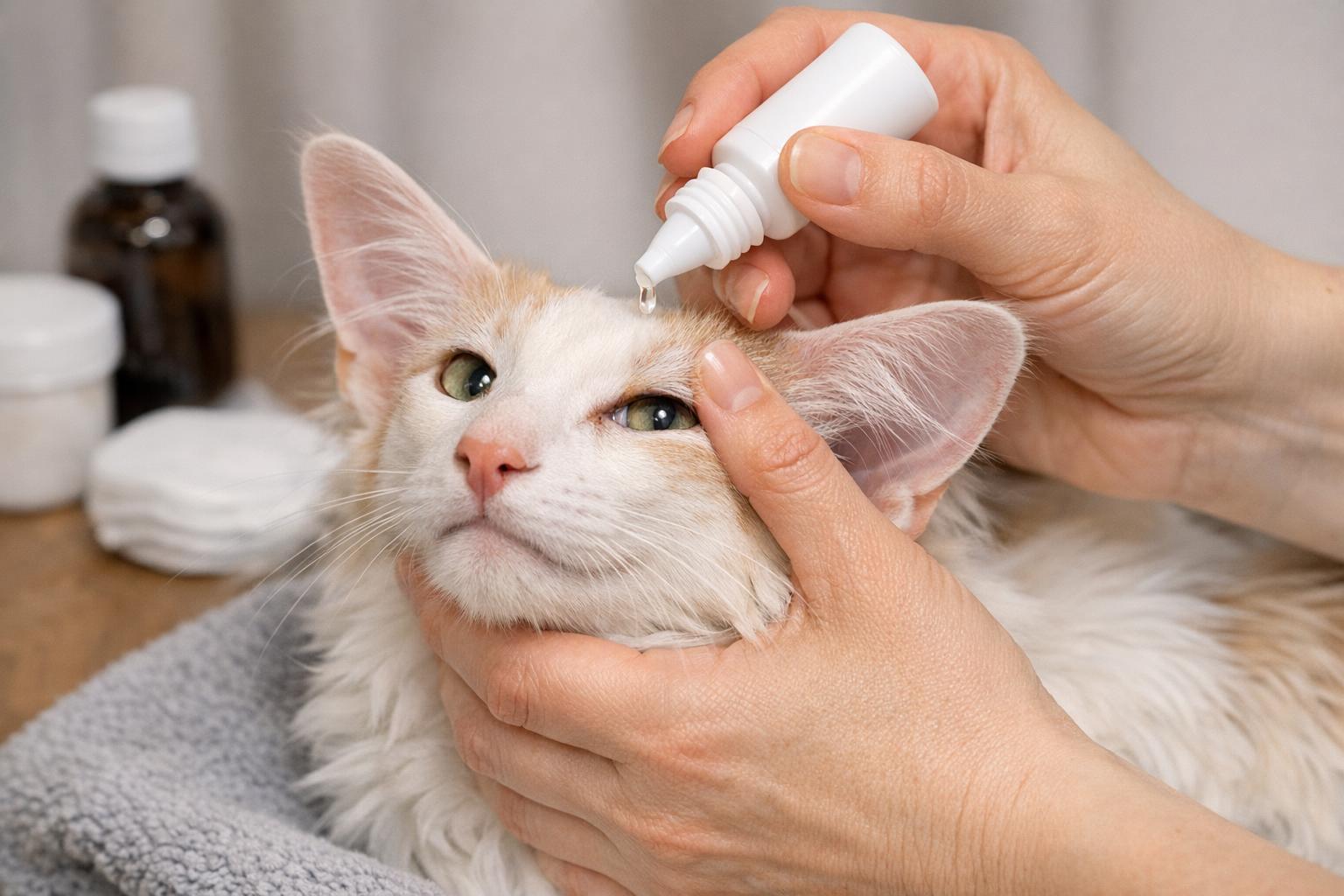
5. With one hand, gently hold the upper eyelid open while using your thumb or forefinger of the other to pull down the lower eyelid to create a small “pocket.”
6. Hold the bottle close to, but not touching, the eye. Squeeze the prescribed number of drops into the pocket. Aim to administer the drop quickly but calmly.
7. Release the eyelids and allow your cat to blink; don’t force them to keep the eye closed.
8. If the vet also prescribed an ointment, apply as directed — often at night because ointments blur vision temporarily.
9. Replace the cap, wash your hands, and reward your cat with a calm pet or a tiny treat if tolerated.
When administering, record the time of each dose so you maintain accurate intervals. If a dose is missed, follow your veterinarian’s instructions — typically administer as soon as remembered unless it’s almost time for the next dose.
## 2. Supportive Home Care: Cleaning, Flushing, And Comfort
### Why Supportive Care Matters
While the antibiotic gets to work, supportive cleaning and comfort measures can reduce irritation and speed recovery. These are not substitutes for antibiotic eye drop for cats but are helpful adjuncts.
#### Saline Flush Method (Safe Cleaning)
Materials:
– Sterile saline solution from pharmacy (preferred)
– OR boiled-and-cooled isotonic saline (9g table salt per liter of boiled water — see notes below)
– Clean, non-lint gauze or cotton balls
– Small bowl
Note: Sterile saline from a pharmacy is safest. If you must make saline at home, boil water for at least 1 minute, dissolve 9 grams of non-iodized salt per liter (0.9%), cool completely, and use within 24 hours refrigerated. Homemade solutions carry contamination risk, so use caution.
Steps:
1. Wash hands and prepare saline and clean cloth.
2. Soak gauze or cotton in saline and gently wipe away discharge, always wiping from the inner corner of the eye outward.
3. For a flush, use a syringe (without needle) filled with saline and gently squirt across the eye surface while your cat gazes away to help rinse debris.
4. Dry surrounding fur gently to prevent matting.
### Warm Compresses For Comfort
Materials:
– Clean towel
– Warm (not hot) water
Steps:
1. Soak towel in warm water, wring out excess.
2. Hold gently against the closed eyelid for 1–2 minutes to help loosen crusts and soothe inflammation.
3. Follow with saline wipe if needed.
Use supportive methods 2–4 times daily or as directed by your vet, and never force the eye open for cleaning.
## Recognizing Eye Problems Early
### Common Signs To Watch For
Redness, swelling, thick yellow or green discharge, excessive tearing, squinting, pawing at the eye, cloudiness, or visible corneal ulcers are all red flags. Some conditions progress quickly, so monitor closely.
### When To See A Veterinarian
If symptoms appear severe, if the eye is painful, if vision seems impaired, or if there is a sudden increase in discharge or swelling, contact your veterinarian promptly. Also seek help if topical treatment leads to worsening signs, or if your cat shows signs of systemic illness (fever, lethargy, decreased appetite).
#### Emergency Signs
– Sudden inability to open the eye
– Protruding third eyelid covering much of the eye
– Eye looks bluish or cloudy (possible ulceration)
– Any sudden, dramatic change in appearance or behavior
## Storage, Dosage, And Safety Tips
### Handling And Storage
Store the antibiotic eye drop for cats exactly as the label or vet prescribes. Many drops require refrigeration after opening; others are kept at room temperature. Note the discard date once opened — most multidose eye drops have a recommended discard window (for example, 7–28 days). Do not use after expiration.
Never touch the dropper tip to the eye, fur, or any surface. If contamination is suspected (bottle tip touches the eye or fur), consult your vet — they may recommend replacing the bottle.
### Dosage Reminders And Adverse Reactions
Follow dose frequency and duration precisely. Even if the eye appears better, complete the course unless instructed otherwise. Stopping early can lead to relapse.
Watch for adverse reactions: increased redness, swelling, itching, or discharge after starting the medication. If these occur, stop use and contact your veterinarian. Allergic reactions in topical eye medications are possible, though uncommon.
### Miscellaneous Practical Tips
– Never share an antibiotic eye drop for cats between pets.
– Keep a calendar or set phone alarms for dosing times.
– If administering drops is consistently traumatic for your cat, ask your vet about clinic-assisted administration or alternative medications.
If you’re tempted to treat immediately without a vet visit because “it can’t be that serious,” a gentle reminder: eye problems can escalate quickly. Using the correct antibiotic eye drop for cats, in the correct dose, prescribed by a veterinarian, is the surest path to healing.
Now go softly, be patient, and reward cooperation with calm praise and a smidgeon of cat-friendly treats. Your cat may not appreciate the drops, but they’ll definitely appreciate the comfy towel afterward — and you’ll both appreciate clear, happy eyes.
































Leave a Reply