

Temperature swings are not a nuisance. They are a direct threat to the fish in your tank. Get a handle on the heat and everything else gets easier.
## Maintaining Temperature Stability In Fish Tanks: Practical Principles
Start with the basics: fish are cold-blooded creatures, which means their metabolism and immune response shift with each degree. A change of two or three degrees can stress them, slow digestion, or make them more susceptible to disease. That’s why maintaining temperature stability in fish tanks is not optional; it’s routine husbandry.
Think in terms of consistency, not absolute perfection. You don’t need the temperature to be identical to a decimal point every hour. You do need to avoid frequent swings and long-term drift. A tank that sits half a degree too warm for weeks is easier to fix than one that jumps three degrees at night and then drops back during the day.
### What Stability Actually Means
Most tropical species do well with a steady range of plus or minus 0.5°C (about 1°F). Coldwater fish tolerate slightly larger swings, but avoid sudden changes. Stability is not a static number; it’s a predictable envelope that you monitor and maintain. If you want to manage a reef setup, your acceptable band narrows even more.
#### Assessing Your Current Situation
Check your aquarium temperature at different times of day for a week before changing anything. Use the same thermometer and record readings. This gives you a real-world profile of cycles and problem windows. Don’t rely on a single measurement taken at noon on a sunny day.
## Why Consistent Aquarium Temperature Matters
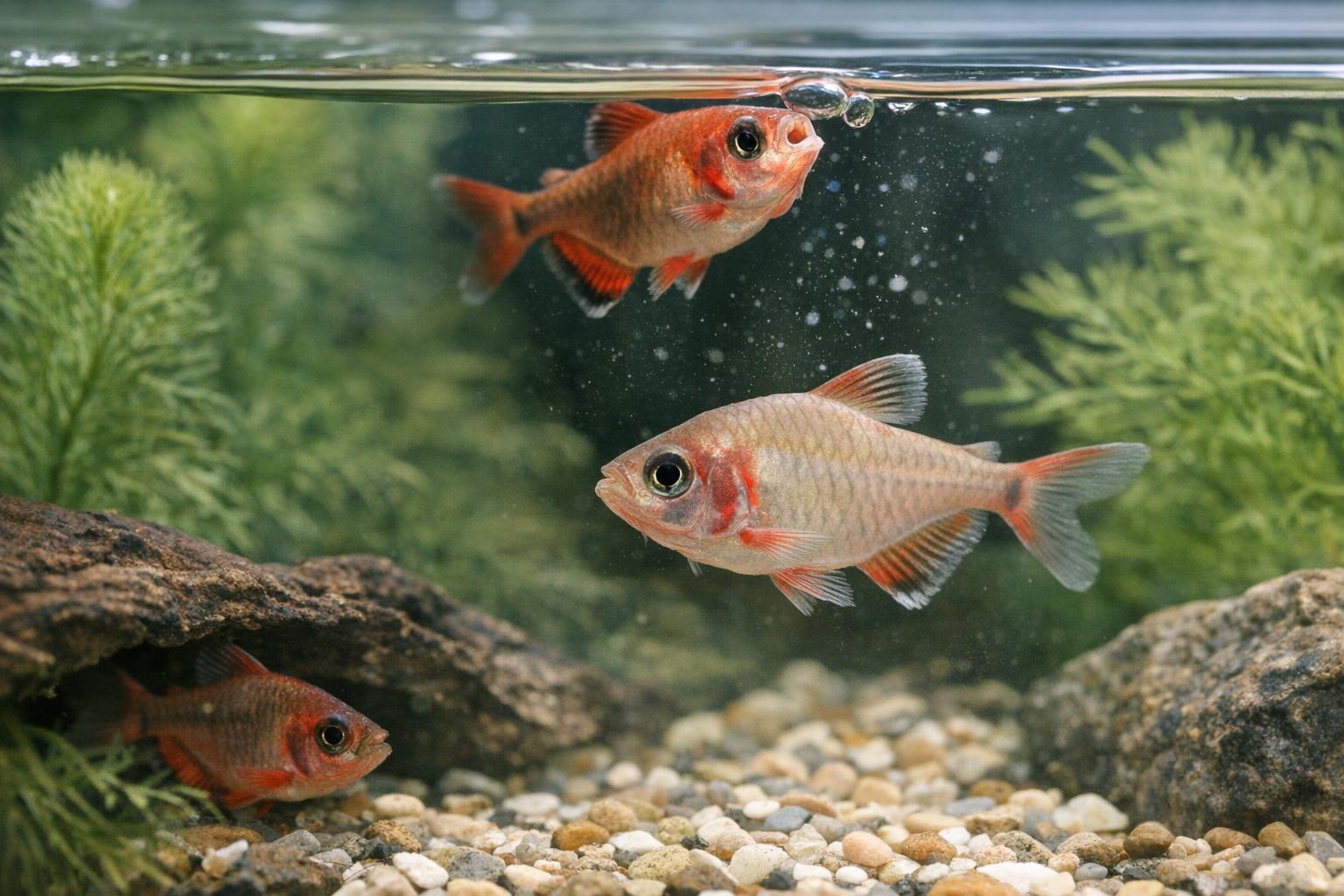
Fish respond to thermal stress in ways you can’t always see right away. Behavior changes, appetite loss, increased hiding, and sudden aggression can all link back to temperature issues. Even if your water chemistry tests fine, temperature problems can undermine immune function and complicate recovery from illness.
### The Biological Side
Temperature affects oxygen solubility, metabolic rate, and the life cycles of parasites and bacteria. Warmer water holds less oxygen, which matters in heavily stocked tanks or during high summer. At the same time, warmer temperatures accelerate metabolism and can increase waste production, which then challenges filtration and water quality.
### The Practical Side
Pet stores sell heaters and controllers like expensive light bulbs. Those tools help, but they don’t replace thinking ahead. Placement of equipment, the chosen wattage of a heater, and how you react to seasonal changes all matter. Those simple choices are why some tanks float along for years while others face recurring issues.
## Tools And Equipment For Stable Aquarium Temperature
Good tools reduce the chance of human error. A reliable heater, a backup heater, a quality thermometer, and a controller with a probe give you options. You’ll pay more for precise equipment, but consider the cost against repeated fish losses or chronic health issues.
### Choosing A Heater
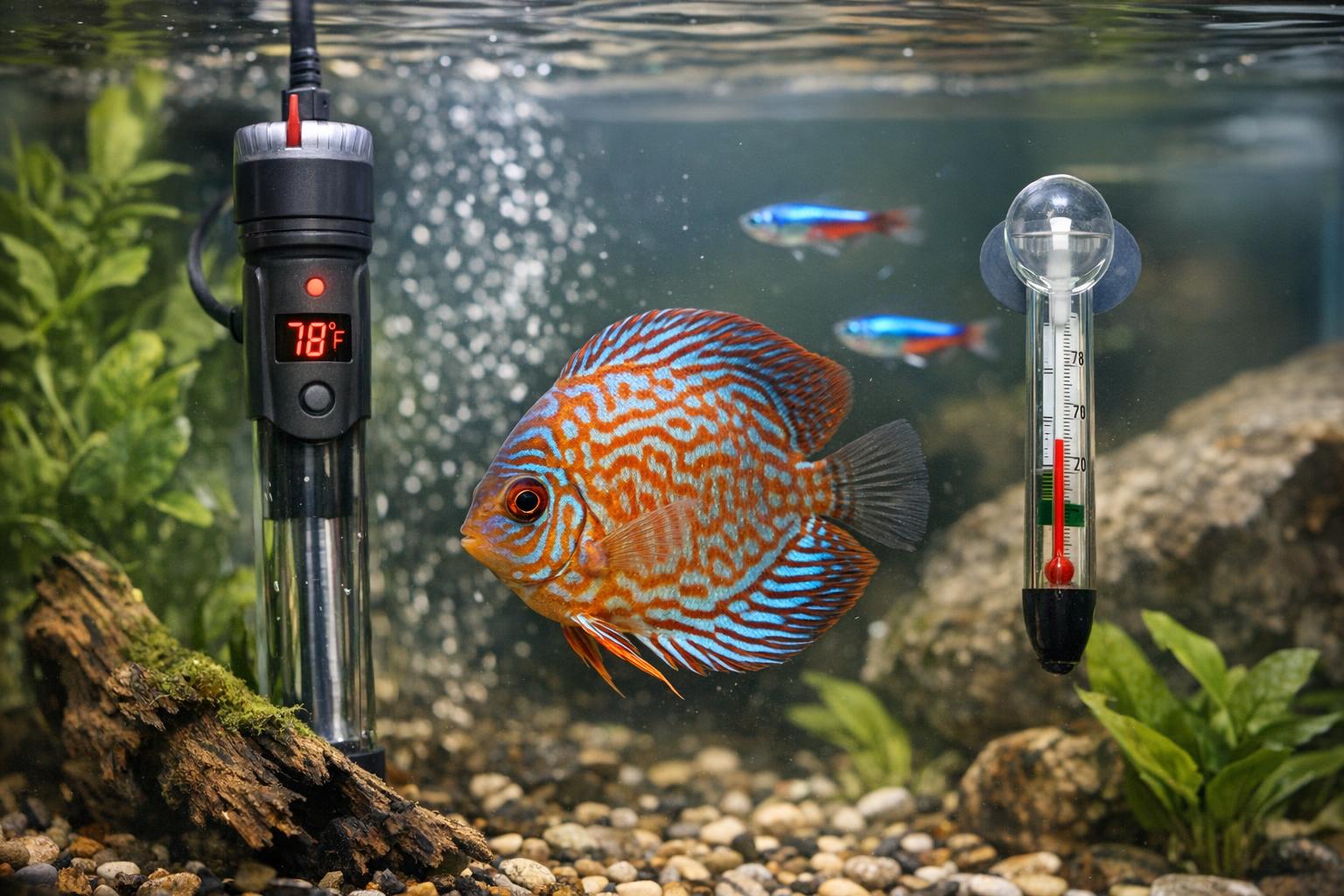
Match wattage to tank size. A common rule is 3–5 watts per gallon for indoor tanks, but room temperature and tank insulation change that. Use glass or titanium heaters with built-in thermostats for mid-range tanks. For critical systems, use a separate external controller that overrides the heater’s internal thermostat.
### Thermometers And Controllers
Digital thermometers with probes are worth the extra dollars. Put the probe mid-tank and away from the heater. Controllers that offer low- and high-temperature alarms give you time to act before things go wrong. If you’re running a sensitive setup, a controller that logs temperatures is especially helpful.
#### Redundancy And Backup
Keep a spare heater on hand and know how to replace it quickly. For crowded tanks, consider two smaller heaters instead of one large one. That way, if one fails, the other still keeps temperature drift gradual. A battery-powered air pump and a manual thermometer in an accessible spot are simple backup options.
## Setting Up Your Tank For Temperature Stability
The way you arrange your tank influences how heat distributes. Water movement, heater placement, and cover design affect how uniform the temperature remains.
### Placement And Flow
Place the heater where flow is strong but not directly in the filter’s intake where it could overheat or clog. The return flow should push warm water around the tank. In larger tanks, use circulation pumps or strategically placed powerheads to avoid thermal pockets where the water is colder or hotter than the rest.
#### Insulation And Room Factors
Think about the room your tank sits in. Avoid windows that get direct sun, and don’t place the aquarium near vents. Covering part of the rear or side of the cabinet can reduce drafts. During winter, a well-insulated cabinet helps keep the tank’s temperature stable with less heater work.
### Choosing Target Temperatures
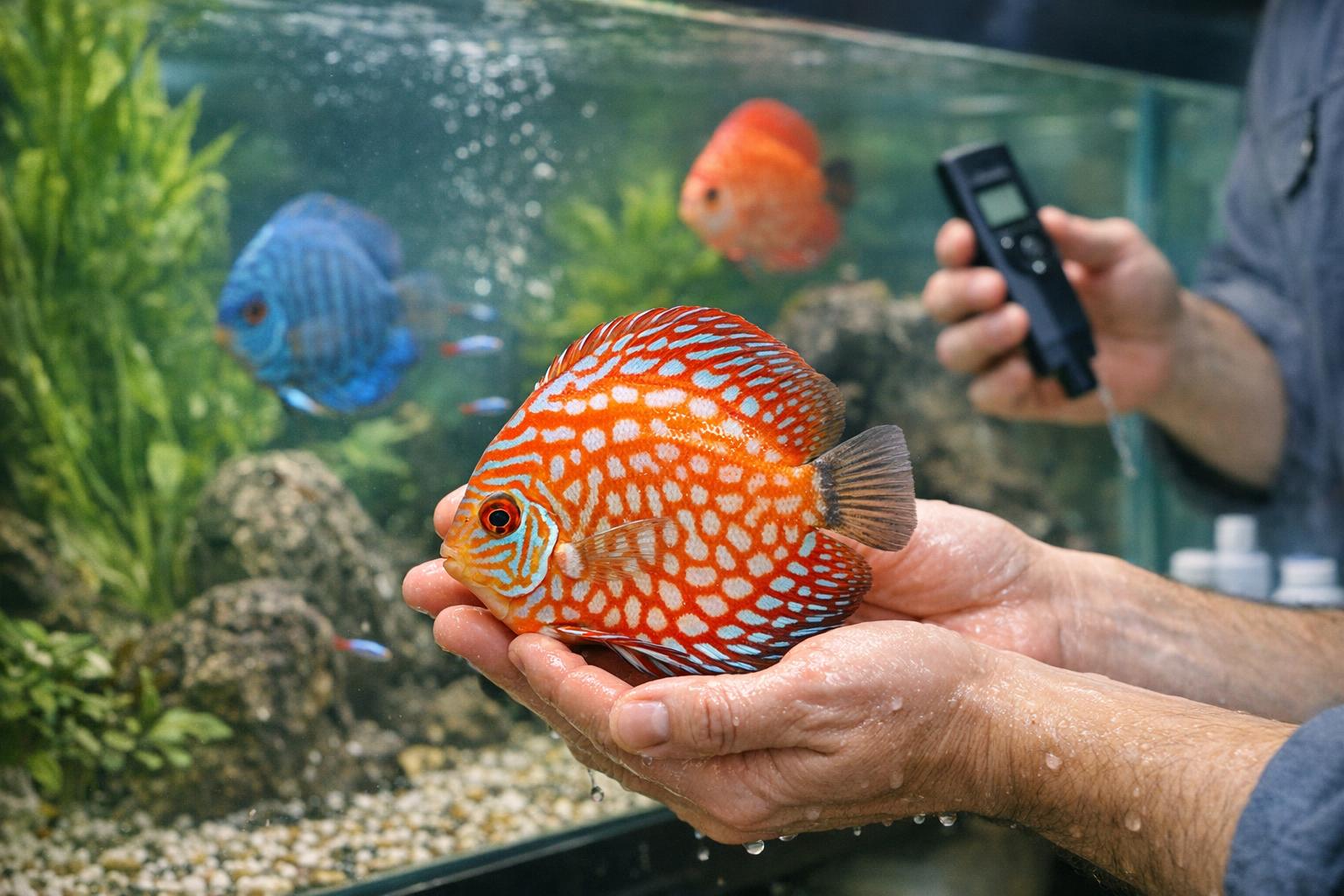
Base your target on the species you keep. Community tropical tanks often sit between 24–26°C (75–79°F). Discus like it a bit warmer. Coldwater tanks with goldfish prefer lower temps, around 18–22°C (64–72°F). Whatever you choose, aim to keep the tank within the established band and note seasonal tolerance. If you keep multiple species, pick a compromise that keeps everyone out of extremes.
## Day-To-Day Monitoring And Small Corrections
Regular checks beat emergency repairs. Make temperature measurement part of your daily routine, much like checking lights and filters.
### Simple Habits That Help
Check the thermometer at different times—morning, late afternoon, and night—especially after lighting cycles change. If you notice a creeping trend, look for the mundane causes: a heater buried in gravel, a lamp left on overnight, or a window left ajar.
#### Responding To Minor Fluctuations
If the tank creeps a degree or two, adjust the heater slowly. Don’t flip settings wildly. For small daytime heat spikes, increase airflow at the surface or reduce lighting. At night, if temperatures drop, turn on a small ceramic heater or use an aquarium-safe insulation wrap for the tank’s back and sides.
### Using Automation Wisely
Program controllers to keep your aquarium temperature tight and to alert you if readings cross thresholds. But don’t let automation lull you into complacency. Even with alarms, physically inspect equipment weekly and test battery backups monthly.
## Troubleshooting Common Temperature Problems
When things go wrong, respond methodically. Panic leads to hasty fixes that sometimes make the situation worse.
### Heater Failure And False Readings
Heaters can fail on or off. A heater stuck on sends slow, unnoticed increases. A heater stuck off allows rapid cooling. If the heat drops or rises unexpectedly, use a second thermometer to confirm. Replace equipment that shows inconsistent behavior.
#### Sudden Drops Or Spikes
If the room lost power briefly or the HVAC kicked on, you may see a sharp change. For rapid cooling without power, move portable, heat-tolerant fish to temporary containers with stable water conditions only if they are severely affected. More often, small swings are survivable if corrected within hours.
### Seasonal Problems
Summer brings heat spikes, winter brings drift downward. For summer, add fans or a chiller when needed. Room air conditioning can help but not all homes have that. For winter, insulation and a slightly higher target temperature prevent excessive heater workload and frequent cycling.
## Advanced Strategies For Steady Aquarium Temperature
If you manage a high-value tank or a sensitive species, a few extra measures pay off.
### Using A Chiller
Chillers are expensive, but sometimes necessary for reef tanks or species that require cooler water than your ambient climate provides. Pair a chiller with a controller so the chiller cycles on only when required. This saves energy and extends equipment life.
#### Dual-Heater And Split Systems
A pair of heaters set slightly apart spreads the workload and prevents one large failure from becoming catastrophic. In larger systems, using one heater for the display and another for the sump balances temperatures and provides redundancy.
### Monitoring With Logs
Logging data gives you context. Graphs show whether a problem is a pattern linked to time of day, a human routine, or a failing device. You can predict when a seasonal change will impact your tank and preemptively adjust settings.
## Common Mistakes That Undermine Temperature Stability
People often overreact to small differences or ignore simple fixes. Both extremes cause trouble.
### Relying On A Single Tool
One thermometer, one heater, and no plan equals risk. A single point of failure is a bad bet. Redundancy doesn’t mean excess; it means practical backup for critical systems.
### Ignoring Room Conditions
A tank in a room with wide temperature swings will require more attention. Store tanks away from doors that open often and don’t rely only on the heater if the room gets very cold.
### Frequent Unnecessary Adjustments
Adjusting a heater up and down every few days creates instability. Make changes slowly and only after you’ve observed a real trend over several days.
## When To Seek Professional Help
If you’re seeing recurring illness linked to temperature or you can’t stabilize readings despite making obvious fixes, ask a vet or an experienced aquarist for a hands-on assessment. They can spot subtle patterns—like a poorly placed heater or inappropriate flow—that are hard to diagnose by phone or forum posts.
### What To Bring To An Appointment
Bring a log of temperature readings, photos of equipment placement, and a list of recent changes. A clear record helps pinpoint whether the problem is equipment, room conditions, or something else.
Keep the daily routine simple: measure, record, and respond in small steps. The tank that’s easy to manage is the tank where maintaining temperature stability in fish tanks becomes second nature, not a constant scramble. If you find yourself reacting to alarms every week, step back and re-evaluate the setup rather than tweaking settings on the fly.
A little preparation and modest redundancy go a long way. Recieve the small inconveniences now and your fish will give back fewer emergencies later.





Leave a Reply