



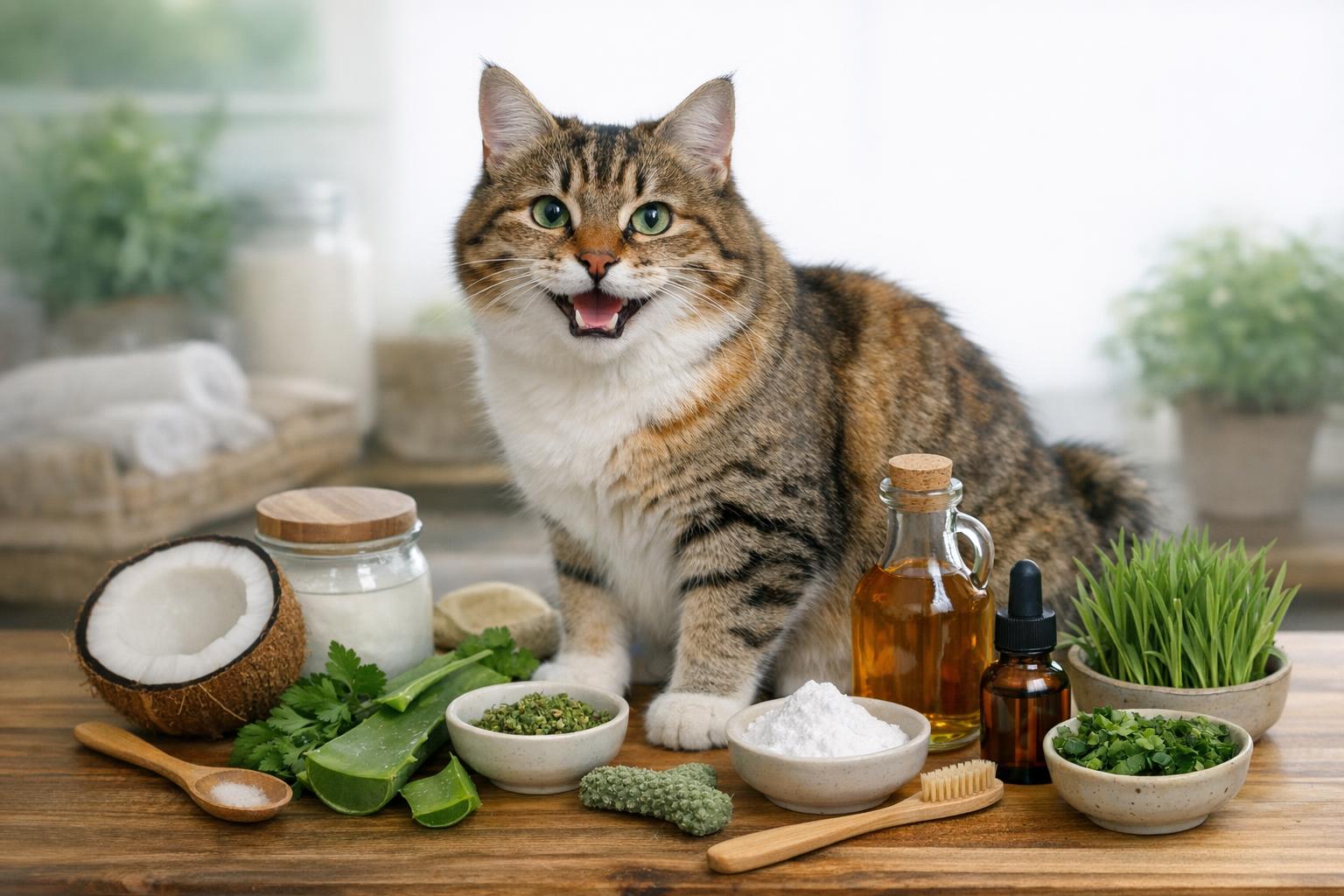
If you love a purring roommate, you know dental drama is a thing — the halitosis that clears a room, the paw-at-the-mouth theatrics, or that suspiciously squirrel-like chewing. Many cat guardians prefer gentle, natural approaches before reaching for chemical solutions. This article gives practical, vet-friendly at-home steps for common feline dental problems while keeping your cat comfortable and safe. Remember: these are supportive measures, not replacements for veterinary dental care when infection, loose teeth, or severe pain are present.
## Natural Home Remedies For Feline Dental Problems At Home
### 1. Coconut Oil Brushing For Plaque And Mild Gingivitis
Coconut oil can help reduce oral bacteria and make brushing easier because cats often tolerate its taste better than many toothpastes. This method is primarily for plaque control and early-stage gingivitis — not for advanced periodontal disease.
#### Ingredients Or Materials
– Virgin, cold-pressed coconut oil (food-grade)
– Soft cat toothbrush or finger brush
– Clean cloth or gauze
– Treats for positive reinforcement
#### Creation And Application Steps
1. Warm a small amount of coconut oil between your fingers until it’s spreadable. Use only a pea-sized quantity.
2. Allow your cat to sniff and lick a tiny dab so they become familiar with the scent and flavor.
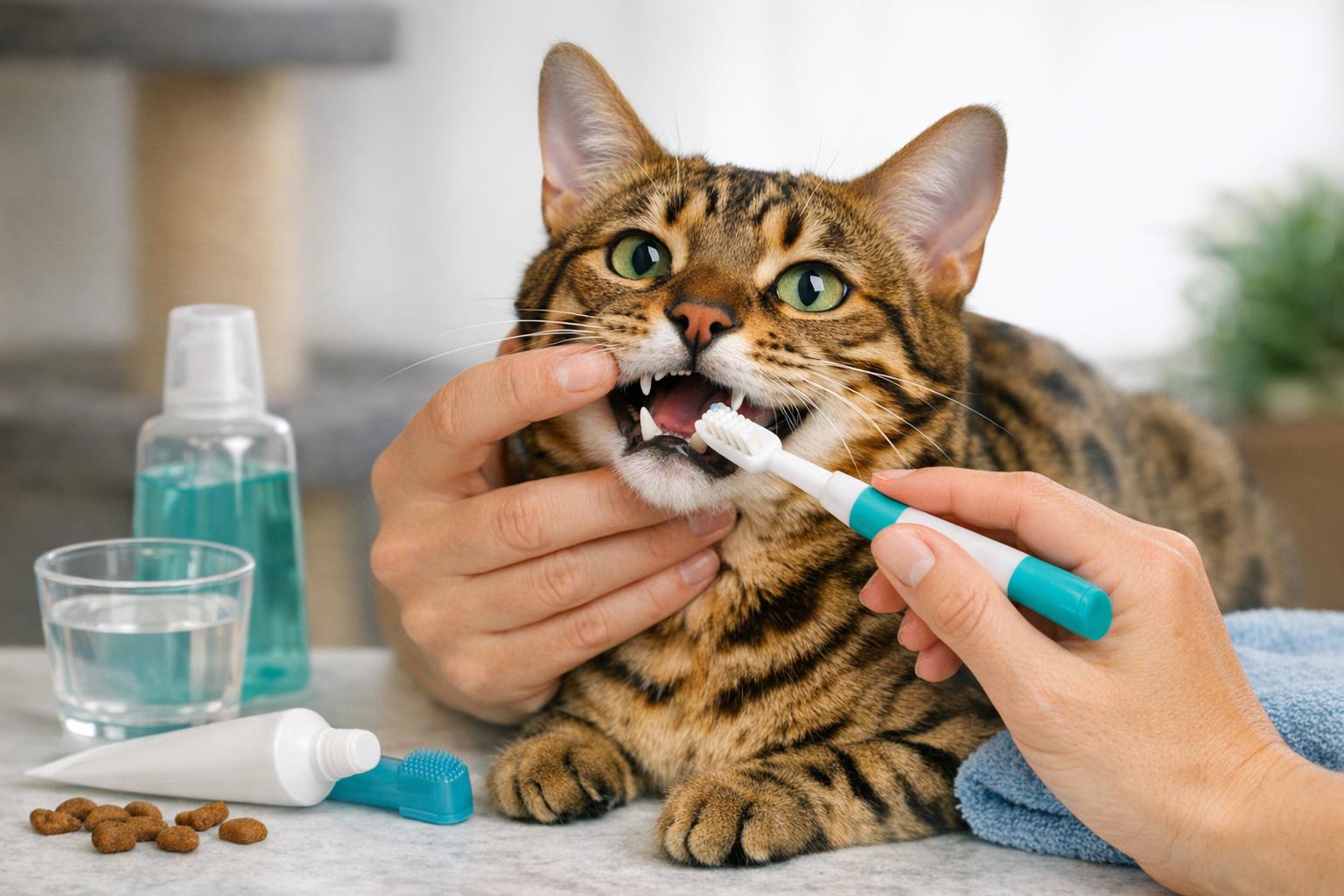
3. Wrap your finger with gauze or use a finger brush, apply a thin smear of coconut oil, and gently rub the outer surfaces of the teeth in small circular motions. Focus on the canine teeth and the back molars where plaque accumulates.
4. Keep sessions short — 30 to 60 seconds — and offer a treat or praise immediately afterward to build a positive association.
5. Perform this 2–3 times per week as maintenance. Increase frequency only if your cat tolerates it well.
Clinical Note: Use this technique to slow plaque buildup. It does not remove hardened tartar. For persistent feline dental problems such as loose teeth, significant inflammation, or pus, see your veterinarian.
### 2. Chamomile Rinse For Sore Gums And Inflammation
Chamomile has gentle anti-inflammatory and soothing properties and can be used as a mild oral rinse for irritated gums. This is supportive care for gingival soreness — not a cure for infection.
#### Ingredients Or Materials
– Organic chamomile tea bags (decaffeinated)
– Filtered water
– Small syringe or clean eyedropper (without a needle)
– Clean cloth
#### Creation And Application Steps
1. Brew chamomile tea using one tea bag per 250 ml (about 1 cup) of boiling water. Steep for 10 minutes to make an adequately strong infusion.
2. Allow the tea to cool completely to room temperature. Strain if needed and discard the tea bag.
3. Using the syringe, draw up 5–10 ml (1–2 teaspoons) of the cooled tea.
4. Gently elevate your cat’s lip and apply a small amount along the gum line. Do not force large volumes — cats can swallow small amounts safely.
5. Use the cloth to gently wipe any discharge or loosened debris.
6. Apply this rinse once daily for up to 7 days. Stop and consult a veterinarian if irritation worsens or if there is bleeding, excessive drooling, or systemic signs (fever, lethargy).
Safety Note: Ensure the tea is fully cooled and use only pure chamomile. If your cat is on medications or has known allergies to plants in the Asteraceae family, check with your vet first.
### 3. Saline Rinse And Gentle Gum Massage For Minor Mouth Wounds
A simple saline rinse can help keep the oral cavity clean after minor injuries or to soothe localized irritation. It’s supportive care for superficial problems and helps reduce bacterial load.
#### Ingredients Or Materials
– Non-iodized salt
– Filtered water
– Measuring spoon
– Clean syringe or dropper
– Soft gauze
#### Creation And Application Steps
1. Prepare a saline solution: dissolve 1/4 teaspoon of non-iodized salt in 1 cup (250 ml) of warm, filtered water. Let it cool to lukewarm.
2. Fill the syringe with a small amount (5–10 ml) of the cooled solution.
3. Gently restrain your cat in a calm area. Apply a small amount of saline along the gum line or to the affected area. Allow your cat to swallow; do not force.
4. If there is debris, gently press a piece of gauze against the teeth and gum to wipe the area until it’s clean.
5. Repeat 1–2 times daily for up to 5 days. Discontinue if you notice increased pain, bleeding, or signs of infection.
Clinical Caution: Saline is supportive for cleaning and mild irritation. For bad breath, persistent drooling, or other signs of systemic illness, a veterinary evaluation is necessary for diagnosing the root cause of feline dental problems.
### 4. Oral Probiotic Paste For Balancing Oral Microbiome
Oral probiotics formulated for pets can help rebalance oral bacteria and reduce malodor. Using a probiotic paste as a preventive measure can assist cats with recurring mild gingivitis and halitosis.
#### Ingredients Or Materials
– Vet-recommended feline oral probiotic (commercial product labeled for cats)
– Soft applicator or clean finger
– Treats for reward
#### Creation And Application Steps
1. Choose an oral probiotic specifically formulated for cats; follow the manufacturer’s storage and handling instructions carefully.
2. Read the label for the recommended dose. Use a clean fingertip or supplied applicator to place a small amount of the paste along the gum line.
3. Apply gently to the outer surfaces of the teeth and gums. Avoid forcing the cat’s mouth open — a few seconds of application is often enough.
4. Administer as directed, typically once daily for a designated period, or as part of a long-term maintenance routine if advised by your veterinarian.
5. Monitor for improved breath and reduced gingival redness over weeks. If no improvement occurs, consult your vet.
Professional Note: Probiotics are adjunctive therapy. For advanced feline dental problems like periodontal pockets, abscesses, or systemic involvement, veterinary intervention is required.
### 5. Mechanical Aids And Diet Adjustments For Ongoing Care
Simple environmental and dietary adjustments complement active remedies. Mechanical action and diet can decrease plaque formation and support oral health over time.
#### Materials Or Changes To Implement
– Soft rubber dental toys (cat-safe)
– Dental-specific kibble or chew approved for feline use (vet-recommended)
– Routine teeth inspection checklist
– Consistent brushing schedule
#### Creation And Application Steps
1. Introduce gentle rubber dental toys that encourage chewing and mechanical plaque disruption. Supervise play to prevent ingestion.
2. Discuss dental-appropriate diets or treats with your veterinarian. Some kibble and treats are formulated to mechanically reduce plaque; use them as part of an overall plan, not a cure-all.
3. Commit to a regular oral inspection routine: lift the lips weekly, look for redness, swelling, bad breath, or loose teeth.
4. Combine diet and mechanical aids with brushing or rinses. Consistency over time reduces the frequency of severe feline dental problems.
Medical Reminder: Hard chews—bones, hooves, ice—can fracture cat teeth and should generally be avoided. Always select products labeled safe for cats.
Warning Signs That Require A Veterinarian
If you observe severe halitosis, drooling, difficulty eating, facial swelling, visible pus, or blood in the mouth, these are red flags. These signs suggest infection, tooth root abscess, or advanced periodontal disease. Prompt veterinary assessment and, often, dental cleaning under anesthesia are necessary. Natural home remedies are supportive but not substitutes for professional treatment in these scenarios.
If you try these approaches and your cat shows improvement, great — keep up the gentle care. If not, or if symptoms escalate, your veterinarian is the best next step to prevent the more painful consequences of unchecked feline dental problems.














Leave a Reply