






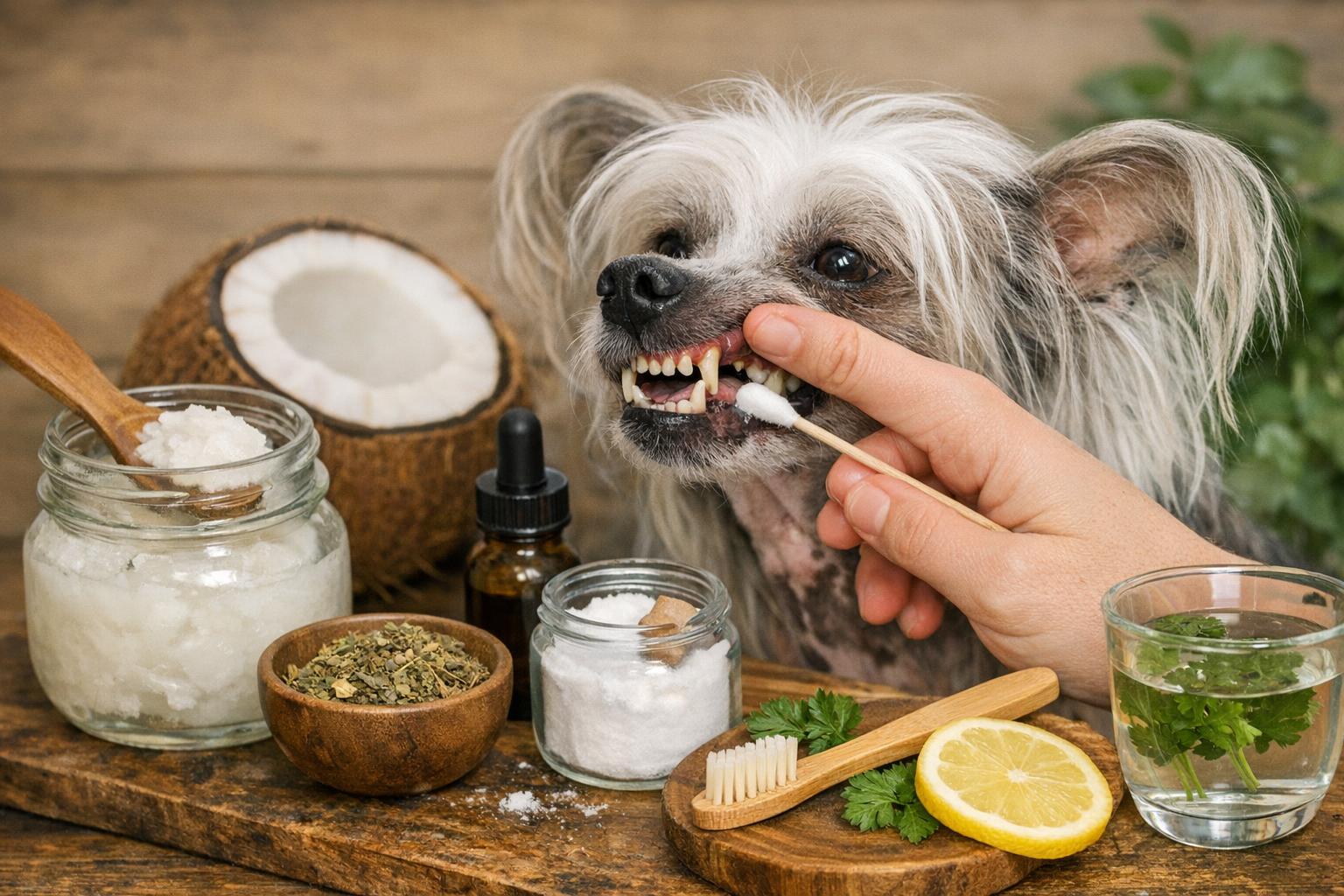
## Dental Disease In Dogs Treatment: Natural Home Approaches
Dental disease in dogs treatment is something many pet parents only think about when the smell hits them. Yet dental disease affects a huge percentage of adult dogs and can lead to pain, infection, and systemic health problems if ignored. The good news? There are safe, natural things you can do at home to slow plaque, freshen breath, and support oral health — alongside veterinary care when needed.
## Why Dental Care Matters For Dogs
Left unchecked, tartar and gingivitis can progress to periodontal disease, causing loose teeth, abscesses, and even bacterial spread to the heart and kidneys. Regular attention to your pup’s mouth is one of the kindest things you can do. Think of dental disease in dogs treatment as preventive maintenance — and yes, your dog will love the extra attention (most do — unless they’re secretly a cat).
### Signs Of Dental Trouble
Watch for:
– Persistent bad breath
– Yellow or brown buildup at the gumline
– Red, swollen, or bleeding gums
– Pawing at the mouth, difficulty eating, or drooling
– Loose or missing teeth
If you see these signs, dental disease in dogs treatment should be started promptly and a vet visit scheduled to rule out advanced periodontal disease.
### When Professional Care Is Required
Natural home care helps prevent and manage mild dental issues, but it’s not a substitute for professional treatment when disease is advanced. If your dog has severe tartar, significant gum recession, or oral pain, a veterinarian’s dental cleaning (often under anesthesia) and possible extractions are necessary. Use home remedies as a supportive measure, not as a replacement for indicated veterinary procedures.
## 1. Remedy: Coconut-Parsley Toothpaste (Daily Brushing Support)
This is a gentle, natural paste that helps reduce bacteria and freshen breath. Brushing is the single most effective home measure for dental disease in dogs treatment.
### ### Ingredients Or Required Materials
– 2 tablespoons virgin coconut oil (melted)
– 1 tablespoon finely chopped fresh parsley (antimicrobial, breath-freshening)
– 1 teaspoon baking soda (optional; mild abrasive)
– Soft dog toothbrush or finger brush
– Small airtight container
#### #### Preparation And Application Steps
1. Combine the coconut oil and finely chopped parsley in the container. If using, add the baking soda and mix until uniform.
2. Allow the mixture to solidify slightly if room temperature is cool; keep it soft enough to scoop.
3. Place a small amount on the toothbrush or finger brush.
4. Gently lift your dog’s lip and brush in circular motions along the gumline for 30–60 seconds per side. Aim for once daily, or at least 3 times per week.
5. Reward your dog with praise or a small treat immediately after brushing to create a positive association.
Notes: Coconut oil has mild antimicrobial properties and helps the paste adhere. Baking soda is optional; use sparingly. If your dog eats a little paste, that’s generally fine in small quantities.
## 2. Remedy: Green Tea Antiseptic Rinse (Twice-Weekly Rinse)
Green tea contains polyphenols that reduce oral bacteria and inflammation, making it a gentle adjunct for dental disease in dogs treatment.
### ### Ingredients Or Required Materials
– 2 green tea bags (caffeine-free if possible)
– 2 cups boiling water
– Measuring cup and pitcher
– Small spray bottle or syringe (no needle)
– Refrigerator-safe container
#### #### Preparation And Application Steps
1. Steep the green tea bags in 2 cups boiling water for 10 minutes to get a concentrated brew.
2. Allow the tea to cool to room temperature, then remove the bags and transfer the liquid to a spray bottle or syringe.
3. Store in the refrigerator for up to 3 days.
4. To use, gently spray or apply 1–2 mL along the gumline and teeth once or twice weekly after brushing. For small dogs, one spray per cheek area is enough.
5. Do not rinse after application; let your dog swallow normally.
Notes: Avoid teas with added flavors or sweeteners. If your dog has a caffeine sensitivity, use decaffeinated green tea.
## 3. Remedy: Dehydrated Sweet Potato Dental Chews (Daily Chew Alternative)
Chewing helps mechanically remove plaque. These homemade chews are a safe, natural alternative to rawhide.
### ### Ingredients Or Required Materials
– 1–2 large sweet potatoes (organic if possible)
– Sharp knife and cutting board
– Oven or food dehydrator
– Baking sheet with parchment paper
#### #### Preparation And Application Steps
1. Preheat oven to 200°F (93°C) or set dehydrator to recommended temperature for vegetables.
2. Wash and scrub the sweet potatoes; peel if desired.
3. Cut into long strips or rounds about 1/4–1/2 inch thick, depending on your dog’s size.
4. Place strips on a lined baking sheet and bake for 2–3 hours, flipping halfway, until fully dried and chewy (or follow dehydrator instructions — typically 6–8 hours).
5. Let cool completely; store in an airtight container for up to 2 weeks.
6. Offer one chew daily as a treat and tooth-cleaning supplement. Supervise chewing to avoid choking on large pieces.
Notes: Monitor portion size and calories; sweet potato chews add carbs and calories to the diet.
## 4. Remedy: Oil Pulling With Coconut Oil (Short-Term Oral Hygiene Boost)
Oil pulling is an adjunct method to reduce oral bacteria. Use it sparingly and always combined with brushing and professional care when needed.
### ### Ingredients Or Required Materials
– 1 teaspoon virgin coconut oil
– Small spoon or syringe
– Towel and quiet area
#### #### Preparation And Application Steps
1. Warm the coconut oil until just liquid.
2. Apply a small amount into your dog’s mouth using a spoon or syringe placed gently along the gumline.
3. Allow the dog to swish the oil naturally for 30–60 seconds; don’t force prolonged holding. Most dogs will swallow, which is acceptable.
4. Wipe any excess oil from the lips and muzzle with a towel.
5. Use once or twice weekly as a supplemental measure.
Notes: Oil pulling should not replace brushing. If your dog dislikes the oil, stop the practice.
## Practical Prevention Tips And Lifestyle Measures
– Regular Brushing: Brushing teeth 3–7 times per week is far more effective than occasional measures. Dental disease in dogs treatment is most successful when combined with consistent brushing.
– Dental Diets And Chews: Veterinarian-recommended dental diets and approved dental chews can reduce tartar. Follow size and frequency guidelines.
– Routine Vet Checks: Have your vet check your dog’s mouth at least annually. Early-stage dental disease is much easier to manage.
– Safe Chewing Options: Offer safe chew toys that promote chewing without splintering. Avoid cooked bones and fragile hard objects that can fracture teeth.
– Monitoring Weight And Diet: Obesity and certain diets can affect oral health. Discuss diet with your vet to support whole-body and oral fitness.
### Small Words About Safety
Natural doesn’t always mean harmless. Some essential oils, human toothpaste, and certain household remedies can be toxic to dogs. Never use human toothpaste, especially those containing xylitol. Always introduce new oral care items slowly and watch for allergic reactions or gastrointestinal upset.
## FAQs About Dental Disease In Dogs Treatment
– How often should I brush my dog’s teeth?
Aim for daily brushing; if that’s not possible, try at least 3 times per week for meaningful benefit.
– Can home remedies cure periodontal disease?
Home remedies help prevent and manage mild plaque and bad breath, but they cannot cure advanced periodontal disease. Professional veterinary treatment is essential for severe cases.
– Are homemade dental chews effective?
Properly prepared dehydrated chews and safe chewing toys help mechanically remove plaque, but efficacy varies. Combine chews with brushing and veterinary advice.
– When should I see a vet?
See a vet promptly if you notice pain, bleeding gums, loose teeth, swelling, or difficulty eating. Early veterinary intervention prevents complications and improves outcomes.
Throughout any plan for dental disease in dogs treatment, your veterinarian is your best ally. Use these natural, home-based strategies as supportive measures to maintain oral health, slow disease progression, and keep your dog comfortable — with professional care stepping in where needed.





























































Leave a Reply