




Keeping your aquarium sparkling without stressing your fish (or yourself) is totally doable. Think of this as a friendly, slightly nerdy guide to making and using safe, effective DIY fish aquarium cleaner options — the kind that won’t leave your tank smelling like a citrus grove or a chemical factory. A little elbow grease, a few household items, and attention to bacterial balance will do the trick.
## 1. Vinegar-Based Fish Aquarium Cleaner
Let’s start with the classic: white vinegar. It’s inexpensive, non-toxic when rinsed properly, and excellent at removing hard-water mineral buildup and surface algae from glass and decorations — provided you don’t apply it directly to a tank with fish inside.
### Materials For Fish Aquarium Cleaner
– White distilled vinegar
– Clean water (preferably dechlorinated or tap water left to sit 24 hours)
– Spray bottle or bucket
– Soft sponge or non-abrasive algae pad
– Old toothbrush or soft brush for crevices
– Gloves (optional, for sensitive skin)
### How To Create And Use This Fish Aquarium Cleaner
1. Prepare The Tank: Remove fish and place them in a properly aerated temporary tank or clean, temperature-matched container filled with tank water. Remove decorations and plants (live plants should be handled gently; some can be rinsed in tank water instead of vinegar).
2. Mix The Solution: Combine 1 part white vinegar with 3 parts clean water in a spray bottle or bucket. This dilution is effective on mineral deposits and safe for most hard surfaces after rinsing.
3. Apply Off-Tank: Spray or apply the solution to glass, acrylic (test first on acrylic in a small spot), and decorations that have been removed. Let it sit for 5–10 minutes to loosen residue.
4. Scrub Gently: Use a soft sponge or algae pad and an old toothbrush for seams and textured surfaces. Avoid abrasive pads on acrylic and delicate décor.
5. Rinse Thoroughly: Rinse all items multiple times with clean, dechlorinated water until the vinegar smell is gone. Vinegar is non-toxic, but residues can alter water chemistry if reintroduced.
6. Reassemble Carefully: Return decorations and refill the aquarium with dechlorinated water at the correct temperature. Slowly reintroduce fish using the tank water you temporarily stored, performing a gradual acclimation if necessary.
Notes: Never use bleach, household cleaners, or soaps on aquarium surfaces or décor. Those chemicals can be toxic to fish even in trace amounts.
## 2. DIY Gravel Siphon Cleaner (Safe For Fish In Tank)
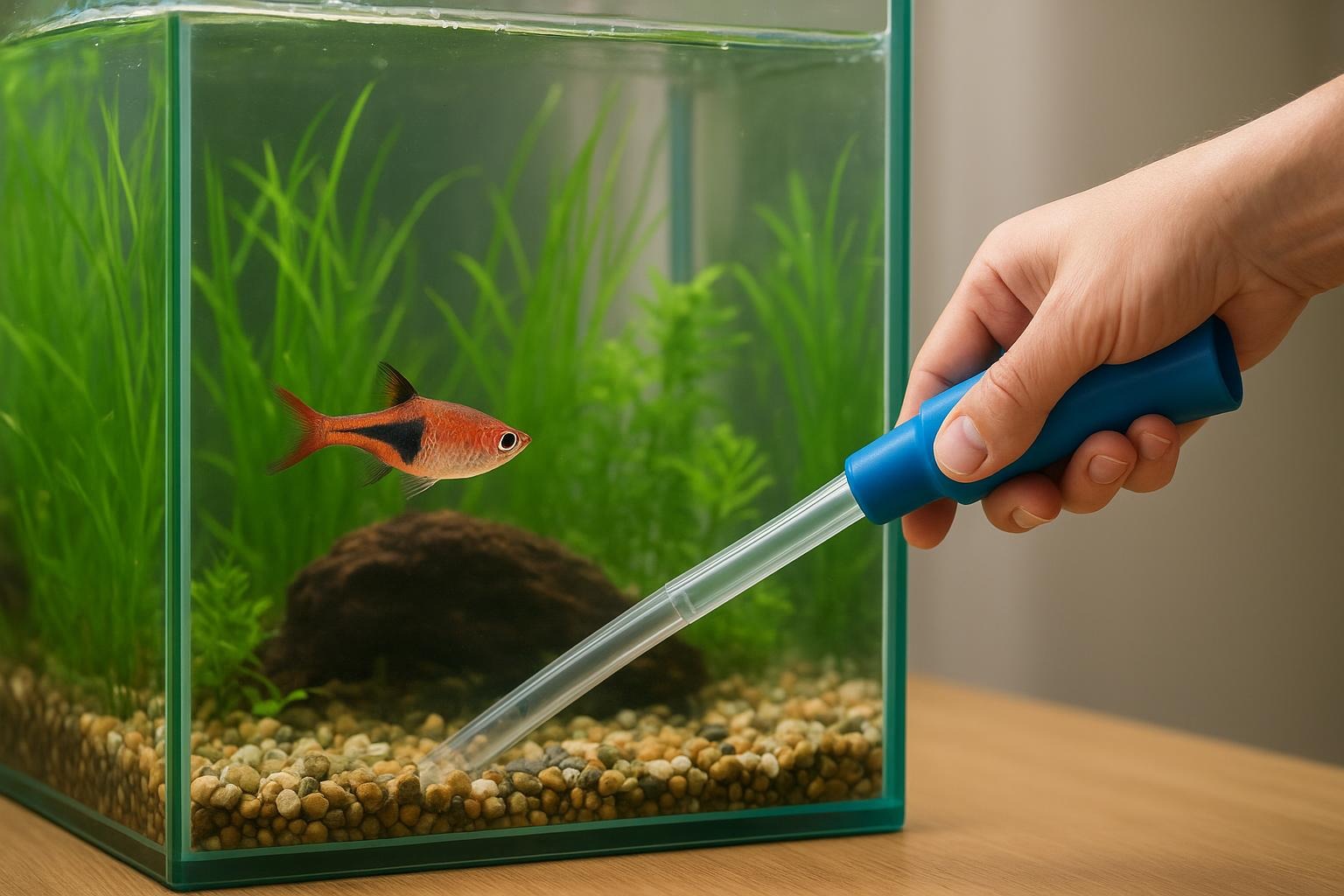
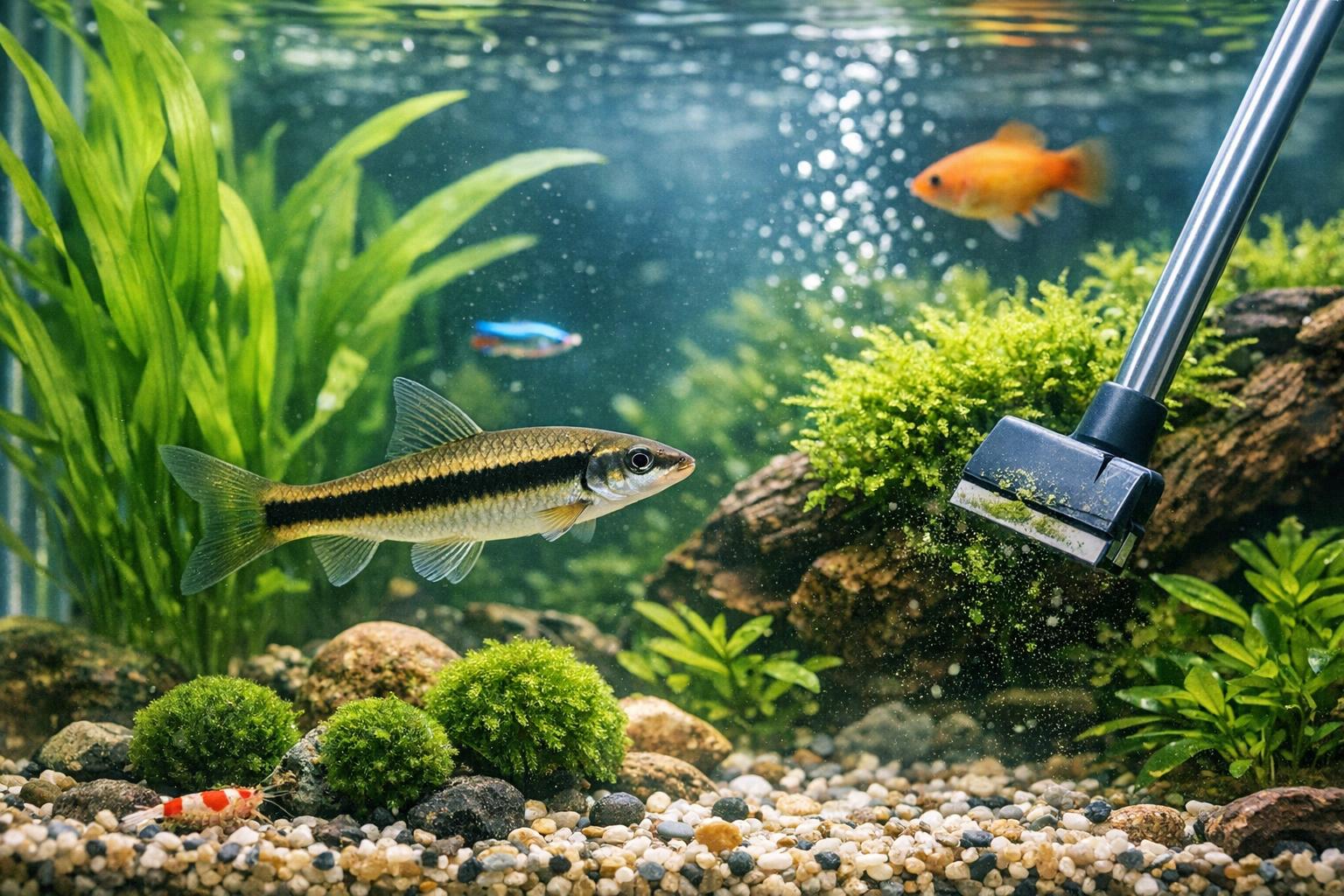
If you want an in-place method that cleans substrate without removing fish, a gravel siphon is your best friend. You can buy one, but here’s a simple DIY approach that’s cheap and effective.
### Materials For Gravel Siphon
– Flexible aquarium tubing (3/4″ / 19 mm inner diameter works well)
– A shorter piece of rigid tubing or a plastic bottle with the bottom cut off (for stabilizing the siphon entrance)
– A bucket for wastewater
– Optional: clamp or valve to control flow
### How To Create And Use The Gravel Siphon Cleaner
1. Assemble The Siphon: Attach the flexible tubing to the rigid stabilizer or the cut bottle piece so the tube opening stays near the substrate without sucking sand or gravel into the tube.
2. Start The Siphon: Fill the tube with tank water by submerging it entirely, or use the “suck” method briefly at the outflow end (avoid ingesting aquarium water). If using gravity, place the bucket lower than the aquarium so water flows out.
3. Clean The Gravel: Hold the tube opening a few inches above the substrate. Move it into the gravel to lift debris; heavier gravel will drop back into place while waste flows into the tube. Work methodically across the substrate.
4. Monitor Water Loss: Aim to remove 20–30% of the tank water during a routine clean. For heavily soiled tanks, perform multiple smaller changes rather than a single large one to protect biological stability.
5. Finish And Refill: Once finished, refill with dechlorinated water matched in temperature to avoid shocking the fish.
This method is formal and methodical: maintain a consistent pace, avoid removing too much beneficial bacteria with excessive filter/media cleaning, and always match water parameters during refills.
## Quick Safety Notes Before You Start
### Avoid These Common Mistakes
– Never Use Soap Or Household Cleaners Inside The Tank: Residues can be lethal.
– Don’t Replace All Filter Media At Once: Biological filtration is fragile; stagger replacements to preserve beneficial bacteria.
– Avoid Hot Water On Acrylic: Hot water can warp acrylic tanks and damage adhesives.
– Be Cautious With Aluminum Or Metal Décor: These can corrode with vinegar, so choose cleaning methods based on material.
## 3. Eco-Friendly Algae Spot Treatment (For Glass And Hard Surfaces)
If you prefer spot-treating algae without removing decorations, a targeted approach works well. This is ideal for stubborn green spots on glass or silicone seams.
### Materials For Algae Spot Treatment
– White vinegar (undiluted for spots)
– Cotton swabs or a soft toothbrush
– Small cup or container
– Dechlorinated water for rinsing
### How To Create And Use This Fish Aquarium Cleaner (Spot Treatment)
1. Isolate The Area: Turn off filters and avoid stirring substrate unnecessarily.
2. Apply Vinegar Locally: Dip a cotton swab or toothbrush in undiluted white vinegar and gently rub the affected area. Leave for 1–2 minutes for mineral crusts; for algae, the action and rubbing typically suffice.
3. Rinse Promptly: Use a turkey baster or cup of dechlorinated water to rinse the spot repeatedly until no vinegar odor remains.
4. Resume Filtration: Turn filters back on and monitor water parameters.
This approach is precise and minimizes disturbance of the tank environment.
#### When To Use Commercial Products
There are commercial fish aquarium cleaner solutions marketed for in-tank use that claim to be safe. Use them sparingly, read labels carefully, and prioritize products that offer clear, fish-safe ingredients and removal instructions.
## Maintenance Schedule And Tips
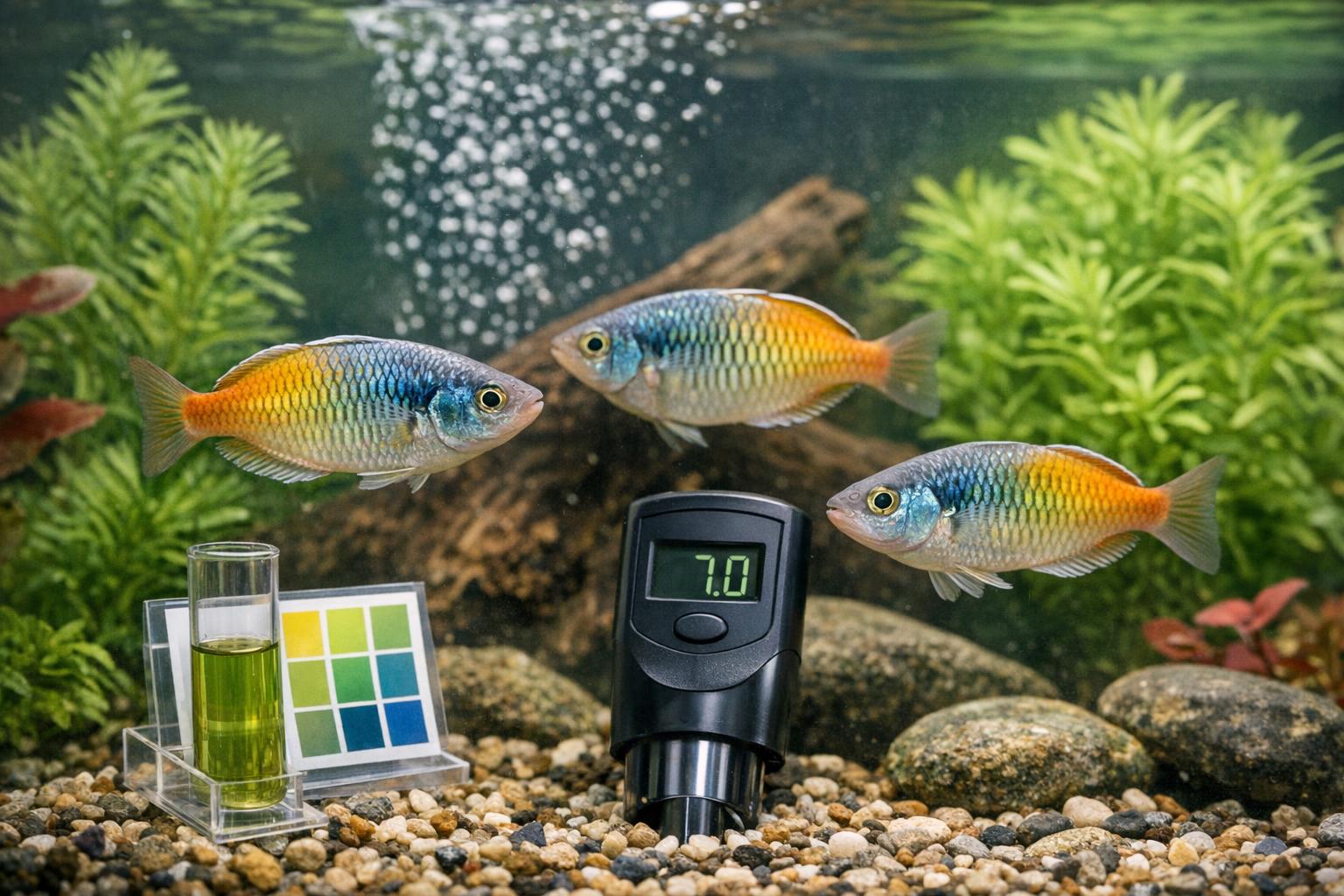
– Weekly: Check water clarity, test ammonia/nitrite/nitrate, and perform partial water changes (10–20%) as needed.
– Biweekly: Gravel siphon and spot-clean glass with an algae pad.
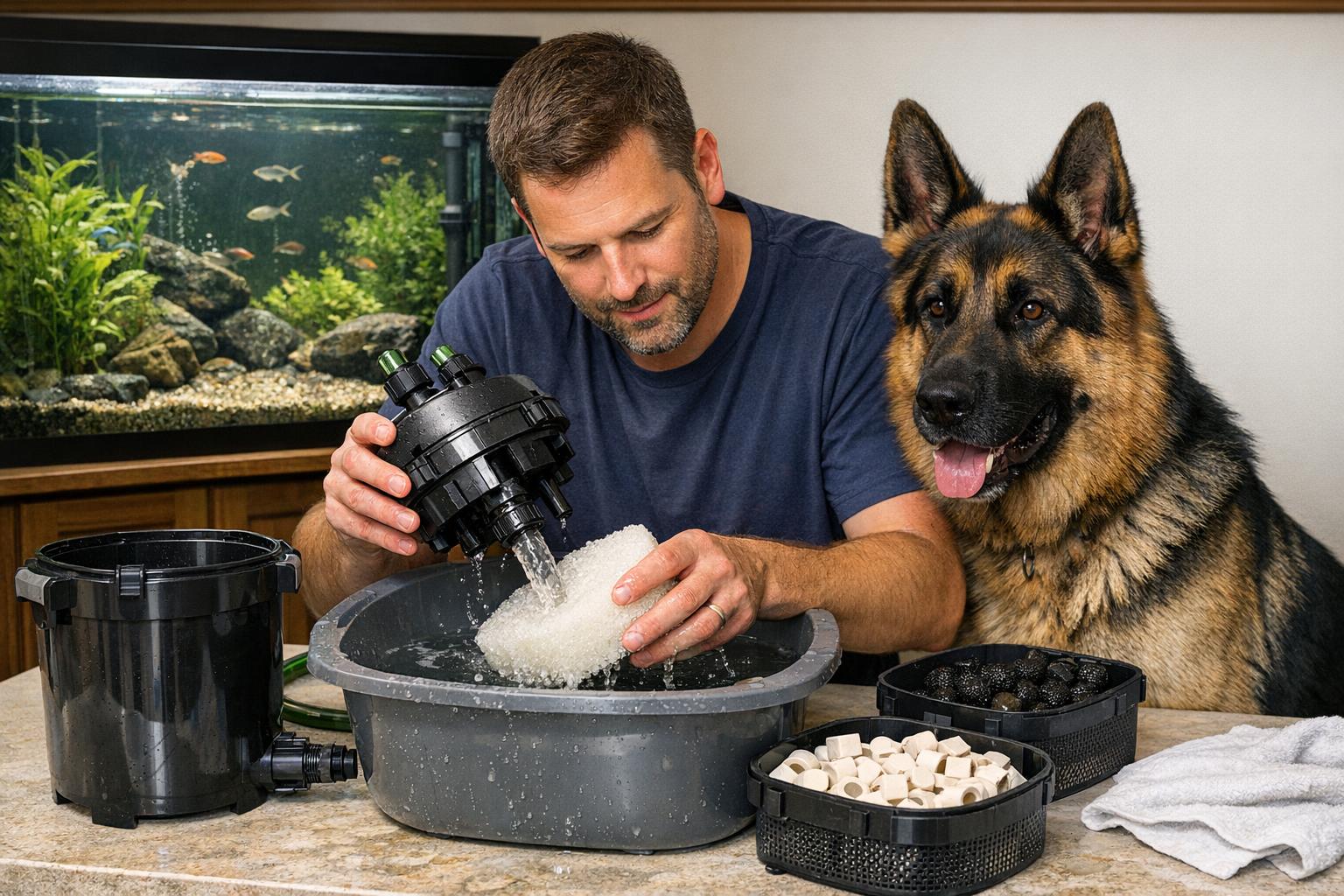
– Monthly: Rinse mechanical filter media in tank water; replace carbon or chemical media as recommended.
– Seasonal: Deep clean decorations using the vinegar method if heavy mineral buildup or algae accumulates.
A consistent schedule reduces the need for aggressive cleaning and keeps the tank ecosystem balanced.
## Troubleshooting Common Problems
### Cloudy Water After Cleaning
Cloudiness can be from stirred-up debris or bacterial bloom. If it’s a bacterial bloom, test ammonia and nitrite. If levels are safe, reduce light exposure and avoid feeding for 24–48 hours to let the bacteria stabilize.
### Persistent Algae
Algae can be a sign of too much light, excess nutrients, or imbalanced water chemistry. Cut back on light duration, control feeding, and consider introducing algae-eating tank mates appropriate for your environment.
### Scratches On Acrylic
If your aquarium is acrylic, avoid abrasive pads. Light scratches can sometimes be buffed with a plastic polish designed for acrylic; follow product instructions precisely.
## Final Practical Notes On Using Any Fish Aquarium Cleaner
When using any cleaner — homemade or commercial — prioritize the biological life in the tank. Rinse thoroughly, preserve beneficial bacteria, and make water changes gradual to protect fish from rapid parameter swings. And remember: a little maintenance regularly beats heroic scrubbing once a year.
Now roll up your sleeves and get to it — a crystal-clear aquarium (and a satisfied, less judgmental fish) await.
























Leave a Reply