
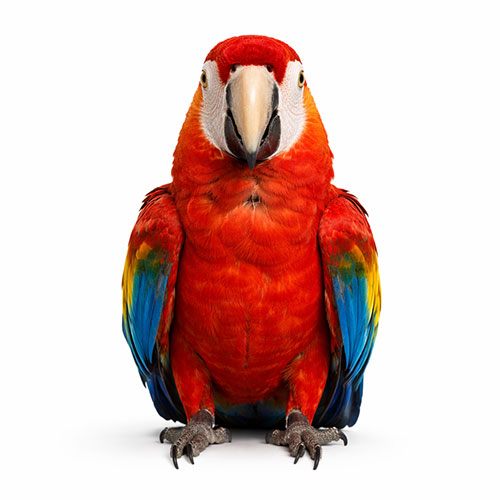

If your tiny parakeet has been looking a bit flaky or rubbing more than usual, you’ve come to the right place. Budgies are delightfully chatty little fur-not-birds, but when it comes to skin troubles they can’t exactly tell you what’s itchy. Below are friendly, practical, and gentle home remedies to help soothe budgie dry skin while keeping safety and comfort front and center. Think of this as a spa day with a strict no-cucumbers policy.
## Budgie Dry Skin: Causes And Quick Checks
Budgie dry skin can come from simple environmental factors or something more serious. First things first: check the environment. Low humidity, drafty cages, dusty bedding, and frequent bathing with harsh soaps are common culprits. Diet matters too — deficiencies in vitamin A, omega fatty acids, or inadequate fresh water can leave a budgie’s skin and feathers dull and dry.
### Common Causes
– Low Humidity: Indoor heating in winter is a notorious offender.
– Poor Diet: Lack of fresh greens, fruit, or seeds rich in omega fatty acids.
– Over-Bathing Or Harsh Soaps: Human soaps and shampoos are too harsh for birds.
– Mites Or Skin Infection: External parasites or bacterial/fungal problems.
– Stress Or Feather-Plucking Behaviors: Behavioral causes can worsen skin condition.
#### Quick Home Checks Before Trying Remedies
– Observe the cage placement: Is it near a heater or drafty window?
– Look for tiny moving dots (possible mites) or excessive feather loss.
– Check diet: Is your budgie getting fresh veggies and clean water daily?
## What To Look For: Signs Of Problem Skin
Mild dryness can be normal, but watch for redness, scabs, flaking concentrated in small patches, or signs of discomfort like constant scratching or restlessness. If you spot blood, open sores, or severe feather loss, don’t play amateur detective for long — seek veterinary care quickly. Mild flaking, dull feathers, and mild scratching are where the home remedies below may help.
## Remedy 1: Humidified Environment And Daily Mist
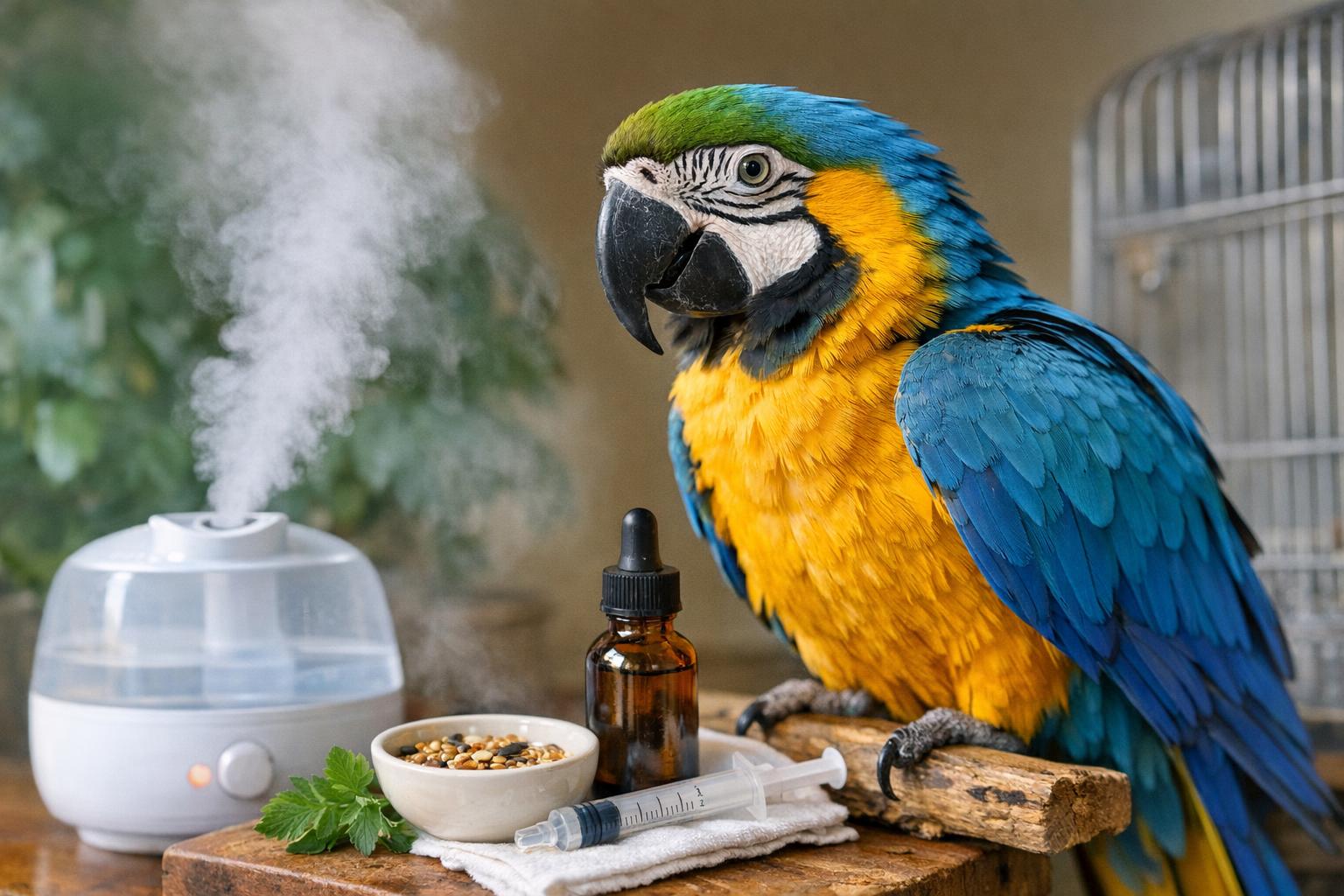
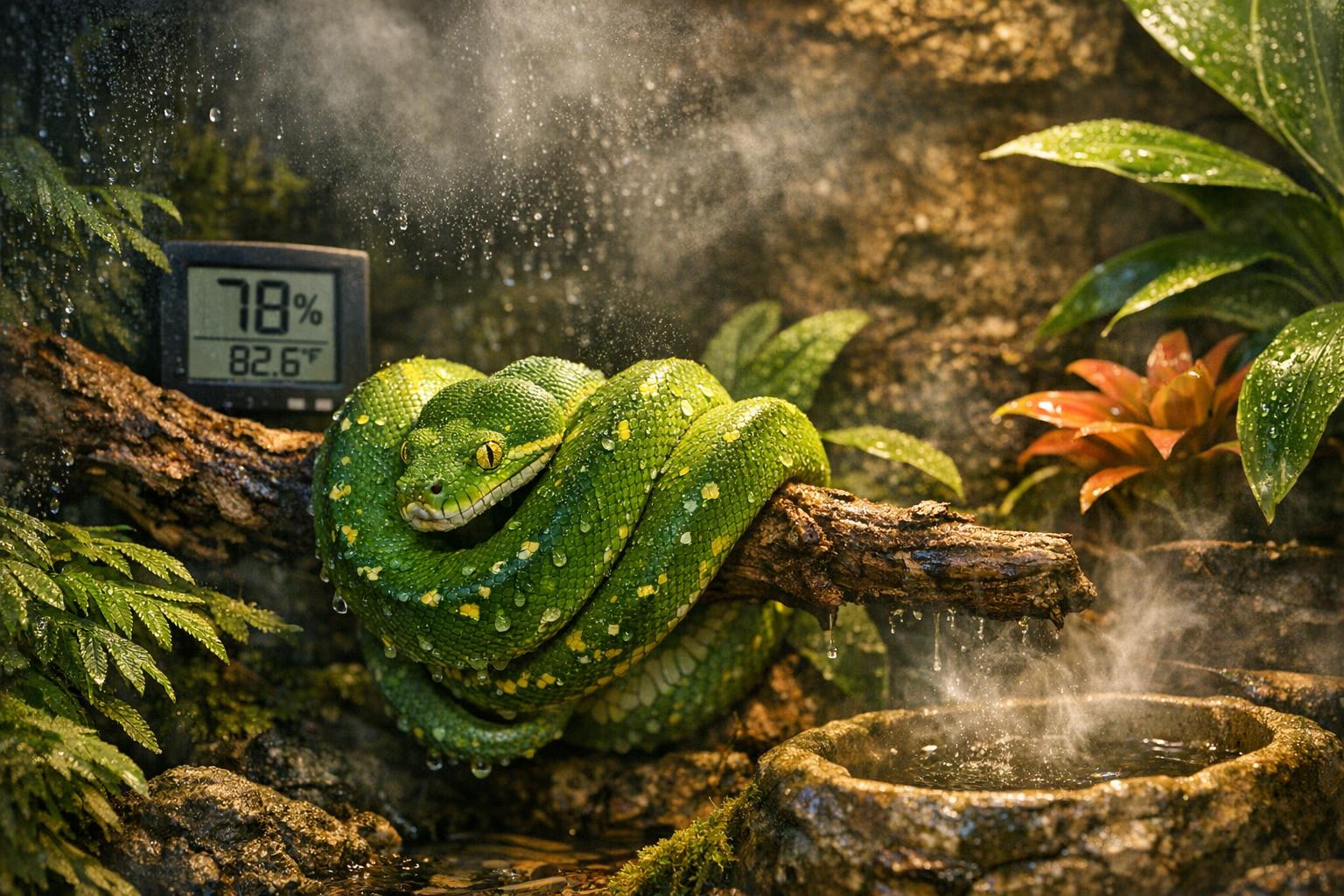
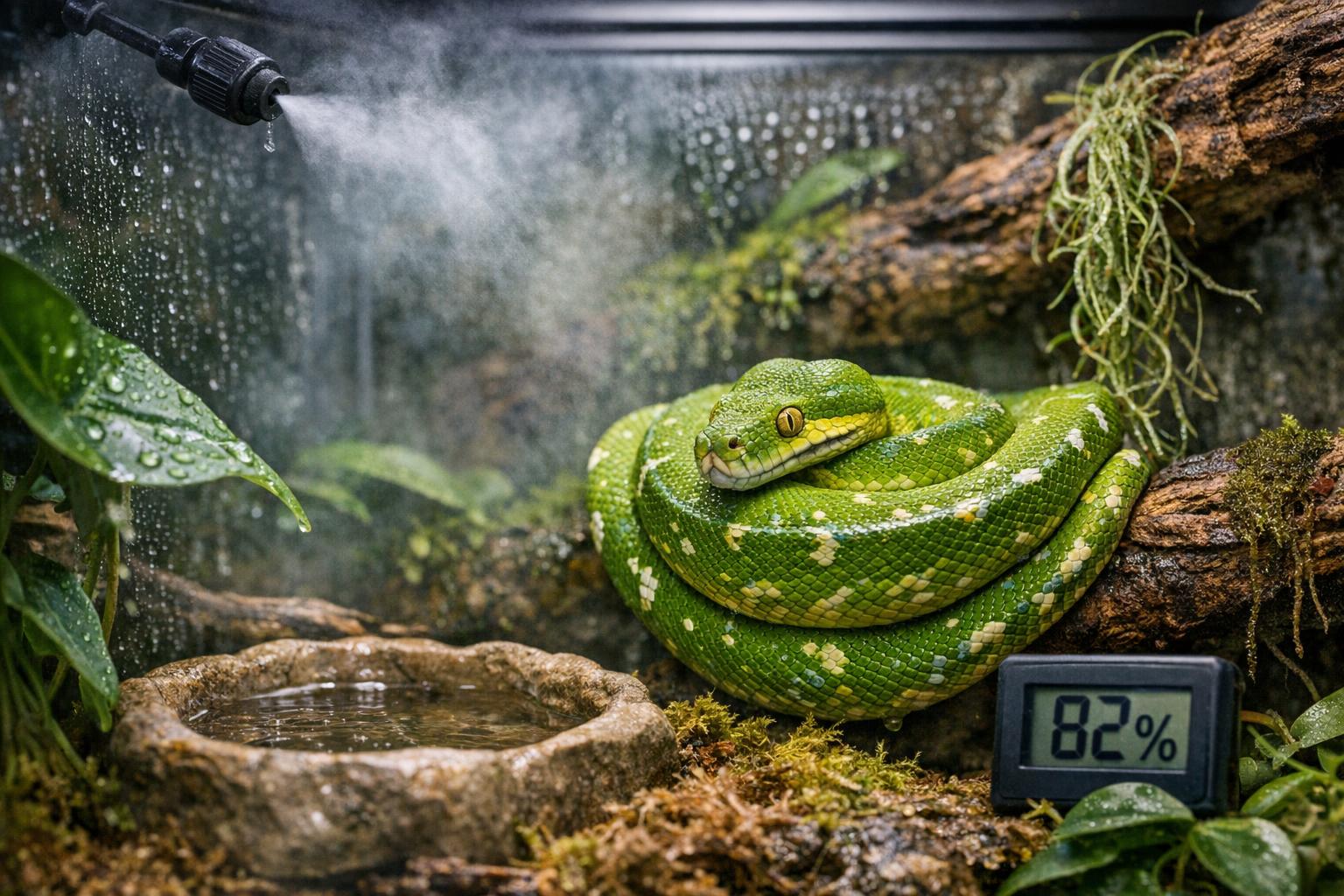
This is Remedy 1 because it’s the gentlest and often the most effective for general budgie dry skin. Restoring ambient humidity mimics natural conditions and helps the skin retain moisture without applying oils directly to feathers.
Ingredients / Materials
– Small room humidifier (cool-mist preferred)
– Spray bottle filled with clean, room-temperature water (distilled if possible)
– Thermometer/hygrometer to monitor humidity
Step-By-Step Creation And Application
1. Place a cool-mist humidifier in the room where your budgie spends most of its time. Aim for a stable relative humidity around 40–55% — enough to alleviate dryness but not so high that mold becomes a risk.
2. Run the humidifier on moderate settings during dry parts of the day (typically winter or when heating is on). Monitor with a hygrometer to avoid over-humidifying.
3. Give your budgie a gentle mist once daily using a fine spray bottle filled with room-temperature, clean water. Hold the bottle 30–40 cm (12–16 inches) away and spray across the cage so the bird can step into the mist if it chooses.
4. Observe the bird’s reaction. Many budgies enjoy brief misting and preen afterward, which redistributes natural oils. If the budgie seems frightened or stressed, stop and try again later in a calmer manner.
Safety Notes: Do not use essential oils or additives in the humidifier or spray. Use only plain water. Avoid steam or hot mists.
## Remedy 2: Oatmeal Soak For Gentle Relief
Remedy 2 is a mild, time-honored skin soother. Oatmeal has anti-inflammatory properties and can help when dryness is causing itchiness. Use this only for mild cases and never on open wounds or severe skin conditions.
Ingredients / Materials
– Plain, unflavored, ground colloidal oatmeal (or finely ground oats)
– Warm (not hot) water
– Small shallow dish or bowl
– Soft towel for drying
Step-By-Step Creation And Application
1. Mix a tablespoon of ground colloidal oatmeal into a shallow dish with enough warm water to form a thin, milky solution (approximately 1/4 to 1/2 cup water). The temperature should feel comfortably warm to your wrist.
2. Offer the shallow dish to your budgie in a calm, secure spot. Do not forcibly submerge the bird. Allow the budgie to step into the bowl and preen as it wishes. The goal is light exposure, not a bath.
3. Let the budgie enjoy the solution for up to 5–10 minutes. Monitor closely for stress or escape attempts. If the bird refuses, do not force the procedure.
4. Remove the dish and allow the budgie to preen and dry naturally in its cage. Use a soft towel to gently pat nearby cage surfaces if they become wet; avoid drying the bird with a towel unless assisted by a vet or an experienced handler.
Safety Notes: Use oatmeal only occasionally (once or twice a week) and stop if you notice increased irritation. Never use oat solutions with added fragrances or oils.
## Remedy 3: Olive Oil Spot Treatment For Scaly Areas
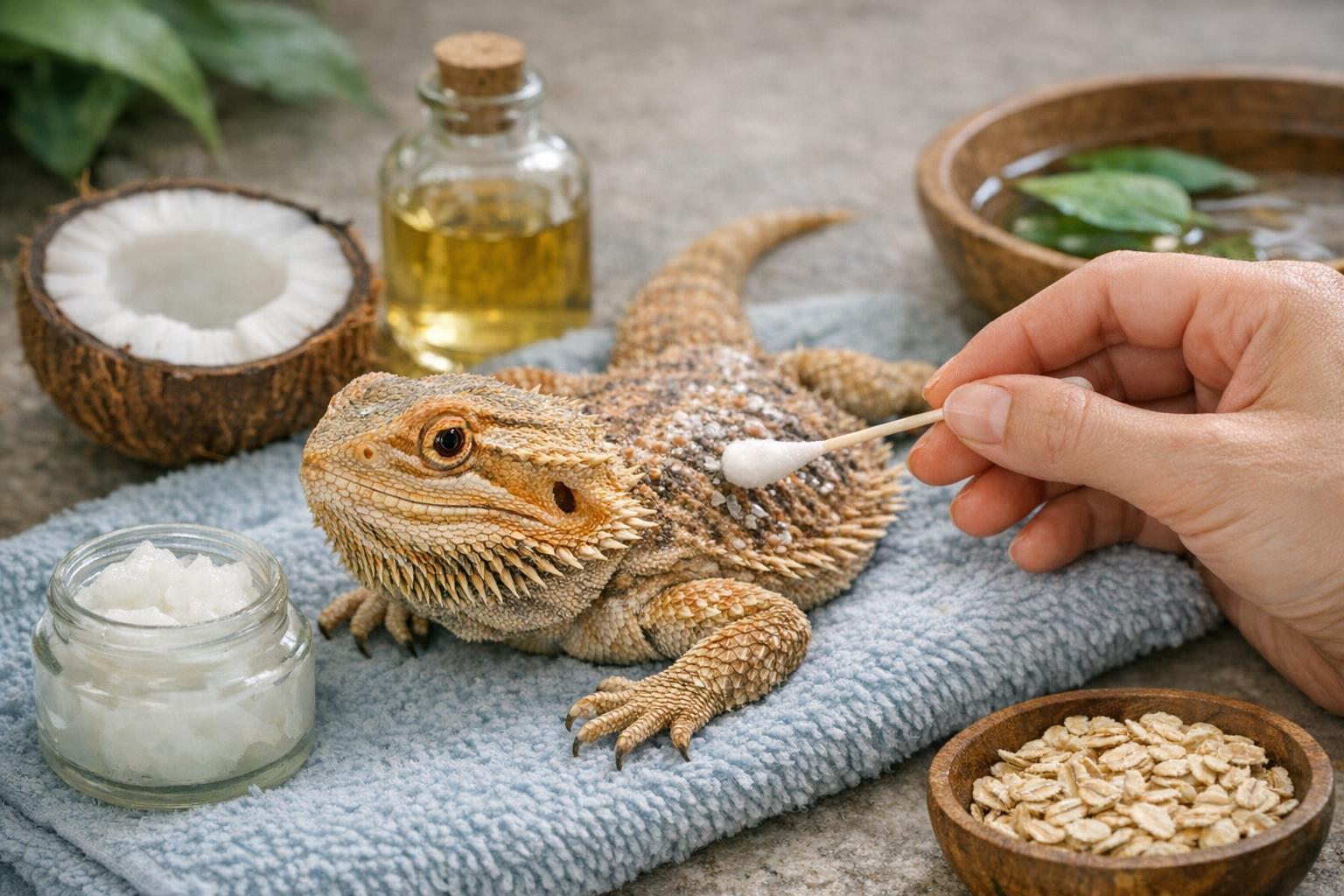
Remedy 3 is for targeted dry patches where moisture and gentle emollients can help. Olive oil is safe in very small amounts and can soften scaly skin when applied carefully. Use this method sparingly and precisely.
Ingredients / Materials
– Extra virgin olive oil (food-grade)
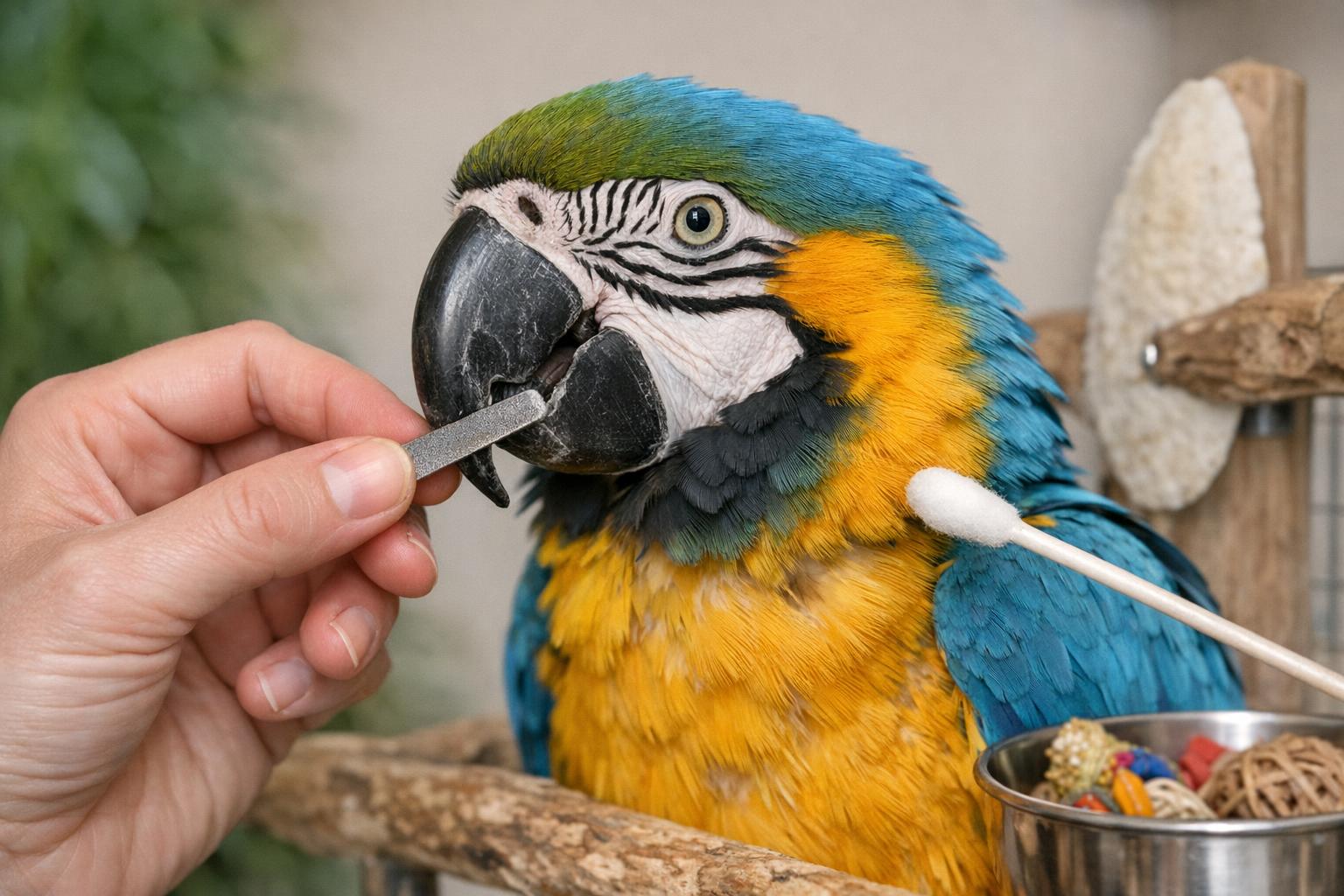
– Cotton swabs (Q-tips) or a clean fingertip wrapped in gauze
– Warm water and a soft cloth for cleanup
Step-By-Step Creation And Application
1. Sanitize your hands and ensure your budgie is calm and gently restrained by a familiar person. Minimal handling is best to reduce stress. If the bird is highly stressed, skip this step and consult a vet.
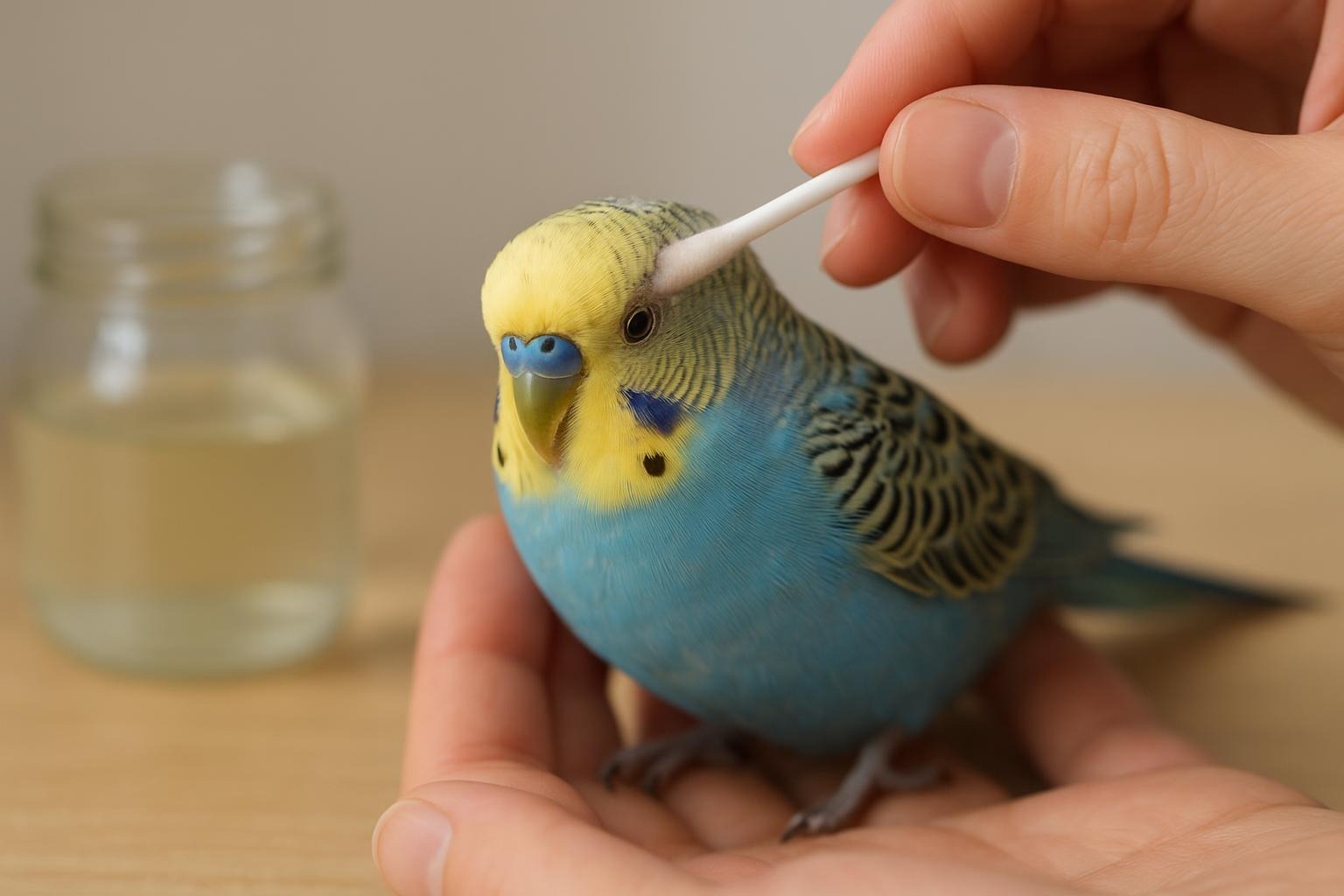
2. Dip the tip of a cotton swab into a very small amount of olive oil — a drop or less is usually sufficient for small scaly areas. Remove excess oil by dabbing on the edge of the container.
3. Gently apply the oil to the dry patch, using a light touch. Work only on targeted areas; do not coat feathers or apply oil across large body regions.
4. Allow the bird to preen the area naturally. Monitor the treated spot daily for improvement or adverse reaction. Repeat no more than once every 3–4 days.
5. If you see worsening redness, swelling, or if the patch spreads, discontinue use and consult a veterinarian.
Safety Notes: Avoid using mineral oil, petroleum jelly, or essential oils. Those can block feather structure, irritate skin, or be toxic if ingested.
### Frequency And Safety Notes
Treating budgie dry skin at home is about moderation and observation. For humidifying, daily use is fine; for oatmeal soaks, limit to once or twice weekly; for olive oil spot treatments, no more than once every few days and only on small areas. Always use only plain, food-grade, and fragrance-free products. Never apply human lotions, creams, or topical medications without veterinary approval.
#### Signs That Home Care Isn’t Enough
– Rapidly spreading lesions or feather loss
– Open sores, bleeding, or signs of infection
– Lethargy, loss of appetite, respiratory signs, or changes in droppings
– Visible mites or persistent scales around the cere or vent
### When To See The Vet
If you suspect parasites, fungal or bacterial infection, allergies, or nutritional deficits are causing budgie dry skin, a licensed avian veterinarian should be consulted. Diagnostics may include skin scrapings, cytology, or bloodwork to identify underlying causes. Prompt professional care can prevent complications — and your budgie will get tailored treatment like medicated dips, topical prescriptions, or dietary corrections.
If a remedy causes increased irritation, stop immediately and seek veterinary guidance. Remember: these gentle home strategies are supportive measures for mild, environmental dryness — not substitutes for professional diagnosis of disease.
Now breathe (but not too dryly). With careful observation, small environmental tweaks, and gentle topical care when appropriate, many cases of budgie dry skin improve at home. If anything looks alarming, don’t hesitate to get a vet involved — your budgie’s comfort is worth the trip.



Leave a Reply