





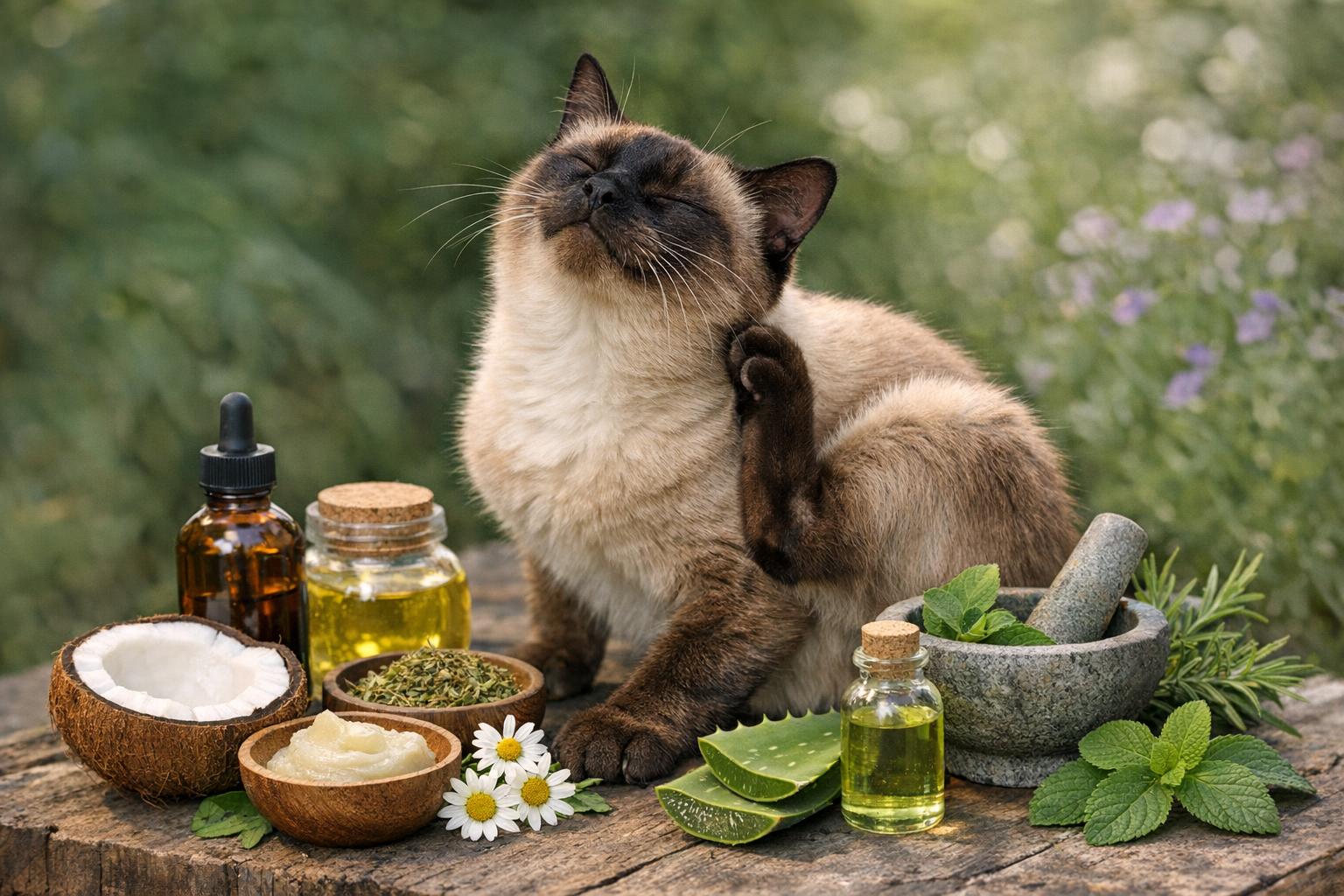
Cats scratch. Some flap their paws at the air, others obsessively lick until raw. If your cat is spending too much time cleaning its fur, the right natural remedies can calm irritation without sending you straight to a pharmacy.
## Natural Remedies For Feline Itchy Skin That Actually Help
Itchy skin in cats has a handful of common causes: fleas, food allergies, environmental allergens, dry skin, and parasites like mites. Addressing the underlying problem makes a huge difference. Below I’ll walk through practical, low-risk natural remedies for feline itchy skin and how to use them sensibly.
### Spot The Real Trigger First
Don’t treat symptoms without checking the cause. A single flea bite can set off frantic scratching, while a slow-developing food sensitivity looks different: recurring redness at the base of the tail, ear infections, or seasonal flare-ups. If you see small dark specks in the fur, flea dirt is likely. Patchy hair loss with scaly skin suggests ringworm or mites. Gut problems or long-term ear inflammation may trace back to diet.
### When Natural Remedies Make Sense
Natural approaches are best for mild to moderate cases, or as supportive care alongside veterinary treatment. They are not a substitute for a vet when the skin is infected, there is deep ulceration, or your cat shows systemic signs like fever, lethargy, or weight loss.
## Practical Topical Options You Can Use At Home
Topical treatments help quickly and are easy to apply when you’re careful and patient with your cat.
### Colloidal Oatmeal Baths For Immediate Relief
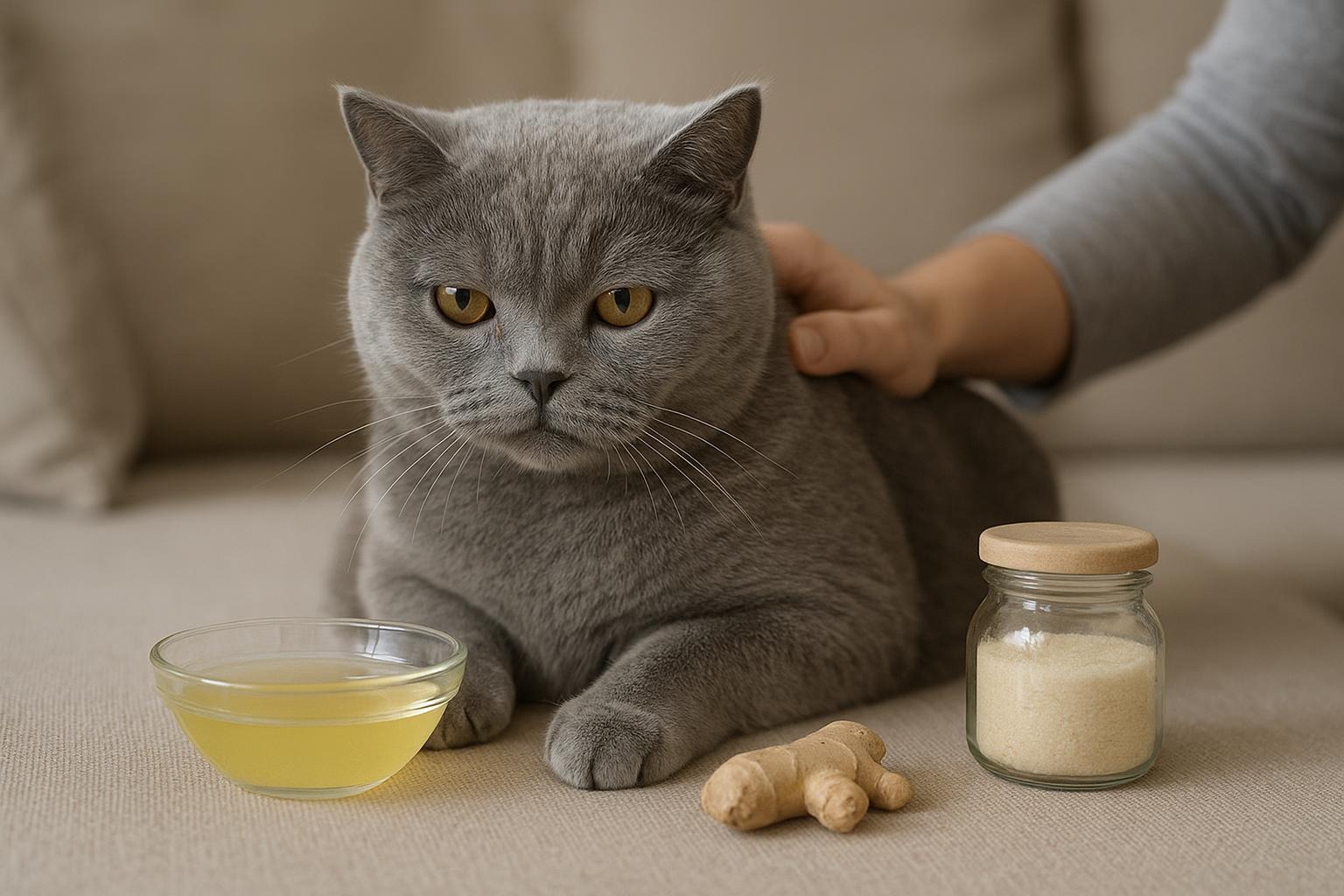
Colloidal oatmeal soothes itchy skin and reduces inflammation. Use plain, ungentled colloidal oatmeal (not heavily fragranced products). Grind regular oats into a fine powder if needed. Warm water only — never hot. Let your cat sit in a shallow bowl for five to ten minutes or use a cloth soaked in the oatmeal water to pat the affected areas. Rinse gently and dry by blotting with a towel.
### Diluted Apple Cider Vinegar For Mild Irritation
A 50:50 mix of apple cider vinegar and water can help with yeast and bacterial overgrowth on skin that is intact. Never use it on open sores. Apply with a spray bottle or cotton ball. If your cat dislikes the scent, use it sparingly and only on localized patches.
### Pure Aloe Vera Gel For Local Soothing
Use 100 percent pure aloe vera (no alcohol, no perfumes) on small areas of irritation. It cools burning and helps the skin heal. Cats tend to lick, so only apply a thin layer where they can’t immediately groom it off, or use it sparingly on the paws.
#### How To Prepare A Simple Soothing Rinse
1. Boil water and steep two chamomile tea bags for 15 minutes.
2. Let cool to lukewarm.
3. Use a spray bottle or a clean cloth to apply to itchy spots.
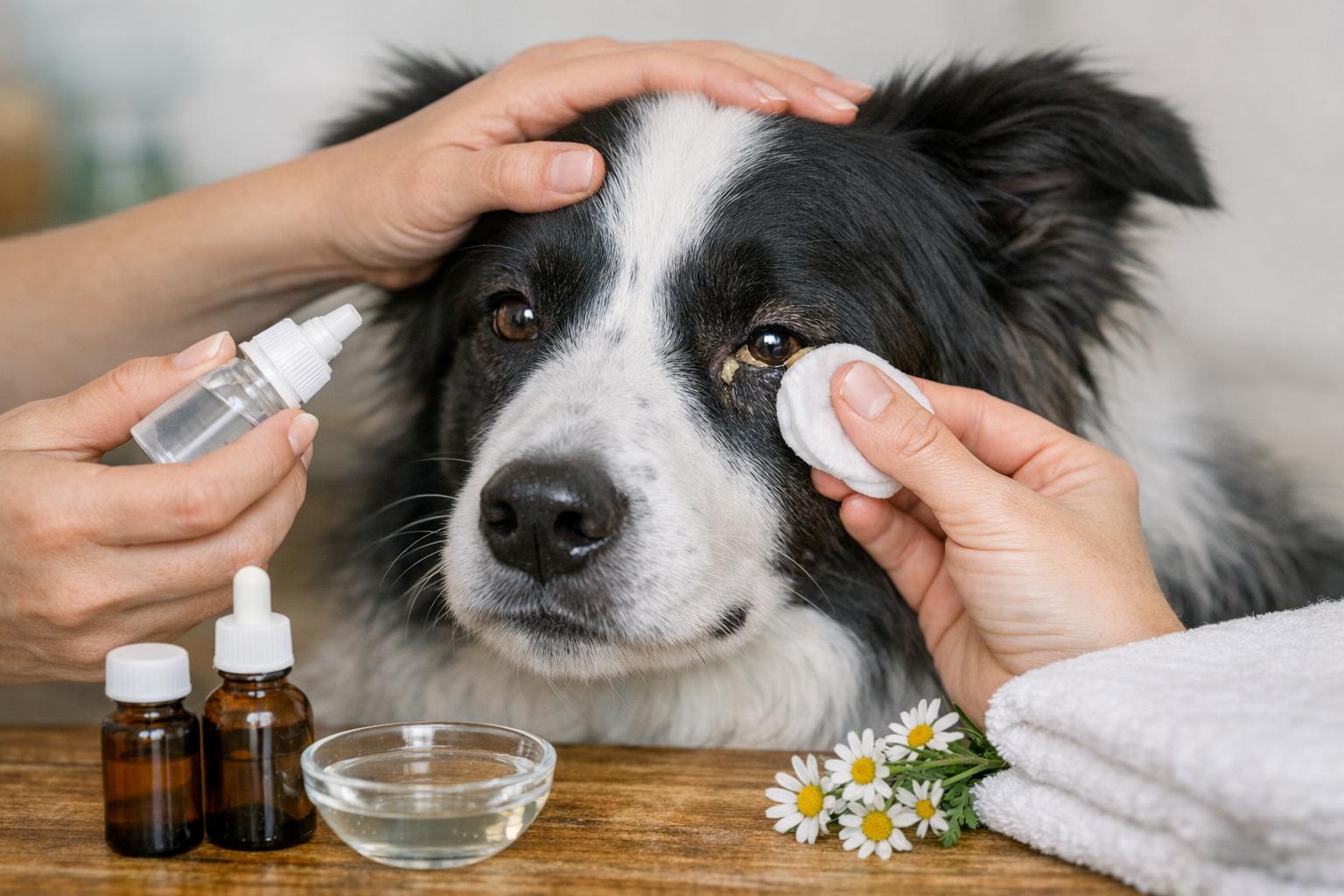
Chamomile is gentle and reduces redness. Don’t use concentrated essential oils; many of them are toxic to cats.
### Coconut Oil, With Caution
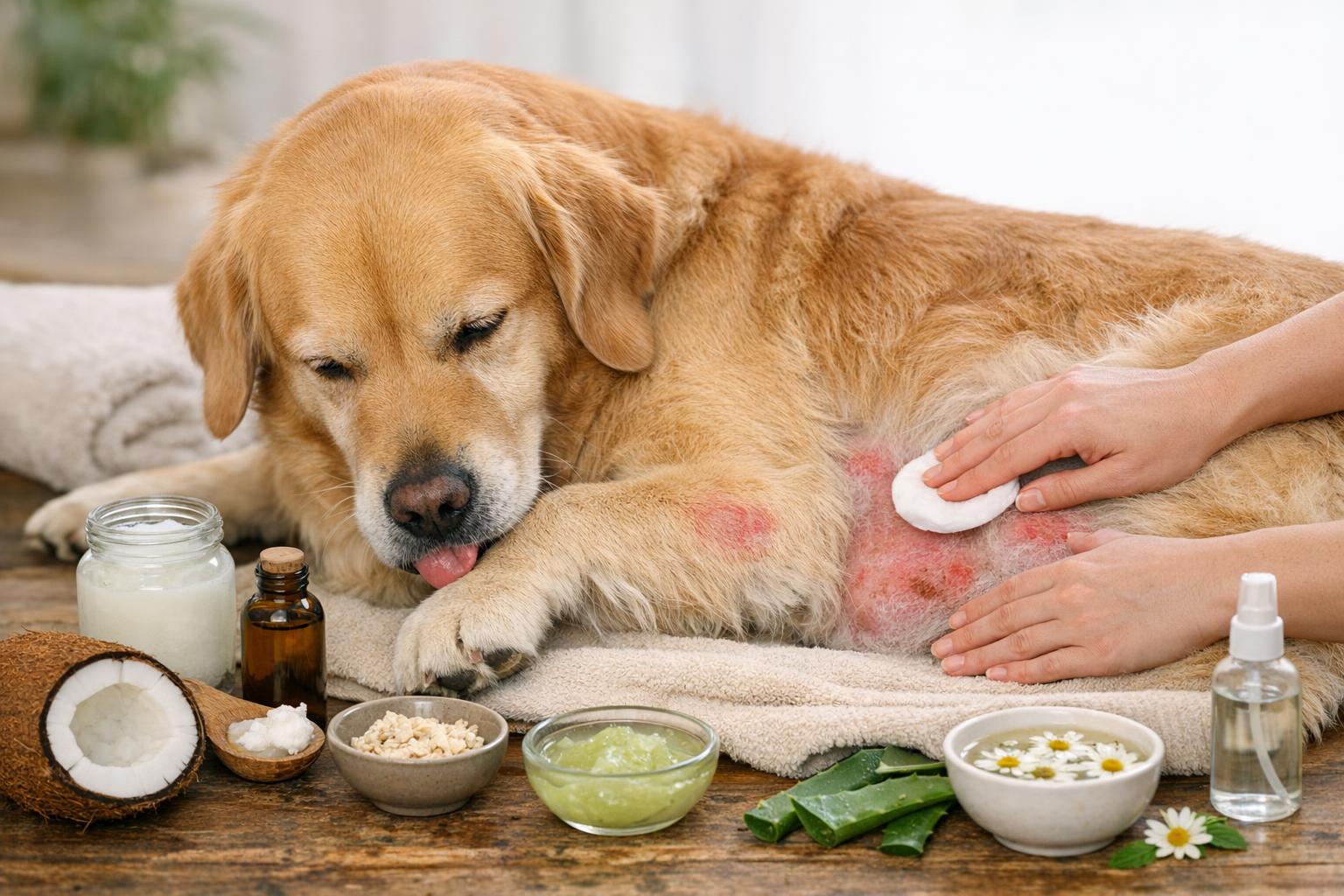
Virgin coconut oil can moisturize dry patches and has mild antimicrobial properties. Rub a small amount into the skin using fingers. Start with pea-sized amounts; more often makes the fur greasy and invites licking. If your cat overeats the oil while grooming and gets an upset stomach, reduce the amount or stop.
## Nutritional Steps That Often Help
Skin health starts from the inside. Small, sustained dietary changes can be among the most effective natural remedies for feline itchy skin.
### Add Omega-3 Fatty Acids
Fish oil supplements rich in EPA and DHA help reduce inflammation and can ease itching from allergies. Look for products labeled for pets or consult your vet on a reputable human-grade product. Typical dosing varies by weight and product potency, so get a vet to confirm. Improvement usually shows in several weeks.
### Try A Limited-Ingredient Or Novel Protein Diet
If food allergy is suspected, an elimination diet using a single protein source your cat hasn’t eaten before can expose sensitivities. This takes time and patience: strict feeding for eight to twelve weeks is the standard. No treats, no flavored toothpaste, no sharing food. If symptoms improve and then return when the old diet is reintroduced, you’ve likely found the culprit.
### Support Gut Health
Probiotics designed for cats can modulate inflammation and immune responses. They won’t cure a severe allergy, but they can be part of a broader plan that reduces flare-ups.
## Environmental Fixes That Matter
You can treat the skin and still lose ground if the environment keeps triggering reactions.
### Clean Bedding And Control Dust
Wash bedding weekly in the hottest water safe for the fabric. Vacuum furniture and floors more often, and consider a HEPA filter in rooms your cat uses. Pollen and dust mites are common culprits for seasonal flare-ups.
### Tackle Fleas Naturally And Decisively
Even one flea can lead to severe itching. Natural options include frequent combing with a fine-tooth flea comb and bathing with a mild shampoo to remove pests. Some owners use food-grade diatomaceous earth sprinkled on bedding and carpets, vacuumed out after a day. Be cautious and avoid overreliance on DIY flea treatments; persistent infestations require vet-grade control.
## What To Avoid: Toxic Or Ineffective Remedies
There are plenty of “natural” options that are dangerous or worthless.
### Never Use Essential Oils Directly
Essential oils like tea tree, eucalyptus, citrus, clove, and peppermint are toxic to cats. Even diluted, they can cause tremors, breathing problems, and liver damage.
### Be Wary Of Human Medications
Don’t give aspirin, acetaminophen, or human antihistamines without explicit vet guidance. Cats metabolize drugs differently and a dose that seems small can be fatal.
### Skip Herbal Overload
Lots of herbal mixes promise miracles. Some ingredients interact with medications or have impurities. Stick to single-ingredient supports like fish oil or probiotics, and buy from reputable suppliers.
### Avoid Overwashing
Excessive bathing strips natural oils and can worsen dry skin. Use bathing as a targeted therapy, not a daily ritual.
## When To See The Vet For Feline Itchy Skin
If itching is intense, persistent beyond a couple of weeks, or if you spot scabs, pus, hairless patches, or lethargy, see a vet. They can rule out fungal infections, mange, and systemic causes, and run allergy testing if needed. A vet will also advise when to combine natural remedies with medical treatments like antibiotics, antifungals, or prescription hypoallergenic diets.
### Tests And Treatments Your Vet May Recommend
Skin scrapings, fungal cultures, and bloodwork are common. For cases that resist simple measures, a short course of anti-inflammatory treatment or medicated dips can break the cycle and allow natural remedies to be effective afterward.
## Helping An Overgrooming Cat
Sometimes the scratching is not physical. Stress and boredom lead to overgrooming, which looks like skin disease. Environmental enrichment is one of the best treatments: interactive play sessions twice a day, puzzle feeders, window perches, and pheromone diffusers. Behavior changes take time. If anxiety is severe, your vet may suggest behavior-modifying medication while you work on enrichment.
### A Real-World Example
I worked with a cat named Milo whose owners thought he had seasonal allergies. He was losing fur around his tail and chin. After eliminating fleas, switching to a novel protein diet, adding a fish oil supplement, and using weekly colloidal oatmeal soaks, his scratching fell dramatically in six weeks. The owners also doubled playtime. Milo’s skin improved and the licking stopped. Small, consistent steps mattered more than a single dramatic fix.
Use natural remedies for feline itchy skin thoughtfully. They are tools, not cures. Combine them with careful observation and a willingness to call the vet when things look off. And remember to recieve real-time advice for supplements and any treatments if your cat has other health issues.











Leave a Reply