






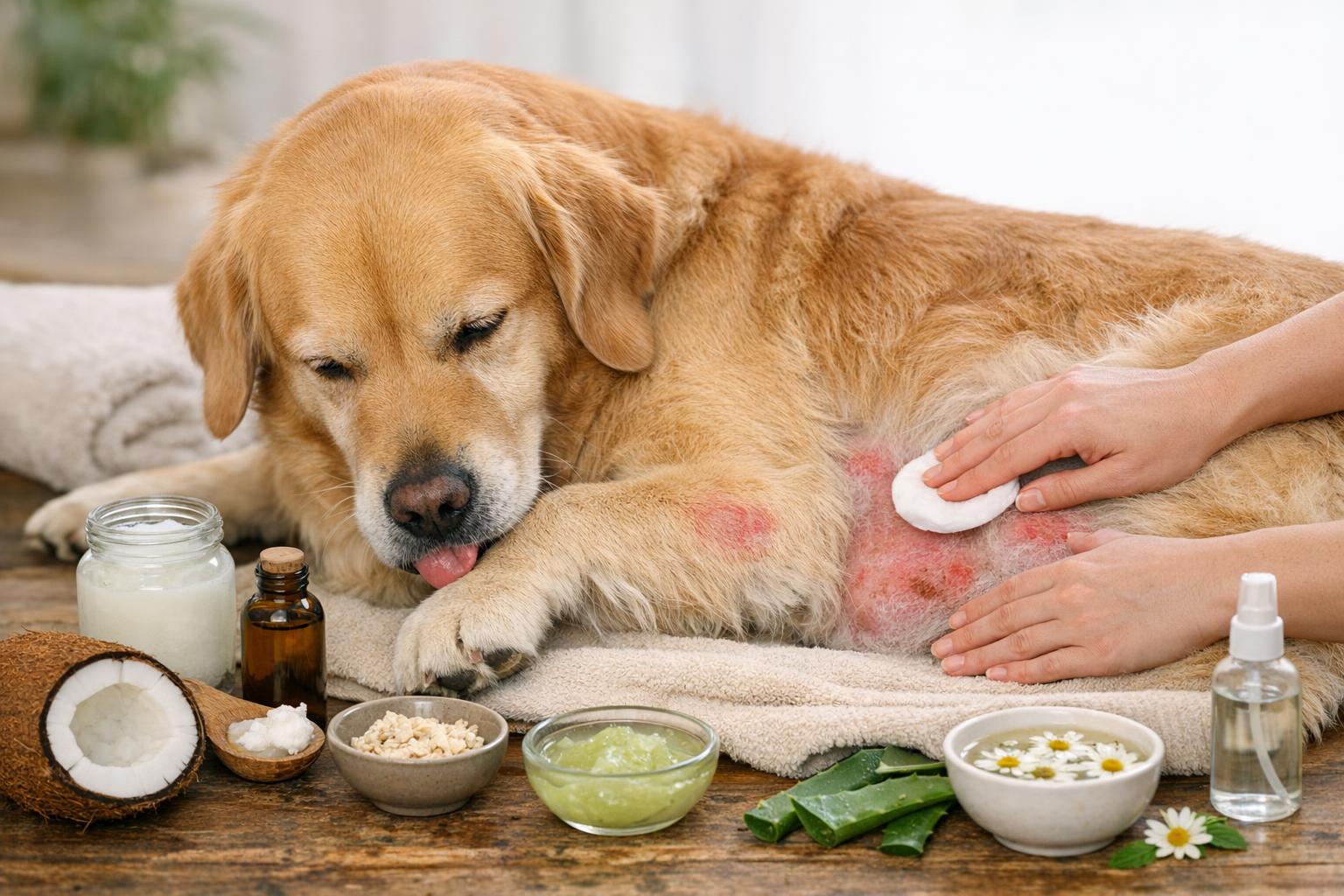
A twitch of a paw, a sigh that smells faintly of summer pollen, and a dog rolling like a tumbleweed—skin problems whisper stories about diet, environment and invisible irritants. This article blends creative observation with practical, vet-safe DIY care so you can soothe your companion without reaching for harsh chemicals.
## Dog Skin Allergy Guide: Gentle DIY Remedies
This dog skin allergy guide maps causes, safe home options and clear step-by-step remedies for mild irritation. It is aimed at helping owners who want gentle, evidence-informed approaches while recognizing when professional care is required. Use these treatments only for mild cases; progressive symptoms, wounds, fever or behavioral change require veterinary attention.
### Identifying Triggers And Symptoms
Dogs announce discomfort through scratching, licking, redness, greasy or flaky coats, and sometimes hair loss. Common triggers include fleas, food components, seasonal pollens, dust mites, and contact irritants like certain fabrics or cleaning products. A dog skin allergy can be seasonal (atopy) or year-round, and often multiple factors interact. Keep a symptom diary to track flares against diet, grooming products and environment.
### When It’s A Minor Problem Versus An Emergency
Mild issues—occasional scratching, small red patches, or dry flaky skin—can often be managed at home. Signs that demand veterinary evaluation include:
– Rapidly spreading sores or deep wounds
– Repeated ear infections, swollen face, or difficulty breathing
– Lethargy, fever, or systemic illness
– Intense, continuous itching that prevents sleep
If you suspect parasites, infections, or food allergies, consult your veterinarian before starting long-term home regimens.
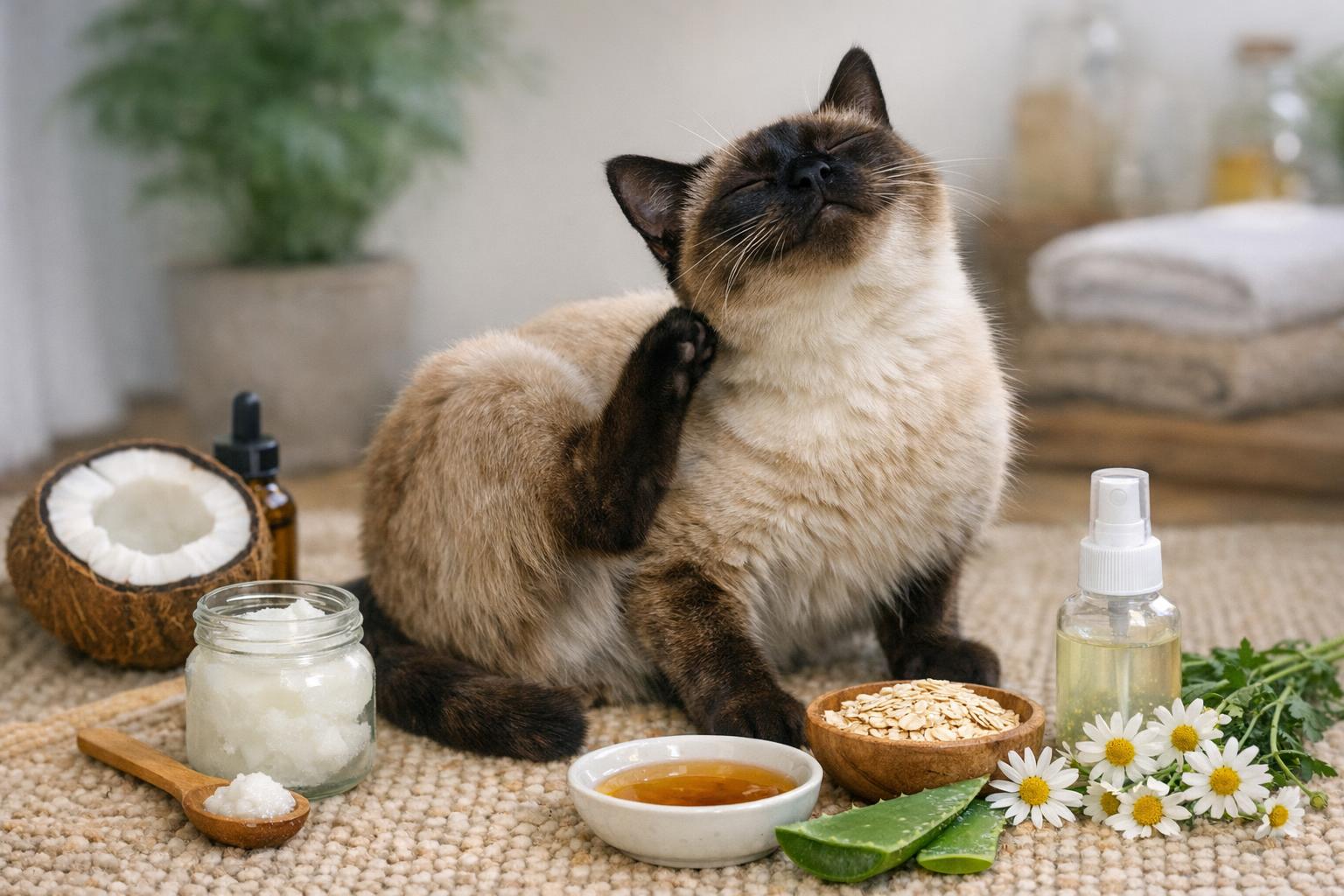
## 1. Oat Soak For Itchy, Inflamed Skin
Plain and soothing, oats contain avenanthramides and colloidal compounds that calm itch and reduce inflammation. This remedy is safe for most dogs and useful for generalized itching from dry skin or mild allergic reactions.
#### Ingredients And Materials
– 1 to 2 cups plain rolled oats (not instant flavored)
– Warm water enough to fill a bathtub or basin
– A blender or food processor
– Soft towel
#### Step-By-Step Preparation And Application
1. Grind the oats into a fine powder using a blender until they resemble flour.
2. Fill a tub or basin with warm water (comfortable to the elbow) and sprinkle the oat powder into the water, stirring until it disperses into a milky suspension.
3. Gently place your dog in the tub and soak the affected areas for 10–15 minutes. For small dogs, you can use a cloth soaked in oat solution to pat the skin rather than submerging.
4. Rinse lightly with clean water and pat dry. Do not use harsh shampoos immediately after an oat bath.
5. Repeat 2–3 times weekly or as directed by your veterinarian.
Use this treatment formally and avoid adding scents, essential oils, or detergents that can irritate sensitive skin.
## 2. Aloe And Fractionated Coconut Oil Gel For Hot Spots
Hot spots are localized, moist, inflamed lesions that can become infected. A neutral, bacteriostatic gel can hydrate, cool and act as a barrier while you seek veterinary care if needed.
#### Materials
– Pure aloe vera gel (food-grade, no alcohol or preservatives)
– Fractionated coconut oil (liquid at room temperature and refined)
– Sterile container and clean spatula
– Cotton gauze or non-stick pad
#### Preparation And Application
1. Combine 2 parts pure aloe vera gel with 1 part fractionated coconut oil in a sterile container. Mix until homogeneous.
2. Clean the hot spot gently with lukewarm saline (1 teaspoon salt per cup of boiled-and-cooled water) and pat dry with sterile gauze.
3. Apply a thin layer of the aloe-coconut gel to the lesion twice daily.
4. Prevent licking with an Elizabethan collar or protective sleeve until the site heals.
5. Monitor for signs of worsening infection (pus, spreading redness, systemic signs) and consult your veterinarian if these occur.
Formulate and apply this remedy with formal sterile technique as much as possible to reduce risk of contamination.
## 3. Apple Cider Vinegar Spray For Mild Bacterial Or Yeast Irritation
Dilute apple cider vinegar (ACV) can help rebalance skin pH and inhibit mild yeast and bacterial growth on the coat surface. Avoid use on open wounds or raw skin.
#### Ingredients
– Raw apple cider vinegar (with “mother” preferred)
– Distilled or boiled-and-cooled water
– Spray bottle
#### Preparation And Application
1. Mix one part ACV with three parts water (25% vinegar concentration). For particularly sensitive skins, start at one part vinegar to four parts water.
2. Transfer the solution into a clean spray bottle and label clearly.
3. Test a small area for sensitivity before widespread use: spray a little on the flank and wait one hour for adverse reaction.
4. If tolerated, lightly mist the coat avoiding eyes, nose and open sores. Rub gently to distribute.
5. Use up to once daily on areas prone to greasiness or mild odor. Discontinue immediately if increased redness or irritation appears.
Be formal in dosing and cautious with concentrations: higher vinegar ratios increase sting and irritation risk.
### Grooming And Environmental Management
Control of external factors is essential to preventing flares. Regular flea prevention is foundational; fleas are often the root cause of intensely itchy spots. Wash bedding in hot water weekly and vacuum carpets and furniture to reduce environmental allergens. Use fragrance-free detergents and rinse clothing and towels thoroughly to remove residues. For dogs that roll in pollen-heavy grass, rinse paws and belly after walks.
### Diet, Supplements And Internal Support
Food sensitivities can produce chronic skin issues. An elimination diet trial overseen by a veterinarian or veterinary nutritionist is the most reliable approach to diagnosing food-related canine skin allergies. Essential fatty acids—omega-3s from fish oil—are supported by research for improving skin barrier function and reducing inflammation; typical formal dosing is determined by weight and product concentration, so follow product labels and veterinary guidance. Probiotics may support overall skin health in some dogs, but choose veterinary formulations and administer consistently.
### Using Topical Remedies Responsibly
When applying any topical remedy:
– Clean the area before application to reduce bioburden.
– Use sterile utensils and sealed containers when preparing gels or dilutions.
– Patch-test new formulations on a small area for 24–48 hours.
– Avoid essential oils unless prescribed by a veterinarian; many are toxic to dogs.
– Prevent licking and ingestion during the healing phase.
### Tracking Progress And When To Escalate Care
Keep a log of treatments, frequency of itching, and visual changes. If there is no improvement after a week of appropriate home care, or if lesions worsen, escalate to veterinary diagnostics: skin scrapings, cytology, allergy testing or cultures. Some cases of canine skin allergies require prescription shampoos, topical antibiotics, or immunotherapy to achieve control—these interventions are best guided by a clinician.
### Special Considerations For Puppies, Seniors And Medicated Pets
Puppies and geriatric dogs have different tolerances and immune responses. Avoid potent home remedies on very young or immunocompromised animals. If your pet is on systemic medications (immunosuppressants, antibiotics, antifungals), consult the prescribing veterinarian before adding topical or oral supplements, to avoid interactions and confounding responses.
### Recordkeeping And Long-Term Care Plans
Create a simple health notebook: document onset, suspected triggers, products used and outcomes. This will make consultations with veterinarians more productive and faster. Establish a long-term plan that includes flea control, environmental measures and dietary review to reduce recurrence.
This dog skin allergy guide equips you with thoughtful, evidence-aligned, DIY approaches for mild cases while emphasizing formal technique and safety. Use these remedies responsibly and seek professional care when needed to keep your dog comfortable and healthy.
























Leave a Reply