




Cats are pros at looking unimpressed while secretly carrying their own tiny emotional weather systems. If your whiskered roommate seems on edge, there are gentle, natural ways to help them feel more like their confident, nap-loving selves. Below you’ll find practical, home-friendly remedies — a mix of cozy, evidence-informed tactics and a few tips that might make you both breathe a little easier.
## Relieving Stress In Cats: Recognizing Signs
Stress in cats isn’t always dramatic. Subtle changes can mean a lot: less grooming, hiding more often, sudden litter box issues, decreased appetite, overgrooming, or increased vocalization. When you’re focusing on relieving stress in cats, log behaviors for several days before changing everything at once — that baseline makes it much easier to know what’s improving.
Cats often show stress through body language: tucked tails, flattened ears, dilated pupils, or a hunched posture. Environmental causes include new people, new pets, moving furniture, loud noises, or even changes to routine. Identifying triggers makes targeted remedies far more effective.
## 1. DIY Calming Spray For Cats
A calming spray can help create an immediate, soothing micro-environment. This is practical for carriers, beds, or rooms where your cat retreats.
### Materials
– 1 cup distilled water
– 2 tablespoons witch hazel (unscented) or high-proof vodka
– 5 drops chamomile essential oil* (use only if diluted; see safety notes)
– 3 drops lavender essential oil* (optional; dilute carefully)
– Small glass spray bottle (100–150 ml)
*Essential oils must be used with caution around cats. See Safety Notes below.
### Steps
1. Sanitize the spray bottle with warm water and a little dish soap, rinsing thoroughly.
2. Pour distilled water into a small mixing container and add the witch hazel (or vodka) as a solubilizer.
3. Add the essential oils drop by drop, stirring gently. Essential oils are potent; do not exceed the amounts listed.
4. Fill the bottle, cap it, and shake gently to mix.
5. Label the bottle with ingredients and date; store in a cool, dark place for up to 4 weeks.
### Application
– Spray once or twice on bedding, carrier lining, or a favorite hiding spot 5–10 minutes before your cat uses it. Do not spray directly on the cat.
– Observe for any respiratory signs (sneezing, coughing, eye watering) during initial use. Discontinue if any adverse reaction occurs.
#### Safety Notes
– Cats metabolize some compounds in essential oils poorly. Use very low concentrations and only the oils listed, avoiding tea tree, peppermint, and citrus oils entirely.
– If your cat has respiratory disease, kittens, elderly cats, or brachycephalic breeds, skip essential oils and use plain chamomile tea (cooled) diluted with water instead.
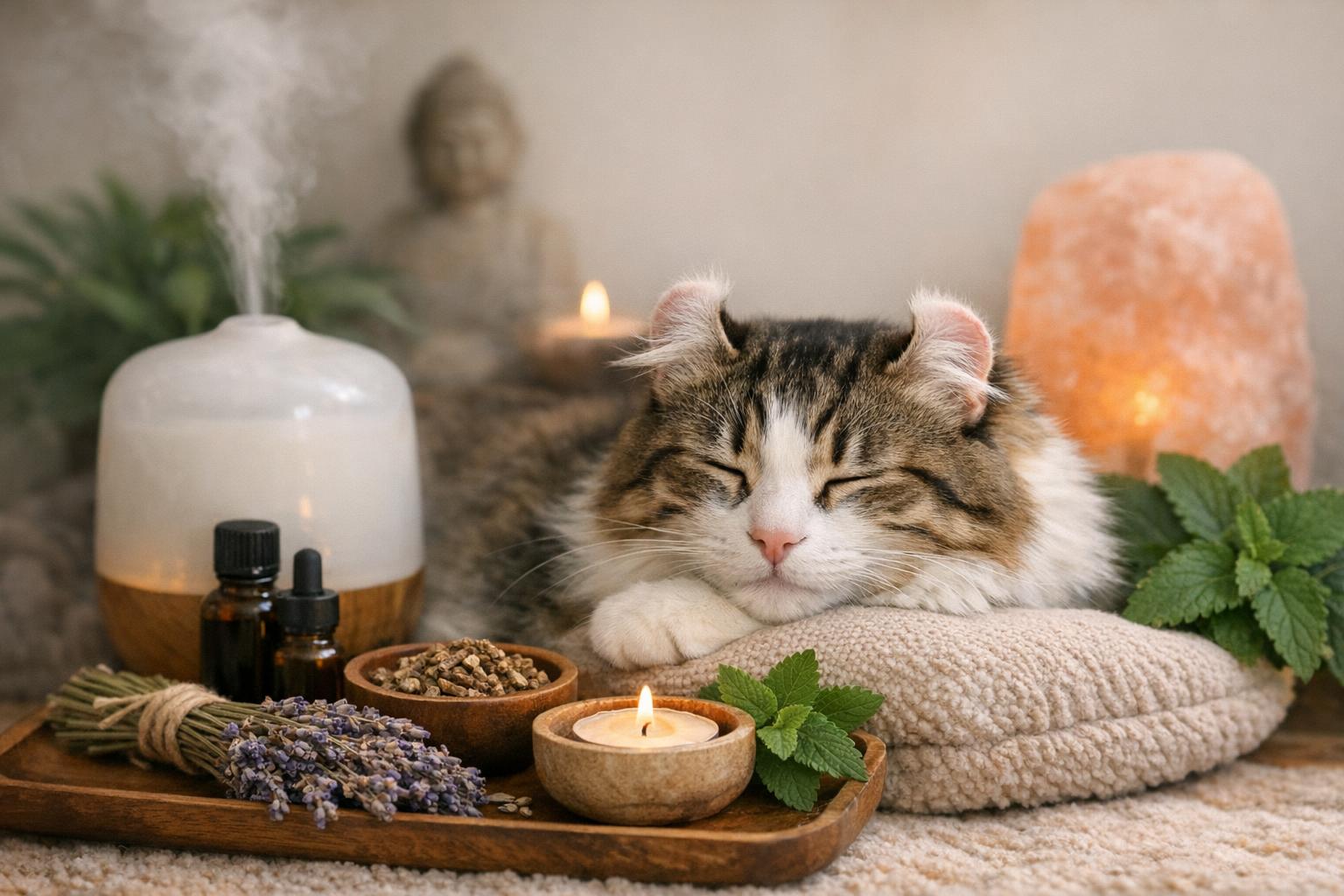
## 2. Soothing Cat Bed With Calming Herbs
A designated safe space that smells gentle and familiar can reduce daily anxiety.
### Materials
– A washable cat bed or basket with soft padding
– Small muslin sachet or cotton pouch
– Dried cat-safe herbs: chamomile, catnip (optional), and a small amount of valerian root (use sparingly)
– A soft blanket or T-shirt with your scent
### Steps
1. Place a thin layer of batting or padding in the bed and add a T-shirt that carries your scent.
2. Put a teaspoon of dried herbs into the muslin sachet; tie securely.
3. Tuck the sachet under the padding or beside the pillow so the scent is present but not overwhelming.
4. Situate the bed in a quiet area with a view (window perch ideal) and low foot traffic.
5. Wash the bed and replace the sachet every 2–4 weeks to keep the aroma fresh.
### Application
– Encourage the cat to use the bed by placing treats nearby and avoiding forcing the cat inside.
– Monitor for increased interest or avoidance. Rotate herbs if one seems to bother your cat.
## 3. Gentle Massage Routine To Reduce Anxiety
Physical touch can be calming when done correctly. This is a hands-on remedy that deepens trust and reduces tension.
### Materials
– Quiet room with low lighting
– A towel or soft blanket for the cat to lie on
– Optional: pheromone diffuser in the background for extra support
### Steps
1. Wait until your cat is calm and receptive (after a nap, not when hiding or alert).
2. Approach slowly and let the cat sniff your hand. Speak softly to create a reassuring presence.
3. Start with gentle strokes along the back (from the shoulders toward the tail), avoiding the belly unless your cat clearly prefers that.
4. Use light circular motions at the base of the skull and behind the ears — these are calming zones for most cats.
5. Keep sessions short (3–7 minutes) initially, and increase only if your cat remains relaxed.
#### Technique Notes
– Watch the tail and ears for signs of overstimulation (twitching tail tip, flattened ears). Stop or change technique if these appear.
– Do not perform vigorous kneading or strong pressure; cats prefer gentle, confident touches.
## 4. Enriched Environment Strategy For Daily Calm
An unstressed cat has choices: places to climb, scratch, hide, and observe. An intentional environment lowers baseline stress and supports long-term wellbeing.
### Materials
– Multiple elevated platforms or cat trees
– Scratching posts of varying textures
– Puzzle feeders or treat-dispensing toys
– Hiding boxes or covered beds
– Interactive toys for supervised play
### Steps
1. Create vertical paths by placing shelves or trees near windows and away from doorways to give escape routes and vantage points.
2. Install scratching options in areas where your cat rubs their scent; rotate textures to keep interest.
3. Place puzzle feeders during meal times to encourage natural foraging behavior; start with simple puzzles and increase complexity slowly.
4. Provide multiple litter boxes in quiet, accessible locations (one per cat plus one spare) and maintain strict cleanliness.
5. Schedule daily interactive play sessions (5–10 minutes twice a day) to reduce excess energy and build routine.
### Application
– Introduce one environmental change at a time and monitor behavior for 1–2 weeks before adding more.
– Use positive reinforcement (treats, praise) to encourage use of new structures.
## When To Consult A Veterinarian
These home remedies are supportive but not a replacement for veterinary assessment. If behaviors worsen, your cat stops eating, becomes lethargic, or shows signs of pain, consult your veterinarian promptly. If you’re not seeing improvement with these measures for relieving stress in cats after a few weeks, a vet or veterinary behaviorist can assess medical causes or suggest prescription interventions.
### Red Flags
– Complete loss of appetite
– Persistent vomiting or diarrhea
– Aggression that’s out of character
– Lethargy or hiding for extended periods
### What A Vet Can Offer
A veterinarian will rule out medical contributors such as thyroid issues, pain, or dental disease. They can also recommend safe pharmaceutical or nutraceutical options, behavior modification plans, or referral to a behaviorist. Sometimes a combined approach (environmental changes plus medical support) is the most effective path for relieving stress in cats.
Try one remedy at a time, make changes gradually, and keep a simple log of behaviors to spot trends. Small, consistent adjustments often yield the most reliable improvements in your cat’s wellbeing — and you may earn a few more relaxed purrs and less dramatic exits from the room.















Leave a Reply