






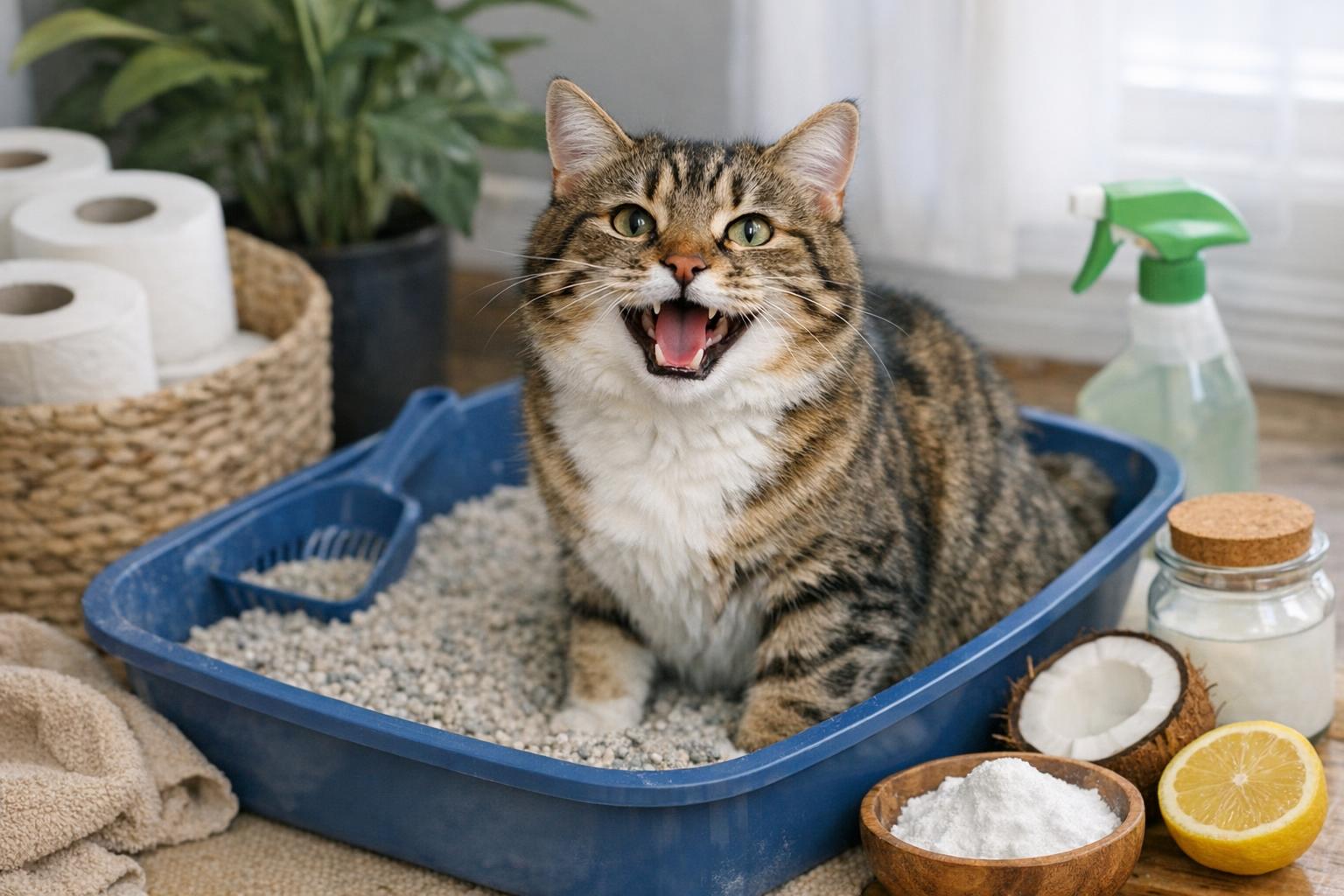
There’s nothing quite like the high-pitched solo your cat performs from the litter box to make you stop mid-swipe of the phone. If you’ve caught your furry roommate yowling while squatting or lingering in the box, you’re wise to pay attention — vocalizing during elimination can be simple attention-seeking, but it can also be a sign of pain, stress, or a medical issue. This article walks through likely causes, signs that demand a vet visit, and three gentle home remedies and tips you can try at home to help ease your cat’s discomfort.
## Cat Meowing In Litter Box: What’s Going On?
Cats don’t typically advertise their bathroom business for fun. When you notice a cat meowing in litter box, consider whether the sound is a one-off or a repeated pattern. A single soft mew might be curiosity or an odd itch, but persistent meowing, especially accompanied by other changes, is your cue to act.
### Common Medical Causes
– Urinary tract infection (UTI) or cystitis
– Bladder stones or crystal formation
– Constipation or painful defecation
– Arthritis or mobility issues that make getting in/out painful
– Obstructive conditions (more urgent — see vet)
### Behavioral Or Environmental Triggers
– Litter box cleanliness, type, or location
– Litter texture or brand change
– Stress from changes at home (new pet, movers, visitors)
– Territory issues with other cats
## 1. Remedy: Warm Sitz For Urinary Comfort
This is a supportive care measure meant to soothe a cat with mild urinary irritation or muscle cramping. It is not a replacement for veterinary care if your cat shows signs of blockage, blood in urine, straining without producing urine, or collapse.
#### Ingredients Or Materials
– Warm water (not hot), about 37–39°C / 98–102°F
– A shallow plastic basin or large baking tray (wide enough for your cat’s paws)
– A soft towel
– A calm, dim room
– Optional: Unscented, hypoallergenic cat-safe wipes
#### Step-By-Step Creation And Application
1. Prepare the water: Fill the shallow basin with warm water to a depth that reaches the cat’s lower abdomen when standing (about 2–3 inches).
2. Create a calm space: Place the basin in a quiet, low-traffic area with a towel nearby. Dim the lights and speak softly to reassure your cat.
3. Introduce gently: Encourage your cat to step into the basin by placing a small treat or petting near the rim. Do not force.
4. Soak briefly: Allow the cat to stand in the warm water for 3–5 minutes. The warmth can relax pelvic muscles and soothe irritation.
5. Dry carefully: Lift the cat onto the towel and pat dry. Make sure the cat remains warm and comfortable afterward.
6. Repeat as needed: Up to twice daily for 2–3 days while monitoring symptoms.
Precautions: If your cat appears lethargic, is straining to urinate or has blood in the urine, stop home care and contact your veterinarian immediately. Warm compresses help comfort, but they do not cure infections or obstructions.
## 2. Remedy: Litter Box Environment Makeover
Sometimes the cure is less clinical and more logistical. Cats are picky, and small changes can make a big difference. This remedy focuses on modifying the litter box setup to reduce stress, discomfort, and vocalization.
#### Materials
– Two or three litter boxes (size: large, low-sided for seniors)
– Unscented clumping litter and a fine-grained alternative for sensory-sensitive cats
– A litter scoop and baking soda (optional for odor control)
– A mat to catch litter
– A private, quiet location away from noisy appliances
#### Step-By-Step Creation And Application
1. Assess current setup: Note number of cats vs. boxes. Rule of thumb: one box per cat plus one extra.
2. Offer choices: Place one box with the usual litter and another with a finer-grained, unscented litter. Some cats vocalize because they dislike texture or scent.
3. Adjust box height: For older cats with mobility issues, provide a low-entry box. If your cat arches or cries due to difficulty entering or exiting, this often reduces vocalization.
4. Increase cleanliness: Scoop daily and fully change litter weekly for clumping types. Old, soiled litter can cause vocal complaints.
5. Place strategically: Move boxes to quiet, low-traffic areas. Avoid placing next to noisy washers/dryers or in areas where other pets can ambush.
6. Monitor and tweak: Watch which box your cat prefers and note any reduction in mewing. Keep a diary for a week to log behavior changes.
When implemented properly this environmental fix can resolve many cases of a cat meowing in litter box that originate from discomfort, dislike, or stress.
## 3. Remedy: Stress Reduction Kit For Cats
Stress is a frequent, underappreciated driver of inappropriate vocalizing around elimination. This kit combines calming tools and routines that are straightforward to implement and can be used alongside medical treatment when indicated.
#### Materials
– Feliway or similar pheromone diffuser (cat-specific)
– Play-and-enrichment toys (puzzle feeders, wand toys)
– Soft bedding placed near litter area but not too close (to avoid contamination)
– A feeding and water station located separately from the litter box
– A quiet sanctuary space (crate or quiet room) with hiding spots
#### Step-By-Step Creation And Application
1. Install diffuser: Plug in the pheromone diffuser in a central area to help reduce general household stress. Replace as manufacturer recommends.
2. Increase play: Add two 5–10 minute interactive play sessions daily to reduce anxiety and redirect energy. Use wand toys to mimic hunting.
3. Enrich environment: Provide puzzle feeders to keep the cat mentally engaged and reduce stress-related elimination behaviors.
4. Create hideouts: Ensure your cat has a safe retreat away from household commotion. A tucked box with a blanket or a high shelf can work wonders.
5. Maintain routine: Feed and play at consistent times. Cats thrive on predictability, which lowers stress and can decrease meowing in the litter box.
6. Monitor progress: Keep a weekly log of vocalizations and litter box outings. If things improve, continue; if not, escalate to veterinary consultation.
### When To See A Veterinarian (Non-Negotiables)
If you observe any of the following alongside a cat meowing in litter box, contact your veterinarian immediately:
– Straining in the box without producing urine
– Blood in urine or feces
– Repeated attempts to urinate with very small amounts
– Lethargy, hiding, refusal to eat or drink
– Vomiting, collapse, or obvious pain when touched
### Additional Practical Tips
#### Gentle Pain Relief And Mobility Support
Discuss safe pain management with your vet. Never give over-the-counter human painkillers to cats. For mobility, consider low ramps and soft bedding to reduce joint pain during post-elimination resting.
#### Hydration And Diet
Increasing water intake can help dilute urine and reduce crystal formation. Provide water fountains (cats prefer running water), wet food, or add water to dry kibble if your cat tolerates it.
#### Record Keeping
Keep a log of frequency, duration, and description of meows, plus litter box times and outputs. This is valuable for your vet and helps spot patterns.
If your home remedies reduce the meowing and your cat seems comfortable, that’s great — keep monitoring. If anything worsens or fails to improve within 48–72 hours, it’s time for professional diagnostics. The fastest route from a worried meow to a purring, healthy cat is observation, sensible home care, and timely vet involvement when needed.





























































Leave a Reply