

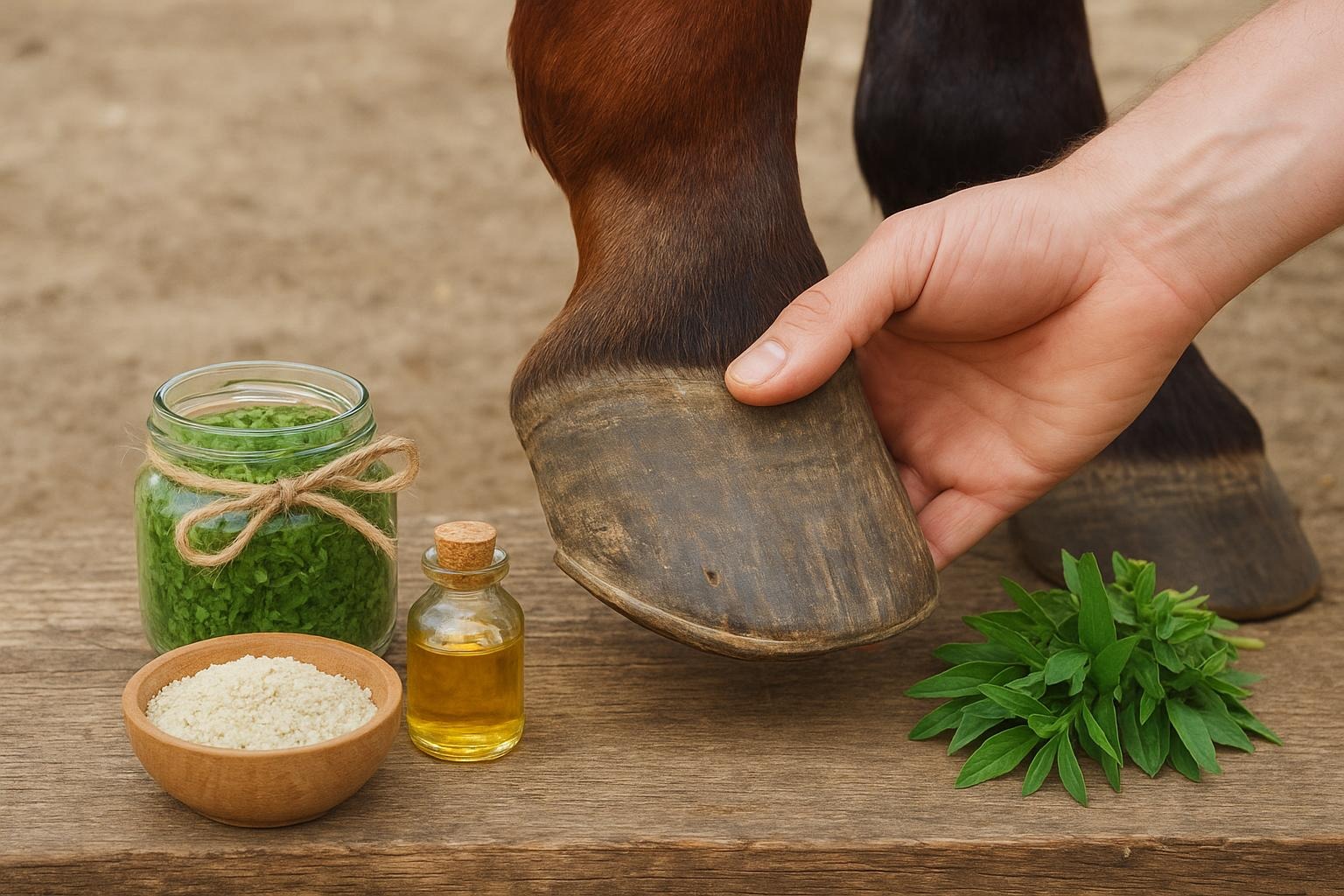
If you love horses, you already know their hooves deserve as much attention as their mane and that charming habit of stealing carrots. Healthy hooves keep a horse comfortable, sound and safe. Below are friendly, practical tips and natural, DIY treatments you can use at home — plus clear, formal instructions for remedies when they’re needed.
## Hoof Care For Horses: The Basics
Hoof care for horses starts with observation. A hoof that’s bright, dry where it should be, and free of foul odor is often a good sign. Regular trimming, a consistent environment, and prompt attention to problems form the foundation. Remember: routine is the friend of good hoof health.
### Understanding Hoof Anatomy
A quick mental map helps. The hoof wall, sole, frog, and white line all have jobs. The frog acts like a pump aiding circulation, while the white line is a junction that can be invaded by thrush or white line disease. Knowing which part is affected guides the remedy.
#### What Healthy Hooves Look And Feel Like
Healthy hooves have a concave sole, a defined frog, and even growth rings. They should not be overly brittle or flaky, and there should be no continuous discharge or bad smell. If in doubt, call your farrier or vet.
## Practical Daily Hoof Habits
Good hoof care for horses is mostly preventative. Small daily habits prevent big problems.
### Cleanliness And Inspection
Pick hooves daily, at least before and after riding. Look for stones, cracks, soft spots in the frog, or black, malodorous material (a red flag for thrush). Use a good hoof pick and a flashlight if necessary.
### Diet, Environment And Movement
Nutrition matters. Biotin, zinc, copper, and methionine support horn quality. Keep stalls dry and paddocks well-drained. Regular movement encourages circulation to the hoof — turn-out and light exercise help.
### When To Call Professionals
If you see lameness, swelling above the coronet band, deep cracks, or persistent discharge, call a farrier or veterinarian. Natural home remedies are supportive but not a replacement for professional care.
## Natural Remedy 1: Apple Cider Vinegar Soak For Thrush
When the frog is soft, smelly, and there’s black discharge, thrush is a common culprit. This soak is a simple, effective, and inexpensive option.
Ingredients / Materials:
1. Raw apple cider vinegar (ACV) — 1 cup
2. Warm water — 3 cups
3. Small bucket or hoof-safe container
4. Clean hoof pick and brush
5. Disposable gloves
6. Clean towel
Creation And Application Steps:
1. Preparation: Put on disposable gloves. Clean the hoof thoroughly with a hoof pick and brush to remove debris.
2. Mix Solution: Combine 1 cup of raw apple cider vinegar with 3 cups of warm water in the bucket.
3. Soak: Submerge the affected hoof for 5–10 minutes once daily. For severe thrush, soak twice daily.
4. Dry And Monitor: After soaking, pat the hoof dry with a clean towel. Air-dry in a dry environment if possible.
5. Duration: Continue daily soaks for 7–14 days, or until the black discharge and odor resolve. If no improvement after 3–5 days, consult a vet.
Notes: ACV creates an inhospitable environment for many anaerobic bacteria associated with thrush. Be cautious on open wounds; do not use on deep tissue infections without veterinary guidance.
## Natural Remedy 2: Coconut Oil And Beeswax Hoof Balm (Protective And Moisturizing)
For hooves that are too dry or prone to superficial cracking, a nourishing balm seals moisture without suffocating the hoof. This remedy is protective and best used after a trim or cleaning.
Ingredients / Materials:
1. Coconut oil — 1/2 cup (refined or virgin)
2. Beeswax pellets — 1/4 cup
3. Almond oil or olive oil — 2 tablespoons
4. Optional: Few drops of tea tree oil (antimicrobial) — 3–5 drops
5. Double boiler or microwave-safe bowl
6. Small jars for storage
7. Stirring utensil and thermometer (optional)
Creation And Application Steps:
1. Melt Ingredients: In a double boiler, melt the coconut oil and beeswax together until fully liquid. If using a microwave, heat in 20–30 second bursts, stirring between.
2. Add Carrier Oil: Remove from heat and stir in the almond or olive oil. If using tea tree oil, add at this point and mix thoroughly.
3. Cool and Store: Pour into small jars. Let cool and solidify. Label jars and store in a cool, dry place.
4. Application: After cleaning the hoof, apply a thin layer of balm to the heel bulbs, frog edges, and outer hoof wall once or twice weekly. For very dry conditions, apply every other day for two weeks, then reduce frequency.
5. Monitoring: Watch for any sensitivity or reaction. Discontinue if irritation occurs and consult your vet.
Notes: This balm helps repel excess moisture while providing conditioning oils. Avoid applying thick coatings to the sole or deep cracks where it could trap debris.
## Natural Remedy 3: Epsom Salt Poultice For Abscesses
Hoof abscesses can be painful and may require veterinary drainage, but an Epsom salt poultice helps draw out infection and relieve pressure while you wait for professional care.
Ingredients / Materials:
1. Epsom salt (magnesium sulfate) — 1 cup
2. Warm water — enough to make a paste
3. Clean cotton or sterile gauze pads
4. Plastic wrap or a plastic bag
5. Vet wrap or duct tape
6. Clean hoof pick and antiseptic (chlorhexidine) for cleaning
Creation And Application Steps:
1. Clean: Remove dirt and pick the hoof clean. Rinse with warm water and a gentle antiseptic; pat dry.
2. Make Poultice: Mix Epsom salt with warm water to a thick paste consistency.
3. Apply: Spread the paste over the sole area or around the white line where swelling/heat is concentrated. Cover with sterile gauze or cotton.
4. Seal: Wrap the hoof with plastic wrap or a plastic bag, then secure with vet wrap or tape to keep it in place and retain warmth.
5. Duration: Leave on for 8–12 hours or overnight. Replace daily until there is visible drainage or until your vet or farrier evaluates the hoof.
6. Aftercare: When removing, clean gently and monitor. If the abscess drains, maintain cleanliness and consider a drying soak after drainage. If no improvement or if the horse is severely lame, call your vet.
Notes: Epsom salt poultices are supportive treatment to reduce inflammation and promote drainage. They are not a substitute for professional opening/drainage when necessary.
## Farrier Partnership And Scheduling
Good hoof care for horses relies on a team approach. Keep a regular schedule with your farrier — typically every 4–8 weeks depending on growth and activity. Communicate any home treatments you’re doing so the farrier can assess progress and adjust trimming or shoeing plans.
### Record Keeping And Seasonal Adjustments
Keep a simple hoof log: trim dates, observed issues, remedies applied, and any changes in environment or diet. Hoof needs shift with seasons — wet winter paddocks and dry summer turnout require different management. Adjust cleaning frequency and protective measures accordingly.
### Natural Preventatives You Can Use Daily
Simple steps include picking feet daily, keeping living areas dry, rotating turnout pastures to avoid muddy stands, and offering a balanced feed with hoof-supportive supplements only after consulting your vet.
A little daily attention, the right collaboration with professionals, and the occasional natural remedy can go a long way toward happier, sounder hooves.





Leave a Reply