





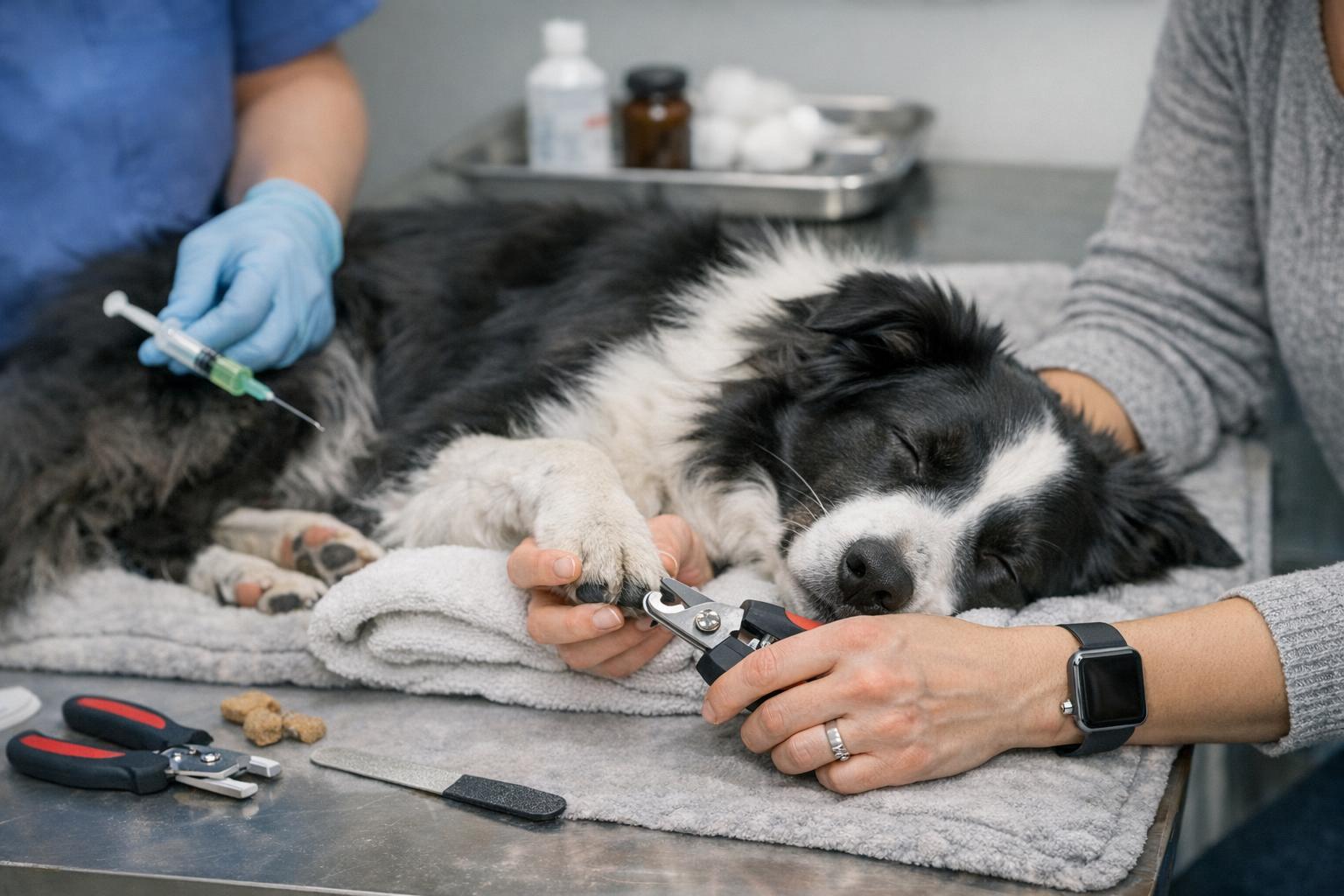
You love your dog, but those rapid-footed ninja maneuvers every time the clippers come out? Not cute. Let’s make nail care calmer, safer, and—dare I say—almost pleasant for everyone involved. Below are practical, vet-conscious options for sedating a dog for nail cutting, emphasizing safety, nonpharmaceutical strategies, and when prescription help is necessary.
## 3 Safe Remedies For Sedating A Dog For Nail Cutting
### 1. Behavioral And Environmental Calming (First-Line, Low-Risk)
This isn’t flashy sedation—it’s real, reliable prep that often eliminates the need for drugs. Think of this as gentle “mental sedation.”
Materials
– Quiet room with minimal foot traffic
– Soft towel or mat
– High-value treats (small, super-smelly)
– Nail grinder or quiet clippers
– Helper (optional)
– Thundershirt or snug wrap (optional)
– Pheromone diffuser or spray (Adaptil)
Step-By-Step
1. Five To Ten Days Before: Acclimate your dog to the tools. Leave the grinder/clippers out near their bed. Allow them to sniff and receive a treat when they approach.
2. Two To Three Days Before: Practice short handling sessions—touch paws, press toes lightly, reward immediately. Session length: 2–5 minutes, multiple times daily.
3. Day Of: Use the pheromone diffuser in the room or apply the spray 15–30 minutes before the session. Put on a Thundershirt if your dog is comforted by the pressure.
4. During: Keep sessions short. If using a grinder, turn it on near (not on) the paw so your dog hears it first, then reward when calm. Trim or grind one nail at a time, reward, then pause.
5. After: Give a longer reward and a calming walk or cuddles to end on a positive note.
Why This Works
Calming the environment reduces adrenaline and stress hormones. Desensitization and counterconditioning teach your dog to associate nail care with positive outcomes—this is the safest route for long-term compliance.
### 2. Over-The-Counter And Natural Supplements (Mild Sedation)
When behavior alone isn’t enough, non-prescription supplements can help reduce anxiety and make nail trimming tolerable. Always check with your veterinarian before starting anything new—especially for dogs with medical conditions or on other medications.
Materials
– Vet-approved melatonin product or L-theanine supplement
– Pheromone spray or diffuser (Adaptil)
– Chamomile or formulated calming chew (vet-recommended)
– CBD oil (only if your vet approves and you choose a reputable pet-specific product)
– Treats and towel
Step-By-Step For Supplements
1. Consult Your Vet: Describe your dog’s size, breed, health history, and current medications. Ask whether melatonin, L-theanine, or a commercial calming chew is appropriate.
2. Choose A Product: Pick a brand formulated for dogs. Human products may contain xylitol or other harmful ingredients.
3. Start Early: Begin the supplement a few days to a week before nail cutting so you can observe effects and any side effects.
4. Administer As Directed: Give the supplement per the product label or your vet’s guidance. Do not exceed recommended amounts.
5. Combine With Behavior Work: Use supplements to augment desensitization, not replace it. On trimming day, use the same behavioral steps listed above.
Safety Notes
– Melatonin is commonly used for anxiety in dogs but check for contraindications (e.g., pregnant dogs).
– Chamomile and valerian can have sedative effects; use vet-approved preparations.
– CBD is still under study—quality assurance and dosing consistency vary. If your vet supports CBD, use a product with third-party testing and clear dosing guidance.
### 3. Veterinary Prescribed Sedation Or Analgesia (When You Need Professional Level Calm)
For very anxious dogs, aggressive chewers, or pets with prior traumatic reactions, a veterinarian-prescribed sedative or anxiolytic may be the safest option. This is not a DIY path; it involves a vet evaluation and sometimes pre-sedation testing.
Materials
– Veterinary exam and medical history
– Prescribed medication (e.g., trazodone, gabapentin, or other vet-prescribed drugs)
– Written dosing instructions and timeline from your vet
– Transport crate or safe containment for aftercare
– Styptic powder and emergency contact info for vet clinic
Step-By-Step (Formal, Clinical Guidance)
1. Schedule A Vet Visit: Request an anxiety-focused consult. Discuss past behavior, current medications, and any medical issues.
2. Undergo A Physical Exam: Your vet may perform bloodwork or assess organ function if they anticipate sedation.
3. Receive A Prescription And Plan: The vet will provide a medication, dosing, and timing plan tailored to your dog’s weight, age, and health.
4. Trial Run: Many vets recommend a supervised trial dose prior to the grooming appointment to monitor any adverse reactions.
5. Grooming Session: With a vetted medication plan, schedule nail trimming in the timeframe the medication is effective. The vet may recommend having the procedure done in-clinic or by a professional groomer familiar with sedated pets.
6. Post-Procedure Care: Follow the vet’s aftercare instructions. Keep your dog quiet and monitored until fully alert.
Important Legal/Safety Notes
Prescription sedatives should only be used under veterinary guidance. Dosing varies with drug, weight, and health status. Never use human sedatives without vet approval. For safety, do not attempt to sedate at home using medications prescribed for another animal or person.
## Tips For A Calm Nail-Trim Day
### Preparation And The First Minutes
– Pick A Time When Your Dog Is Naturally Tired. After a long walk or play session is ideal.
– Keep Sessions Short And Positive. One to four nails per session can build success.
– Use A Grinder If Your Dog Hates Clippers. Grinders produce vibration and noise but reduce the risk of cutting the quick.
– Have Styptic Powder Handy. Accidents happen; be ready to stop minor bleeding.
### Safety And Monitoring
– Watch For Signs Of Over-Sedation. Heavy stumbling, disorientation, vomiting, or difficulty breathing require immediate vet attention.
– Never Combine Sedatives Without Vet Approval. Mixing supplements and prescriptions can be dangerous.
– Avoid Alcohol And Human Sleep Aids. These can be toxic for dogs.
#### When Pheromones And Pressure Wraps Work Best
– Use pheromones for mild-moderate anxiety and to create a calm space.
– Thundershirts may help dogs who respond to gentle pressure, but they’re not effective for all breeds or temperaments.
## Common Questions About Sedating A Dog For Nail Cutting
### Is It Cruel To Sedate For Nail Trimming?
When done under veterinary guidance, sedation is a humane option for dogs who experience extreme fear or become aggressive during grooming. The goal is safety for both the dog and the person trimming nails.
### Can I Use Human Medications Like Xanax Or Benadryl?
Do not administer human prescription medications without a vet’s explicit direction. Benadryl is sometimes used in dogs under vet supervision, but dosing and appropriateness depend on the individual dog. Always consult your veterinarian first.
### How Soon Will I See Results From Supplements?
Some supplements take several days to a week to reach effective levels; others (like certain chews or melatonin) can work within hours. Always observe for side effects and check with your vet.
### What If My Dog Still Won’t Tolerate It?
If repeated, gentle attempts fail, seek professional help. A groomer or vet experienced with fearful dogs can often perform the trim safely, sometimes using supervised sedation.
## Safety Checklist Before Any Sedation Attempt
– Veterinary clearance for any medication or supplement
– Up-to-date pet records and emergency contact
– Post-procedure monitoring plan
– Styptic powder and first-aid supplies
– Clear handler roles and a calm environment
Let’s be real: sedating a dog for nail cutting isn’t about shortcuts—it’s about choosing the safest, least traumatic path for your pup. Start with behavior and environment, add vet-approved supplements if needed, and reserve prescription sedation for when truly necessary. Your dog will thank you (with a paw shake, or maybe a very relaxed nap).



































Leave a Reply