Hey there — if your dog has suddenly decided their food tastes better lived than eaten, you’ve landed in the right spot. This guide is friendly, practical, and a little cheeky (because we all need a laugh when cleaning up unexpected surprises). Below you’ll find clear steps for safe home care, a few effective remedies, and guidance on when it’s time to phone the vet. Read calmly, breathe deeply, and keep the paper towels close.
## Constipation Style Guide: Canine Diarrhea Treatment At Home
## Canine Diarrhea Treatment: When To Act
Diarrhea in dogs is common and often short-lived. For many pups, a day or two of loose stools resolves with simple home care. But diarrhea can also signal infection, toxins, dietary indiscretion (a.k.a. “mystery garbage dinner”), parasites, or more serious health issues — so vigilance matters.
If your dog is bright, hydrated, and eating normally aside from the loose stool, mild home measures can help. If the dog shows lethargy, repeated vomiting, fever, blood in stool, signs of dehydration, severe abdominal pain, or if the diarrhea lasts more than 24–48 hours in a small dog (48–72 in a larger dog), contact your veterinarian immediately. This article focuses on safe, evidence-based home strategies to support recovery and relieve mild cases.
## 1. Bland Diet Reset
When to use: Mild, recent-onset diarrhea with no vomiting or dehydration.
Tone shift: The following remedy is presented in a formal, stepwise manner for clarity and safety.
Ingredients / Required Materials:
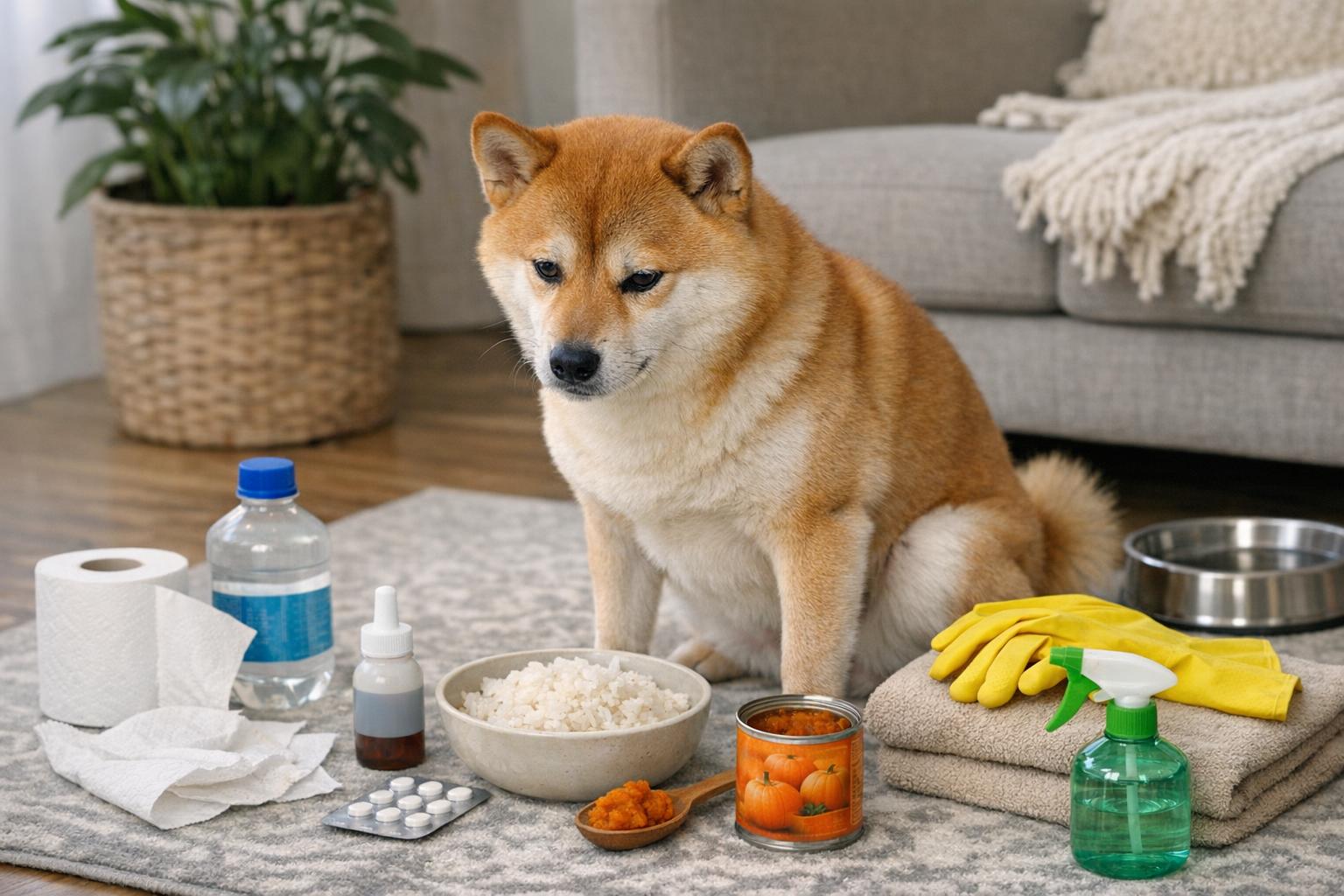
1. Plain boiled skinless chicken breast or lean white fish (no seasoning, bones, skin, or oil).
2. Plain white rice (well-cooked).
3. Clean measuring cup and spoon.
4. Clean bowls for food and water.
Step-by-Step Creation And Application:
1. Fast: For adult dogs that are otherwise well, withhold food for 8–12 hours (not longer for puppies or small dogs), but continue access to fresh water. This gives the gut a short rest.
2. Prepare Food: Boil chicken until fully cooked; shred into small pieces. Cook white rice until soft and plain.
3. Mix And Portion: Combine chicken and rice in approximately a 1:2 ratio (one part chicken to two parts rice) for the first 24 hours. Offer small portions every 4–6 hours rather than one large meal.
4. Monitor: Watch stools for improvement over 24–48 hours. If stool firms, gradually transition back to the regular diet over 2–4 days by increasing the normal food portion and decreasing bland food.
5. Hydration: Ensure free access to water; consider multiple shallow bowls for small dogs. If your dog refuses to drink or seems dehydrated, seek veterinary care.
Notes: Do not add spices, butter, or broth. The bland diet is short-term support — not long-term feeding.
## 2. Pumpkin + Probiotic Support
When to use: Mild to moderate diarrhea, especially if caused by dietary upset or suspected low-grade gut imbalance.
Ingredients / Required Materials:
1. Plain canned pumpkin (100% pumpkin, not pumpkin pie filling).
2. Canine-specific probiotic powder or paste (or veterinary-recommended human probiotic only under vet guidance).
3. Measuring spoon.
4. Clean bowl.
Step-by-Step Creation And Application:
1. Dosage: For most adult dogs, offer 1 to 4 teaspoons of plain canned pumpkin per meal (start low for small dogs, higher for medium/large). Use 1/2 to 1 teaspoon for small breeds under 10 lbs.
2. Administer Probiotic: Follow manufacturer or veterinarian instructions for probiotic doses. Probiotics designed for dogs are formulated to survive the canine GI tract and are preferred.
3. Combine: Mix the pumpkin into the bland diet or a small portion of regular food so the dog eats it.
4. Frequency: Give pumpkin with meals twice daily until stool normalizes, up to 3 days. Continue probiotics for the recommended duration (often 7–14 days) to help restore healthy gut flora.
5. Record Response: Note improvements and any adverse reactions. If diarrhea persists beyond 48–72 hours despite probiotics, consult your vet.
Mechanism: Pumpkin provides soluble fiber that can add bulk and normalize stool consistency. Probiotics reintroduce beneficial bacteria that support digestion and immune function.
## 3. Rehydration And Electrolyte Support
When to use: Any case where fluid loss is a concern — especially in puppies, senior dogs, or when diarrhea is frequent.
Ingredients / Required Materials:
1. Fresh water.
2. Canine electrolyte solution or unsweetened Pedialyte (use only with vet approval).
3. Syringe or small cup for administering fluids if the dog won’t drink.
4. Soft towel and a calm space.
Step-by-Step Creation And Application:
1. Encourage Drinking: Keep fresh water available and entice with small amounts frequently. Warm thinned broth (no onion/garlic) may encourage intake — veterinary approval recommended for long-term use.
2. Use Electrolytes Where Appropriate: If the dog is drinking but still showing signs of dehydration (sticky gums, sunken eyes, lethargy), offer measured amounts of electrolyte solution. Typical short-term amounts are small frequent sips; consult your veterinarian for precise dosing relative to weight and condition.
3. Administer Carefully: If using a syringe, tilt the dog’s head slightly upward and syringe small amounts into the side of the mouth, allowing swallowing between doses. Do not force too quickly, as aspiration risk exists.
4. Monitor Hydration: Check skin turgor (gentle tenting of the skin at the shoulder) and gum moisture; if unsure, seek professional help.
5. When To Stop: If your dog is vomiting, severely lethargic, or unable/unwilling to drink, go to the vet immediately for possible IV fluids.
Important Safety Note: Do not use sports drinks or solutions with high sugar content for rehydrating dogs; these can worsen diarrhea or cause other imbalances.
### Home Care Tips That Help
– Slow Dietary Transition: After recovery, reintroduce regular food gradually over 2–4 days. Sudden switches often trigger recurrences.
– Avoid Human Meds: Do not give over-the-counter human anti-diarrheal medications (e.g., loperamide) unless prescribed by your vet. Some dogs, especially those with certain genetic mutations or concurrent conditions, can react badly.
– Watch For Toxins: Consider whether your dog could have eaten garbage, human food, houseplants, or rodent bait; disclose this to your vet if you go in.
– Keep Records: Track stool frequency, consistency, and any additives (blood, mucus). This helps the veterinarian determine causes and treatments.
## Recognizing Red Flags And When To Call The Vet
Canine diarrhea treatment at home is appropriate for mild cases only. Call your veterinarian or emergency clinic immediately if you notice any of the following: persistent vomiting, bloody stools, extreme lethargy, refusal to drink, severe abdominal pain, collapse, or if the dog is a young puppy, geriatric, pregnant, or has existing health conditions like diabetes or kidney disease. Rapid deterioration can occur; when in doubt, call.
### Diagnostic Steps A Vet May Recommend
If symptoms persist or worsen, your veterinarian may perform:
1. Physical exam and hydration check.
2. Fecal testing for parasites and pathogens.
3. Bloodwork and electrolyte panels.
4. Imaging (X-rays or ultrasound) if obstruction or structural issues are suspected.
Treatment may then include antibiotics, antiparasitics, antiemetics, or fluid therapy — based on the underlying cause.
## Preventive Practices To Reduce Recurrence
– Gradual Food Changes: Introduce new foods over a week.
– Avoid Table Scraps: Many human foods upset canine stomachs.
– Parasite Prevention: Keep year-round heartworm and deworming schedules.
– Food Safety: Store trash securely and supervise neighborhood walks.
If you want a quick checklist to print and stick to the fridge, I can make one for you — or, you know, you could just pin this page and pretend it’s decorative.
## Final Practical Notes
Home remedies are supportive and intended for mild, uncomplicated diarrhea. Always prioritize hydration and monitor your pup closely. If anything feels off, your vet is the best resource — they love dogs more than you love toilet paper (probably).
If you want personalized ratios, dosing for a specific weight, or a fridge-ready recipe card for the bland diet, tell me your dog’s size, age, and any known health issues and I’ll tailor recommendations.



Leave a Reply