



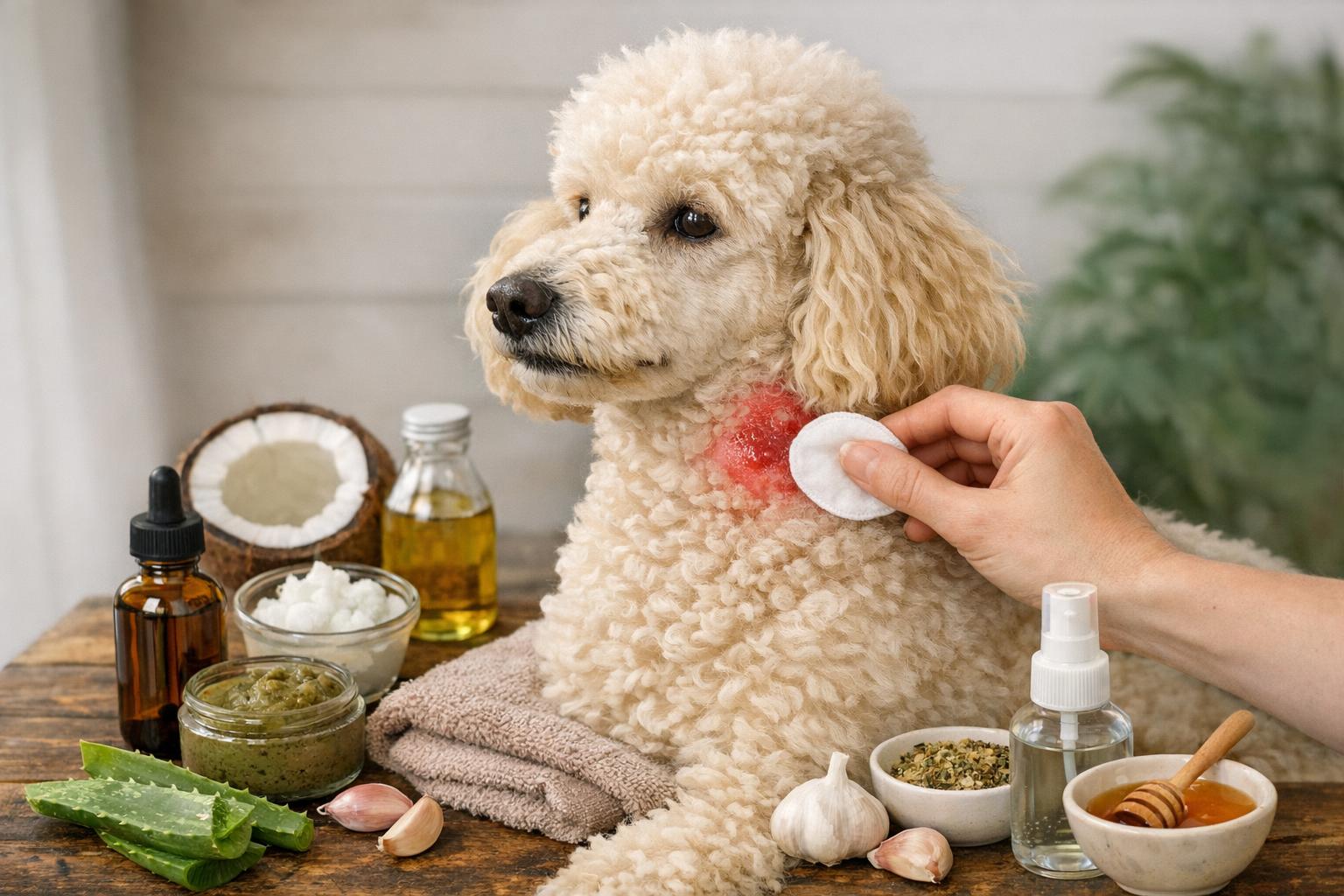
Hey there—if your pup has discovered a sweet new spot to scratch and it’s turned into a red, weepy patch, you’re in the right place. Below you’ll find sensible, vet-friendly info about when antibiotics matter and several natural, DIY remedies to soothe hot spots. I’ll try not to play doggy dermatologist, but I will hand you some practical, calm-first-aid approaches (with a dash of humor—because pets are drama queens sometimes).
## Antibiotics For Hot Spots On Dogs: When They’re Needed
Hot spots (acute moist dermatitis) are bacterial skin infections that can explode in size quickly because dogs lick and scratch them. Many owners ask about antibiotics for hot spots on dogs—when they’re absolutely necessary, temporary, or avoidable.
Veterinarians prescribe antibiotics for hot spots when the infection is moderate to severe, when the lesion is large, or when secondary infection has set in and is unlikely to clear with topical care alone. Systemic antibiotics (oral or injectable) treat the bacteria throughout the tissues and are especially important if your dog has a fever, deep tissue involvement, or is not improving after 48–72 hours of proper topical care.
Topical antiseptics and cleaning can resolve mild hot spots, but if the dog is in obvious pain, the lesion is spreading rapidly, or your dog has underlying conditions (allergies, ear disease, hormonal imbalances), ask your vet about antibiotics for hot spots on dogs. Don’t be tempted to self-prescribe human antibiotics—this causes resistance and risks dosing errors.
### How Hot Spots Start And Escalate
A small irritation—flea bite, moisture trapped in the coat, a scraped ear—becomes a repeating cycle: itch → scratch → bacterial colonization → more itch. Hot spots are typically bacterial (often staph species), which is why antibiotics for hot spots on dogs can be helpful, but only when infection is established beyond what topical measures can safely manage.
### Signs You Should See A Vet
If you notice one or more of the following, contact your vet:
– Rapidly growing, painful, or very smelly lesions.
– Lesions that are deep, bleeding, or accompanied by fever or lethargy.
– Recurrent hot spots despite home care.
These indicate your dog may need systemic antibiotics for hot spots on dogs and possibly additional diagnostics.
## Remedy 1: Cleanse And Soothing Spray (Number 1)
This gentle antiseptic spray helps remove surface bacteria and vets-friendly grime without harsh chemicals. It can be used as first-aid and between other treatments.
Ingredients / Materials
– 1 cup boiled then cooled distilled water
– 1 tablespoon raw apple cider vinegar (with “mother”)
– 1 teaspoon sea salt (non-iodized)
– 5 drops lavender essential oil (optional; test first)
– Clean spray bottle (sterilized)
Step-By-Step Creation And Application
1. Sterilize the spray bottle with boiling water and let it cool.
2. Combine the cooled distilled water, apple cider vinegar, and sea salt in a clean container; stir until dissolved.
3. Add lavender oil if using—lavender can be soothing, but do a small skin patch test first.
4. Pour the solution into the spray bottle and label it.
5. To use: clip hair around the hot spot carefully with blunt-tipped scissors or clippers, exposing the lesion (do this gently; if the dog resists, ask a second person to help or seek professional grooming).
6. Spray the lesion lightly and pat dry with sterile gauze. Do not soak; aim to remove surface debris.
7. Repeat 2–3 times daily until the area looks less inflamed. If no improvement in 48–72 hours, see your vet about antibiotics for hot spots on dogs.
## Remedy 2: Epsom Salt Soak And Honey Poultice (Number 2)
This two-part approach draws out infection and then applies a natural antimicrobial dressing. Medical-grade honey (manuka or equivalent) is the active part here.
Ingredients / Materials
– Clean bowl or basin
– 2 cups warm water (comfortably warm, not hot)
– 2 tablespoons Epsom salt (magnesium sulfate)
– Sterile gauze pads
– Medical-grade honey (manuka preferred)
– Light, breathable bandage or self-adhesive wrap
Step-By-Step Creation And Application
1. Dissolve the Epsom salt in the warm water in a clean bowl.
2. Gently clip hair around the hot spot and trim any crusts using sterilized scissors (if dog tolerates it).
3. Soak a clean gauze pad in the Epsom solution and apply it to the hot spot for 5–10 minutes to help reduce swelling and draw out fluids.
4. Pat the area dry with sterile gauze.
5. Apply a thin layer of medical-grade honey directly over the lesion—honey is antibacterial and creates a moist healing environment.
6. Cover with a sterile gauze pad and secure lightly with a breathable bandage, ensuring you don’t restrict circulation.
7. Change dressing twice daily; reapply honey each dressing change. If the wound looks worse, becomes deeply red or your dog is febrile, contact your vet to discuss antibiotics for hot spots on dogs.
## Remedy 3: Calendula And Coconut Oil Ointment (Number 3)
A preventive and supportive ointment to soothe irritation and create a barrier while the skin heals. Calendula has anti-inflammatory properties; coconut oil has mild antimicrobial activity.
Ingredients / Materials
– 2 tablespoons organic coconut oil (solid at room temp)
– 1 teaspoon calendula-infused oil (or 1 calendula capsule opened)
– 3–4 drops vitamin E oil (optional)
– Small sterile container
Step-By-Step Creation And Application
1. Gently melt the coconut oil in a double boiler until liquid, then remove from heat.
2. Stir in calendula oil and vitamin E oil; mix thoroughly.
3. Pour into a sterilized small container and allow to solidify.
4. After cleaning the hot spot (use the spray from Remedy 1), apply a thin layer of the ointment to the affected area 2–3 times daily.
5. Monitor the lesion for signs of reduced redness and moisture. If the ointment is licked off repeatedly, consider an Elizabethan collar or vet consultation; persistent or worsening infections may need antibiotics for hot spots on dogs.
### When Natural Remedies Aren’t Enough
Home remedies can help with minor, early hot spots or support healing alongside vet care. However, if the lesion expands, shows pus, your dog has systemic signs, or there’s no improvement after 48–72 hours, seek veterinary care. A vet will determine whether your dog needs systemic antibiotics for hot spots on dogs, a topical prescription-strength antibiotic, or other therapies (steroids for itch control, allergy testing, parasiticide treatment).
#### Cautions And Safety Notes
– Never give your dog human antibiotics without a vet’s prescription and dosing instructions.
– Essential oils can be toxic to some dogs—use sparingly and always patch-test.
– If your dog has diabetes, immune suppression, or is on other medications, check with your vet before applying any home treatment.
– Keep wounds clean and prevent licking; an Elizabethan collar can be a huge help and less awkward than a cone-themed photoshoot.
### Preventing Future Hot Spots
Prevention focuses on reducing the triggers: regular flea and tick control, good ear hygiene, prompt treatment of allergic flares, keeping your dog’s coat clean and dry, and addressing underlying skin conditions with your vet. Groom short-haired dogs more frequently during humid months; for long-coated breeds, consider professional trims around problem-prone areas.
### FAQs About Antibiotics For Hot Spots On Dogs
Q: Can I use over-the-counter topical antibiotics from the human aisle?
A: Avoid using human topical antibiotics without vet guidance. Some ingredients may be irritating, and improper use can mask symptoms. Your vet can prescribe topical products formulated for dogs.
Q: How long will antibiotics for hot spots on dogs be needed?
A: If prescribed, systemic antibiotics are typically given for 7–14 days depending on severity. Follow your vet’s instructions and finish the full course even if the lesion looks better.
Q: Can baths help?
A: Yes—medicated or antiseptic shampoos can be useful, but avoid over-bathing, which can dry the skin and make things worse. Use as directed.
If you’d like, I can help you pick which of the above remedies is best for your dog based on a brief description of the lesion, breed, and any current medications. I can also outline questions to ask the vet about antibiotics for hot spots on dogs so you leave the appointment feeling confident.








Leave a Reply