





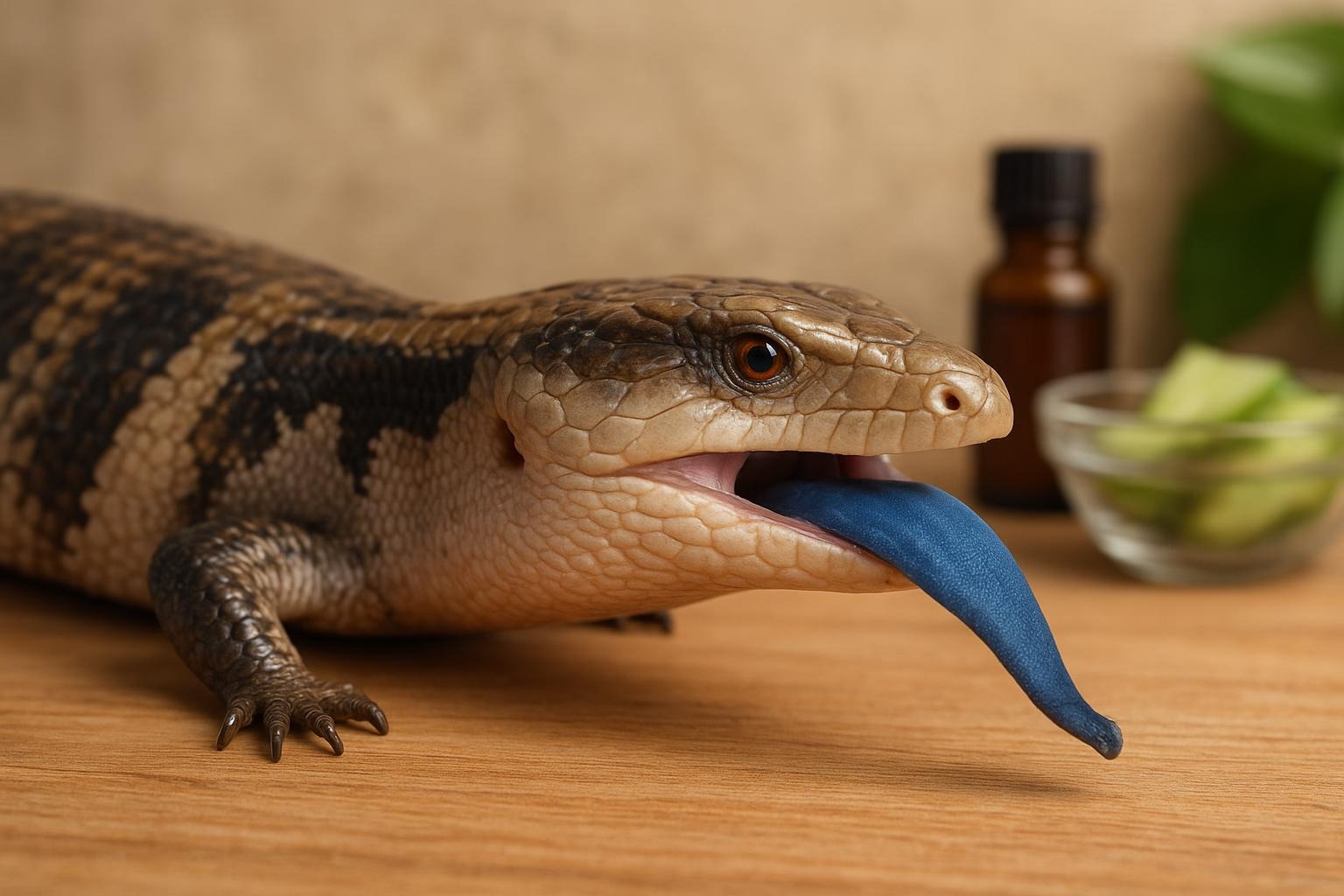
Keeping a blue tongue lizard healthy and happy is easier than you might think — and a lot more satisfying than explaining to your relatives why a reptile is an acceptable houseguest. Below you’ll find practical husbandry tips, signs to watch for, and two safe, veterinarian-friendly home remedies for common, non-emergency problems. Read the care basics, then dive into step-by-step remedies if your scaly roommate needs a little at-home help.
## Blue Tongue Lizard Care Basics
Blue tongue lizards are sturdy, curious, and often quite personable. Good blue tongue lizard care starts with three pillars: an appropriate enclosure, balanced diet, and regular observation. These lizards can thrive in captivity for many years when their environment and nutrition match their natural needs.
### Enclosure And Temperature
A blue tongue lizard thrives in a terrestrial setup with ample floor space. For an adult, aim for at least a 4–6 foot long enclosure (120–180 cm) when possible. Substrate should be a mix that allows burrowing and holds humidity moderately well — a blend of coconut coir and washed topsoil works nicely.
Temperature gradient:
– Basking spot: 100–105°F (38–40°C)
– Cool end: 75–85°F (24–29°C)
– Night temperature: can drop to around 68–72°F (20–22°C)
Use thermostatically controlled heat sources (ceramic heat emitters or basking lamps) and an infrared thermometer to verify microclimates. Avoid heat rocks; they can cause burns.
### Diet And Feeding
They’re omnivores. A practical feeding rotation includes:
– High-quality carnivore/omnivore pellets formulated for reptiles (occasionally)
– Fresh vegetables: leafy greens, squash, carrots, and bell peppers
– Protein: cooked lean meats, earthworms, crickets, and occasional canned fish
– Fruit occasionally as treats
Calcium and vitamin D3 supplementation is important — dust prey items and leafy greens according to a schedule recommended by your reptile vet. Fresh water should always be available in a shallow dish.
### Handling And Behavior
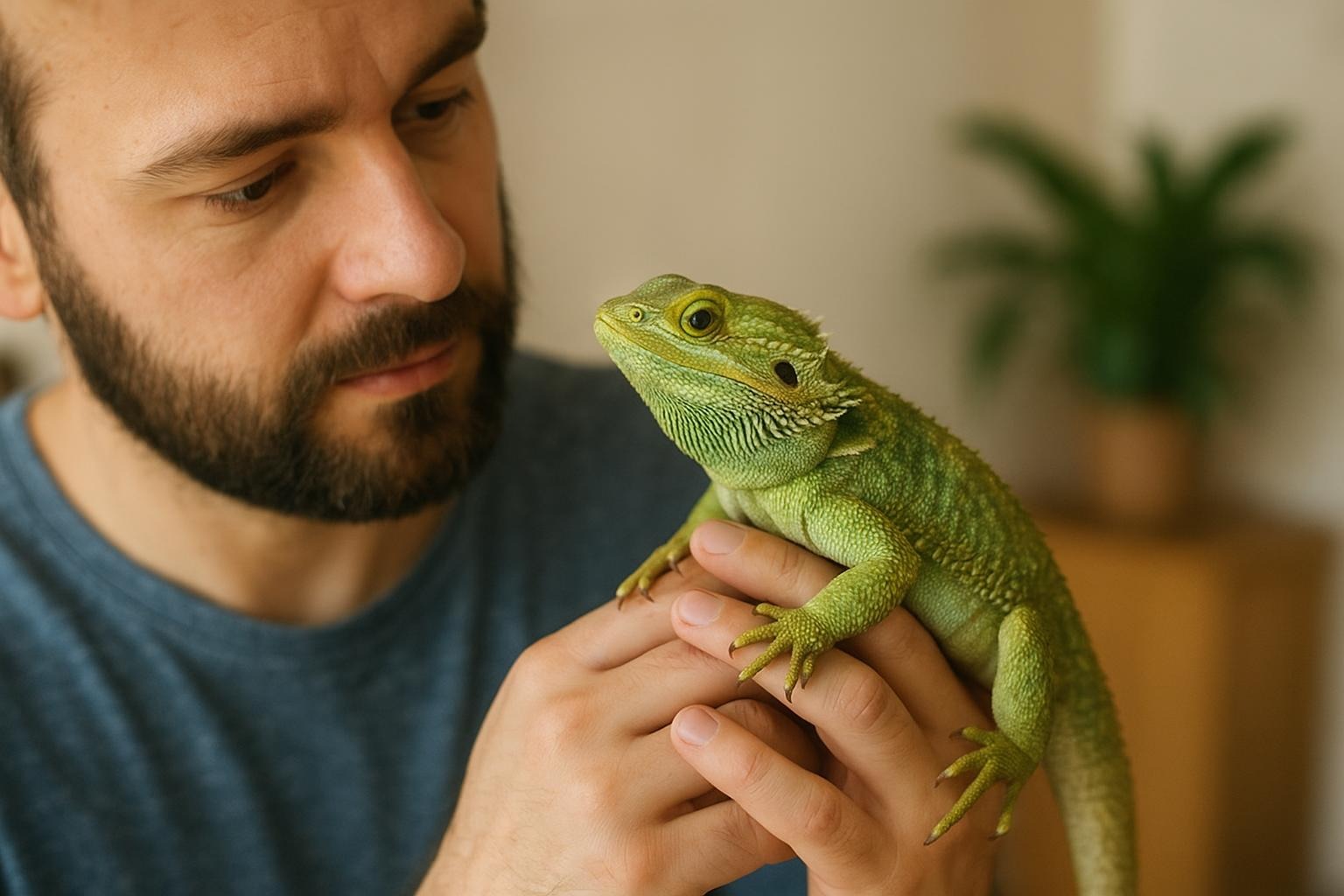
Blue tongues can be docile but may hiss or bite if stressed. Handle gently and support their body. Build trust by offering food from the hand and keeping handling sessions brief at first. Regular, calm interaction is part of good blue tongue lizard care and helps you notice subtle changes in behavior or appetite.
## Recognizing Common Health Issues
Early detection is part of successful blue tongue lizard care. Be familiar with common problems: mouth rot (infectious stomatitis), scale infections, stuck shed, dehydration, and minor wounds.
### Signs Of Illness
Watch for:
– Loss of appetite or weight loss
– Lethargy or hiding for extended periods
– Discharge from eyes, nose, or mouth
– Swelling, reddened or discolored scales
– Unusual feces or lack of defecation
– Difficulty shedding (retained skin on toes, tail, or eyecaps)
If you observe these signs, assess whether the issue looks superficial and stable (possible home care) or serious (immediate veterinary attention).
#### Stress, Shedding, And Environmental Triggers
Improper humidity and temperature commonly cause retained shed or stress-related issues. Slight seasonal lethargy can be normal, but prolonged anorexia is not. Correcting husbandry variables often resolves mild problems quickly under attentive care.
## 2 Home Remedies For Blue Tongue Lizard Care
Below are two remedies that are appropriate for minor issues only. If the wound is deep, bleeding heavily, shows signs of systemic infection (feverish feel, severe swelling, pus), or if the animal’s condition worsens, seek veterinary care immediately. When following these remedies, be sterile, cautious, and stop if the lizard shows signs of distress.
### Remedy 1: Mild Wound Cleaning And Protective Salve
Use this for superficial cuts, abrasions, or small localized skin irritation.
Ingredients / Materials:
– Sterile saline (0.9% sodium chloride) or commercially available wound wash
– Clean gauze pads
– Sterile cotton swabs
– Small soft towel
– Antiseptic ointment for reptiles or a veterinarian-approved dilute povidone-iodine solution (dilute 1:10 with sterile saline)
– Thin layer of reptile-safe topical barrier salve (zinc oxide–free; veterinarian recommended)
– Disposable gloves
Step-By-Step Creation And Application:
1. Prepare a calm environment: dim lights, quiet room, and a soft towel to gently wrap the lizard’s body without restricting breathing.
2. Wash your hands and put on disposable gloves. Warm the saline to room temperature.
3. Gently secure the lizard using the towel, exposing only the injured area. Minimize handling time.
4. Flush the wound with sterile saline using a syringe or pour slowly to remove debris. Do not use hydrogen peroxide or alcohol — these are toxic and damaging.
5. If debris remains, use a sterile cotton swab moistened with saline to gently clean the area. Avoid deep probing.
6. Apply a small amount of diluted povidone-iodine (1:10) using a gauze pad or swab; leave it on for 30–60 seconds, then rinse thoroughly with saline.
7. Dry the area by lightly dabbing with sterile gauze.
8. Apply a thin layer of reptile-safe topical barrier salve to protect the wound and keep it moist for healing. Avoid occlusive dressings unless directed by a vet.
9. Return the lizard to a warm, clean enclosure to encourage circulation and immune response.
10. Repeat once daily, monitoring closely for increased redness, swelling, discharge, or behavioral decline. If any of these occur, contact a vet.
Notes: This remedy addresses only superficial injuries. Proper sterile technique reduces infection risk. Use products specifically labeled safe for reptiles or those recommended by a reptile veterinarian.
### Remedy 2: Rehydration Soak And Shedding Aid
This remedy helps mildly dehydrated animals and assists with retained shed, particularly on toes and tail.
Ingredients / Materials:
– Shallow plastic tub or Tupperware large enough for lizard to sit comfortably
– Lukewarm dechlorinated water (not hot)
– 1–2 teaspoons of Betadine (povidone-iodine) per gallon — optional and dilute further if needed
– A few drops of reptile electrolyte solution (veterinarian-formulated) or unflavored pediatric electrolyte solution diluted 1:4 with water
– Soft toothbrush or cotton swab
– Towel
Step-By-Step Creation And Application:
1. Prepare the soak: fill the tub with 1–2 inches (2.5–5 cm) of lukewarm, dechlorinated water. Add diluted electrolyte solution per instructions. If using povidone-iodine, use a very weak dilution (1:50 to 1:100) and consult a vet before use.
2. Place a non-slip mat or a shallow rock in the tub so the lizard can rest without swimming.
3. Gently place the blue tongue lizard in the tub, ensuring its head stays above water. Soaking should be calm and supervised.
4. Let the lizard soak for 10–15 minutes. Watch closely for signs of stress (rapid breathing, frantic movements).
5. After soaking, for retained shed areas, gently use a soft toothbrush or cotton swab to remove loosened skin. Do not pull firmly on stuck skin; re-wet and wait if resistant.
6. Dry the lizard thoroughly by gently patting with a towel and return it to a warm enclosure to help the skin slough naturally.
7. Repeat once daily for up to 3 consecutive days. Prolonged soaking can disrupt skin oils and should not be done long-term.
8. If retained shed persists on digits or constriction is present (swollen or discolored toes), seek veterinary care promptly to avoid necrosis.
Notes: Soaks are a supportive therapy for mild dehydration and shedding problems. Electrolytes aid rehydration, but severe dehydration requires subcutaneous fluids under veterinary supervision.
## When To See A Vet
Home remedies are not a substitute for professional care. See a reptile veterinarian if you notice:
– Deep wounds, heavy bleeding, or bone exposure
– Progressive swelling, heat, or painful reactions at a site
– Persistent anorexia beyond 48–72 hours
– Respiratory distress, wheezing, or bubbling from nostrils
– Neurological signs (tremors, uncoordinated movement)
Prompt diagnostics (cytology, cultures, imaging) and systemic antibiotics or fluids may be necessary.
### Preventive Care Tips
Routine monitoring and simple maintenance keep most problems at bay:
– Keep a husbandry log: temperatures, feeding, shedding, and stool quality.
– Perform weekly quick health checks for lumps, wounds, or abnormal behavior.
– Rotate enclosure enrichment to reduce boredom and stress.
– Schedule annual check-ups with a reptile-savvy vet for parasite screening and nutrition advice.
#### Enclosure Hygiene And Seasonal Adjustments
Clean food and water bowls daily. Replace substrate spot-cleaning as needed and perform deeper cleanings monthly. During cooler months, monitor basking temperatures more closely; during shed seasons, slightly elevated humidity in a localized hide can facilitate healthy skin changes.
Enjoy your time with your blue tongue lizard — they’re often affectionate, food-motivated, and delightfully chatty in their own scaly way. Proper blue tongue lizard care blends good habitat, attentive feeding, and timely, conservative home remedies when minor issues arise.























Leave a Reply