



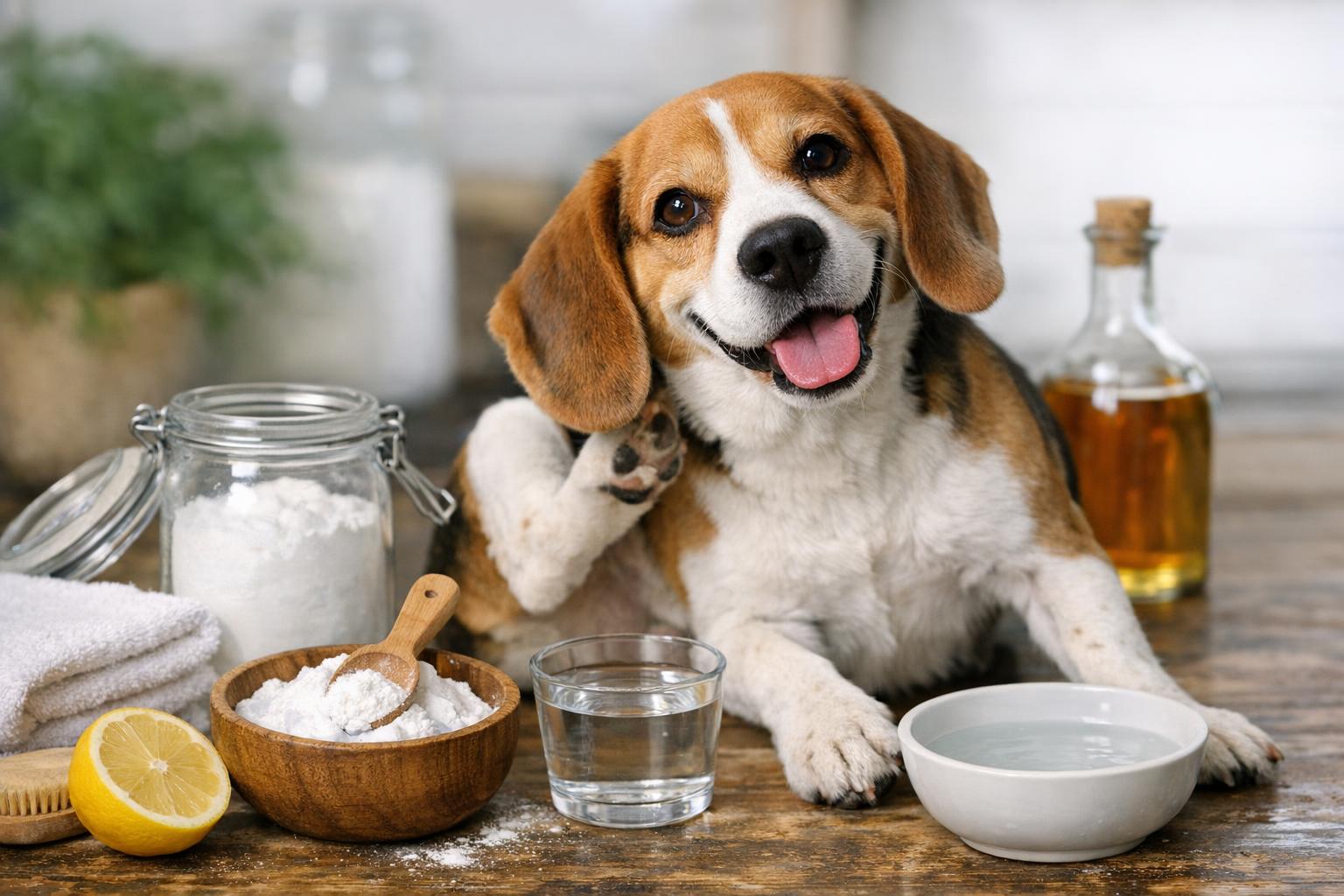
If your dog is doing the one-pawed shuffle or starring at you like you personally invented itchiness, welcome — you’re in the right place. This article looks at practical, gentle ways to use a common pantry item: baking soda for itchy dog relief. I’ll keep it friendly, honest, and just a little bit droll (your pup won’t appreciate the jokes, but that’s okay).
## Baking Soda For Itchy Dog: What It Does And When To Use It
Baking soda (sodium bicarbonate) is a mild alkaline powder that can help neutralize acids, soften skin, and reduce mild itching caused by minor irritations like insect bites, mild dandruff, or contact with irritating plants. When applied properly, baking soda can provide temporary relief and help dry out damp, itchy areas. It’s not a cure-all and should not replace veterinary care for infections, severe allergies, or ongoing skin conditions.
### How Baking Soda Works On Skin
Baking soda works through several mechanisms: it can raise the pH of a localized area (making it less hospitable to some microbes), act as a gentle exfoliant to remove flaky skin, and absorb moisture that contributes to itch. For temporary, superficial issues, baking soda’s drying and soothing properties can be helpful. Be careful: overuse can dry healthy skin and disrupt the natural barrier, so precise application and moderation are key.
### When Not To Use Baking Soda
Do not use baking soda on open wounds, raw skin, hot spots, or areas with thick crusting and bleeding. If there is hair loss accompanied by oozing, foul odor, severe swelling, or intense pain, contact a veterinarian immediately. Also avoid use if your dog has a known sensitivity to baking soda or develops excessive redness, swelling, or a rash after application.
## Remedy 1: Baking Soda Soothing Bath
This is a gentle soak designed to calm generalized itching and refresh your dog’s coat without stripping too much natural oil. Use this for mild, widespread itching or after exposure to dust, pollen, or mild irritants.
#### Ingredients And Materials
– 1 cup baking soda (sodium bicarbonate)
– Warm water (enough to fill a tub or large basin for your dog)
– Mild, fragrance-free dog shampoo (optional)
– Towels
– A non-slip mat or towel in the tub
#### Step-By-Step Creation And Application
1. Fill the tub or basin with warm water (not hot) to a depth that reaches your dog’s chest when standing.
2. Dissolve 1 cup of baking soda into the water, stirring until mostly dissolved. The solution will be mildly alkaline and slightly cloudy — that’s normal.
3. Gently lower your dog into the water. Keep reassurance calm; some dogs dislike baths more than itch.
4. Soak for 5–10 minutes. Use a cup to pour water over the coat and help the solution contact the skin, especially around commonly itchy zones (neck, belly, groin, under armpits).
5. If your dog tolerates shampoo, you may add a small amount of mild, fragrance-free dog shampoo and lather briefly, then rinse thoroughly. Avoid medicated shampoos unless directed by a vet.
6. Rinse thoroughly with clean lukewarm water to remove residual baking soda. Leaving significant residue can dry the skin.
7. Towel dry and keep your dog warm until fully dry. Observe for any immediate irritation.
Notes on Use: Use this bath up to twice weekly for short-term relief. If itching persists beyond a few days or worsens, stop and consult your veterinarian.
## Remedy 2: Baking Soda Dry Spot Treatment
A focused, dry application to specific itchy spots. Useful for local insect bites, small hot spots in early stages, or contact irritations.
#### Ingredients And Materials
– Baking soda (sodium bicarbonate)
– Cornstarch (optional, to reduce clumping)
– A clean, dry cloth or small spoon
– Spray bottle with water (optional)
– Small Elizabethan collar if your dog is likely to lick
#### Step-By-Step Creation And Application
1. Mix one part cornstarch with two parts baking soda to form a powder blend. Cornstarch is optional but helps the mixture stay in place.
2. If the area is dirty, gently clean with a damp cloth and pat dry. Do not apply to open wounds.
3. Sprinkle a small amount of the powder directly onto the itchy spot. Alternatively, place the powder on the cloth and dab gently.
4. Allow it to sit for 10–15 minutes. The powder will absorb moisture and soothe the area.
5. Brush or wipe off gently; do not leave heavy residue. If your dog licks the area immediately, use an Elizabethan collar or distract them until the powder is removed.
6. Repeat once daily for up to 3 days. If no improvement is seen, discontinue and consult your vet.
Important: Avoid using on or near the face if your dog is likely to inhale the powder. Keep the mixture out of eyes, nose, and mouth.
### When To Choose The Bath Versus Spot Treatment
Choose the bath for generalized itching (many patches or whole-body discomfort) and the dry spot treatment for localized problems. Both are intended for mild issues; persistent, spreading, or severe symptoms require veterinary evaluation.
## Safety Tips And Precautions
When using baking soda for itchy dog care, maintain a cautious, measured approach. Baking soda is generally safe in small topical applications but can cause irritation if used too frequently or in high concentrations. Dogs that ingest large quantities of baking soda can experience electrolyte imbalances or gastrointestinal upset. Always prevent prolonged licking of treated areas.
– Start with a small test patch on your dog’s flank and wait 24 hours to watch for adverse reactions.
– Do not combine baking soda with acidic topical products (like vinegar) directly on the skin without veterinary guidance — this can cause chemical reactions or increased irritation.
– Keep treatments brief and infrequent; over-drying the skin can worsen itching long-term.
– If your dog is on topical or oral medications for skin conditions, check with the veterinarian before adding any home remedy.
#### How Much Baking Soda Is Safe
For baths: 1 cup per tub of warm water is a common safe concentration for medium-to-large dogs; reduce to 1/2 cup for small dogs. For spot treatments: a light dusting is sufficient. Never saturate the skin with undiluted baking soda paste unless a vet has prescribed a specific formulation. Oral ingestion of baking soda in large amounts can be dangerous; keep powder secured and supervise treated dogs to limit licking.
### Signs That Require Immediate Veterinary Care
– Rapid spreading of redness or swelling
– Oozing, bleeding, or pus from skin lesions
– Signs of systemic illness (fever, lethargy, vomiting)
– Continuous intense scratching despite treatment
– Any breathing difficulty or facial swelling after topical use
## Aftercare And Monitoring
After applying baking soda remedies, observe your dog for 24–72 hours. Look for reduced scratching, less redness, and improved comfort. If improvements are modest or short-lived, document the pattern (when itching occurs, what makes it worse, any new products or foods introduced) and share this with your vet — it’s often more useful than trial-and-error home remedies alone.
If you’re using baking soda for itchy dog episodes that recur seasonally, consider pairing topical care with environmental management: regular grooming, hypoallergenic bedding, flea prevention, and addressing household allergens like dust and pollen. Remember, baking soda can be a helpful tool for short-term soothing, not a substitute for diagnosing and treating underlying causes.



















Leave a Reply