
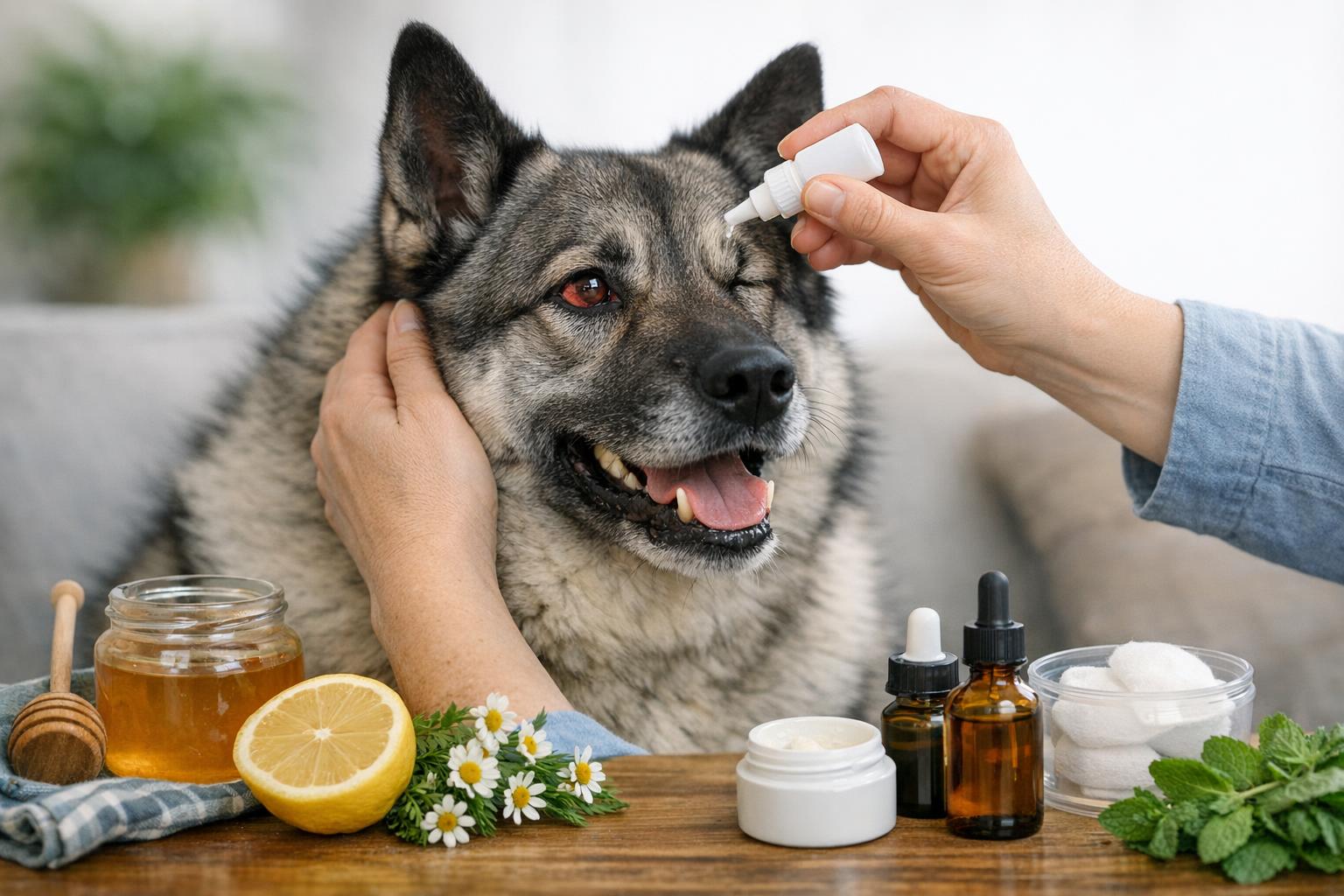
Allergies in dogs can show up in some surprising places — including those big, expressive eyes. If your pup’s been squinting, rubbing, or producing more eye gunk than usual, you’re probably hunting for practical, safe dog eye allergy treatment that actually helps. This article walks you through signs, causes, and several vet-safe home remedies you can try while keeping the formal bits where they matter: safety and proper application.
## Dog Eye Allergy Treatment: What You Need To Know
Allergic conjunctivitis (yes, dogs get it too) happens when an allergen — pollen, dust, certain chemicals, or even food sensitivities — irritates the conjunctiva (the thin membrane covering the eye and inner eyelid). Unlike infections that typically create thick green goo, allergies usually cause watery discharge, redness, itchiness, and frequent pawing at the face.
Dogs with seasonal allergies often show eye symptoms along with sneezing or itchy skin. Indoor allergens like dust mites or household cleaners can trigger year-round problems. Correct identification of the trigger helps guide effective dog eye allergy treatment and keeps your dog comfortable without over-reliance on medications.
### Signs And Symptoms To Watch For
– Red, watery eyes that may be itchy (pawing or rubbing at the eyes).
– Clear, watery discharge rather than thick, yellow-green pus.
– Swollen eyelids or conjunctival redness.
– Squinting, blinking more than usual, or sensitivity to light.
– Secondary irritation from rubbing, which can lead to crust or infection.
#### Mild Versus Severe Symptoms
Mild: occasional tearing, slight redness, short-lived rubbing.
Severe: persistent squinting, thick discharge, swelling, eye pain, or any signs of vision changes. Severe symptoms require prompt veterinary attention.
### When To Contact Your Veterinarian
If symptoms persist beyond 48 hours, worsen quickly, or involve thick colored discharge, swelling, or apparent pain, call your vet. Also reach out immediately if your dog shows changes in behavior, appetite, or mobility with the eye symptoms. A veterinarian can rule out infections, foreign bodies, corneal ulcers, or other causes that need prescription treatment rather than home care.
### Typical Veterinary Treatments (What To Expect)
When professional care is needed, vets may prescribe topical antihistamine drops, anti-inflammatory drops, topical or systemic antibiotics if there’s a secondary infection, or immunomodulators like cyclosporine for chronic allergic conjunctivitis. In some cases, allergy testing and immunotherapy are recommended. These are formal, evidence-based components of dog eye allergy treatment and should be used under veterinary supervision.
### 1. Saline Rinse For Allergic Eyes (Home Remedy)
Ingredients / Materials:
– Sterile 0.9% sodium chloride saline solution (single-use vials or bottle).
– Sterile syringe without a needle or a clean eye dropper.
– Soft towel.
– Treats for calming reward.
Step-By-Step Creation And Application:
1. Wash your hands thoroughly and find a quiet, well-lit spot where your dog feels secure.
2. Warm the saline to room temperature by holding it in your hands (don’t microwave).
3. Gently restrain your dog’s head — you can have someone help, or tuck your dog against your body if they’re small.
4. Using the sterile syringe or dropper, place 2–3 drops into the inner corner of the eye and allow the fluid to flush across the surface toward the outer corner. For a more thorough rinse, you may apply up to 5–10 mL, letting the saline overflow naturally.
5. Blot excess liquid and discharge with a soft towel from the inner to outer corner (avoid wiping back and forth).
6. Repeat once or twice daily for up to 48 hours while monitoring for improvement.
Note: This is a supportive dog eye allergy treatment — it helps remove allergens and soothe irritation but does not treat infections. Stop and call your vet if symptoms worsen or do not improve.
### 2. Cold Compress To Reduce Swelling And Itch (Home Remedy)
Ingredients / Materials:
– Clean, soft cloth or microfiber towel.
– Cold water or an ice pack wrapped in a thin towel.
– Timer.
Step-By-Step Creation And Application:
1. Soak the cloth in cold water and wring out excess, or wrap an ice pack in a thin towel.
2. Gently hold the cool compress over the closed eye for 5–10 minutes. Avoid direct pressure on the eyeball.
3. Remove for 10–15 minutes and repeat up to three times daily as needed.
4. Use calm, soothing voice and reward your dog afterward.
This method reduces inflammation and provides short-term itch relief. It’s a conservative, non-invasive component of dog eye allergy treatment and is safe when done gently.
### 3. Allergy Management And Environmental Reduction (Home + Long-Term)
Ingredients / Materials:
– HEPA air filter or vacuum with HEPA filter.
– Hypoallergenic bedding and frequent washing.
– Mild, fragrance-free cleaners.
– Veterinary-recommended omega-3 fish oil supplement (dosed by weight).
Step-By-Step Creation And Application:
1. Identify likely triggers: pollen seasons, new cleaning products, scented candles, or recent diet changes.
2. Use HEPA filtration and wash bedding weekly in hot water to cut down on dust and dander.
3. Replace heavily scented products with unscented alternatives to reduce airborne irritants.
4. Discuss omega-3 supplementation with your vet; research supports omega-3 fatty acids for reducing inflammatory responses. If approved, use the vet-recommended product and dose.
5. Track symptom patterns in a diary (date, environment, activities) to help you and your vet pinpoint triggers.
These measures are central to ongoing dog eye allergy treatment and can reduce the frequency and severity of flare-ups.
### 4. Safe Use Of Over-The-Counter Medications (Vet Consultation Required)
Some oral antihistamines (like cetirizine or loratadine) are used in dogs under veterinary guidance. Never give human eye drops or medications without explicit vet approval, and never use steroid eye drops unless prescribed by your veterinarian after examination; inappropriate steroid use can worsen infections and cause severe damage.
If your vet recommends an OTC oral antihistamine, they will advise dose by weight and monitor for side effects. This is a formal, medically supervised element of dog eye allergy treatment.
#### Emergency Signs Requiring Immediate Care
– Sudden cloudiness of the cornea.
– Bleeding from the eye.
– Severe swelling of the eyelids.
– Reluctance to open the eye or signs of severe pain.
If any of these occur, go to an emergency vet immediately.
### Tips To Keep Your Dog Comfortable While Treating Allergies
– Don’t let your dog rub their eyes on coarse surfaces; use an Elizabethan collar if necessary.
– Keep nails trimmed to minimize damage from pawing.
– Use gentle, vet-approved eye wipes for daily cleaning only if recommended.
– Reward calm behavior during treatments — treats and praise help make routine care easier.
### When Prescription Treatments Become Necessary
Chronic or severe allergic conjunctivitis often requires prescription eye drops like topical antihistamines, mast cell stabilizers, or immunomodulators (e.g., cyclosporine). Your veterinarian will choose the medication based on whether inflammation, infection, or immune-mediated disease is present. For persistent cases, allergy testing and immunotherapy (allergy shots or oral desensitization) may be the most effective long-term dog eye allergy treatment.
### Practical Safety Reminders
– Always use sterile solutions near the eye.
– Don’t reuse single-use saline vials.
– Avoid home remedies that introduce plant material directly into the eye — contamination risk is real.
– Consult before adding supplements or human medications.
If you’re trying to manage a flare-up at home, these remedies — properly applied — offer meaningful relief and reduce the need for emergency care. For any ongoing issue, partnering with your veterinarian is the safest route to an effective, long-term dog eye allergy treatment plan.










Leave a Reply