





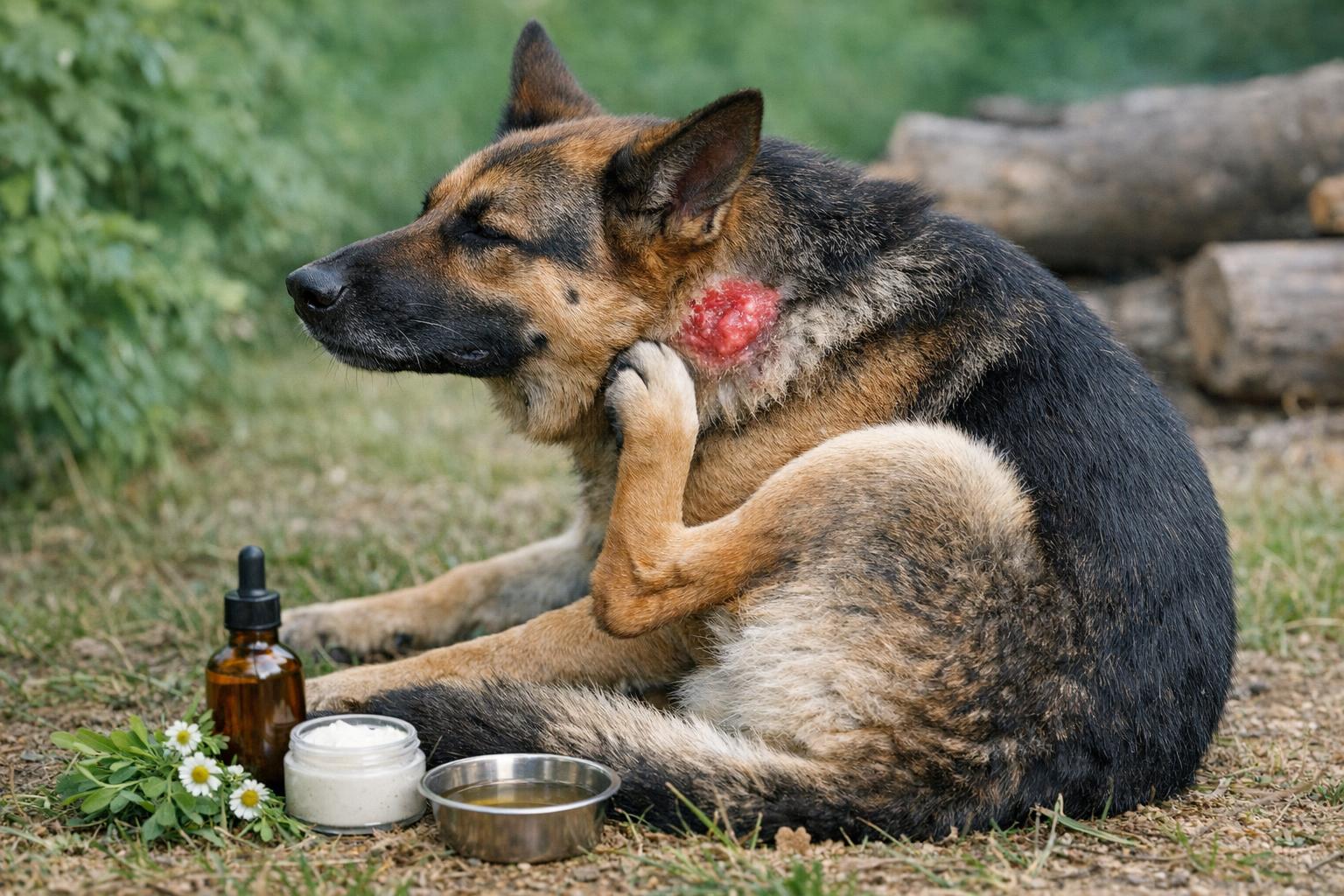
## Causes Of Hot Spots In Dogs: Why They Happen
If your dog has suddenly started chewing, licking, or rubbing one particular spot until it looks like it’s auditioning for a horror movie, you’re likely dealing with a hot spot (aka acute moist dermatitis). It’s itchy, inflamed, and can develop frighteningly fast. Understanding the causes of hot spots in dogs is the first step toward calming your furry friend and treating the sore naturally and safely.
### What A Hot Spot Looks Like And How Fast It Develops
Hot spots often start as a small red area and can balloon into larger oozing, hairless lesions in just 24–48 hours. They tend to be moist, crusty, and very painful for your dog. You’ll usually find them on the head, hips, chest, or where the dog can reach easily with its mouth.
### Common Underlying Triggers
The causes of hot spots in dogs are mostly behavioral or environmental triggers that lead to scratching or licking. Some common culprits include:
– Fleas and other parasites: A single flea bite can make a sensitive dog scratch obsessively.
– Allergies: Food, seasonal, or contact allergies can cause itchy skin that leads to hot spots.
– Skin infections: Bacterial or yeast overgrowth can aggravate the skin and encourage self-trauma.
– Moisture trapped in the coat: After swimming or bathing, trapped moisture creates a perfect environment for bacterial growth.
– Pain or irritation: A sore, splinter, or ear infection may cause your dog to repeatedly lick or chew a spot.
– Behavioral causes: Boredom or stress can manifest as compulsive licking.
### Who’s At Higher Risk
Some breeds (especially those with thick coats or skin folds), dogs with allergies, and pets who swim frequently or have heavy undercoats are more prone to these lesions. Puppies and older dogs can also be more vulnerable.
## Signs To Watch For And When To See Your Vet
### Visual And Behavioral Clues
You’ll usually notice:
– Intense scratching, licking, or chewing at a single spot
– Wet, red, or oozing lesions
– Hair loss and crusting
– Foul smell in severe cases
– Changes in behavior—aggression or lethargy due to pain
If the lesion is large, expanding rapidly, or your dog has a fever, go to the vet. Also seek veterinary care if the hot spot recurs frequently—there’s often a deeper issue to address.
### When Home Care Is Appropriate
If the lesion is small, your dog is otherwise healthy, and you can comfortably manage it, many hot spots respond well to prompt cleaning and natural topical care. But be realistic—deep or infected wounds, or those close to vital areas (eyes, genitals), should always be seen by a professional.
## Natural Care Remedies (1) Clean And Soothe — Basic Hot Spot First Aid
When addressing hot spots, act quickly. The following formal, step-by-step remedy focuses on cleaning, drying, and reducing bacterial load safely.
Ingredients/Materials:
– Clean towels
– Saline solution (sterile saline or 1 tsp salt in 500 ml boiled/cooled water)
– Non-toxic, fragrance-free antiseptic (chlorhexidine 0.05% solution or diluted povidone-iodine)
– Cornstarch or plain powdered aloe powder (for dry support)
– Elizabethan collar or equivalent to prevent licking
– Gloves
Step-By-Step Creation And Application:
1. Restrain your dog gently and calm them. Use treats or have a helper if needed.
2. Trim hair around the hot spot with blunt scissors to expose the lesion. Be careful not to cut skin.
3. Clean the area by flushing with saline to remove debris and crusts. Use gentle pressure.
4. Apply the antiseptic: soak a clean gauze or cloth with diluted chlorhexidine or povidone-iodine and gently dab the lesion for 1–2 minutes. Do not scrub aggressively.
5. Pat dry thoroughly and allow the area to air for a few minutes. Moisture fosters bacteria, so dryness is crucial.
6. Lightly dust with cornstarch or powdered aloe to absorb residual moisture and soothe irritation.
7. Fit an Elizabethan collar to prevent licking until the site heals.
8. Repeat cleaning twice daily and monitor for improvement within 48–72 hours. If no improvement, consult your veterinarian for possible systemic therapy (antibiotics/anti-inflammatory drugs).
## Natural Care Remedies (2) Herbal Antimicrobial Spray For Ongoing Support
This remedy is intended as a supportive topical spray after initial cleaning. It’s more formal in preparation and usage to ensure safe, effective application.
Ingredients/Materials:
– 1 cup distilled water
– 1/4 cup witch hazel (alcohol-free if possible)
– 10 drops lavender essential oil (antimicrobial, calming)
– 6 drops tea tree oil (antimicrobial) — use cautiously and only if your dog tolerates it; avoid around cats
– 1 tsp vegetable glycerin (optional, for soothing)
– Small spray bottle (cleaned and sterilized)
Step-By-Step Creation And Application:
1. Combine distilled water and witch hazel in a clean container.
2. Add essential oils and glycerin. Mix well.
3. Pour mixture into the spray bottle and label with date. Store in a cool, dark place; use within 2 weeks.
4. After cleaning the hot spot (see Remedy 1), lightly mist the area from a few inches away—do not saturate.
5. Allow to air-dry. Use twice daily.
6. Monitor for irritation. If your dog shows stinging, redness, or distress, discontinue immediately and rinse the area with saline.
Note: Essential oils can be potent. Use low concentrations and never apply undiluted. Avoid this spray on very young, elderly, or medically fragile dogs without veterinary approval.
## Natural Care Remedies (3) Ointment For Protective Barrier And Healing
This thicker option creates a protective barrier over the lesion and supports skin repair.
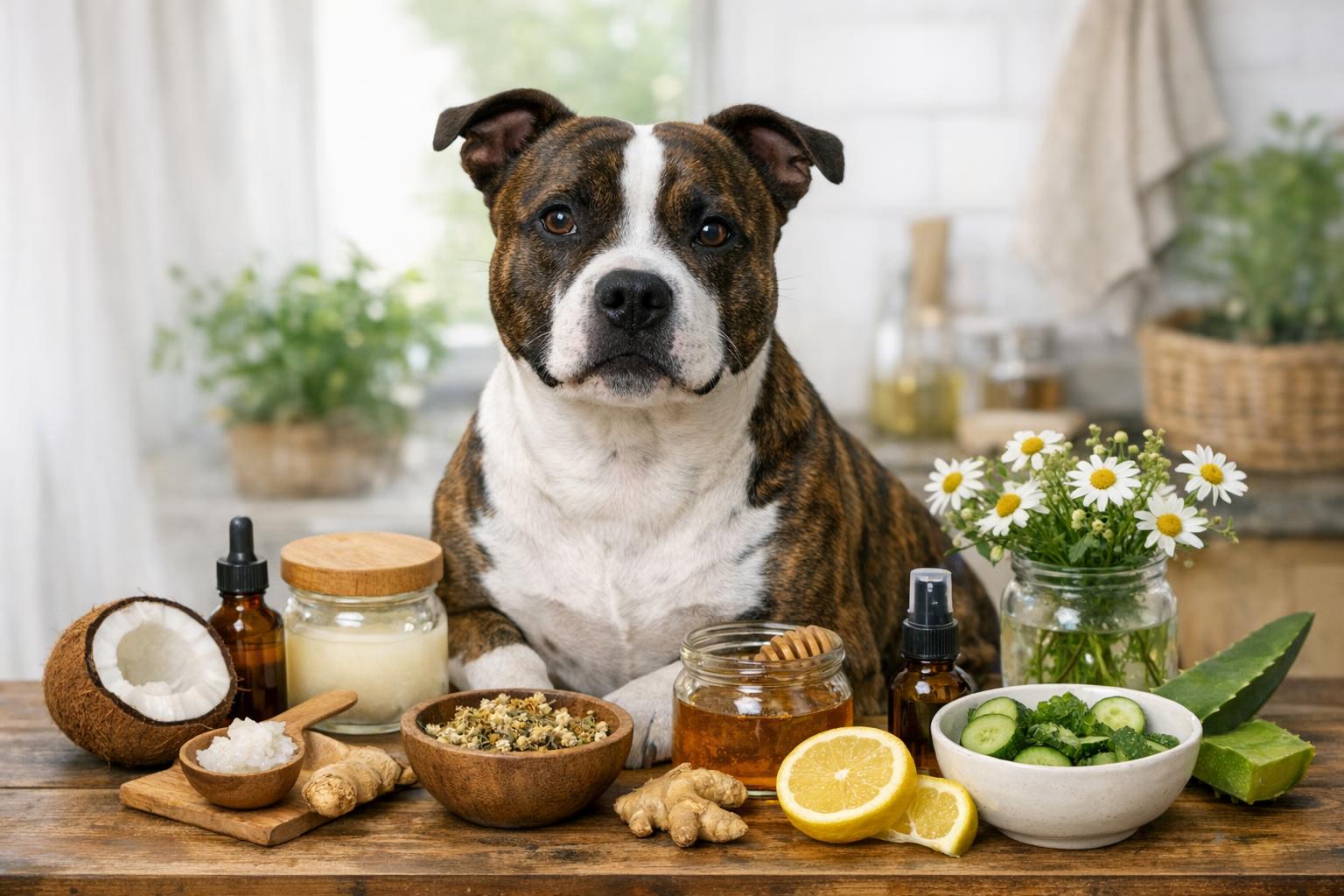
Ingredients/Materials:
– 2 tbsp organic coconut oil
– 1 tbsp shea butter (raw, unrefined)
– 1 tsp calendula infused oil (or a few drops calendula tincture)
– Small, sterilized jar
– Double boiler or heat-safe bowl and pot
Step-By-Step Creation And Application:
1. Gently melt the coconut oil and shea butter in a double boiler until liquid.
2. Remove from heat and stir in calendula oil or tincture.
3. Pour into a sterilized jar and let cool to solidify.
4. After cleaning and drying the hot spot, apply a very thin layer of the ointment to the lesion. Do not smother the wound—just a protective film.
5. Prevent licking with an Elizabethan collar. Reapply twice daily until the skin shows healthy regrowth.
6. If the site appears to worsen or remains wet and oozing, stop use and seek veterinary care.
## Preventive Measures To Reduce Recurrence
Prevention is often about addressing the underlying cause. Here are targeted steps to lower the risk of future hot spots:
### Flea And Parasite Control
Regular, vet-recommended flea prevention matters. Even a small flea burden can create intense scratching.
### Allergy Management
Work with your vet on diagnosing food or environmental allergies. Hypoallergenic diets, regular bathing with oatmeal shampoos, or antihistamines prescribed professionally can help.
### Grooming And Moisture Control
Keep the coat well-brushed, especially in double-coated breeds. Dry your dog thoroughly after baths or swims. For long-haired dogs, consider professional trimming in problematic areas.
### Mental And Physical Health
Reduce boredom and stress with exercise, enrichment toys, and attention. Behavioral causes of licking can be as important as medical ones.
### Regular Inspections
Check your dog’s skin weekly. Early detection of small red spots or insect bites lets you intervene before a hot spot develops.
## When To Escalate To Veterinary Care
If the hot spot is expanding rapidly, has a foul odor, your dog is febrile, or multiple lesions are present, seek veterinary care promptly. Recurrent hot spots or lesions that don’t respond to home care might indicate deeper infections, endocrine disorders, or allergies that need professional diagnostics and treatment.
Remember, quick attention and proper care will usually stop a hot spot in its tracks. Knowing the causes of hot spots in dogs helps you prevent the first episode and respond quickly if one appears—so your pup gets back to being the charming, itch-free goofball you know and love.










Leave a Reply